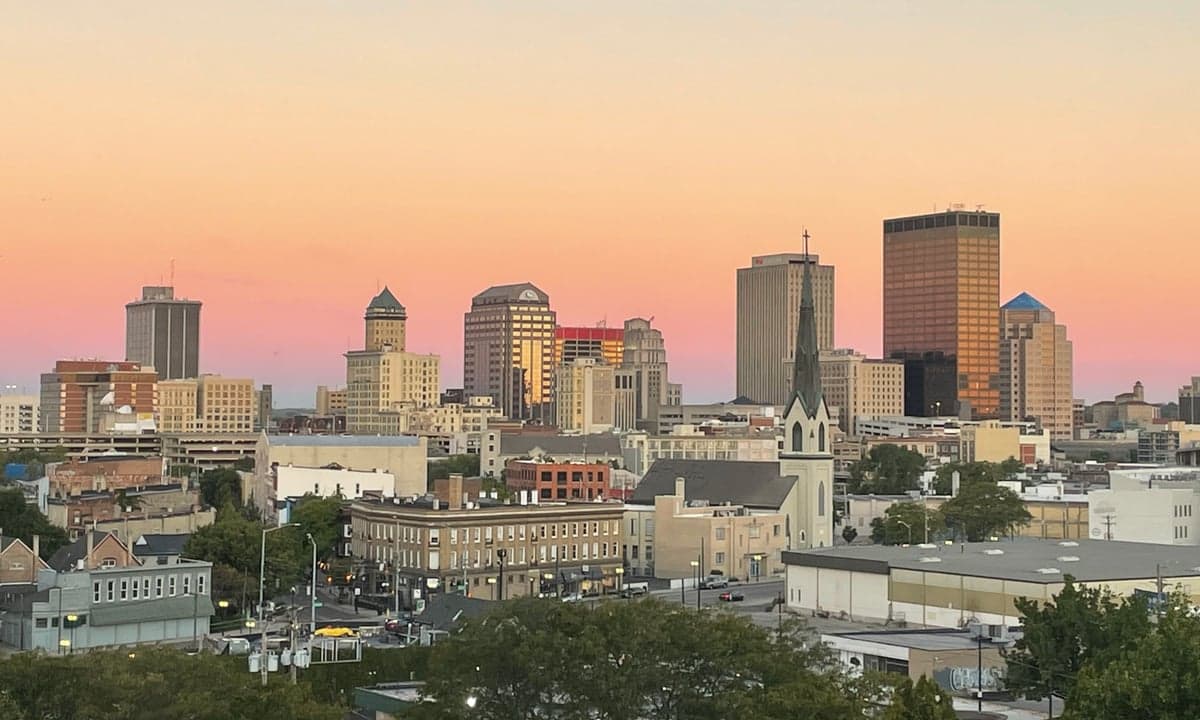
Photo: Wikipedia
Political ClimatePolitical Climate in Dayton, OH
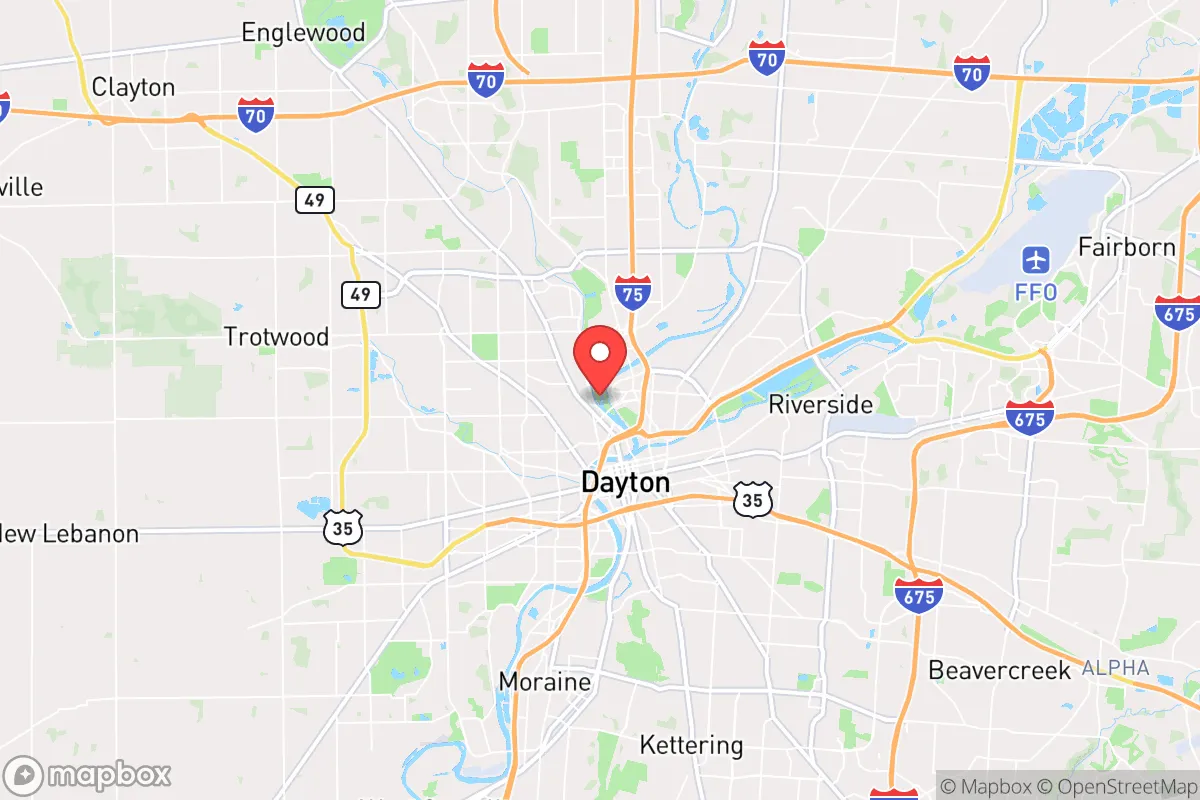
District shown is the primary district for this city’s centroid. Cities may span multiple districts.
Local Political AnalysisPolitical Analysis of Dayton, OH
Dayton, Ohio, has a political climate that’s been shifting under our feet for a while now. Historically, this was a solidly blue-collar, union-strong Democratic town, but those days are fading fast. The city itself still votes reliably Democratic in local elections, but the surrounding Montgomery County has been trending right, and the Cook PVI of R+3 for the broader area tells you the real story: the suburbs and exurbs are pulling the region back toward common sense. You can feel it in the air—people are tired of the same old promises from the same old faces, and they’re starting to vote like it.
How it compares
If you drive twenty minutes north to places like Vandalia or Tipp City, you’ll see what I mean—those communities are solidly conservative, with folks who just want to be left alone to live their lives. Head south to Centerville or Springboro, and it’s the same story: lower taxes, fewer regulations, and a general distrust of government overreach. Compare that to the city core, where you’ve got a mayor and city commission that’s been pushing progressive pet projects—like bike lanes nobody uses and symbolic resolutions that don’t fix potholes. The contrast is stark. Even neighboring Greene County, just east of here, votes red by a much wider margin. It’s like Dayton proper is stuck in a time warp, while the rest of the region has woken up to the fact that big government isn’t the answer.
What this means for residents
For the average person living here, this political tug-of-war means you’ve got to keep your guard up. The city council has a habit of passing feel-good ordinances—like sanctuary city policies or non-binding climate pledges—that sound nice on paper but do nothing to lower your property taxes or make the streets safer. Meanwhile, the county commissioners are more grounded, focusing on keeping the budget balanced and not meddling in your personal business. If you’re a homeowner or a small business owner, you’ll notice the difference: the city nickel-and-dimes you with fees and red tape, while the surrounding townships let you breathe. The real concern is that if the progressive faction in Dayton gets its way, we’ll see more of the same—higher costs, more mandates, and less freedom to make your own choices about your property, your kids’ education, or your healthcare.
One thing that’s always set Dayton apart is its blue-collar pride and a certain no-nonsense attitude. We’re not a flashy place, and we don’t like being told how to live. The push for things like ranked-choice voting or “equity” initiatives feels out of step with that spirit. Culturally, you’ve still got strong churches, a thriving gun culture, and a deep skepticism of anyone who promises to fix everything from a government office. The long-term trend? If the city keeps leaning left while the suburbs keep leaning right, you’ll see more families and businesses voting with their feet—heading to the outskirts where the government stays out of your garage and your wallet. That’s the Dayton I know: a place that values its independence, and won’t let a few politicians in a downtown office change that.

State Political ClimatePolitical Climate in Ohio
State Political AnalysisPolitical Environment in the State
Ohio has long been the quintessential swing state, but over the past decade it has shifted decisively to the right, with Donald Trump carrying it by 8 points in both 2016 and 2020 and Republicans now holding every statewide executive office and a supermajority in the legislature. The state’s political center of gravity has moved from the old manufacturing-heavy, union-driven Democratic coalition of the 1990s toward a more culturally conservative, working-class populism that dominates everywhere except the three major metros. For a conservative relocating here, the bottom line is that Ohio is a red state with deep-blue islands — a place where your vote matters locally but the state-level policy environment is reliably friendly to traditional values.
Urban vs. rural divide
The political map of Ohio is a textbook study in geographic polarization. The three Cs — Cleveland, Columbus, and Cincinnati — are the Democratic strongholds, with Cuyahoga County (Cleveland) delivering a 66% vote share for Biden in 2020 and Franklin County (Columbus) hitting 62%. These metros are growing, but their Democratic margins are being diluted by explosive growth in the exurbs and smaller cities. Delaware County, just north of Columbus, was a classic swing county in the 1990s but now votes +20 Republican, driven by families fleeing the city for lower taxes and better schools. The real engine of Ohio’s red shift is the vast rural and small-town expanse: counties like Mercer (western Ohio) and Holmes (Amish country) routinely vote 75-80% Republican. The Appalachian southeast, once a Democratic stronghold under the old coal-and-union economy, has flipped hard — Belmont County went from voting for Obama in 2008 to giving Trump 68% in 2020. The only place where Democrats are still competitive outside the big cities is Lucas County (Toledo), which remains a narrow blue holdout due to union density and a large African American population.
Policy environment
Ohio’s policy environment is broadly conservative, with a few notable exceptions that frustrate the base. The state has a flat income tax of 3.5% (down from 4.8% in 2019) and no tax on Social Security benefits, making it attractive for retirees. Property taxes are moderate but vary wildly by district — expect 1.5-2.5% of assessed value in most areas. The regulatory posture is business-friendly, with right-to-work laws not on the books but a 2023 law preempting local minimum wage and paid leave mandates. Education policy is a battleground: the state has a robust school choice program (EdChoice vouchers) that now covers nearly all families, but the public school establishment fights it constantly. In 2023, the legislature passed a Parents’ Bill of Rights (HB 8) requiring schools to notify parents of any changes to a child’s health or well-being — a direct response to transgender policies in districts like Upper Arlington and Bexley. Election laws are solid: voter ID is required (photo ID only, no student IDs), drop boxes are limited to one per county, and early voting is 28 days. The 2024 election ran smoothly with no major controversies.
Trajectory & freedom
Ohio is trending more free in several key areas, but there are warning signs. On gun rights, the state passed constitutional carry (permitless carry) in 2022 and a “stand your ground” law in 2021 — both major wins. On medical freedom, the legislature overrode Governor DeWine’s veto in 2023 to ban gender-transition procedures for minors (HB 68), a strong parental-rights move. However, the 2023 ballot initiative to enshrine abortion rights in the state constitution (Issue 1) passed with 57% support, a jarring defeat for conservatives that showed the limits of legislative power when the public votes directly. The state also legalized recreational marijuana via ballot initiative in 2023, though the legislature is now trying to gut the law with higher taxes and fewer dispensaries. Property rights are generally strong, but local zoning battles in suburbs like Dublin and Mason have seen fights over density and affordable housing mandates. The biggest freedom concern is the growing use of state preemption to override local ordinances — while this protects against progressive city policies (like sanctuary city laws), it also means the state can impose its will on conservative towns.
Civil unrest & political movements
Ohio has seen its share of political flashpoints. The 2020 George Floyd protests in Columbus and Cincinnati turned violent, with looting and arson in the Short North and downtown Columbus — a memory that still drives suburban flight. The 2023 East Palestine train derailment became a national story, with locals furious at both the railroad and the federal response, fueling a populist distrust of corporate-government collusion. Immigration politics are relatively quiet compared to border states, but the 2024 surge of Haitian migrants in Springfield (Clark County) caused a local crisis, with the city’s resources strained and the governor deploying the National Guard to help. Election integrity remains a live issue: the 2020 election in Ohio was clean, but the 2022 primary saw a debacle with faulty ballot printing in Cuyahoga County that disenfranchised thousands. The “Ohio Freedom Alliance” and similar groups are active, pushing for election audits and ballot security. On the left, the “Ohio Organizing Collaborative” and local Democratic Socialists of America chapters are well-funded and focused on school board races and city council seats.
Projection
Over the next 5-10 years, Ohio will likely become more Republican at the state level but more polarized internally. The in-migration pattern is key: people are moving to the red exurbs (Delaware, Union, Warren counties) and the rural south, while the urban cores of Cleveland and Cincinnati are losing population. This demographic shift will make the state’s presidential vote margin even redder — expect a 10-12 point Republican lean by 2032. However, the blue metros will become more intensely progressive, with Columbus likely to pass a local “sanctuary city” ordinance and Cincinnati pushing rent control. The biggest wildcard is the state’s ballot initiative process: if the left keeps using it to bypass the legislature (as they did with abortion and marijuana), conservatives may push to make it harder to amend the constitution. The school choice movement will continue to expand, likely leading to a full voucher system by 2030. The biggest risk for a conservative moving here is that the urban-rural divide could lead to a “two Ohio” scenario where state law and local enforcement clash constantly — expect more preemption battles over gun laws, vaccine mandates, and transgender policies.
For a conservative relocating to Ohio, the practical takeaway is this: you can live in a red suburb or small town and enjoy low taxes, strong gun rights, and good schools, but you will be a short drive from blue cities that are increasingly hostile to your values. The state government is on your side, but the cities are not — choose your county carefully. If you want the full red experience, look at Delaware, Warren, or Geauga counties. If you need to be near a city for work, Mason (Cincinnati exurb) or Powell (Columbus exurb) offer a buffer. Ohio is a solid bet for a conservative family, but it’s not Texas — the blue islands are real and they fight back.
* Values derived from national, state, county, city and local statistics and may differ in a specific area. Last updated: 2026-04-21T18:42:13.000Z
Narrative content on this page is AI-generated and may contain mistakes. Verify any details that matter before acting on them.
ReloMaps may earn a commission from affiliate links at no extra cost to you.

