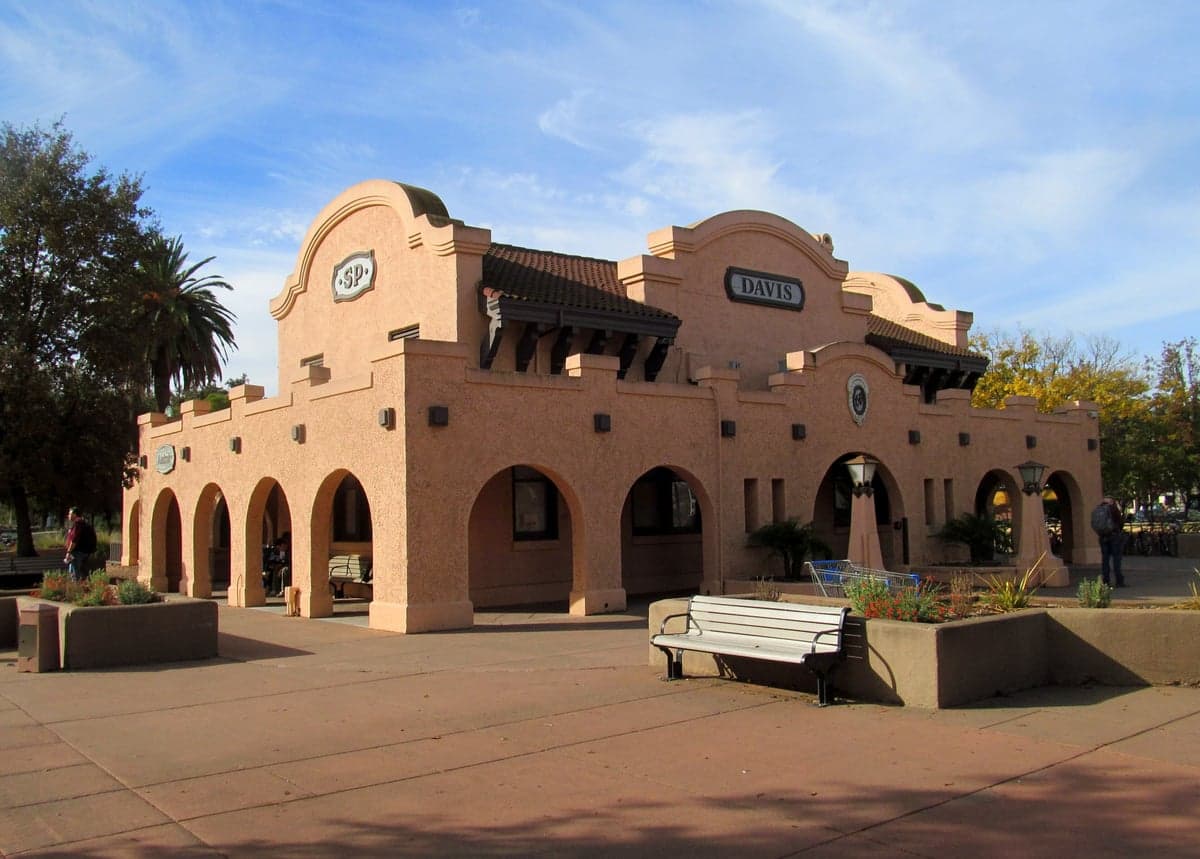
Photo: Wikipedia
Quality of Life in Davis, CA
A high quality of life with strong walkability, manageable living costs, healthy neighborhood signals, and solid amenity access.
What does Quality of Life tell us?
Quality of Life blends cost of living, nearby amenities, socioeconomic signals, and neighborhood character. City-level scores represent the whole municipality; individual neighborhoods can differ.
What does this tell us?
Quality of Life blends cost of living, nearby amenities, socioeconomic signals, and neighborhood character. City-level scores represent the whole municipality; individual neighborhoods can differ.
Cost of Living
123% above national average
The Real Cost of Living in Davis, CA for 2026
| Tier | Individual | Family (4) |
|---|---|---|
| Survival | $33k | $61k |
| Comfortable | $127k | $186k |
| Luxury | $158k+ | $245k+ |
| Elite (Top 5%) | $218k+ | $339k+ |
47%
The Area Signal
A metric tracking the socioeconomic signals of the area.
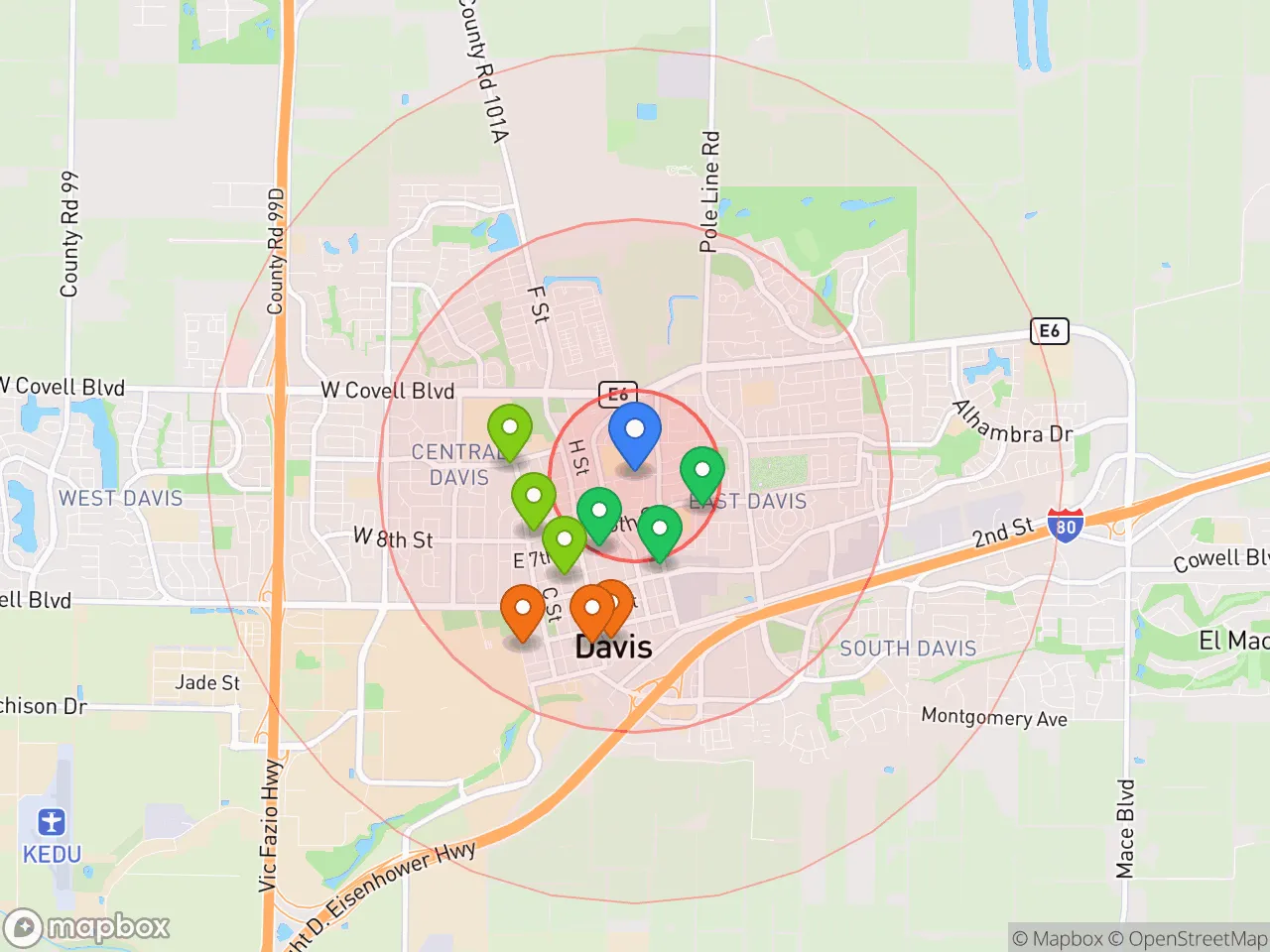
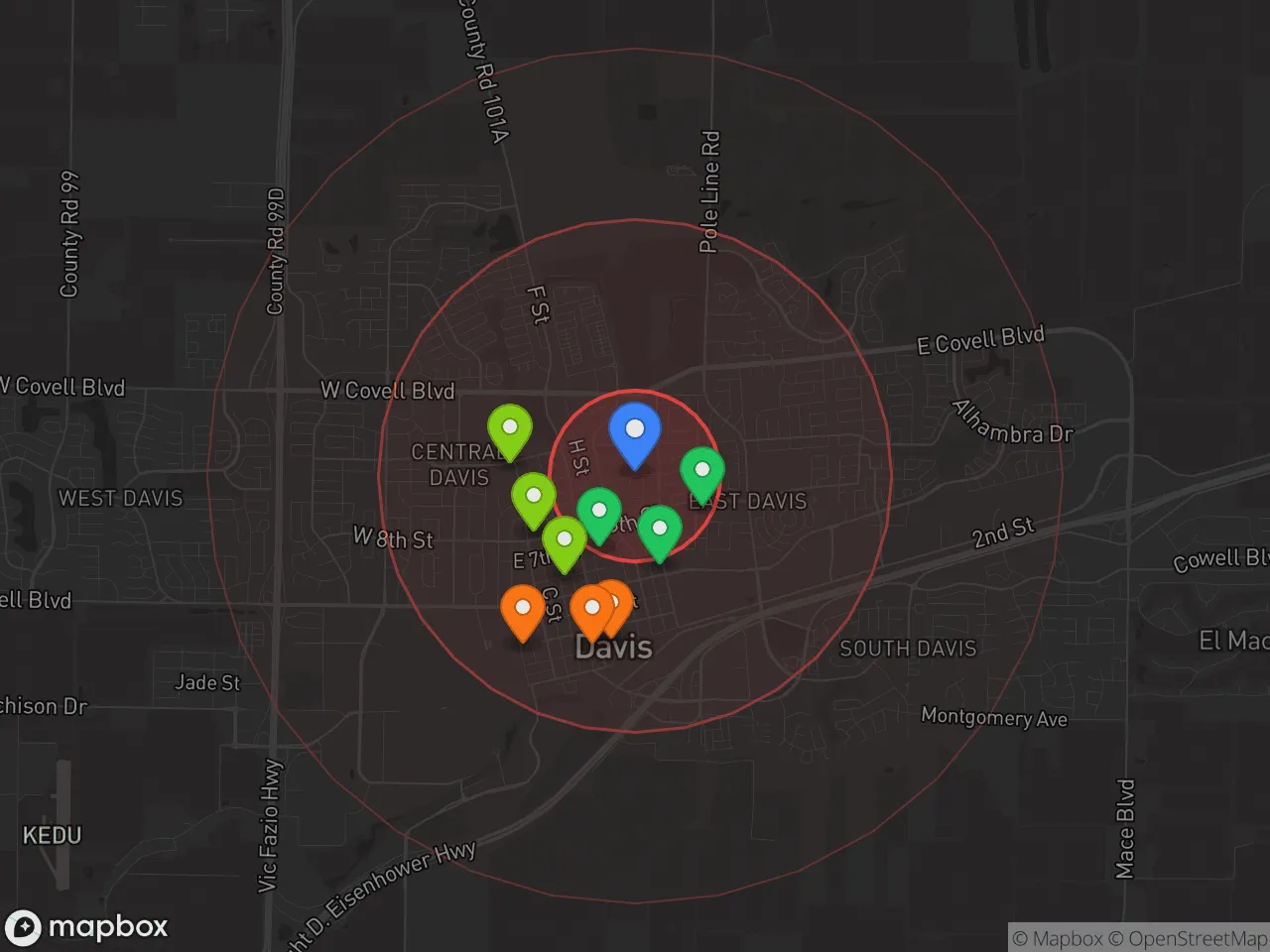
Hobbies
Explore the areaGroceries
0 within 10 miles
Gas
0 within 10 miles
Hospital
0 within 20 miles
Airport
SAN — Oakland San Francisco Bay
Post Office
Critical Amenities
Quality-of-Life Analysis
Davis, California, is a highly educated, affluent college town where the cost of living index of 223 (more than double the U.S. average) reflects its desirability and limited housing supply. The city's character is shaped by a dense population of University of California, Davis faculty, staff, and students, alongside professionals commuting to Sacramento and the Bay Area. With a median home value of $829,000 and a median rent of $2,043, Davis commands a significant premium over nearby Woodland (median home value ~$550,000) and Sacramento (~$480,000), but remains less expensive than Bay Area suburbs like Berkeley or Palo Alto.
Cost of living, housing affordability, and how Davis compares to nearby cities
The cost of living in Davis is 123% above the national average, driven almost entirely by housing. The median home value of $829,000 is roughly 50% higher than in neighboring Woodland and 73% higher than in Sacramento, yet it is about 30% lower than in the Bay Area city of Walnut Creek. Renters face a median monthly rent of $2,043, which is $300–$400 more than comparable units in Woodland but still below the $2,500+ average in Berkeley. The average commute time of 23.3 minutes is notably short for the region, as many residents work locally at the university or in downtown Davis, avoiding the longer drives typical of Sacramento suburbs. However, for those commuting to the Bay Area, the 70–90 minute drive via I-80 significantly increases transportation costs and time.
Local amenities, schools, and what daily life feels like for families and professionals
Daily life in Davis revolves around its extensive bike network, farmers markets, and university events. The city has over 100 miles of bike lanes and paths, making it one of the most bike-friendly communities in the U.S., with over 20% of residents commuting by bicycle. The Davis Farmers Market, held twice weekly, is a central gathering spot, and the UC Davis Arboretum offers 100 acres of gardens and walking trails. The Davis Joint Unified School District is highly rated, with schools like Davis Senior High School and Emerson Junior High consistently scoring in the top 10% of California schools. The city also has a strong "slow food" culture, with numerous farm-to-table restaurants and a low crime rate—violent crime is about 60% below the national average. For families, the rhythm is defined by school events, youth sports leagues, and weekend trips to the nearby Sacramento River Delta. Professionals appreciate the short commute and access to university resources, though the lack of major corporate employers outside of UC Davis limits career mobility.
Davis is best suited for academics, university-affiliated professionals, and families who prioritize education, outdoor recreation, and a tight-knit community over urban nightlife or low housing costs. The high cost of entry means that renters and first-time buyers often need dual incomes or significant savings, while the bike-centric lifestyle and limited retail options may not appeal to those seeking a car-dependent suburban experience. For those who value a walkable, intellectually vibrant environment with strong schools and a low-stress commute, Davis offers a quality of life that justifies its premium price tag.

Crime in Davis, CA
Lower crime rates than 75% of comparable U.S. locations.
Violent CrimeViolent Crime Analysis
Property CrimeProperty Crime Analysis
Crime Analysis
Davis, California, presents a mixed safety profile that demands careful scrutiny. While the city's violent crime rate of 190.5 incidents per 100,000 residents is notably lower than the national average, its property crime rate of 2,015.5 per 100,000 is significantly elevated. This disparity, combined with the progressive judicial environment typical of Yolo County, creates a situation where property-related offenses are a serious concern for residents and potential movers.
Crime in context
Compared to national benchmarks, Davis's violent crime rate sits roughly 35% below the U.S. average, making it safer in terms of physical assault, robbery, and homicide. However, the property crime rate is approximately 40% higher than the national figure, placing it in a riskier category for theft, burglary, and vehicle-related crimes. This pattern is common in college towns, but the situation is exacerbated by Yolo County's progressive district attorney and judiciary, who have implemented policies that prioritize diversion and reduced sentencing for non-violent offenders. While intended to reduce incarceration, these policies directly contribute to higher recidivism for property crimes, as offenders face minimal consequences for repeat offenses. The result is a cycle where stolen bikes, packages, and car break-ins are routine, and perpetrators are quickly back on the street.
What residents experience
Daily life in Davis involves a heightened awareness of property security. Bicycle theft is endemic, with thousands reported annually, and car burglaries and catalytic converter thefts are common even in well-lit areas. Residents frequently report that police response to property crimes is slow, and prosecution is rare due to the district attorney's focus on reducing caseloads through plea deals and pre-trial diversion programs. This creates a sense of impunity among offenders. For families, this means investing in high-quality locks, security cameras, and comprehensive renter's or homeowner's insurance is not optional—it is a necessity. The UC Davis campus has its own police force, but off-campus neighborhoods rely on the city's police department, which is often stretched thin.
Neighborhood-level variation is notable. Areas closer to the UC Davis campus and downtown, such as the central grid and South Davis, see the highest concentration of property crimes due to transient populations and foot traffic. In contrast, the more affluent and family-oriented neighborhoods in West Davis and North Davis, particularly those with active neighborhood watch programs, report lower incident rates. However, no area is immune. The progressive legal philosophy in Yolo County means that even in safer neighborhoods, the risk of property crime is elevated compared to similarly sized cities in more conservative counties. Prospective residents should prioritize homes with off-street parking, secure garages, and strong community ties to mitigate these risks.
* Values derived from national, state, county, city and local statistics and may differ in a specific area. Last updated: 2026-11-23T15:21:31.000Z
Narrative content on this page is AI-generated and may contain mistakes. Verify any details that matter before acting on them.
ReloMaps may earn a commission from affiliate links at no extra cost to you.

