Personal Sovereignty in Daleville, VA
Viable for self-reliance. Generally workable, though some barriers may limit total independence.
What does Personal Sovereignty tell us?
Personal Sovereignty measures your capacity for self-reliance and independence with minimal government friction. Higher scores mean fewer barriers between you and the way you want to live... but it assumes you have the space you need and good neighbors.
What does this tell us?
Personal Sovereignty measures your capacity for self-reliance and independence with minimal government friction. Higher scores mean fewer barriers between you and the way you want to live... but it assumes you have the space you need and good neighbors.
State Policy
Energy independence: Importer (20% of energy produced in-state)
Personal Liberty
Homesteading

Personal Liberty Analysis
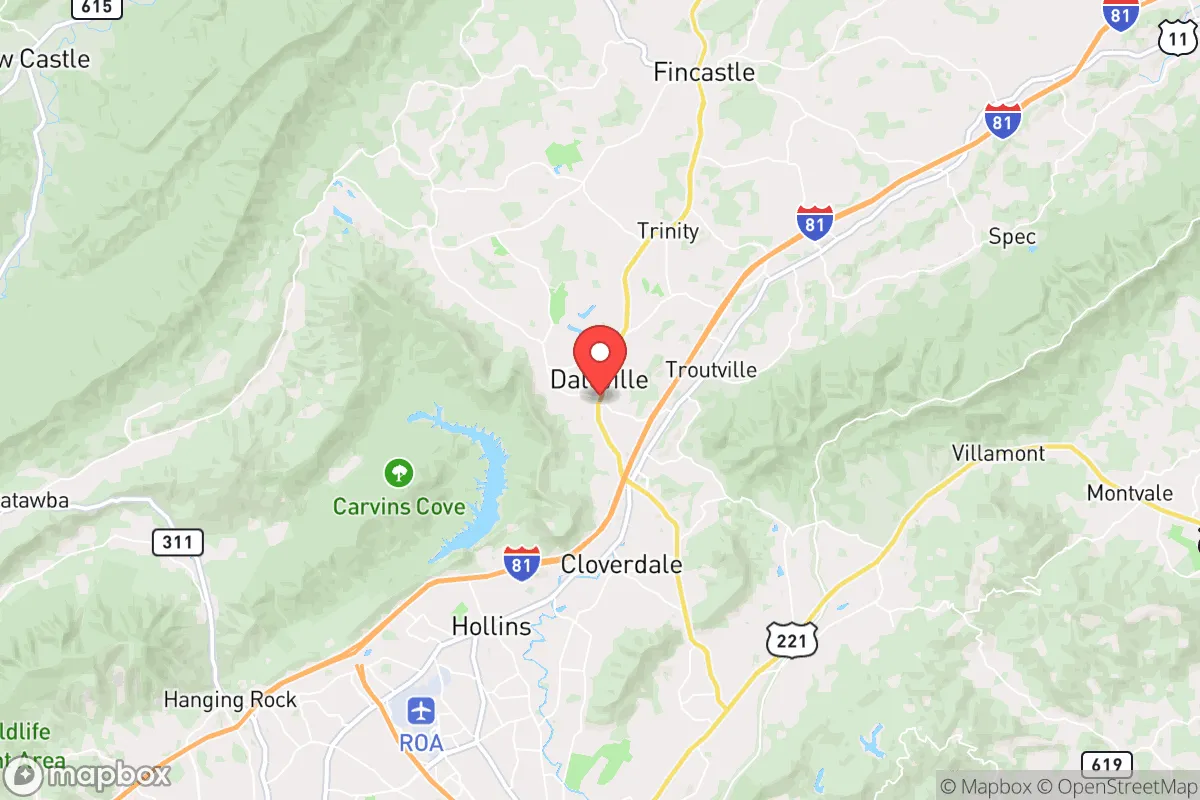
Daleville, Virginia, offers a notably strong personal sovereignty environment rooted in Virginia’s status as a Dillon Rule state with a conservative-leaning local governance structure in Botetourt County. For individuals and families prioritizing autonomy, the area provides a practical balance of low regulatory friction on property use, robust self-defense protections under state preemption, and a tax burden that remains manageable compared to Northern Virginia or the Tidewater region. While not as libertarian-leaning as some rural Western states, Daleville’s local officials generally defer to state-level permissive frameworks, meaning residents experience fewer local ordinances that restrict personal choices—especially around firearms, land use, and parental rights.
Tax burden and regulatory posture in Botetourt County
Botetourt County maintains a relatively light tax and regulatory environment compared to Virginia’s urban centers. The county’s real property tax rate is approximately $0.54 per $100 of assessed value, which is below the state median and significantly lower than rates in Roanoke City (around $1.20) or Fairfax County. There is no county-level income tax, and Virginia’s state income tax is a flat rate of 5.75% as of 2026, with no local surcharges in Botetourt. Sales tax in Daleville is 5.3% (state rate plus 1% local option), which is standard for rural Virginia counties. The regulatory posture is best described as “hands-off” for most residential activities: no countywide zoning overlay for agricultural or rural residential parcels, and building permits are required but processed quickly—typically within 10 business days for standard residential additions. Business licensing is minimal, with no gross receipts tax for home-based enterprises under $100,000 in annual revenue. The county’s comprehensive plan explicitly supports “limited government intervention in private property decisions,” a stance that aligns with the area’s conservative governance. However, Virginia’s Dillon Rule means that local governments only have powers explicitly granted by the state, which can limit local flexibility but also prevents overreach in areas like short-term rental regulation or noise ordinances—Daleville has no local noise code beyond state nuisance statutes.
Self-defense and gun law specifics for Daleville residents
Virginia is a “shall issue” state for concealed handgun permits, and Botetourt County’s circuit court processes applications with a typical turnaround of 30–45 days. Daleville residents benefit from state preemption of firearm laws, meaning local ordinances cannot ban or restrict the carrying of firearms in public spaces—a critical protection for self-defense advocates. Open carry is legal without a permit for anyone 18 or older who can legally possess a firearm, and concealed carry requires a permit (though permitless carry legislation has been debated in the General Assembly; as of 2026, a permit is still required). The state does not require registration of firearms, and there is no waiting period for purchases. Magazine capacity is unrestricted under state law. Stand-your-ground protections apply: Virginia Code § 18.2-280 allows the use of deadly force if a person reasonably believes it is necessary to prevent death or great bodily harm, with no duty to retreat in any place where the person has a legal right to be. Botetourt County has no local gun-free zones beyond those mandated by state law (e.g., courthouses, schools). The sheriff’s office is known for a pro-Second Amendment stance, and the county has been designated a “Second Amendment Sanctuary” by a 2019 board resolution. For practical self-defense, Daleville’s low violent crime rate (approximately 1.2 incidents per 1,000 residents in 2024) means defensive firearm use is rare, but the legal framework ensures residents can exercise that right without local obstruction.
Self-reliance and homesteading viability in Daleville
Daleville’s residential zoning and lot sizes strongly support self-reliance and homesteading activities. The town itself is small (population around 4,500), but most residents live in unincorporated Botetourt County on parcels ranging from 1 to 10 acres. Agricultural zoning (A-1) permits livestock, poultry, and crop cultivation without special permits for up to 10 animal units per acre. Off-grid feasibility is high: Virginia has no state-level ban on rainwater collection, and Botetourt County does not restrict private wells or septic systems on parcels of one acre or more. Solar panel installation is permitted by right under the county’s zoning ordinance, with no homeowner association (HOA) restrictions in unincorporated areas—though some newer subdivisions in Daleville proper have HOAs that may limit solar or livestock. The county’s building code does not require connection to municipal water or sewer if a private well and septic system meet health department standards. For those seeking energy independence, net metering is available through Appalachian Power, the primary utility, with a cap of 100% of the customer’s average annual consumption. The local extension office offers soil testing and livestock management workshops, reflecting a community culture that values self-sufficiency. However, off-grid living is not entirely unregulated: the Virginia Department of Health requires septic system permits and periodic inspections, and any dwelling must meet basic structural safety codes. Overall, Daleville offers one of the more permissive environments in the Roanoke Valley for homesteading, with fewer restrictions than neighboring Roanoke County or the city of Roanoke.
Personal liberties: parental rights, medical autonomy, speech, and property
Personal liberties in Daleville are shaped by Virginia’s state-level policies and Botetourt County’s conservative governance. Parental rights are strong: Virginia law requires parental consent for medical treatment of minors (with exceptions for emergencies and certain reproductive health services), and the state’s “Parents’ Bill of Rights” (enacted 2023) gives parents the right to review educational materials and opt their children out of specific instruction. Botetourt County Public Schools, which serves Daleville, has a conservative school board that has resisted state-level mandates on curriculum content, particularly around gender identity and critical race theory. Medical autonomy is more mixed: Virginia does not have a state-level right-to-try law for terminally ill patients (though federal law applies), and vaccine mandates for healthcare workers were repealed in 2024. The state does not require a prescription for COVID-19 testing or treatment, but medical marijuana is legal only for qualifying conditions with a doctor’s certification. Speech protections are robust under the First Amendment, and Botetourt County has no local ordinances restricting political signage or public assembly beyond standard time-place-manner regulations. Property rights are well-protected: Virginia is a “property rights” state with a strong eminent domain standard requiring “public use” (not just public benefit), and Botetourt County has not used eminent domain for private development in over 20 years. The county’s land-use policies favor private property owners, with no inclusionary zoning or rent control measures. For those concerned about government overreach, Daleville’s local government is small and accessible—the Board of Supervisors meets monthly and accepts public comment on all agenda items.
In the broader context of Virginia and the Mid-Atlantic, Daleville ranks as a high-sovereignty location for individuals and families who prioritize personal freedom. It avoids the regulatory density of Northern Virginia and the tax burden of the Richmond suburbs while offering stronger self-defense protections than Maryland or New Jersey. Compared to more libertarian-leaning areas like Floyd County or parts of the Shenandoah Valley, Daleville is slightly more conventional but still provides a practical environment for self-reliance, with lower property taxes and fewer zoning hurdles than most of the Roanoke metro area. For a relocation researcher advising a conservative-leaning audience, Daleville represents a solid middle ground—not the most permissive jurisdiction in Virginia, but one where personal sovereignty is respected in daily practice rather than just on paper.

* Values derived from national, state, county, city and local statistics and may differ in a specific area. Last updated: 2026-10-06T21:24:16.000Z
Narrative content on this page is AI-generated and may contain mistakes. Verify any details that matter before acting on them.
ReloMaps may earn a commission from affiliate links at no extra cost to you.

