Demographics of Daleville, VA
Affluence Level in Daleville, VA
A middle-class area roughly in line with national averages across income, home values, education, and employment.
People of Daleville, VA
Daleville, Virginia, is a small, predominantly white community of 3,166 residents that blends a historic Appalachian foothills character with a modern, college-educated professional base. With a foreign-born population of just 0.3% and a 89.8% white demographic, the town remains one of the least ethnically diverse municipalities in Botetourt County. Its identity is shaped by a legacy of Scotch-Irish and German settlement, a mid-century suburban expansion tied to the Roanoke Valley’s growth, and a present-day population that is highly educated (39.0% hold a bachelor’s degree or higher) and largely conservative-leaning.
How the city was settled and grew
Daleville’s human history begins in the mid-18th century, when Scotch-Irish and German pioneers pushed westward from the Shenandoah Valley along the Great Wagon Road. These early settlers were drawn by fertile bottomlands along the Roanoke River and the promise of land grants in the Virginia frontier. The area that would become Daleville was originally part of a larger agricultural tract, with small clusters of farms and mills. The arrival of the Virginia and Tennessee Railroad in the 1850s spurred the first real village growth, as the line connected the region to Lynchburg and Bristol. The historic Daleville Village core, centered around what is now U.S. Route 220 and Cloverdale Road, became the commercial and social hub for these early farming families. A second wave of settlement came in the late 19th and early 20th centuries, when the timber and coal industries of the Alleghany Highlands drew laborers, many of whom settled in the Bonsack area just south of Daleville. These workers were overwhelmingly native-born white Protestants, and their descendants still form a significant portion of the town’s older families. By 1950, Daleville remained a rural crossroads of fewer than 500 residents, with its population anchored by the Daleville Presbyterian Church and a handful of general stores.
Modern era (post-1965)
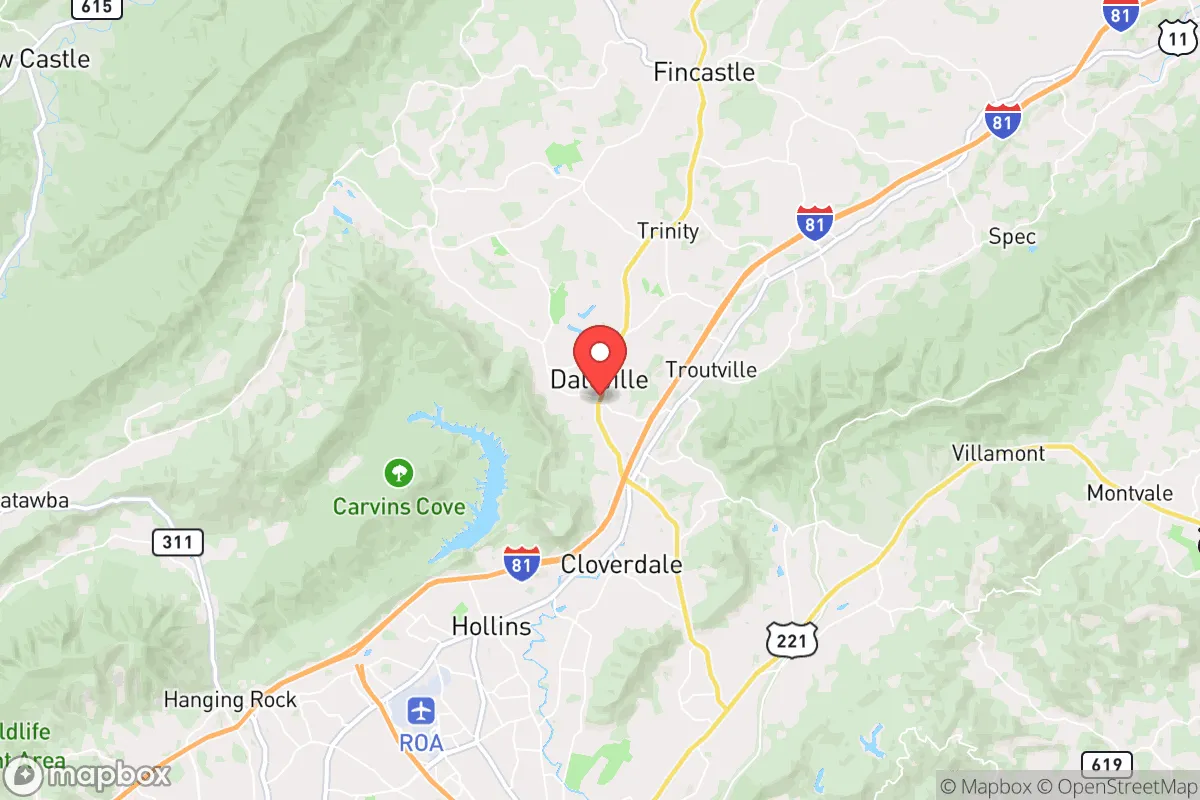
The town’s modern demographic character was forged after 1965, when the construction of Interstate 81 and the expansion of the Roanoke-Blacksburg Regional Airport made Daleville a viable bedroom community for professionals commuting to Roanoke (15 miles south) and Virginia Tech (30 miles north). The 1970s and 1980s saw the development of the Greenfield subdivision, a planned community of single-family homes on large lots that attracted middle- and upper-middle-class families, many of them white-collar workers at Carilion Roanoke Memorial Hospital and Norfolk Southern’s Roanoke headquarters. This wave was almost entirely white and native-born, drawn by low taxes, good schools, and a rural-suburban lifestyle. The 1990s and 2000s brought a smaller but notable influx of retirees from the Northeast and Midwest, who settled in the Daleville Town Center area, a newer mixed-use development with condominiums and townhomes. The town’s racial composition has remained remarkably stable: the 2020 Census recorded 89.8% white, 1.6% Black, 0.8% East/Southeast Asian, 0.7% Indian (subcontinent), and 0.6% Hispanic. The 0.3% foreign-born figure is among the lowest in Virginia, reflecting a community that has seen virtually no international immigration since 1965. The Cloverdale neighborhood, straddling the Daleville-Cloverdale line, has absorbed most of the small Black and Hispanic populations, while the Bonsack area remains the most economically diverse pocket, with a mix of older working-class homes and newer apartment complexes.
The future
Daleville’s population is projected to grow modestly, perhaps reaching 3,500–3,800 by 2040, driven by continued spillover from Roanoke and the expansion of remote work. The town’s demographic trajectory points toward slightly increased diversity, but from a very low base. The small East/Southeast Asian and Indian communities (combined 1.5%) are likely to grow as Virginia Tech and Carilion recruit more specialized professionals, and these new residents are concentrating in the Greenfield and newer Daleville Town Center developments. The Hispanic and Black shares may inch upward as service-sector workers seek affordable housing in the Bonsack area, but Daleville’s high home prices (median above $350,000) and lack of rental stock will limit rapid change. The town’s cultural identity is evolving from a purely rural-Southern character to a more suburban, amenity-oriented one, with new coffee shops, a brewery, and a farmers’ market in the Town Center. However, the conservative political lean and low foreign-born rate suggest that Daleville will remain a predominantly white, native-born community for the foreseeable future.
For someone moving in now, Daleville offers a stable, safe, and highly educated small-town environment with strong schools and easy access to Roanoke’s jobs and amenities. The trade-off is a lack of ethnic diversity and a social fabric that remains deeply rooted in its Scotch-Irish and German heritage. New residents, particularly those from outside the region, will find a welcoming but insular community where integration happens gradually, often through church, school, or civic groups.

* Values derived from national, state, county, city and local statistics and may differ in a specific area. Last updated: 2026-10-06T21:24:16.000Z
Narrative content on this page is AI-generated and may contain mistakes. Verify any details that matter before acting on them.
ReloMaps may earn a commission from affiliate links at no extra cost to you.

