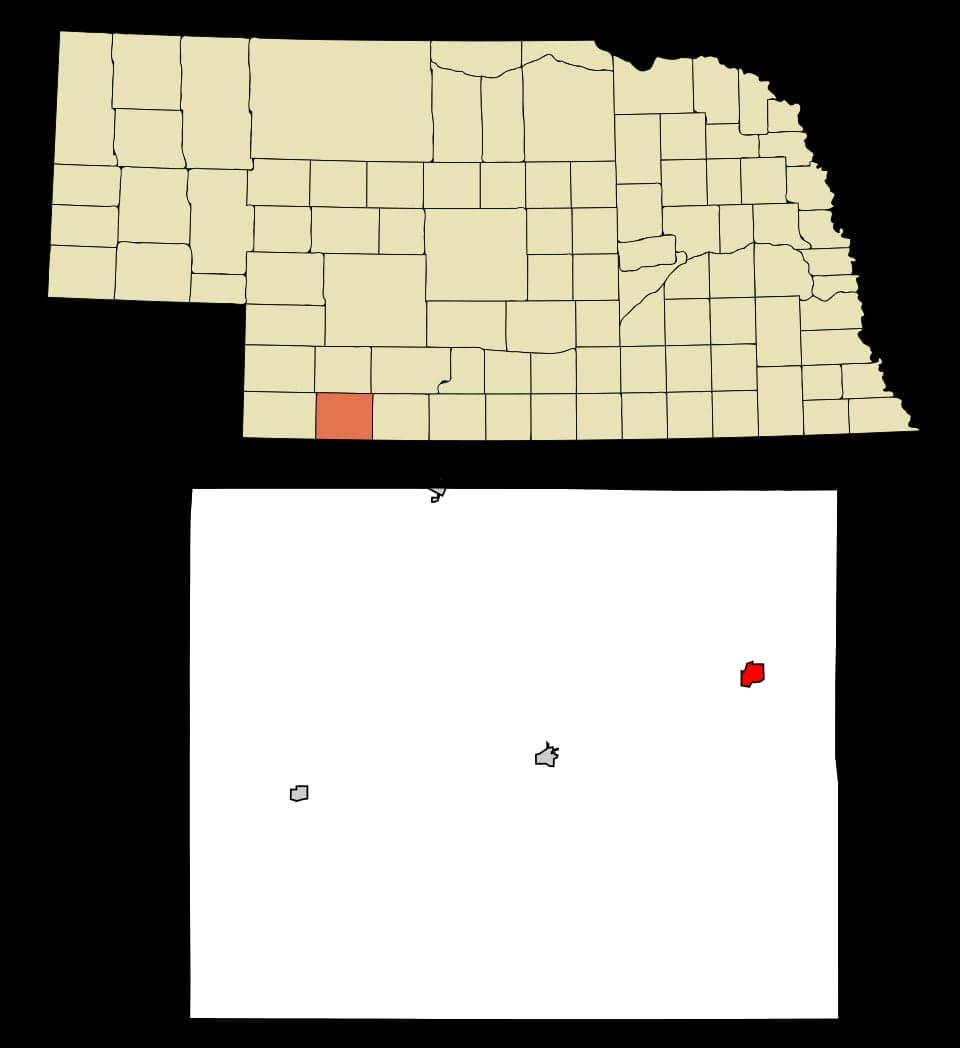
Photo: Wikipedia
Political ClimatePolitical Climate in Culbertson, NE
District shown is the primary district for this city’s centroid. Cities may span multiple districts.
Local Political AnalysisPolitical Analysis of Culbertson, NE
Culbertson, Nebraska, is about as reliably Republican as a small town gets, with a Cook Partisan Voting Index of R+27 that puts it deep in deep-red territory. That’s not just a number—it’s a reflection of a community where conservative values have been the baseline for generations, and where Democratic candidates rarely crack 30% of the vote in local or national elections. The political trajectory here has been stable and consistent; there’s no recent swing toward the center or left, and if anything, the area has held steady as surrounding regions have seen more fluctuation. For anyone moving to Culbertson, the political reality is straightforward: this is a place where Republican politics are the default, and that shapes everything from local governance to daily conversation.
How it compares
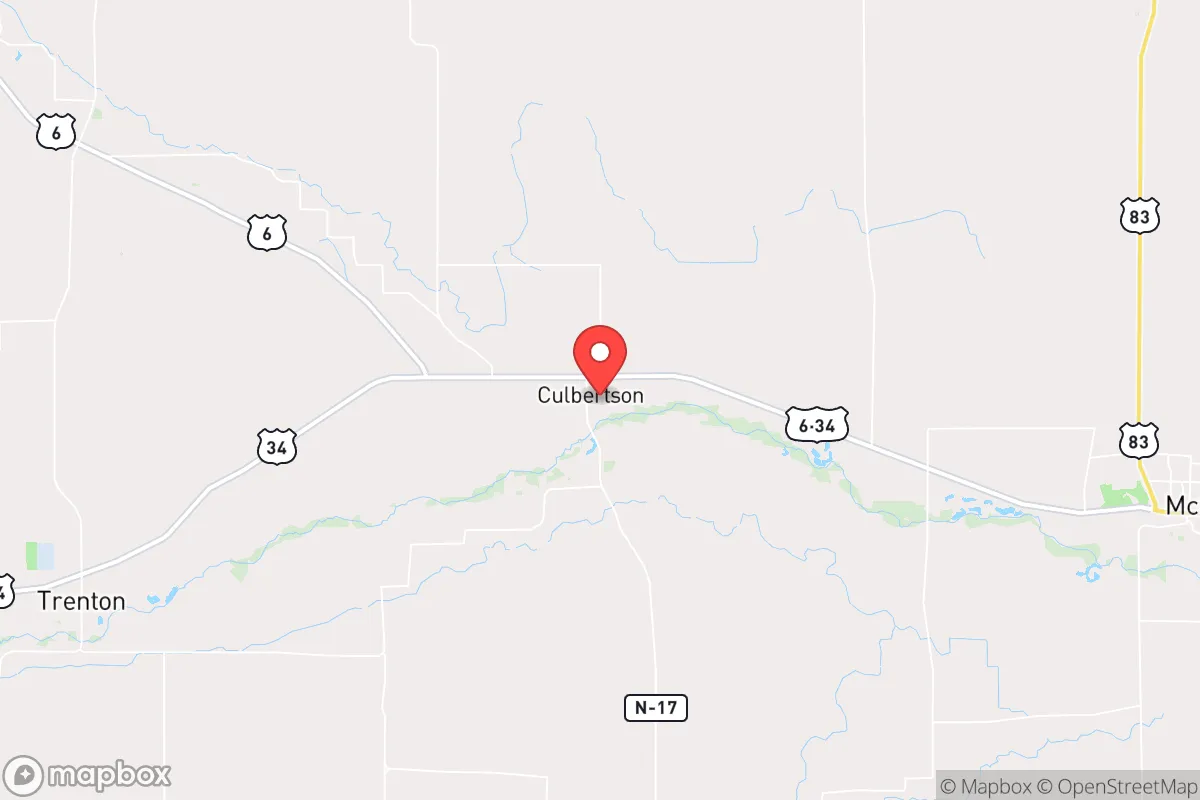
Compared to Nebraska as a whole, which carries a Cook PVI of R+10, Culbertson is significantly more conservative. The state-level PVI already indicates a solid Republican lean, but Culbertson’s R+27 is nearly three times as strong. That gap means the town is not just a reflection of state trends but an outlier even within a red state. For context, nearby towns like McCook (about 20 miles east) and Trenton (about 15 miles south) share similar political leanings, but larger cities like North Platte (roughly 70 miles north) or Kearney (about 120 miles northeast) tend to have more moderate pockets due to their size and economic diversity. In contrast, Culbertson’s small population—around 600 people—means political diversity is minimal, and the community’s rural, agricultural base reinforces a conservative outlook that’s less influenced by urban or suburban shifts. The state’s R+10 PVI reflects a broader mix of urban centers like Omaha and Lincoln, which lean more Democratic, but Culbertson’s R+27 shows it’s firmly in the state’s most conservative tier.
What this means for residents
For conservative residents, Culbertson’s political climate means their views are the norm in local government, school board decisions, and community events. There’s little need to argue about policy—most neighbors share the same priorities, like low taxes, gun rights, and limited regulation. For liberal residents, the reality is more isolating. They’ll likely find few like-minded peers, and political discussions can be tense or avoided altogether. In practice, this means progressive viewpoints are rarely voiced in public forums, and local policies—like zoning or school curriculum—tend to reflect conservative values without much debate. The lack of political friction can feel stable for some, but for others, it can feel like a closed loop. The trajectory suggests this won’t change soon; Culbertson’s demographics (aging, predominantly white, and agricultural) are not shifting toward diversity, so the political lean is likely to persist for the foreseeable future.
Culturally, Culbertson stands apart from Nebraska’s more moderate areas in a few key ways. For instance, there’s a stronger emphasis on local autonomy—residents here are skeptical of state-level mandates, whether on education or environmental regulations. You’ll see more “Don’t Tread on Me” flags than in Lincoln or Omaha, and local churches play a bigger role in community life. Policy-wise, this means things like mask mandates or vaccine requirements were never seriously considered during the pandemic, and property taxes are a perennial hot-button issue, with residents pushing for cuts even when state funding is tight. For a newcomer, the biggest takeaway is that Culbertson’s politics aren’t just about voting—they’re woven into the fabric of daily life, from the topics at the diner to the decisions made at town hall. If you’re comfortable with that, you’ll fit right in; if not, you’ll likely feel the distance.

State Political ClimatePolitical Climate in Nebraska
State Political AnalysisPolitical Environment in the State
Nebraska is a solidly Republican state with a Cook PVI of R+10, but calling it a simple red state misses the real story. The dominant coalition is a mix of rural conservatives, agricultural interests, and a growing suburban base, but the state’s politics are more nuanced than the national headlines suggest. Over the last 10-20 years, Nebraska has shifted rightward on cultural and economic issues, driven by out-migration from deep-blue counties and in-migration to red-leaning suburbs, though the Omaha metro area has become a persistent blue island that keeps the state from being a total lock for the GOP.
Urban vs. rural divide
The political map of Nebraska is a textbook case of the urban-rural split. The eastern third of the state, anchored by Omaha (Douglas County) and Lincoln (Lancaster County), is the Democratic stronghold. Omaha’s 2nd Congressional District is the only competitive seat in the state—it flipped to Joe Biden in 2020 and has elected both a Republican and a Democrat to the House in recent cycles. Lincoln, home to the University of Nebraska, leans blue but is less reliably Democratic than Omaha. Meanwhile, the rest of the state is deep red. Grand Island, Kearney, and North Platte are conservative strongholds, with rural counties like Cherry and Box Butte routinely voting 80%+ Republican. The divide isn’t just about population density—it’s cultural. Omaha’s suburbs, like Papillion and La Vista, have grown more moderate as they’ve absorbed Omaha’s outward expansion, while smaller towns like Scottsbluff in the Panhandle remain staunchly conservative. The 2020 census showed that Douglas and Lancaster counties now hold over 40% of the state’s population, meaning the urban-rural tug-of-war will only intensify.
Policy environment
Nebraska’s policy environment is a mix of low-tax conservatism and pragmatic midwestern moderation. The state has no income tax on Social Security benefits, a flat individual income tax rate that was recently cut to 5.84% (with a path to 3.99% by 2027), and a corporate income tax rate dropping to 5.5%. Property taxes are a perennial headache—among the highest in the region as a percentage of home value—but the legislature has passed annual caps and credits to ease the burden. Education policy is a flashpoint: Nebraska has a robust system of public schools, but a 2023 law created a school choice program with tax-credit scholarships, and the state has banned critical race theory and certain diversity training in public schools. On healthcare, Nebraska expanded Medicaid in 2020 via ballot initiative, but the state has not expanded abortion access—a 2022 law bans abortion after 12 weeks, with exceptions for rape, incest, and medical emergencies. Election laws are moderately restrictive: voter ID is required (implemented in 2024), and the state has no-excuse absentee voting, but same-day registration is not allowed. Nebraska is also the only state that splits its electoral votes by congressional district, a quirk that gives Omaha’s 2nd District outsized national attention.
Recent policy direction
The last three years have seen Nebraska move decisively right on several fronts. In 2023, the legislature passed a permitless carry law (LB 77), allowing any legal gun owner to carry a concealed firearm without a permit. The same bill also raised the age to purchase certain firearms to 21, a compromise that drew support from some gun rights groups. On education, the state enacted a “Parents’ Bill of Rights” (LB 1089) in 2024, requiring schools to notify parents of any changes to a student’s health or well-being, including gender identity. This has been a major rallying point for conservative families. On speech and privacy, Nebraska passed a law in 2023 banning TikTok on state-owned devices and has considered broader social media age-verification bills. Medical and bodily autonomy saw a sharp turn: the 12-week abortion ban passed in 2022, and a 2024 law (LB 574) banned gender-affirming care for minors, overriding a filibuster by the state’s unicameral, nonpartisan legislature. Property rights remain strong—Nebraska has no statewide rent control and limited eminent domain use. On voting, the 2024 voter ID law has been implemented without major controversy, though critics say it suppresses turnout in Omaha’s minority-heavy precincts. The overall direction is toward more state-level control over cultural issues, with a pragmatic streak on taxes and business regulation.
Civil unrest & political movements
Nebraska is not a hotbed of civil unrest, but it has seen organized movements on both sides. The most visible flashpoint in recent years was the 2020 George Floyd protests in Omaha, which drew thousands and led to clashes with police, but the state avoided the widespread property damage seen in larger cities. On the right, the “Moms for Liberty” chapter in Omaha has been active in school board meetings, pushing for book bans and parental notification policies. Immigration politics are relatively muted compared to border states, but the 2024 legislative session saw a bill to allow local law enforcement to enforce federal immigration law—it failed, but the debate highlighted a growing divide between Omaha’s immigrant-friendly policies and rural counties’ calls for stricter enforcement. There is no serious secession or nullification movement in Nebraska, though some rural counties have floated “county secession” proposals to break away from Omaha’s influence in state government. Election integrity controversies have been minimal—Nebraska’s hand-counted paper ballots and strong chain-of-custody rules have kept fraud allegations rare, even after 2020. The most visible political movement is the ongoing fight over abortion and transgender rights, with both sides holding regular rallies at the state capitol in Lincoln.
Projection
Over the next 5-10 years, Nebraska’s political trajectory points toward continued polarization, but with a twist. Demographic trends show Omaha’s 2nd District growing faster than the rest of the state, driven by young professionals and immigrants, which could make it more competitive for Democrats. However, the rural exodus is accelerating—many small towns are losing population, and those who remain are getting older and more conservative. The net effect is that Nebraska will likely stay R+10 or even shift slightly redder at the state level, while Omaha’s blue island becomes more entrenched. In-migration is modest but notable: people moving from California and Colorado to Lincoln and Omaha for lower housing costs are often moderate or left-leaning, while retirees moving to smaller towns like Fremont or Columbus tend to be conservative. The biggest wildcard is the state’s unicameral legislature—it’s nonpartisan in name, but party-line votes are becoming more common. If the GOP continues to hold a supermajority, expect more laws on education, abortion, and gun rights. If Democrats flip a few seats in Omaha’s suburbs, the state could see more compromise on taxes and healthcare. A new resident moving in now should expect a state that is culturally conservative but not hostile to moderate voices, with a growing urban-rural divide that will define its politics for the next decade.
For someone relocating to Nebraska, the bottom line is this: if you’re conservative, you’ll find a state that broadly aligns with your values on taxes, guns, and education, with a legislature that’s actively pushing those priorities. If you’re liberal, you’ll find a comfortable home in Omaha or Lincoln, where you can vote your conscience and live your life without feeling isolated, but you’ll be outvoted on most statewide issues. The practical takeaway is that Nebraska rewards engagement—local school boards, city councils, and the unicameral legislature are all accessible, and your voice can matter more here than in a larger state. Just be prepared for property taxes that never seem to stop rising and winters that will test your resolve.
* Values derived from national, state, county, city and local statistics and may differ in a specific area. Last updated: 2026-09-27T15:28:38.000Z
Narrative content on this page is AI-generated and may contain mistakes. Verify any details that matter before acting on them.
ReloMaps may earn a commission from affiliate links at no extra cost to you.

