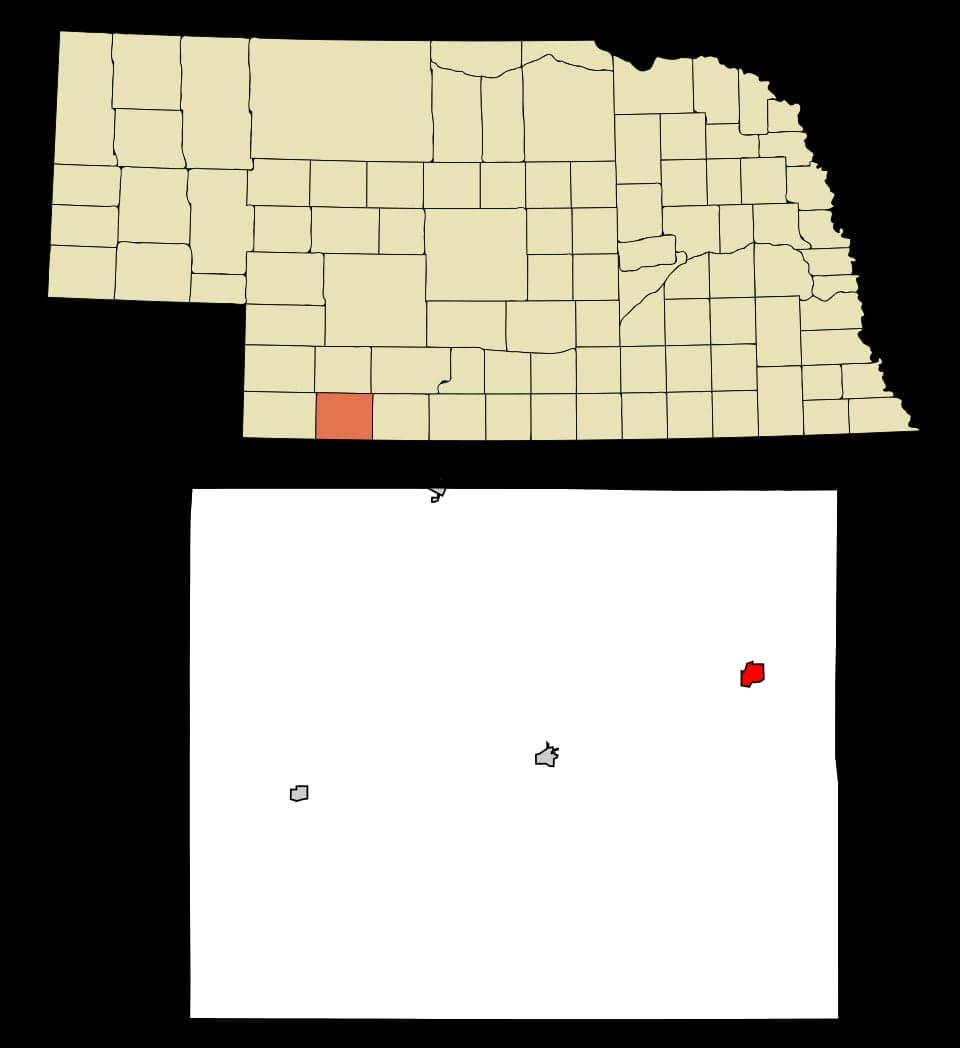
Photo: Wikipedia
Demographics of Culbertson, NE
Affluence Level in Culbertson, NE
A below-average socioeconomic profile. Incomes, home values, and educational attainment trail the U.S., with higher poverty and unemployment.
People of Culbertson, NE
The people of Culbertson, Nebraska, today form a small, tight-knit community of 635 residents, characterized by its overwhelming White (88.7%) and growing Hispanic (10.4%) population. The town’s identity is rooted in its agricultural heritage and railroad history, with a low foreign-born share (0.6%) and a college-educated rate of 19.7% reflecting a working-class, family-oriented character. Density is low, and the community is known for its quiet, self-reliant atmosphere, where generational ties to the land remain strong.
How the city was settled and grew
Culbertson was founded in the late 1880s as a railroad town along the Burlington and Missouri River Railroad, which opened the region to homesteaders and commerce. The original settlers were predominantly of German, Czech, and Scandinavian descent, drawn by the promise of fertile farmland and the railroad’s economic anchor. The first wave built homes in the Original Townsite, the historic core centered near the railroad depot, where simple wood-frame houses and a few brick commercial buildings still stand. By the early 1900s, a second wave of German-Russian immigrants arrived, seeking cheap land and religious freedom; they concentrated in the South Side district, south of the tracks, where they established small farms and a tight-knit ethnic enclave. The town’s population peaked around 500 in the 1920s, supported by wheat farming and the railroad’s maintenance shops. No significant growth occurred during the Dust Bowl or post-war boom, as younger residents left for larger cities, leaving the core neighborhoods largely unchanged.
Modern era (post-1965)
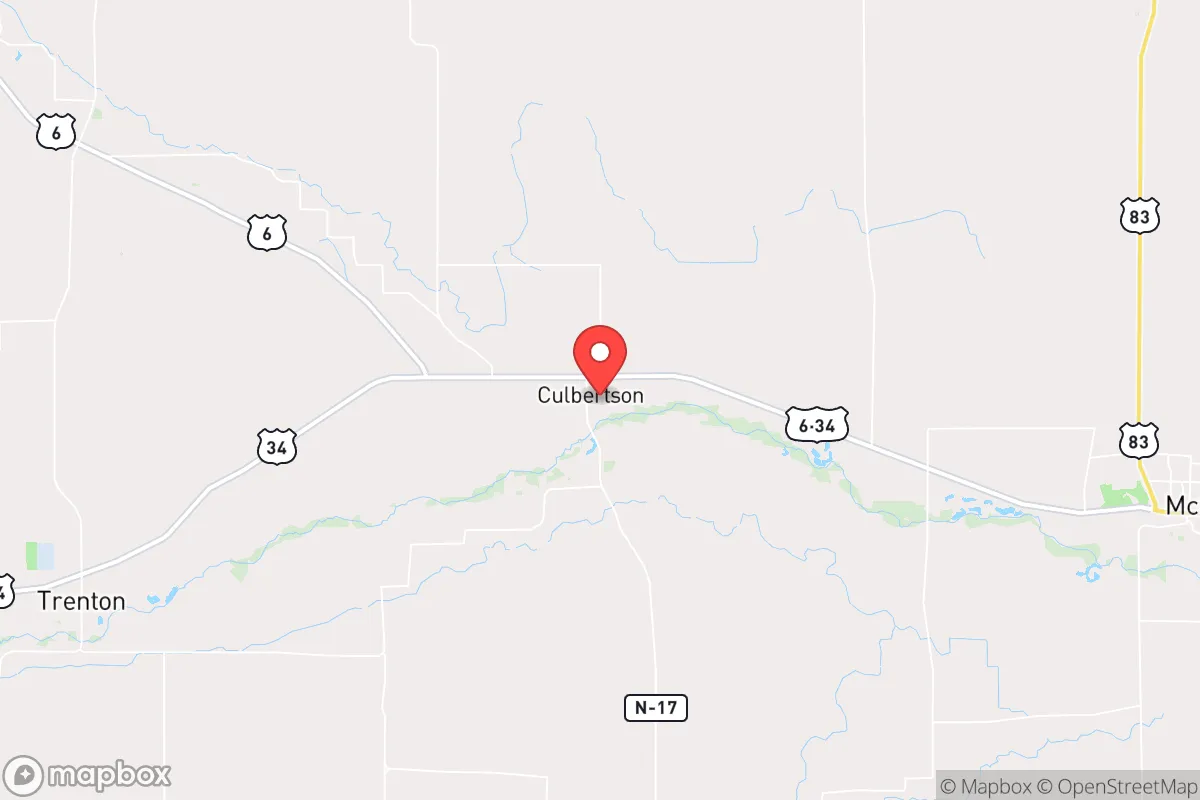
After the 1965 Hart-Cellar Act, Culbertson saw almost no new immigration, with the foreign-born share remaining below 1% to this day. The most significant demographic shift has been the gradual increase in Hispanic residents, from near zero in 1990 to 10.4% today, driven by agricultural labor demand in nearby feedlots and sugar beet fields. These families have settled primarily in the West End, a newer subdivision of modest ranch homes and mobile homes built in the 1980s and 1990s, and in rental properties along Railroad Avenue. The White population has aged and declined, with many younger adults moving to McCook (10 miles east) or Lincoln for jobs. The Hilltop Addition, a small post-2000 development of single-family homes on the town’s northern edge, has attracted a few returning families but remains predominantly White. The Black and Asian populations are negligible (0.0% and 0.6%, respectively), and no Indian-subcontinent community exists. The town’s cultural identity remains strongly rooted in its agricultural and railroad past, with the annual Culbertson Days festival and the local volunteer fire department serving as social anchors.
The future
Culbertson’s population is projected to continue a slow decline, mirroring rural Nebraska trends, as the median age rises and outmigration of young adults persists. The Hispanic share is likely to grow modestly, potentially reaching 15-18% by 2040, driven by continued agricultural labor demand and family reunification, but the overall population may shrink to below 600. New residents will likely concentrate in the West End and Hilltop Addition, as these areas offer the only available housing stock. The town’s cultural identity will become slightly more diverse, but the core character—quiet, family-focused, and agriculturally tied—will remain. No major new industries or subdivisions are planned, and the lack of rental housing and jobs outside agriculture will limit in-migration. The community is becoming older and more Hispanic, but the pace of change is slow enough that long-time residents will continue to dominate local institutions.
For someone moving in now, Culbertson offers a stable, low-cost, and safe environment where neighbors know each other and community involvement is expected. The trade-off is limited economic opportunity, minimal diversity, and a shrinking population that may reduce services over time. It is best suited for families seeking a quiet rural life, retirees with local ties, or workers in agriculture who value affordability over amenities.

* Values derived from national, state, county, city and local statistics and may differ in a specific area. Last updated: 2026-09-27T15:28:38.000Z
Narrative content on this page is AI-generated and may contain mistakes. Verify any details that matter before acting on them.
ReloMaps may earn a commission from affiliate links at no extra cost to you.

