Photo: Wikipedia
Strategic Assessment of Crystal Springs, MS
Workable tactical position. Some exposure to population density or targets, but generally defensible in a crisis.
What does the Strategic Assessment tell us?
Our Strategic Assessment grades tactical survivability of an area. Major population centers, military targets, fallout zones, natural disasters, and border exposure all drive risk — lower exposure means a more defensible position in a crisis.
This is heavily inspired by Joel Skousen's Strategic Relocation book. Highly recommended you checkout the book ($)What does this tell us?
Our Strategic Assessment grades tactical survivability of an area. Major population centers, military targets, fallout zones, natural disasters, and border exposure all drive risk — lower exposure means a more defensible position in a crisis.
This is heavily inspired by Joel Skousen's Strategic Relocation book. Highly recommended you checkout the book ($)Strategic Pillars
Key Distances
Regional Safe Places
Below is our recommended "safe zones" in Mississippi and the surrounding area based on our strategic heuristics. For most people, it's unrealistic to live in a “safe zone” full-time due to work, family or other personal reasons. They tend to be more rural. However, many of these areas are perfect for second homes and retreat properties that double as a vacation home or even a short-term rental.
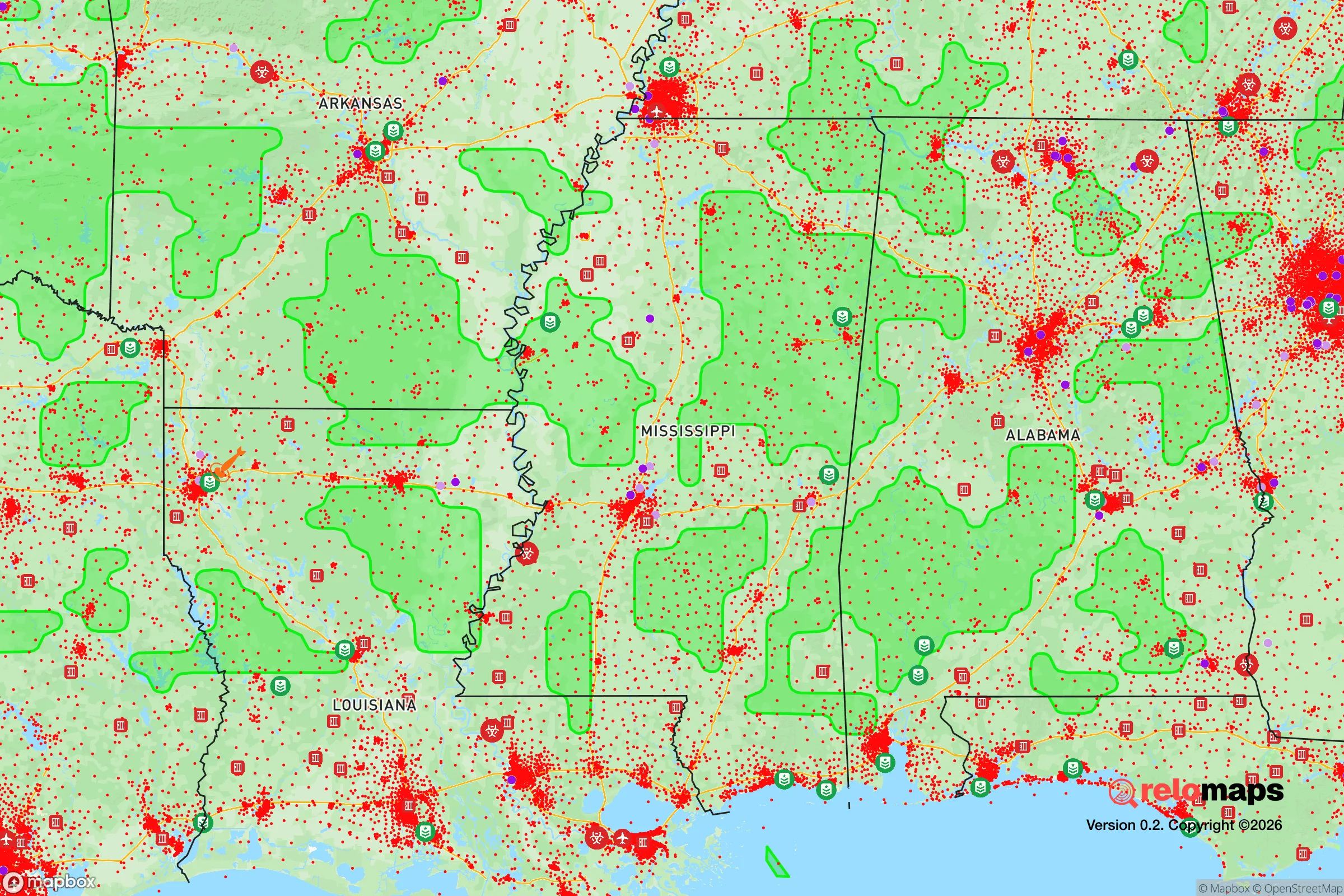
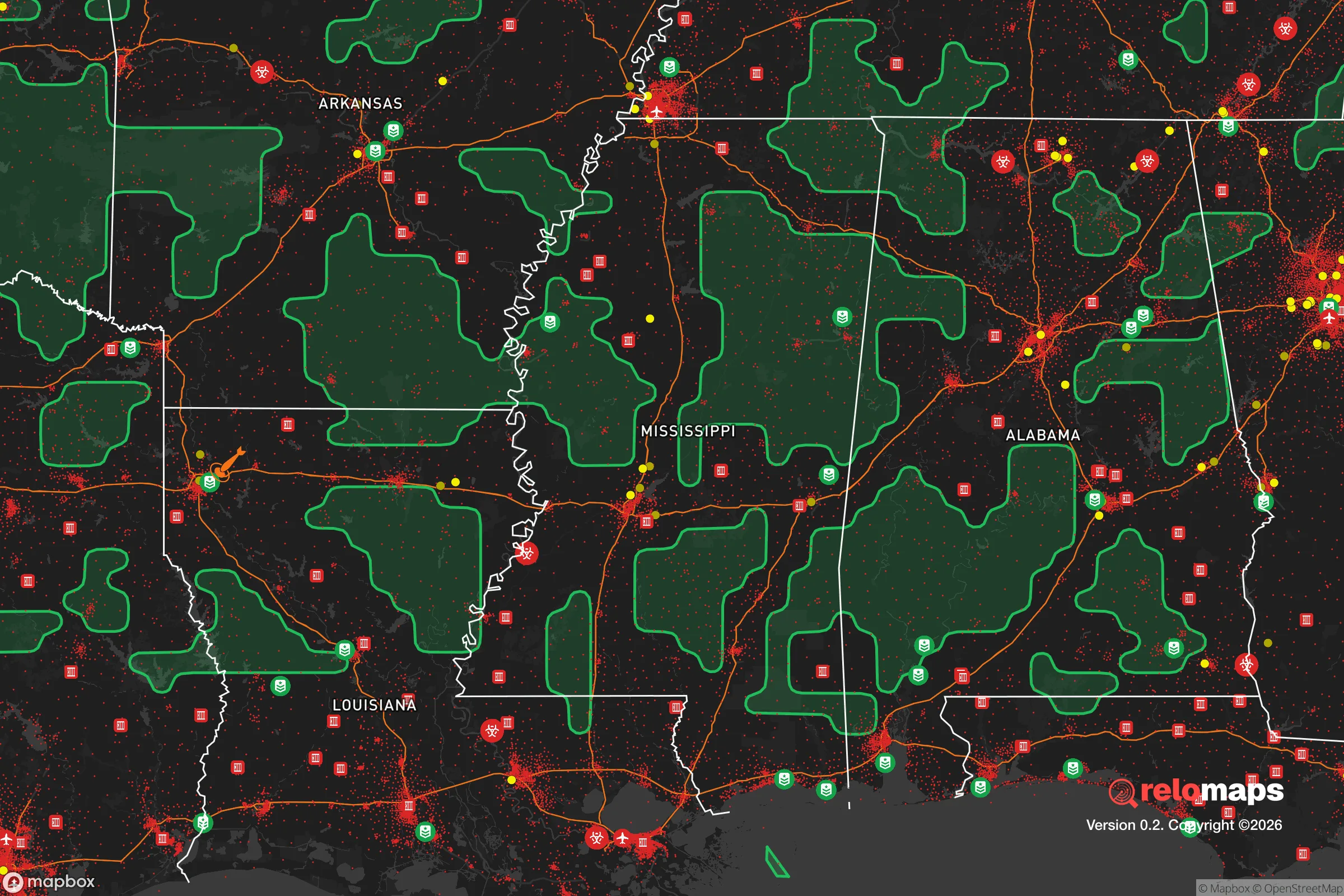


Important Note: For informational purposes only. This does not mean nothing bad ever happens in the green zones. Please use common sense. This is based on public data and modeled with AI. We tried to take a conservative approach but mistakes happen. We update this regularly as new information becomes available.
Solar Generator Recommendations
Backup power matters more here than in safer locations. We've picked three solar generators across budgets and capacity tiers — start with the budget unit if you only need a few essentials, or step up if you want to run a fridge and HVAC for days at a time.
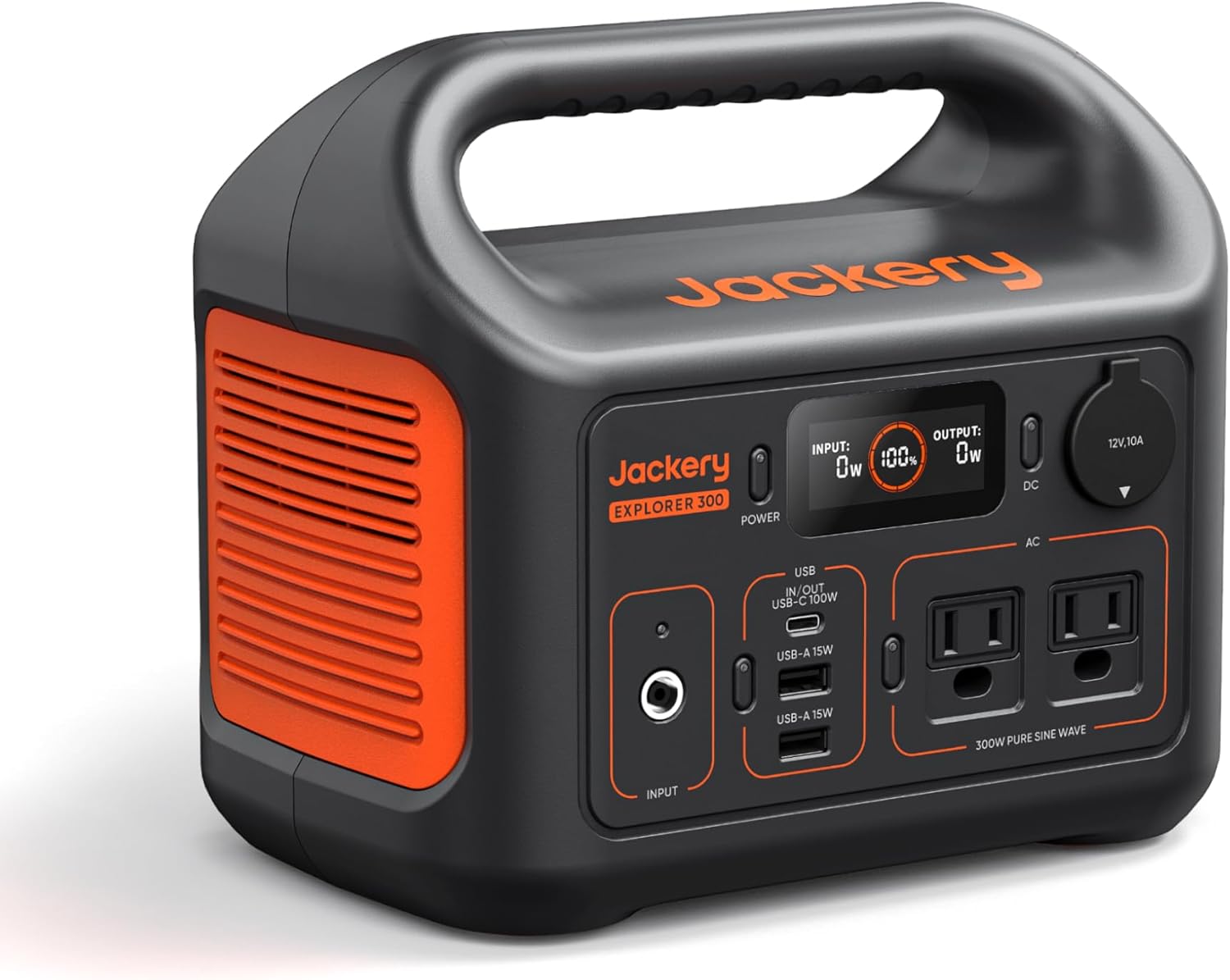
Jackery Portable Power Station Explorer 300
Budget OptionPower on the Go: Weighing only 11 lbs, it's convenient to set up and store with book-sized foldable solar panels

BLUETTI Portable Power Station AC180
Designed for both indoor and outdoor scenarios, AC180 is highly capable as it has a robost capacity and continuous output power.

EF ECOFLOW DELTA Pro Ultra Power Station
Upgraded PickEcoFlow DELTA Pro Ultra is a whole-home energy system designed to grow with your family. Integrated with the Smart Home Panel 2, it scales to meet your evolving energy needs — keeping your home powered, intelligent, and secure through every stage of life.
We earn a commission, at no additional cost to you.
Strategic Assessment Analysis
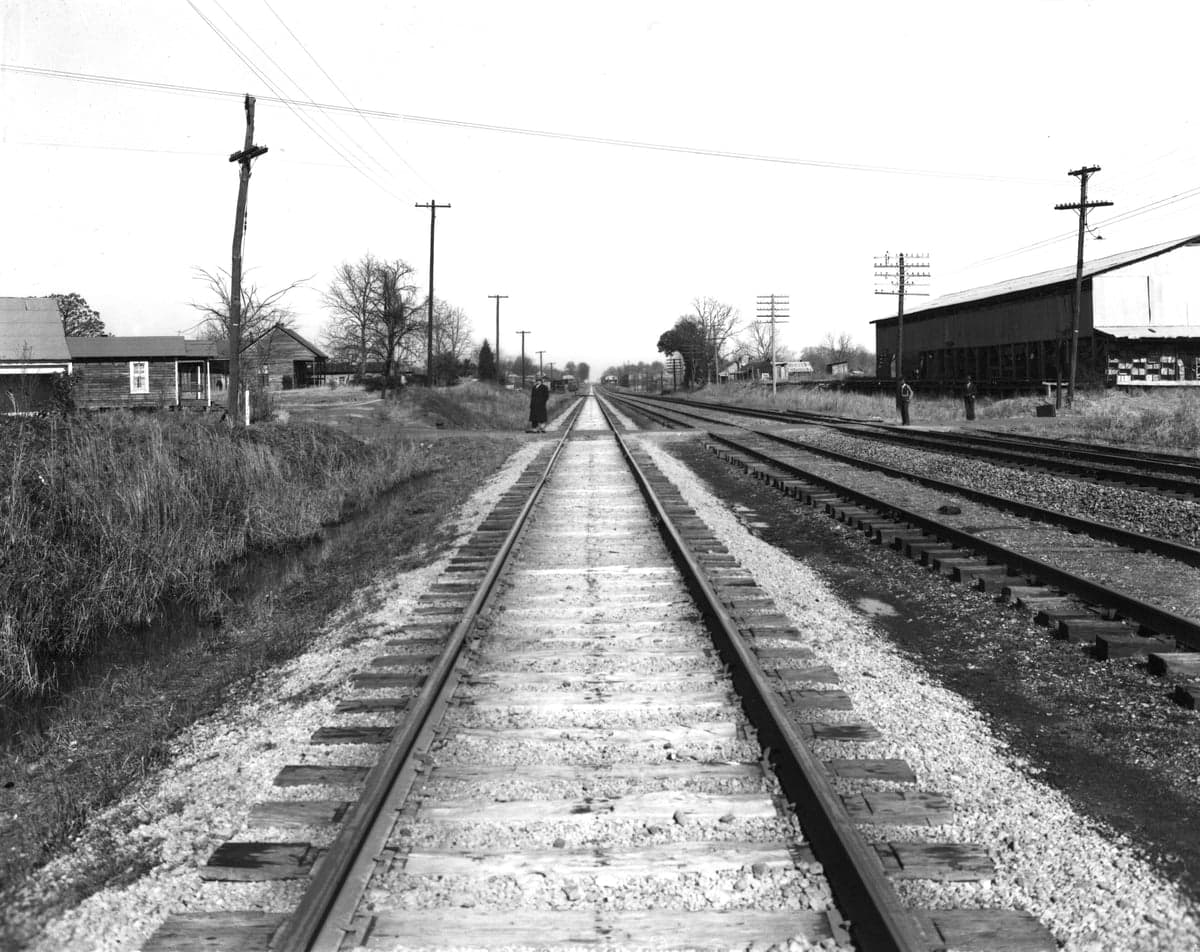
Crystal Springs, Mississippi, sits in a genuinely interesting strategic position for someone weighing relocation through a resilience lens. It’s close enough to a major metro to matter for jobs and supply chains, but far enough off the interstate spine that it doesn’t carry the same target profile as Jackson or the I-55 corridor towns. The town’s identity has long been tied to agriculture and the railroad, which means the local culture already leans toward self-reliance and practical skills — a useful baseline for disaster preparedness that you don’t always find in bedroom communities.
Geographic position and natural advantages for long-term stability
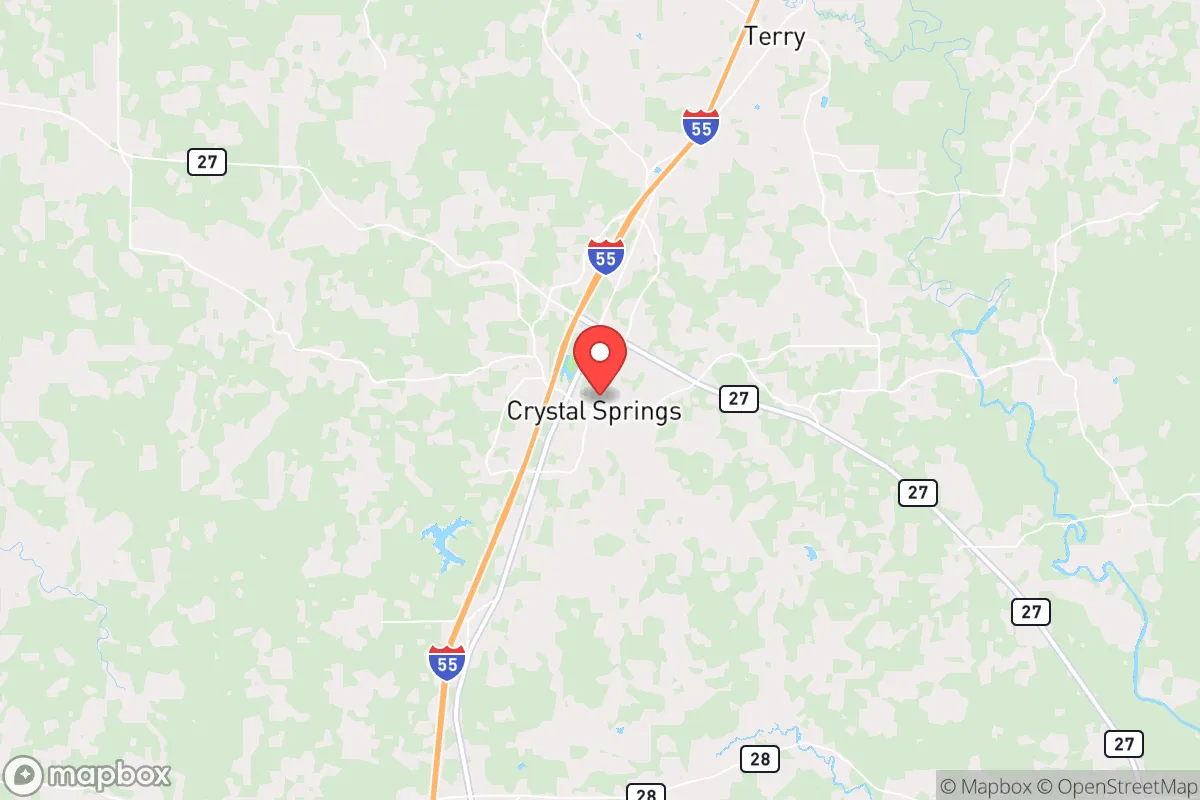
Crystal Springs is located in Copiah County, roughly 25 miles south of Jackson and about 15 miles west of I-55, with U.S. Highway 51 running directly through town. That placement gives you a meaningful buffer from the immediate blast-and-fallout zones of a major metro while still keeping you within a reasonable drive of medical centers, big-box retail, and the Jackson-Medgar Wiley Evers International Airport. The terrain is rolling hills of the loess soil region — well-drained, not flood-prone like the Delta, and generally favorable for private wells and septic systems. The area sits atop the Sparta Aquifer, one of the more productive groundwater sources in the state, which is a serious point in favor of water security for a household drilling its own well.
The climate is humid subtropical, with hot summers and mild winters, which cuts both ways. On the plus side, you’re looking at a long growing season — roughly 230 days — that supports substantial home food production, including citrus with some protection, pecans, and a wide range of vegetables. On the minus side, you’re in tornado alley’s southern extension, and the region gets its share of severe thunderstorms, hail, and the occasional hurricane remnant pushing inland. The natural hazard profile is real but manageable: flash flooding is localized, and the hilly terrain means most residential lots have natural drainage. The area’s biggest natural advantage is simply that it’s not coastal and not in a major floodplain — two of the most common reasons people get forced out of their homes in the Gulf South.
Risk exposure and proximity to fallout-relevant landmarks
For a reader thinking in terms of man-made risks, the honest assessment is that Crystal Springs is not a zero-risk location, but it’s far from a high-priority target. The most significant exposure is proximity to Jackson, which hosts state government infrastructure, the University of Mississippi Medical Center, and a major airport — all plausible secondary targets in a broader conflict scenario. At roughly 25 miles, you’re outside the immediate thermal and blast radius of most likely strike packages, but you’d be within the zone where fallout could arrive within hours depending on wind direction. The practical mitigation is simple: a basement or an interior room with thick mass, plus a few weeks of supplies, covers the realistic window.
Closer to home, the risks are more mundane. The Entergy-operated Grand Gulf Nuclear Station is about 45 miles southwest near Port Gibson, on the Mississippi River. That’s outside the 10-mile emergency planning zone, and the plant’s safety record is solid, but it’s worth knowing where it sits relative to prevailing winds. The railroad line through town carries freight, including the occasional hazardous materials shipment, and U.S. 51 sees tanker traffic. These are everyday risks that any small town on a rail line faces — not strategic vulnerabilities. The bigger picture for a resilience-minded relocator is that Crystal Springs is not a logistics hub, not a military installation, and not a critical infrastructure node. It’s a small agricultural town, and that anonymity is itself a form of security.
Practical resilience for a relocator: food, water, energy, and defensibility
On the practical side, Crystal Springs offers a strong foundation for self-sufficiency. The town’s agricultural heritage is not just historical — Copiah County still has active farming, and the local farmers’ market and roadside stands provide direct access to fresh produce. For a family serious about food security, the combination of a long growing season, available acreage at reasonable prices, and a community that understands canning and preservation makes this a workable place to build a homestead. The soil is fertile loess, and water is accessible via well at typical depths of 150–300 feet, with good yield in most of the county. Municipal water comes from groundwater sources, which is more resilient than surface-water systems that depend on treatment plants and pumps.
Energy resilience is a mixed bag. The grid in central Mississippi is served by Entergy Mississippi, and outages are common during severe weather — typically a few hours to a day or two, with longer events after major storms. Solar is viable, with roughly 215 sunny days per year, and net metering is available, though the economics favor a battery-backed off-grid or hybrid setup for true resilience. Propane is widely available for heating and cooking, and firewood is plentiful in the surrounding timber country. For defensibility, the terrain offers natural advantages: the rolling hills provide sightlines, and the rural lots outside city limits allow for setback distances that are hard to find in suburban developments. The local culture is hunting and firearms-friendly, which aligns with a preparedness mindset, and the Copiah County Sheriff’s Office has a visible presence in the area.
One underrated factor is community. Resilience is not just about gear and supplies — it’s about neighbors who know how to fix things, share tools, and help each other after a storm. Crystal Springs retains that small-town character, with active churches, a strong sense of local identity, and a population that skews toward multi-generational families who have weathered hurricanes, ice storms, and economic downturns. For a relocator, that social fabric is arguably the most valuable asset the area offers.
The overall strategic picture for Crystal Springs is that of a solid, unglamorous choice for a resilience-minded individual or family. It doesn’t have the remote isolation of the mountain West or the off-grid infrastructure of the Upper Midwest, but it offers a practical balance: low cost of living, productive land, reliable groundwater, and a location that’s close enough to resources but far enough from the highest-risk targets. The realistic threat profile — tornadoes, severe storms, and the indirect effects of a Jackson-area event — is manageable with basic preparedness. If you’re looking for a place where you can build a self-sufficient life without being a pioneer, and where your neighbors will actually help you when things go sideways, Crystal Springs deserves a serious look.

* Values derived from national, state, county, city and local statistics and may differ in a specific area. Last updated: 2026-10-28T16:17:04.000Z
Narrative content on this page is AI-generated and may contain mistakes. Verify any details that matter before acting on them.
ReloMaps may earn a commission from affiliate links at no extra cost to you.

