
Photo: Wikipedia
Demographics of Crystal Springs, MS
Affluence Level in Crystal Springs, MS
A low-income area with significant economic hardship. Household wealth and educational attainment are well below national averages.
People of Crystal Springs, MS
Crystal Springs, Mississippi, is a small city of 4,766 residents where the population is overwhelmingly Black (66.2%), with a White population of 24.9% and a Hispanic community of 6.9%. The city’s identity is rooted in its railroad and agricultural past, and today it functions as a working-class bedroom community on the Interstate 55 corridor between Jackson and Brookhaven. With a foreign-born share of just 0.9% and a college-educated rate of 23.6%, Crystal Springs remains a predominantly native-born, blue-collar town with deep generational roots.
How the city was settled and grew
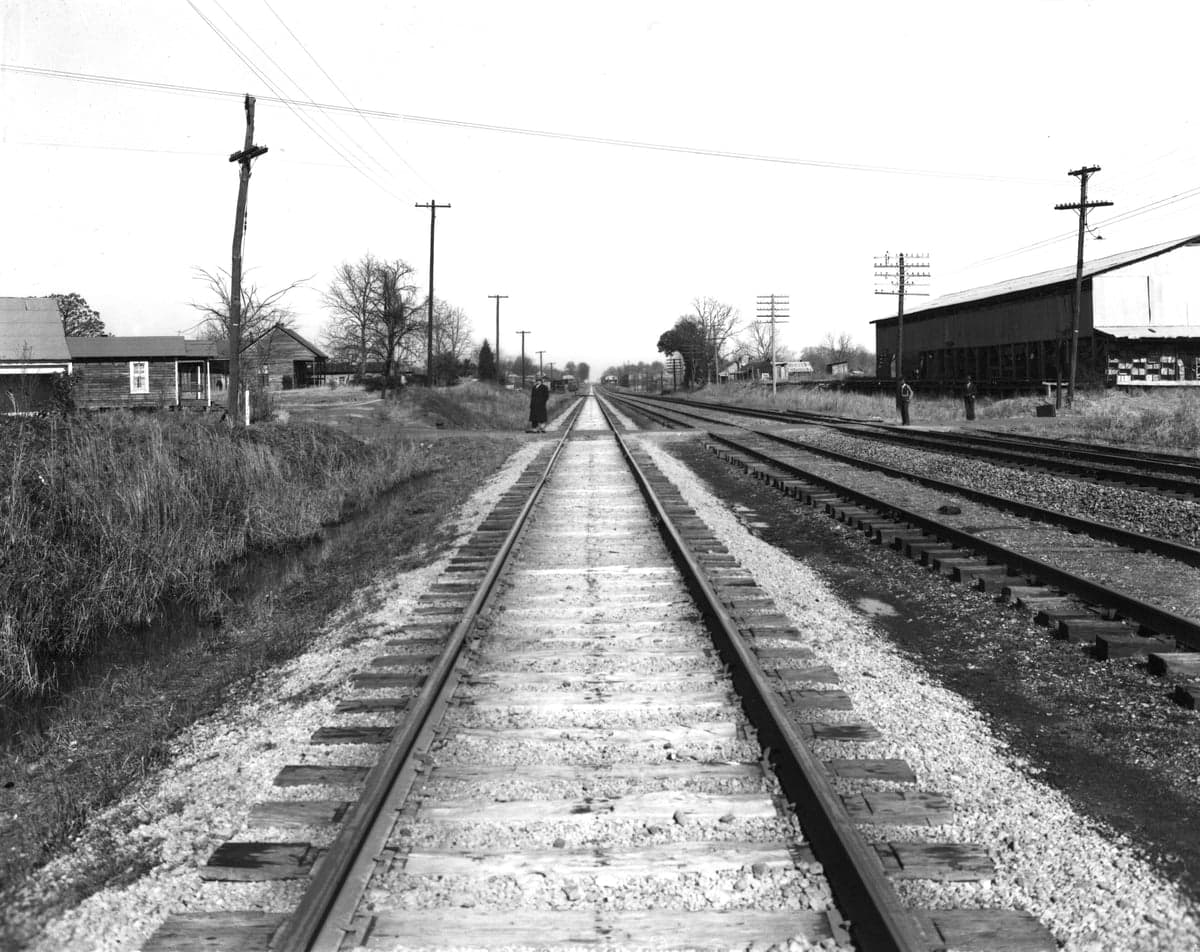
Crystal Springs was incorporated in 1858, but its real growth began after the Civil War when the New Orleans, Jackson and Great Northern Railroad (later part of the Illinois Central) established a depot here. The railroad made the town a shipping hub for the region’s timber and, later, its famous tomatoes, which earned Crystal Springs the nickname "Tomatopolis." The original White population, largely of English, Scottish, and Irish descent, settled in the blocks nearest the depot, an area still referred to as Old Town around Georgetown Street and the railroad tracks. Freedmen and their descendants formed the backbone of the agricultural labor force and built their own neighborhoods on the town’s eastern and southern edges, most notably Baptist Bottom and the area around East Railroad Avenue, where several historic Black churches still anchor the community today.
By the early 20th century, the tomato-canning industry drew seasonal Black workers from surrounding Copiah County, many of whom settled permanently in the South Side district. The White population peaked in the 1920s and 1930s, concentrated in the North Side and West Crystal Springs neighborhoods, which featured larger single-family homes on tree-lined streets. The city’s population remained stable through the 1950s, with a clear geographic divide: Whites north and west of the tracks, Blacks south and east.
Modern era (post-1965)
The post-1965 era brought significant demographic change. As the tomato industry mechanized and canneries closed, White families began leaving for larger cities like Jackson, a pattern accelerated by school desegregation in the 1970s. By 1980, Crystal Springs had shifted from a majority-White to a majority-Black city, a transition that took place over just two decades. The North Side and West Crystal Springs neighborhoods gradually turned over as White homeowners sold to Black families moving up from the older Baptist Bottom and South Side districts. Today, those formerly White enclaves are now solidly middle-class Black neighborhoods, while the historic Black districts remain the city’s most affordable housing stock.
The Hispanic population, now 6.9%, is a recent arrival, dating primarily to the 2000s. These families, largely of Mexican origin, came to work in the region’s poultry processing plants in nearby Hazlehurst and Bude, as well as in construction along the I-55 corridor. They have concentrated in rental housing on the South Side and along South Main Street, where several small Hispanic-owned grocery stores and taquerias now operate. The East/Southeast Asian population is effectively zero, and there is no measurable Indian-subcontinent community, making Crystal Springs one of the least diverse cities in Mississippi in terms of immigrant populations.
The future
Crystal Springs’ population is aging and slowly declining, down from a peak of roughly 6,000 in the 1970s. The city is not attracting significant in-migration; the 0.9% foreign-born share is among the lowest in the state, and there is little new housing construction. The Hispanic share is the only segment expected to grow, likely reaching 8-10% over the next decade as families expand and a few new arrivals come for agricultural and industrial work. The Black majority is projected to remain stable, while the White share will likely continue a slow decline as the remaining older White residents pass away or move to Jackson suburbs.
New residential development is nearly nonexistent within city limits; most growth is occurring in unincorporated Copiah County to the north, where a few subdivisions have been built for Jackson commuters. The city’s cultural identity is increasingly defined by its Black churches, the annual Tomato Festival, and a quiet, family-oriented pace of life. The school district, which is over 80% Black, remains the central institution for most families.
For someone moving in now, Crystal Springs offers a low-cost, deeply rooted Southern community with a strong Black cultural identity and a small but growing Hispanic presence. It is not a place of rapid change or new arrivals; it is a stable, modest-income town where property is inexpensive and community ties run deep. The practical trade-off is limited retail, a weak job base that pushes most workers to Jackson or Hazlehurst, and a demographic profile that will remain overwhelmingly Black and native-born for the foreseeable future.

* Values derived from national, state, county, city and local statistics and may differ in a specific area. Last updated: 2026-10-28T16:17:04.000Z
Narrative content on this page is AI-generated and may contain mistakes. Verify any details that matter before acting on them.
ReloMaps may earn a commission from affiliate links at no extra cost to you.

