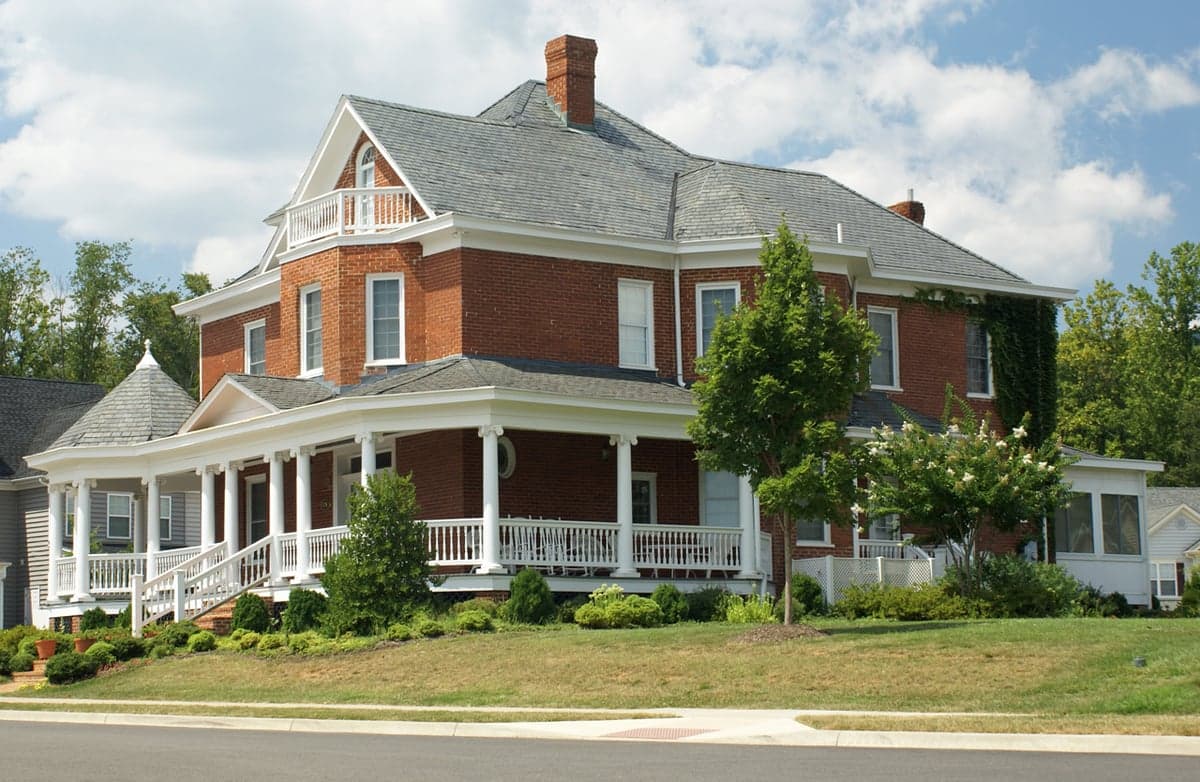
Photo: Wikipedia
Political ClimatePolitical Climate in Crozet, VA
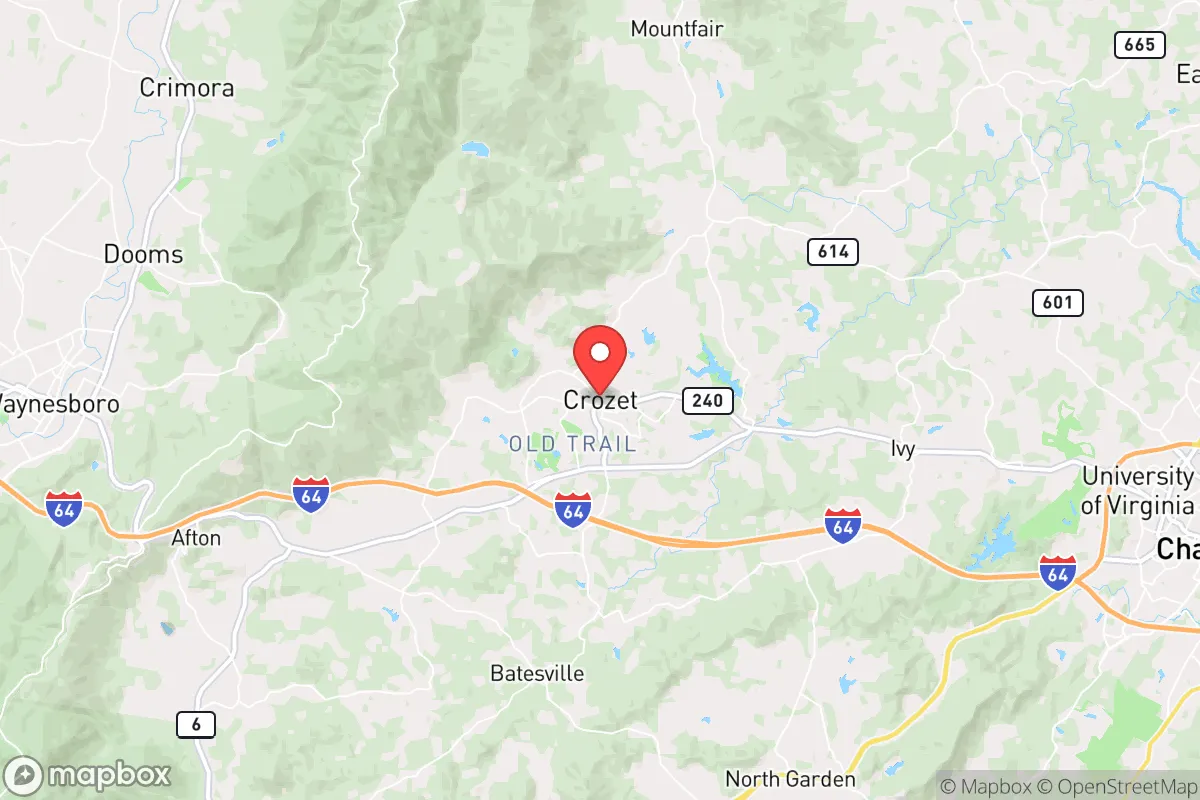
District shown is the primary district for this city’s centroid. Cities may span multiple districts.
Local Political AnalysisPolitical Analysis of Crozet, VA
Crozet sits in a politically interesting pocket of Virginia, anchored by its location in Albemarle County but shaped by the broader, more conservative dynamics of the surrounding region. While the state of Virginia as a whole carries a Cook PVI of D+4, Crozet’s immediate political environment leans right of that, with the wider 5th District and much of the rural Piedmont pulling toward an R+6 rating. That gap between the blue-leaning Charlottesville metro and the red-leaning countryside is the single most important thing to understand about politics here.
How it compares
Crozet is not Charlottesville, and it’s not rural Nelson County either—it’s the bridge between the two. Charlottesville itself is a deep-blue college town, consistently voting 80%+ Democratic in recent presidential cycles. Drive 15 minutes west on I-64, and you hit Crozet, where the vote is much more competitive. The surrounding Albemarle County Board of Supervisors races often split along this urban-rural fault line, with Crozet’s district frequently being the swing seat. Just over the mountain in Waynesboro and Staunton, you’re in solidly Republican territory, with those cities and their surrounding counties routinely voting 60-65% for GOP candidates. So Crozet’s political reality is a microcosm of the state’s broader split: a growing, exurban community with an influx of remote workers and Charlottesville commuters, layered on top of a traditional, agricultural Virginia base that votes reliably conservative.
What this means for residents
For conservative residents, Crozet is a place where your vote actually counts in a way it doesn’t in Charlottesville. Local races for the Albemarle County Board of Supervisors and the School Board are often decided by a few hundred votes, and the Crozet district is usually the one that determines the board’s majority. You’ll find a strong, organized Republican presence at the county level, and the Crozet Community Association frequently hosts debates where both parties show up. For liberal residents, the picture is more nuanced. You’re likely in the minority in your immediate neighborhood, but you’re only 20 minutes from a deep-blue city with a robust progressive infrastructure. Statewide, your vote for governor or senator is part of the D+4 coalition that has made Virginia a reliably blue state in federal races since 2008. The practical trade-off is that you’ll have to drive to Charlottesville for most Democratic campaign events or progressive community organizing, but you’ll also enjoy a local political culture that is generally more civil and less tribal than what you’d find in the city.
What this means for residents
The most visible policy battleground in Crozet is land use and growth. The area has been one of the fastest-growing in Virginia for a decade, and that growth has split the community in ways that don’t always follow party lines. Longtime conservative residents often align with environmentalists to oppose new subdivisions, while newer, often liberal transplants push for more housing and density. The county’s Comprehensive Plan, which designates Crozet as a growth area, is the single most contested document in local politics. School funding is another flashpoint: Albemarle County spends above the state average per pupil, and bond referendums for new schools in Crozet typically pass with strong support from both parties, but debates over curriculum and library materials have become more heated in recent years, mirroring national trends.
Looking ahead, the trajectory is clear: Crozet is getting bluer, but slowly. The new residents moving into developments like Old Trail and Westhall are predominantly white-collar professionals, many from Northern Virginia or out of state, and they tend to vote Democratic. However, the rural areas surrounding Crozet—places like Batesville and White Hall—are holding firm, and the district’s overall lean is likely to remain a true toss-up for the next decade. That makes Crozet one of the few genuinely competitive political environments in Virginia, where both sides have to show up, listen, and actually persuade their neighbors rather than just turning out the base.

State Political ClimatePolitical Climate in Virginia
State Political AnalysisPolitical Environment in the State
Virginia has drifted from a reliably competitive swing state into a solidly Democratic-leaning one, carrying a Cook PVI of D+4 after a decade of blue dominance in statewide races. The shift is driven almost entirely by the explosive growth of the Washington, D.C. suburbs in Northern Virginia, which now dwarf the rest of the state in population and electoral muscle. While Republicans still hold significant power in the legislature and routinely win statewide offices, the trajectory over the last 15 years has been unmistakably leftward, though the state’s political culture remains far more moderate than deep-blue states like California or New York.
Urban vs. rural divide
The political map of Virginia is a tale of three distinct regions that often feel like different states. The dominant force is Northern Virginia — specifically the counties of Fairfax, Loudoun, and Prince William — which together cast roughly a third of all ballots in the state. These suburbs have transformed from Republican-leaning territory in the 1990s to Democratic strongholds today, with Fairfax County routinely going 65-70% for Democrats. The tech economy, federal contracting, and an influx of highly educated professionals have made this the engine of the state’s blue shift.
Richmond and the surrounding metro area form the second pillar of Democratic strength, with the capital city itself being overwhelmingly liberal while its suburbs remain competitive. The third region is the vast rural expanse — Southside Virginia, the Shenandoah Valley, and the western mountain counties — which vote heavily Republican. Places like Roanoke, Lynchburg, and Blacksburg anchor a conservative crescent that runs from the North Carolina border up through the Shenandoah. The divide is stark: in 2024, rural counties like Lee and Wise voted 80%+ for Donald Trump, while Fairfax County gave Kamala Harris over 70%.
The critical battlegrounds are the exurban counties like Stafford, Spotsylvania, and Culpeper, which have been trending Democratic as Washington’s footprint expands outward. Meanwhile, Virginia Beach and the Hampton Roads area remain the state’s premier swing region, with military families and defense workers keeping the area competitive in every cycle.
Policy environment
Virginia’s policy environment is a study in contrasts. The tax structure is moderate by national standards — income tax rates range from 2% to 5.75%, and the sales tax sits at 5.3% (higher in Northern Virginia with local add-ons). Property taxes are set locally and vary widely, with rural counties often half the rate of Fairfax County. The state’s regulatory posture leans business-friendly compared to the Northeast, but has tightened under recent Democratic governors.
Education policy has become a flashpoint. Virginia was the first Southern state to adopt the California-style math framework in 2023, removing accelerated math pathways in early grades, which sparked a parent revolt in Loudoun County and Fairfax County. The state also mandates transgender-inclusive policies in public schools, though a 2024 law requires parental notification for any changes to a student’s gender identity records. Healthcare is a mixed bag — Virginia expanded Medicaid under the Affordable Care Act in 2019, but the state maintains some of the strictest certificate-of-need laws in the country, limiting hospital and clinic expansion.
Recent policy direction
The last five years have seen Virginia lurch between left and right depending on which party controls the governor’s mansion. Under Governor Glenn Youngkin (2022-2026), the state enacted a 15-week abortion ban with exceptions, ended COVID-era vaccine mandates for state employees, and signed a landmark school choice bill creating education savings accounts for low-income families. Youngkin also pushed through a 2024 law requiring all public schools to adopt a policy of notifying parents about any changes to a student’s health records, including gender identity.
On guns, Virginia remains a shall-issue state for concealed carry, and Youngkin signed a 2023 law allowing permitless carry for anyone 21 or older. However, the Democratic-controlled legislature has passed red flag laws and a 2024 measure banning assault weapons sales to anyone under 21. Election law is a patchwork — Virginia has no voter ID requirement (repealed in 2020), but does require in-person voting to be conducted with paper ballots. The state also has same-day voter registration and no-excuse absentee voting.
On property rights, Virginia is a mixed bag. The state has strong eminent domain protections following the 2013 Supreme Court case Horne v. Department of Agriculture, but localities in Northern Virginia have aggressively pursued zoning reform, with Arlington and Alexandria eliminating single-family zoning in 2023. Privacy law is weak — Virginia has no comprehensive data privacy statute, though a 2024 law created a right to opt out of facial recognition surveillance by law enforcement.
Civil unrest & political movements
Virginia has been a flashpoint for political violence and protest in recent years. The 2017 Unite the Right rally in Charlottesville remains the most infamous incident, resulting in the death of counter-protester Heather Heyer and leading to the removal of Confederate statues statewide. The 2020 George Floyd protests saw significant unrest in Richmond, with the Robert E. Lee monument becoming a makeshift memorial and protest site for months.
Immigration politics have been comparatively quiet, as Virginia is not a border state, but Fairfax County and Prince William County have declared themselves sanctuary jurisdictions, limiting cooperation with ICE. The state has seen a growing movement of rural counties passing Second Amendment sanctuary resolutions — over 100 of Virginia’s 95 counties have adopted such measures, though they carry no legal force. Election integrity has been a persistent controversy, with Republicans alleging irregularities in the 2020 and 2024 elections in Northern Virginia, though no evidence of widespread fraud has emerged.
Projection
Over the next decade, Virginia’s Democratic lean will likely deepen, but not as dramatically as some predict. The population growth in Northern Virginia shows no signs of slowing, with Loudoun County projected to add another 200,000 residents by 2035. However, the state’s rural areas are also growing, driven by remote workers fleeing high costs, and these newcomers often bring conservative politics with them. The key variable is the exurban ring — if Fredericksburg and Warrenton continue their blueward drift, Republicans will be locked out of statewide office for a generation. If they hold, Virginia remains competitive.
Demographically, the state is becoming more diverse, with the Hispanic population growing 40% between 2010 and 2020, and Asian-American populations surging in the D.C. suburbs. Both groups lean Democratic, but not overwhelmingly so — a 2024 poll showed 35% of Hispanic voters in Virginia supporting Trump. The military community in Hampton Roads remains a wildcard, with defense spending cuts potentially shifting that region’s politics.
For a new resident, the practical reality is that Virginia offers a genuine choice. If you live in Richmond or Northern Virginia, you’ll experience a blue-state policy environment with high costs and progressive governance. If you settle in Roanoke, Lynchburg, or the Shenandoah Valley, you’ll find a red-state lifestyle with lower taxes, fewer regulations, and a conservative social culture. The state’s moderate tax burden and strong job market make it a viable option for both political tribes, but your day-to-day experience will depend almost entirely on which of Virginia’s three distinct political worlds you choose to call home.
* Values derived from national, state, county, city and local statistics and may differ in a specific area. Last updated: 2026-10-12T03:40:49.000Z
Narrative content on this page is AI-generated and may contain mistakes. Verify any details that matter before acting on them.
ReloMaps may earn a commission from affiliate links at no extra cost to you.

