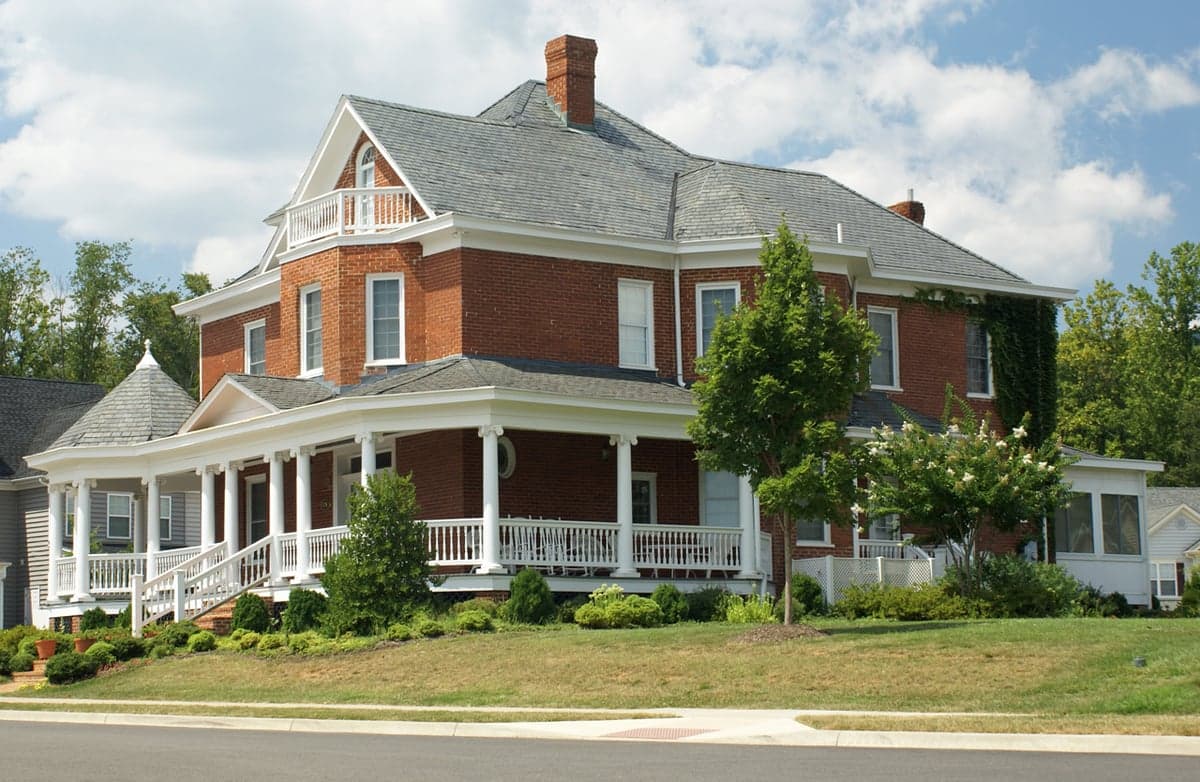
Photo: Wikipedia
Demographics of Crozet, VA
Affluence Level in Crozet, VA
An upper-middle-class area. Household wealth, education levels, and homeownership run ahead of national benchmarks.
People of Crozet, VA
Crozet, Virginia, is a rapidly growing community of 9,211 residents in western Albemarle County, anchored by a distinctive blend of historic mountain-town character and modern suburban expansion. The population is predominantly white (88.2%) with a highly educated workforce—75.6% hold a college degree—reflecting the area's deep ties to the University of Virginia and the technology sector in nearby Charlottesville. Despite its growth, Crozet retains a small-town identity centered around its historic downtown, with a foreign-born population of just 2.9% that keeps the community culturally homogeneous compared to national averages.
How the city was settled and grew
Crozet's human history begins not with a grand founding charter but with the arrival of the Chesapeake and Ohio Railway in the 1870s, which transformed a scattered farming settlement into a railroad town named after Confederate engineer Claudius Crozet. The original population was overwhelmingly of English, Scottish, and German descent, drawn by the promise of fertile Shenandoah Valley foothills and the commercial lifeline of the railroad. These early families built the first homes in what is now the Historic Downtown Crozet district, along the railroad tracks near the current Crozet Park, establishing a pattern of small-frame houses and brick storefronts that still defines the town's core. Through the early 20th century, the population grew slowly, sustained by apple orchards and the railroad's freight traffic, with the Park Street and Railroad Avenue neighborhoods housing the Irish and Italian laborers who arrived to work on the rail lines and in the fruit-packing plants. By 1950, Crozet remained a small, insular community of roughly 1,500 residents, almost entirely white and native-born, with its identity tied to the land and the railway rather than any wave of immigration.
Modern era (post-1965)
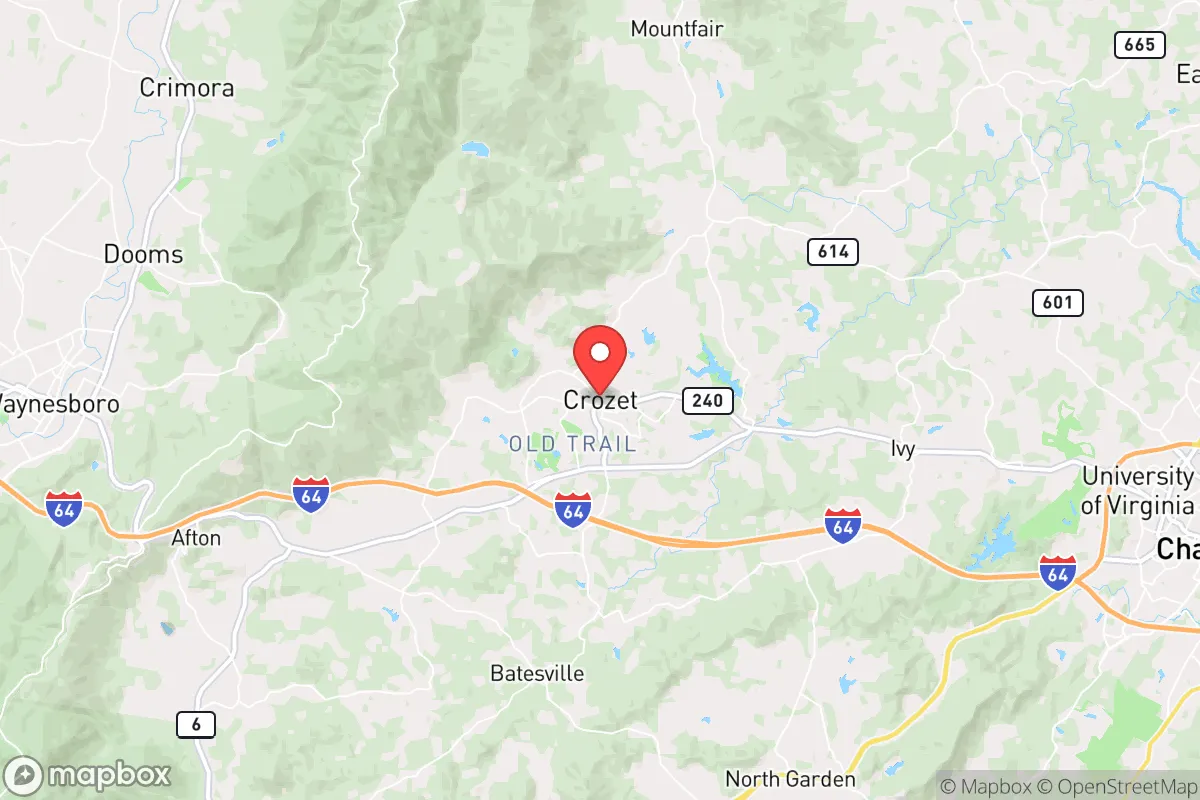
The post-1965 era brought a fundamental shift as the Immigration and Nationality Act opened doors to new arrivals, but Crozet's growth was driven less by foreign immigration and more by domestic in-migration from the Washington, D.C., and Northern Virginia metro areas. The construction of Interstate 64 in the 1970s made Crozet a viable commuter suburb for Charlottesville, and the population began to swell with professionals, academics, and tech workers seeking affordable land and mountain views. This wave of newcomers concentrated in the Western Ridge and Old Trail developments, master-planned communities built from the 1990s onward that offered large single-family homes and a deliberate small-town aesthetic. The racial composition shifted only modestly during this period—today, the community is 88.2% white, with small but distinct minority populations: 2.4% Hispanic, 2.2% Black, 2.1% East and Southeast Asian (primarily Chinese and Korean families employed at UVA and area tech firms), and 1.6% Indian (subcontinent) residents, many of whom work in healthcare and engineering. The Cloverdale Village and Foothills Crossing neighborhoods have become the most diverse pockets, attracting younger families and a mix of professional backgrounds, while the historic downtown remains predominantly white and long-established.
The future
Crozet's population is heading toward continued growth but not dramatic diversification. The Albemarle County Comprehensive Plan projects the Crozet area to add several thousand new residents over the next two decades, with most development funneled into the Crozet Master Plan's designated growth areas—specifically the new Downtown Crozet expansion zone and the Route 250 corridor near the new Crozet Elementary School. The demographic trajectory suggests the community will remain overwhelmingly white and highly educated, as the primary drivers of in-migration continue to be remote workers and UVA-affiliated professionals from other parts of Virginia and the Northeast. The East/Southeast Asian and Indian populations are likely to grow modestly as the technology and healthcare sectors expand, but the foreign-born share (currently 2.9%) is expected to remain well below the national average of roughly 14%. Culturally, Crozet is evolving from a railroad-and-orchard town into a bedroom community with a curated "mountain modern" identity—new residents are drawn to the wineries, the Crozet Artisan Trail, and the proximity to Shenandoah National Park, but the social fabric remains rooted in school sports, church communities, and neighborhood associations rather than ethnic enclaves.
For someone moving to Crozet today, the bottom line is this: you are joining a community that is affluent, educated, and overwhelmingly white, with a strong sense of place but limited ethnic diversity. The town offers a safe, family-oriented environment with excellent schools and a growing downtown, but if you are seeking a multicultural urban experience, this is not that place. The next decade will bring more rooftops and more traffic, but the character of the population—professional, rooted, and predominantly white—is likely to remain remarkably stable.

* Values derived from national, state, county, city and local statistics and may differ in a specific area. Last updated: 2026-10-12T03:40:49.000Z
Narrative content on this page is AI-generated and may contain mistakes. Verify any details that matter before acting on them.
ReloMaps may earn a commission from affiliate links at no extra cost to you.

