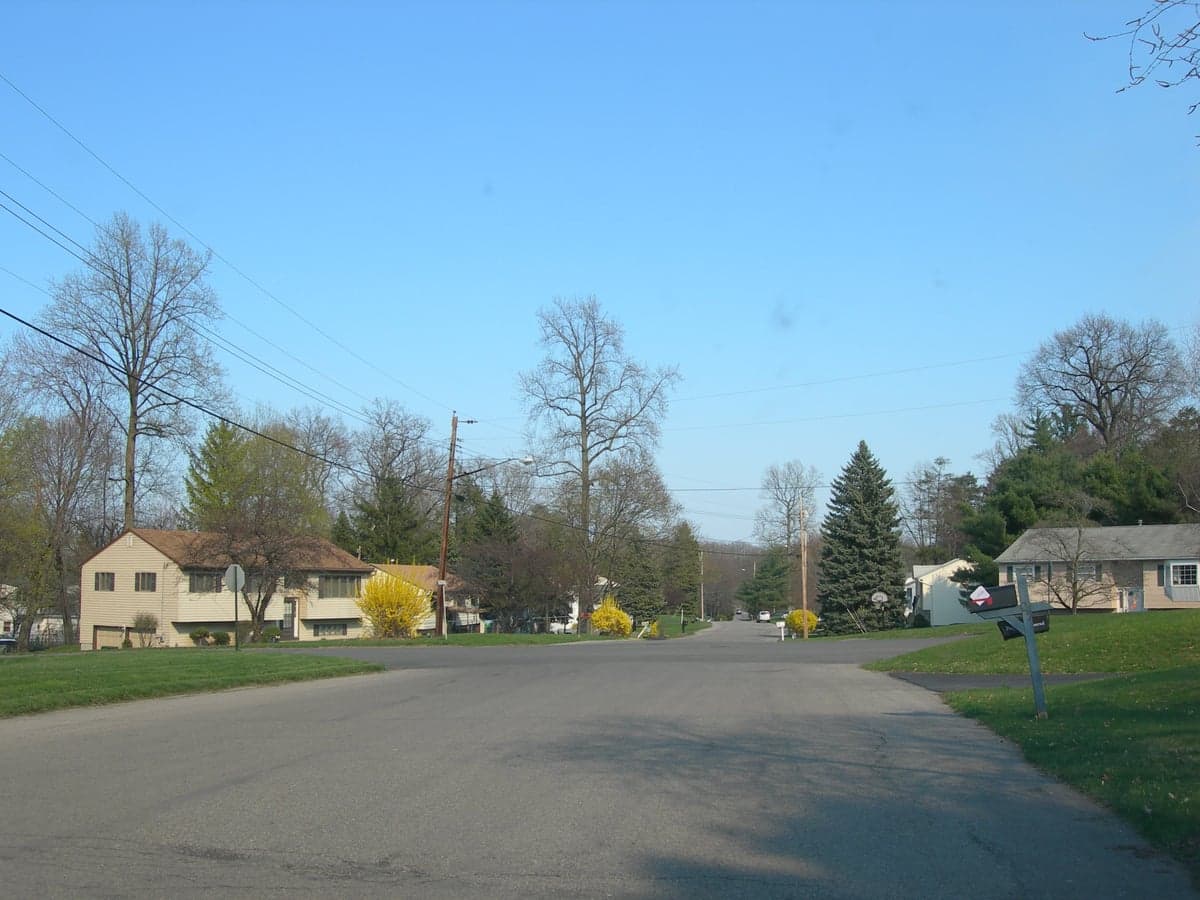
Photo: Wikipedia
Personal Sovereignty in Crown Heights, NY
Moderate friction. Expect trade-offs in some aspect of personal liberty and independence.
What does Personal Sovereignty tell us?
Personal Sovereignty measures your capacity for self-reliance and independence with minimal government friction. Higher scores mean fewer barriers between you and the way you want to live... but it assumes you have the space you need and good neighbors.
What does this tell us?
Personal Sovereignty measures your capacity for self-reliance and independence with minimal government friction. Higher scores mean fewer barriers between you and the way you want to live... but it assumes you have the space you need and good neighbors.
State Policy
Energy independence: Importer (15% of energy produced in-state)
Personal Liberty
Homesteading

Personal Liberty Analysis
Crown Heights, Brooklyn, operates within the dense regulatory and tax environment of New York City and New York State, which significantly constrains personal sovereignty compared to less urbanized or more libertarian-leaning jurisdictions. For a relocation researcher assessing autonomy, the area presents a clear trade-off: residents gain access to extensive public services and infrastructure but surrender substantial control over property, self-defense, and daily economic decisions to city and state authorities. The overall autonomy environment is best described as heavily managed, with high compliance costs and limited room for individual deviation from established codes.
Tax burden and regulatory posture in Crown Heights
New York City imposes one of the highest combined tax burdens in the United States, and Crown Heights residents are fully subject to this structure. The city's income tax rate ranges from 3.078% to 3.876% on top of New York State's progressive income tax, which reaches 10.9% for top earners. Property taxes, while lower than the national average as a percentage of home value due to the city's assessment system, are still substantial in absolute terms because of high property values. A typical single-family home in Crown Heights carries an annual property tax bill of $4,000 to $8,000, depending on assessment and exemptions. Sales tax in Brooklyn is 8.875%, among the highest in the nation, applied to most goods and services. The regulatory posture is dense and enforcement-oriented. New York City has a robust administrative code covering everything from building permits (requiring Department of Buildings approval for most renovations) to short-term rental restrictions (illegal for under 30 days if the host is not present). Operating a home-based business requires a zoning variance in many residential blocks, and the city's Department of Consumer and Worker Protection mandates licenses for dozens of professions. For a reader prioritizing low-tax, low-regulation living, Crown Heights represents a high-friction environment where compliance with multiple layers of bureaucracy is a daily reality.
Self-defense and gun law specifics in Crown Heights
New York State's gun laws are among the most restrictive in the nation, and Crown Heights residents face particularly stringent constraints on self-defense options. Following the Supreme Court's NYSRPA v. Bruen decision in 2022, New York transitioned from a "may-issue" to a "shall-issue" concealed carry regime, but the state's response—the Concealed Carry Improvement Act (CCIA)—imposed new restrictions. As of 2026, obtaining a concealed carry permit in Kings County (Brooklyn) requires completing a 16-hour in-person training course, a background check, fingerprinting, and a showing of "good moral character." The application process through the NYPD License Division can take 6-12 months. Permit holders are prohibited from carrying in a wide array of "sensitive locations," including all government buildings, schools, parks, places of worship (unless explicitly permitted), public transportation, and any private property where the owner posts a sign prohibiting firearms. The CCIA also bans the possession of firearms in Times Square and other designated "public gathering" areas. New York City itself has additional restrictions: a separate handgun license is required (the NYPD issues premises and carry licenses), and the city maintains a strict assault weapons ban and a 10-round magazine limit. For a conservative-leaning reader who views firearm ownership as a fundamental right for self-defense, Crown Heights imposes a high barrier to exercise that right, with significant legal risk for even inadvertent violations.
Self-reliance and homesteading viability in Crown Heights
Homesteading and off-grid living are effectively non-viable in Crown Heights due to extreme density, zoning restrictions, and building codes. The neighborhood consists primarily of rowhouses, apartment buildings, and multi-unit dwellings on lots typically measuring 20 to 25 feet wide and 100 feet deep. Lot sizes are small—often 2,000 to 2,500 square feet—and most properties are fully built out with minimal yard space. Zoning is predominantly R6 and R7 residential districts, which allow for medium- to high-density development but prohibit agricultural uses, livestock, or commercial farming. Keeping chickens is technically allowed in New York City with a permit (up to six hens, no roosters), but the permit process involves a site inspection and neighbor notification, and the practice is rare in Crown Heights due to space constraints and HOA or co-op board restrictions in many buildings. Off-grid systems like solar panels are permitted but must connect to the city's electrical grid; standalone systems are not allowed. Rainwater collection is legal but limited to 55 gallons per roof area, and composting toilets are not permitted under the city's plumbing code. The Department of Environmental Protection strictly regulates water and sewer connections. For a reader seeking self-reliance through gardening, energy independence, or reduced reliance on municipal utilities, Crown Heights offers little opportunity. The neighborhood's infrastructure is designed for dense urban living, not homesteading.
Personal liberties in Crown Heights: parental rights, medical autonomy, speech, and property
Personal liberties in Crown Heights are shaped by New York State's progressive legal framework and New York City's local ordinances. On parental rights, New York State mandates that public schools provide comprehensive sex education, including instruction on sexual orientation and gender identity, without an opt-out provision for parents. The state also requires parental consent for minors to receive certain medical treatments, but New York City's Department of Education has policies that allow students to access reproductive health services without parental notification. Medical autonomy is heavily regulated: New York State maintains a strict vaccine mandate for school attendance (including COVID-19 for certain periods), and the state's public health law allows for mandatory treatment in declared emergencies. The state also has a "right-to-die" law (Medical Aid in Dying Act) passed in 2024, but it requires multiple physician certifications and a 15-day waiting period. Free speech is protected under the First Amendment, but New York City has enacted ordinances that restrict certain types of speech in public spaces, including a ban on "disorderly conduct" that has been used to limit protests. The city also enforces strict noise ordinances that can affect amplified speech or public gatherings. Property rights are constrained by rent stabilization laws covering approximately 50% of Crown Heights rental units, which limit rent increases and eviction grounds. Homeowners face strict historic preservation rules in designated districts (Crown Heights North is a historic district), requiring Landmarks Preservation Commission approval for exterior changes. For a reader who values maximal personal discretion in family, medical, and property decisions, Crown Heights presents a regulatory environment where individual choice is frequently secondary to state and city policy.
Overall, personal sovereignty in Crown Heights is markedly lower than in most suburban or rural areas of the United States, and significantly lower than in states like Texas, Florida, or New Hampshire. The combination of high taxes, dense regulation, restrictive gun laws, limited homesteading potential, and constrained personal liberties creates an environment where individual autonomy is heavily mediated by government authority. For a conservative-leaning reader who prioritizes self-reliance and minimal government interference, Crown Heights would rank among the least favorable urban neighborhoods in the country. However, for those who value the trade-offs—robust public transit, cultural diversity, walkability, and access to amenities—the area offers a vibrant community where personal sovereignty is exercised primarily through consumer choice and civic engagement rather than through independence from the state. The key takeaway for relocation research is that Crown Heights is a high-regulation, high-compliance environment that rewards those who align with its norms and penalizes those who seek to deviate from them.

* Values derived from national, state, county, city and local statistics and may differ in a specific area. Last updated: 2026-11-25T11:18:29.000Z
Narrative content on this page is AI-generated and may contain mistakes. Verify any details that matter before acting on them.
ReloMaps may earn a commission from affiliate links at no extra cost to you.

