Photo: Wikipedia
Demographics of Creedmoor, NC
Affluence Level in Creedmoor, NC
A below-average socioeconomic profile. Incomes, home values, and educational attainment trail the U.S., with higher poverty and unemployment.
People of Creedmoor, NC
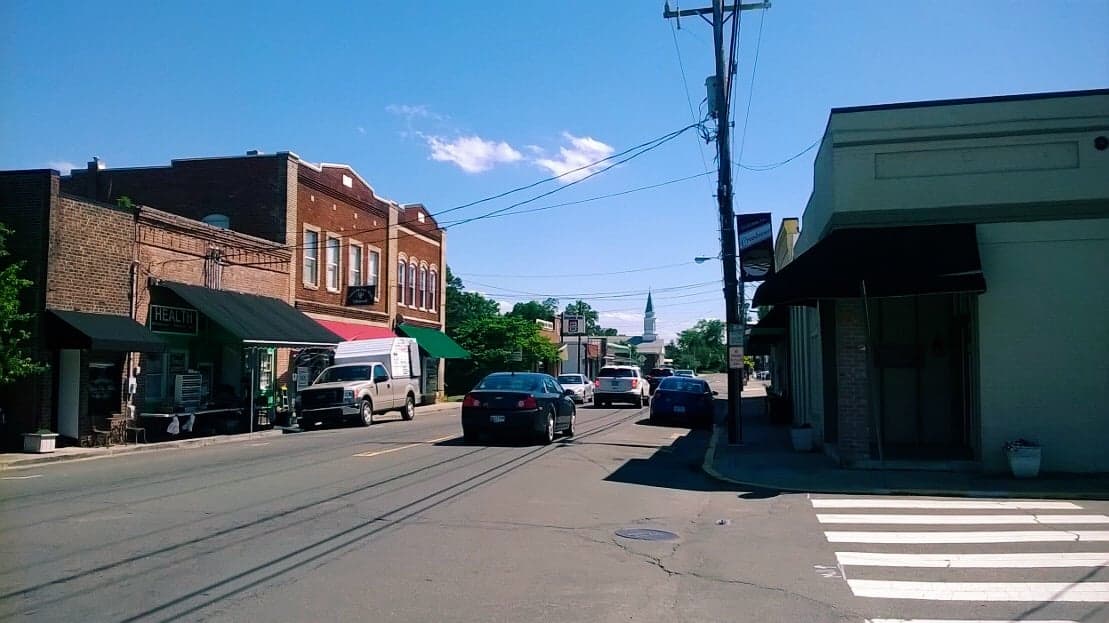
Creedmoor, North Carolina, is a small, historically grounded city of 4,957 residents where Black and White populations form the core of a community shaped by railroad commerce and rural Southern life. With a Black population of 44.4% and a White population of 35.7%, the city carries a distinctive biracial character uncommon in many fast-growing Triangle exurbs. A modest Hispanic community (9.6%) and small East/Southeast Asian presence (2.0%) add emerging diversity, while the foreign-born share remains low at 2.6%, reflecting a population that is largely native-born and deeply rooted in the area.
How the city was settled and grew
Creedmoor’s founding population arrived not through colonial land grants but through the railroad. The city was established in the 1880s as a stop on the Raleigh and Gaston Railroad, and its early residents were predominantly White farmers and merchants drawn by the promise of rail access to markets. The original settlement clustered around the depot in what is now Downtown Creedmoor, where the first stores, churches, and homes were built. By the early 1900s, a small Black community had formed just south of the tracks in the South Creedmoor area, working as sharecroppers, domestic laborers, and railroad hands. The city incorporated in 1905, and through the mid-20th century, growth remained slow and tied to tobacco farming and local retail. The West End neighborhood, developed in the 1940s and 1950s, became home to many White families who worked in the nearby textile mills and tobacco warehouses. The East Side, near the old school grounds, saw a concentration of Black families who built their own churches and community institutions during the Jim Crow era.
Modern era (post-1965)
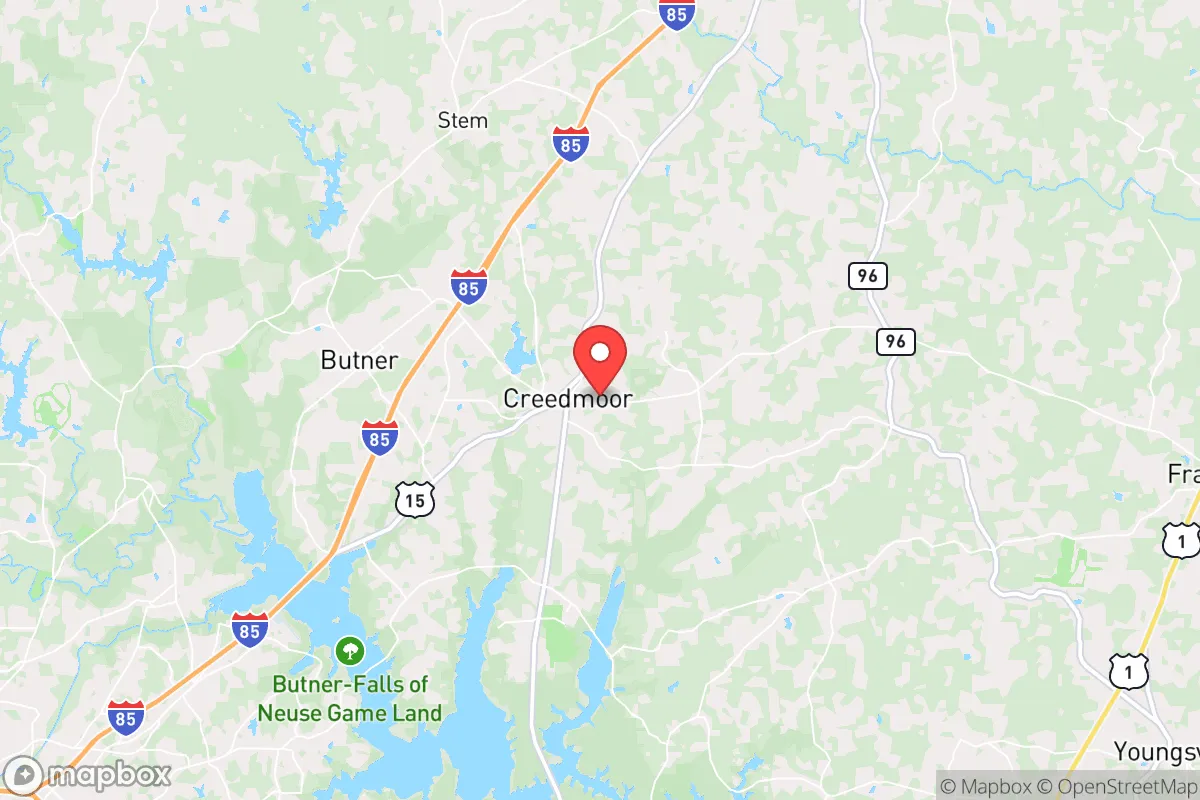
After the 1965 Hart-Cellar Act, Creedmoor saw little direct international immigration; the foreign-born share remains just 2.6% today. Instead, the modern era has been defined by domestic in-migration from the broader Triangle region. Beginning in the 1990s, as Raleigh-Durham’s tech and research economy expanded, some Black and White families moved south from Wake and Durham counties seeking lower housing costs and quieter streets. This wave settled primarily in newer subdivisions like Falls Lake Estates and Riverwood, which were built on the city’s northern and western edges. The Hispanic population, now 9.6%, began arriving in the 2000s, drawn by construction and agricultural work; these families concentrated in rental housing near the U.S. 15 corridor and in mobile home parks on the city’s southern fringe. The East/Southeast Asian community (2.0%) is small and dispersed, with no single ethnic enclave, and the Indian-subcontinent population is effectively zero. The Black share (44.4%) has remained stable since 2010, while the White share has declined slightly as younger White families have moved to newer exurbs further out. The college-educated share stands at 31.0%, reflecting a modest but growing professional class, many of whom commute to jobs in Durham or Raleigh.
The future
Creedmoor’s population is likely to grow modestly over the next 10–20 years, driven by spillover from the Triangle’s housing market. The city’s racial composition is expected to remain predominantly Black and White, with the Hispanic share slowly rising as families already in the area settle and have children. New development is concentrated in the Creedmoor Crossing area, a mixed-use district planned along U.S. 15, which will likely attract younger, more diverse households, including some East/Southeast Asian and Hispanic families. The foreign-born share may inch upward but will remain well below state and national averages. The city’s cultural identity is evolving from a quiet railroad town into a more suburban bedroom community, though it retains a strong sense of local heritage centered on its historic churches and the annual Creedmoor Music Festival. The population is becoming slightly more diverse, but the pace is slow, and the city is unlikely to see the rapid demographic turnover of nearby suburbs like Wake Forest or Knightdale.
For someone moving in now, Creedmoor offers a stable, family-oriented environment where the population is rooted and change is gradual. The city is becoming a more diverse, slightly more educated exurb, but it remains a place where long-time residents—Black and White—still define the community’s character. New arrivals will find a town that values its history while cautiously opening to new neighbors.

* Values derived from national, state, county, city and local statistics and may differ in a specific area. Last updated: 2026-09-02T22:29:34.000Z
Narrative content on this page is AI-generated and may contain mistakes. Verify any details that matter before acting on them.
ReloMaps may earn a commission from affiliate links at no extra cost to you.

