
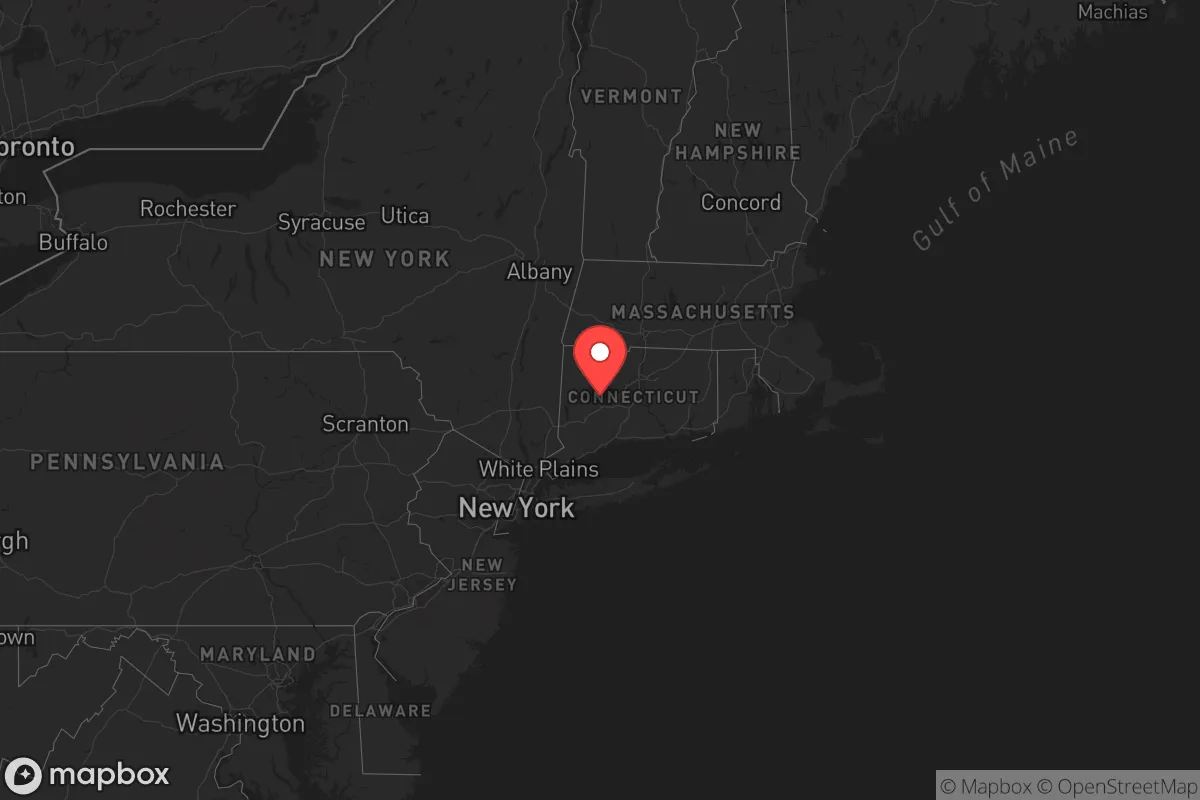
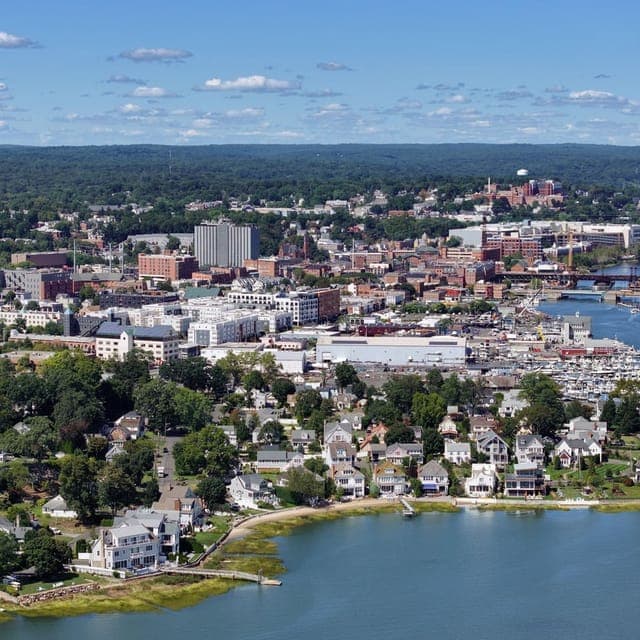
Photo: Wikipedia
Personal Sovereignty in Connecticut
Viable for self-reliance. Generally workable, though some barriers may limit total independence.
What does Personal Sovereignty tell us?
Personal Sovereignty measures your capacity for self-reliance and independence with minimal government friction. Higher scores mean fewer barriers between you and the way you want to live... but it assumes you have the space you need and good neighbors.
What does this tell us?
Personal Sovereignty measures your capacity for self-reliance and independence with minimal government friction. Higher scores mean fewer barriers between you and the way you want to live... but it assumes you have the space you need and good neighbors.
State Policy
Energy independence: Importer (5% of energy produced in-state)
Personal Liberty
Homesteading

Personal Liberty Analysis
Connecticut presents a complex and often contradictory environment for personal sovereignty, where deep historical roots in self-governance clash with one of the nation's most assertive state-level regulatory frameworks. For the strategic relocator—particularly those with a survivalist or prepper mindset—the state offers a mixed picture: robust property rights in certain rural pockets, but a heavy-handed state apparatus that consistently ranks among the most restrictive in the Northeast for gun ownership, medical autonomy, and tax freedom. The key to navigating Connecticut lies not in broad state-level assumptions, but in understanding the stark divide between the urbanized coastal corridor (Greenwich, Stamford, New Haven) and the more independent-minded Litchfield Hills and Quiet Corner (Kent, Woodstock, Thompson).
Tax burden and regulatory posture: how Connecticut's fiscal policies impact personal freedom
Connecticut's tax burden is among the highest in the United States, a fact that directly erodes personal sovereignty for anyone seeking to keep more of what they earn. The state imposes a progressive income tax with rates up to 6.99%, a state sales tax of 6.35% (with no local option to reduce it), and some of the highest property taxes in the nation—averaging over 2.1% of assessed home value annually. For a prepper or homesteader, this means a modest 10-acre parcel in a town like Kent or Woodstock can carry a property tax bill exceeding $8,000 per year, a significant drain on resources that could otherwise fund self-reliance projects. The regulatory posture is equally burdensome: Connecticut has a statewide building code that is stricter than many states, with environmental regulations that can delay or block off-grid construction, especially in wetland-designated areas. Towns like Litchfield and Cornwall have additional local zoning that restricts accessory dwelling units and limits livestock on parcels under two acres, making true homesteading difficult without significant acreage. The state's fiscal structure effectively penalizes self-sufficiency by taxing land and improvements heavily, while offering few tax breaks for agricultural or off-grid improvements.
Self-defense and gun law specifics: navigating Connecticut's restrictive firearms environment
Connecticut's gun laws are among the most restrictive in the country, a critical consideration for anyone prioritizing the right to self-defense. The state requires a permit to purchase any handgun or long gun, a process that includes a background check, a mandatory safety course, and a 14-day waiting period. The "assault weapon" ban, enacted in 2013, prohibits a wide range of commonly owned semi-automatic rifles and shotguns, including the AR-15 platform, and bans magazines capable of holding more than 10 rounds. For the prepper, this means that standard defensive and survival firearms are effectively illegal to purchase new, though pre-ban firearms (manufactured before 1994) are still transferable at a premium. Open carry is illegal, and concealed carry permits are issued on a "may-issue" basis, though in practice most non-felons with a clean record can obtain one after a lengthy application process. Towns like New Haven and Hartford have additional local ordinances that further restrict firearm storage and transport. However, rural towns like Thompson and Woodstock have a stronger gun culture, with local gun clubs and fewer enforcement issues, though state law still applies uniformly. The practical takeaway: Connecticut is not a state for someone who wants to build a defensive firearms collection or carry without bureaucratic hurdles.
Self-reliance and homesteading viability: lot sizes, zoning, and off-grid feasibility across Connecticut
Homesteading and off-grid living in Connecticut are possible but require careful town selection and a willingness to navigate dense regulations. Minimum lot sizes vary dramatically: in the rural Quiet Corner (Woodstock, Thompson, Eastford), zoning typically requires one to two acres for a single-family home, with larger parcels needed for livestock. In contrast, towns in the Litchfield Hills like Kent and Cornwall often require three to five acres for agricultural use, and some have "farm" designations that come with additional permitting. Off-grid feasibility is limited by state law: Connecticut requires all new homes to be connected to the electrical grid unless a licensed engineer certifies that solar and battery systems can meet all loads, a costly and rare approval. Rainwater collection is legal but restricted to non-potable uses in most towns, and composting toilets require a state-approved system that can cost $5,000-$10,000. Wood-burning stoves are common and legal, but new installations must meet EPA emissions standards and local fire codes. The most homestead-friendly towns are in the northeastern corner: Woodstock, Thompson, and Union have the largest parcels, the most permissive livestock ordinances, and a culture of self-reliance. However, even there, the state's Department of Energy and Environmental Protection (DEEP) has authority over wetlands and water rights, which can complicate pond digging or stream diversion. For the serious prepper, Connecticut offers viable options only if you buy at least 10 acres in a rural town and budget for regulatory compliance.
Personal liberties: parental rights, medical autonomy, speech, and property protections
Connecticut's record on personal liberties is mixed, with strong protections for property rights in some areas but significant state overreach in medical and parental autonomy. Parental rights are legally recognized but have been eroded in practice: the state has a mandatory vaccination law for school attendance (with only medical exemptions), and during the COVID-19 pandemic, Connecticut was among the first states to mandate vaccines for schoolchildren without a religious exemption option. Medical autonomy is similarly constrained: the state has a strict certificate-of-need process that limits the opening of independent clinics, and telehealth regulations require in-person visits for many services. Free speech is protected under the state constitution, but Connecticut has some of the nation's broadest hate speech laws and has prosecuted individuals for online speech deemed "harassing" under vague statutes. Property rights are relatively strong in rural towns, where zoning boards are often composed of local landowners who resist state-level overreach. However, the state's "right to farm" law is weaker than in many states, meaning that a new neighbor can sue a long-established farm for noise or odor. The overall picture: Connecticut offers a high degree of personal liberty in private property use in rural areas, but state-level mandates on health, education, and speech create a climate where the individual is often subordinate to government directives.
In the broader context of personal sovereignty, Connecticut ranks near the bottom among the 50 states for those seeking maximum autonomy. The combination of high taxes, restrictive gun laws, heavy environmental regulation, and state-level mandates on health and education creates an environment where the individual must constantly navigate bureaucratic hurdles. For the strategic relocator with a prepper mindset, the state's best option is the rural Quiet Corner—Woodstock, Thompson, and Union—where large parcels, a self-reliant culture, and local resistance to state overreach offer a partial refuge. But even there, the state's long arm reaches into every aspect of life, from the firearms you can own to the way you heat your home. Compared to states like New Hampshire or Vermont, Connecticut offers far less breathing room for the sovereign individual. It is a state best suited for those who value coastal amenities and historical charm over the ability to live entirely on their own terms.

Top Cities for Personal Sovereignty in Connecticut







* Values derived from national, state, county, city and local statistics and may differ in a specific area. Last updated: 2026-04-18T00:20:00.000Z
Narrative content on this page is AI-generated and may contain mistakes. Verify any details that matter before acting on them.
ReloMaps may earn a commission from affiliate links at no extra cost to you.

