
Photo: Wikipedia
Demographics of Connecticut
Affluence Level in Connecticut
An upper-middle-class area. Household wealth, education levels, and homeownership run ahead of national benchmarks.
People of Connecticut
Connecticut’s 3.6 million residents form one of the most densely populated and historically layered states in the nation, a place where colonial-era villages, industrial mill towns, and affluent commuter suburbs coexist within a compact geography. The state’s identity is shaped by a population that is 63.0% white, 17.8% Hispanic, 9.9% Black, 2.6% East/Southeast Asian, and 2.1% Indian (subcontinent), with a foreign-born share of just 6.9% — lower than the national average. Connecticut is marked by sharp contrasts: it ranks among the most educated states (41.9% college graduates) yet struggles with stagnant population growth and a fiscal divide between wealthy Fairfield County commuters and struggling post-industrial cities like Hartford, Bridgeport, and New Haven. For a conservative-leaning audience, Connecticut represents a state with deep traditional roots, strong local governance, and a population that is slowly diversifying while grappling with high taxes and out-migration.
Settlement & growth (pre-1960)
Long before European arrival, Connecticut was home to several Algonquian-speaking nations, including the Pequot, Mohegan, Nipmuc, and Niantic peoples, who lived in fortified villages and practiced agriculture, fishing, and trade. The Pequot War of 1636–1638 and King Philip’s War of 1675–1676 decimated native populations, opening the land for English colonization. The first permanent English settlements were established in the 1630s by Puritan colonists from the Massachusetts Bay Colony, who founded Hartford (1635), Windsor (1633), and Wethersfield (1634) along the Connecticut River. These settlers, led by Thomas Hooker, sought religious autonomy and fertile farmland, establishing the Fundamental Orders of Connecticut in 1639 — often cited as the first written constitution in the Western world.
Throughout the 18th century, Connecticut’s population grew steadily through natural increase and modest immigration from England and Scotland. The state was a key supplier of food and supplies during the American Revolution, and its population remained overwhelmingly English-descended and Congregationalist. The 19th century brought transformative waves: Irish immigrants fleeing the Great Famine (1845–1852) poured into industrial cities like New Haven, Bridgeport, and Waterbury, working in factories, railroads, and construction. By 1860, the Irish made up roughly 15% of Connecticut’s population. French Canadians followed from Quebec between 1850 and 1900, settling in mill towns like Willimantic, Danielson, and Putnam to work in textile mills. Italians arrived in massive numbers between 1880 and 1920, concentrating in New Haven’s Wooster Square, Hartford’s Front Street, and Bridgeport’s East Side, where they dominated the construction, masonry, and food trades. Poles, Russians, and Eastern European Jews also settled in Hartford’s Frog Hollow and New Britain’s Broad Street neighborhoods during this period, drawn by factory jobs in manufacturing, hardware, and firearms.
The Great Migration of African Americans from the rural South began during World War I and accelerated through the 1940s and 1950s, with Black families moving to Hartford, New Haven, Bridgeport, and Waterbury for industrial work in munitions, shipbuilding, and metal fabrication. By 1960, Connecticut’s Black population had grown to roughly 4.5%, concentrated in urban centers. The post-World War II era saw massive suburbanization, with white families leaving cities for towns like Glastonbury, West Hartford, and Trumbull, fueled by the GI Bill and highway construction. This period also saw the arrival of Puerto Ricans, who began migrating to Hartford and Bridgeport in the 1950s as U.S. citizens seeking factory jobs, laying the foundation for the state’s largest Hispanic subgroup.
Modern era (post-1965)
The 1965 Hart-Cellar Act fundamentally reshaped Connecticut’s demographics by opening immigration from Asia, Latin America, and the Caribbean. The most significant post-1965 wave has been Hispanic immigration, primarily from Puerto Rico (which remains a U.S. commonwealth), but also from the Dominican Republic, Mexico, and Central America. Today, Hispanics make up 17.8% of the state’s population, with the largest concentrations in Hartford (where they are roughly 44% of the city), Bridgeport (43%), New Haven (30%), and Waterbury (30%). Puerto Ricans remain the dominant subgroup, but Dominican and Mexican communities have grown rapidly since 2000, particularly in Danbury and Stamford.
East/Southeast Asian immigration has been more modest but highly concentrated. Chinese and Vietnamese communities have established enclaves in New Haven’s Dwight neighborhood and along the Boston Post Road in Milford and West Haven. Indian (subcontinent) immigration, now 2.1% of the state, has grown sharply since the 1990s, driven by tech and healthcare professionals settling in Stamford, Norwalk, and the Hartford suburbs of Avon and Farmington. These Indian communities are among the most affluent and educated in the state, with median household incomes well above the state average. Black immigration from the Caribbean — particularly Jamaica, Haiti, and Trinidad — has supplemented the African American population, especially in Bridgeport, Hartford, and New Haven, where West Indian cultural festivals and churches are prominent.
Domestic migration tells a different story. Since the 1990s, Connecticut has experienced net domestic out-migration, with residents moving to lower-tax states like Florida, Texas, and the Carolinas. This outflow has been disproportionately white and middle-class, contributing to the state’s aging population and slow growth. At the same time, affluent professionals from New York City have moved into Fairfield County towns like Greenwich, Darien, and Westport, driving up housing costs and reinforcing the state’s economic divide. Suburbanization has continued, with second-ring suburbs like Southington, Wallingford, and Enfield absorbing families priced out of coastal Fairfield County.
The future
Connecticut’s population is projected to remain relatively flat or decline slightly over the next decade, as out-migration offsets modest international immigration. The state is tribalizing into distinct enclaves: wealthy, highly educated, and increasingly diverse Fairfield County; aging, white, and fiscally conservative Litchfield County and the Quiet Corner; and struggling, majority-minority post-industrial cities like Hartford, Bridgeport, and New Haven. Hispanic and Indian communities are growing steadily, with Hispanics projected to reach roughly 22% of the population by 2035, while the white share continues to decline. East/Southeast Asian communities are growing more slowly, concentrated in professional suburbs. The Indian subcontinent population, while small, is expanding rapidly in tech hubs and is likely to double in share over the next 20 years.
Culturally, Connecticut is becoming more polarized: the urban and inner-suburban areas are diversifying and leaning Democratic, while rural and outer-suburban towns remain predominantly white and conservative. The state’s high cost of living and tax burden continue to drive out-migration of young families and retirees, but in-migration of wealthy New Yorkers and skilled immigrants is partially offsetting the loss. For a conservative-leaning audience, Connecticut offers a mixed picture: strong local communities, excellent schools in many suburbs, and a rich historical identity, but also high taxes, a growing urban-rural cultural divide, and a population that is slowly becoming more diverse and more Democratic.
For someone moving in now, Connecticut is a state of trade-offs. The best opportunities for conservative families lie in the outer suburbs and rural towns — places like Southbury, Woodbury, and Litchfield — where property taxes are lower, schools are strong, and the pace of demographic change is slow. The cities offer diversity and economic opportunity but come with higher crime, weaker schools, and progressive governance. Connecticut is not homogenizing; it is sorting itself into distinct communities by income, ethnicity, and political affiliation, and the choice of where to live will largely determine the experience of the state.

Most Diverse Cities in Connecticut
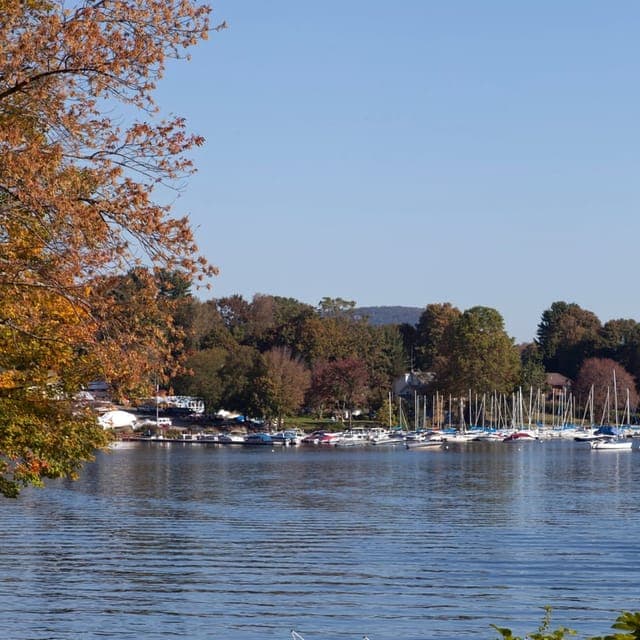
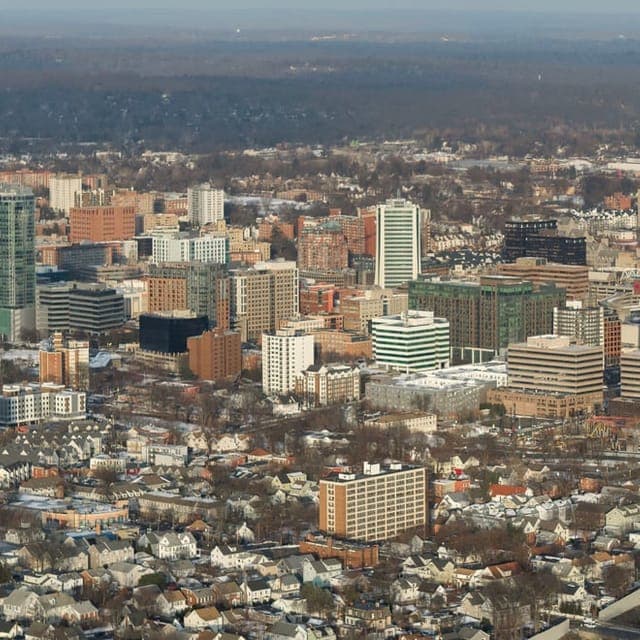
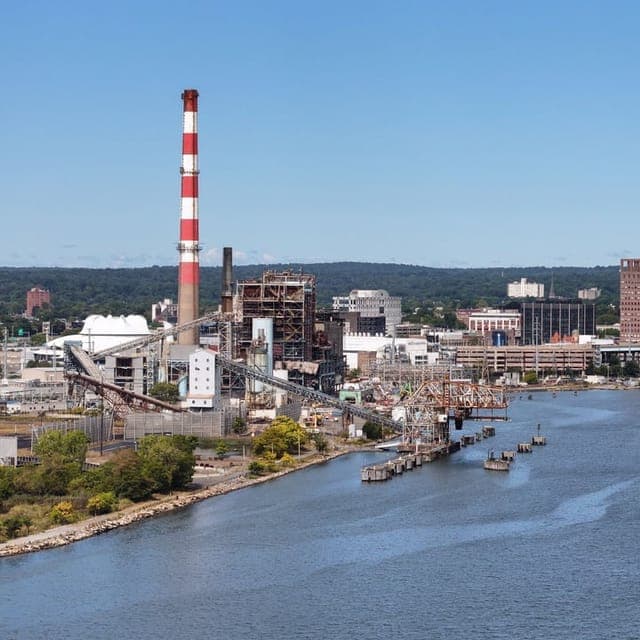
Most Homogenous Cities in Connecticut
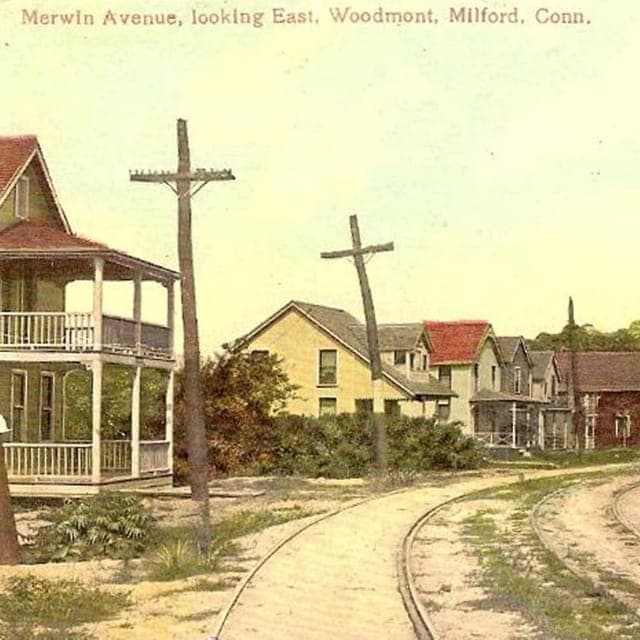

* Values derived from national, state, county, city and local statistics and may differ in a specific area. Last updated: 2026-04-18T00:20:00.000Z
Narrative content on this page is AI-generated and may contain mistakes. Verify any details that matter before acting on them.
ReloMaps may earn a commission from affiliate links at no extra cost to you.

