Political ClimatePolitical Climate in Northwest Hills Planning Region County
Showing district-level results — no local-only data available.
Local Political AnalysisPolitical Analysis of Northwest Hills Planning Region County
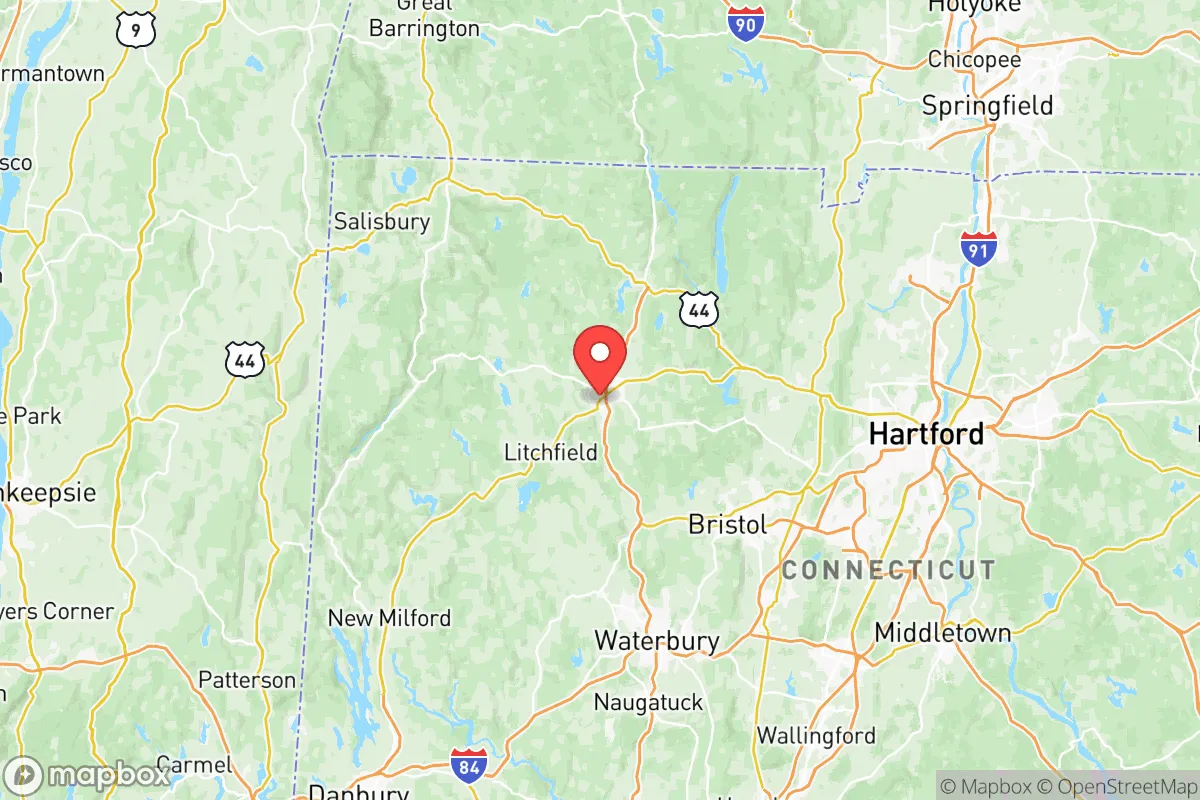
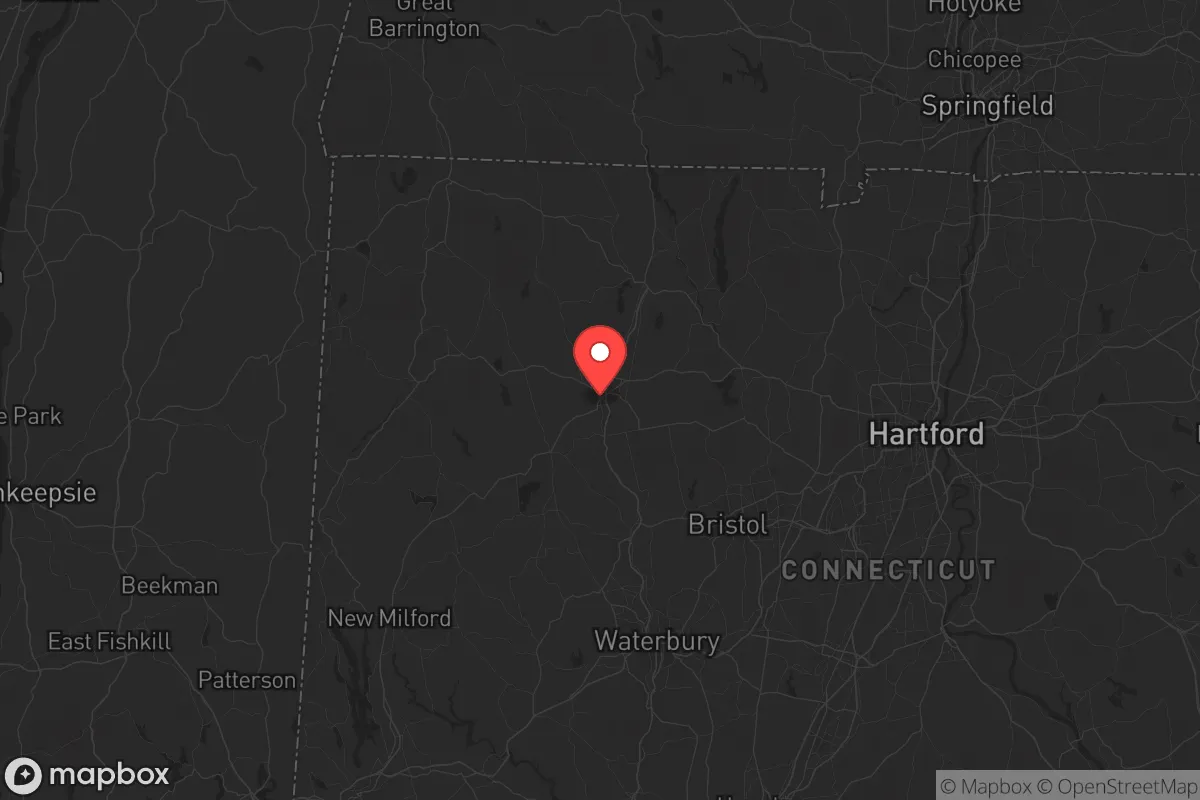
Northwest Hills Planning Region County, Connecticut, is a politically moderate area that leans Democratic, but with a noticeably softer blue tint than the state as a whole. The county carries a Cook Partisan Voting Index (PVI) of D+3, meaning it votes about three points more Democratic than the national average, while Connecticut overall sits at D+8. This gap reflects a real political divide within the county: the more rural, northern towns like Norfolk and Canaan tend to vote Republican or split evenly, while the southern and more suburban communities like Litchfield, Torrington, and New Milford lean Democratic, though often by narrower margins than in the state's urban centers. The swing precincts are often found in the middle of the county, around towns like Cornwall and Kent, where independent voters can tip a race by a few hundred votes.
How it compares
Compared to Connecticut as a whole, Northwest Hills is about five points more conservative on the Cook PVI scale. That difference is most visible in state legislative races: while the state legislature is firmly Democratic, several districts in the county are competitive, with Republicans holding seats in the 66th and 67th districts covering parts of Torrington and Litchfield. In presidential elections, the county has voted Democratic in every cycle since 2008, but the margins are consistently smaller than in Fairfield County or the Hartford suburbs. For example, in 2020, Joe Biden won the county by about 8 points, compared to his 20-point statewide margin. The county's Republican base is concentrated in the hill towns and along the Massachusetts border, where voters tend to be more fiscally conservative and skeptical of Hartford's one-party rule.
What this means for residents
For conservative residents, Northwest Hills offers a more welcoming environment than much of Connecticut. You can find Republican town committees that are active and well-organized, and local elections often feature genuine competition. The county's moderate lean means that conservative voices are not marginalized; they are part of a healthy, if sometimes contentious, local debate. For liberal residents, the county is still reliably blue enough that you won't feel isolated, but you will encounter more political diversity than in, say, New Haven or Stamford. This mix makes for a community where political conversations are more common and more nuanced, especially around issues like land use, school funding, and local taxes. The county's independent streak also means that candidates who can appeal across party lines—like a moderate Republican or a fiscally conservative Democrat—often do well in local races.
Culturally, Northwest Hills is distinct from the rest of Connecticut in its blend of rural tradition and progressive environmentalism. The county is home to several working farms and a strong hunting and fishing culture, but also to a growing number of organic farms, farmers' markets, and land trusts. This creates a unique political dynamic where both conservatives and liberals can find common ground on issues like preserving open space and opposing overdevelopment. Policy-wise, the county has been a battleground over school regionalization and affordable housing mandates, with some towns pushing back against state-level requirements. The result is a political climate that feels less like the coastal suburbs and more like a New England version of the rural-urban divide, but with a distinctly Connecticut flavor of civility and local control.

State Political ClimatePolitical Climate in Connecticut
State Political AnalysisPolitical Environment in the State
Connecticut is a reliably Democratic state with a Cook Partisan Voting Index of D+8, meaning it votes about eight points more Democratic than the national average in presidential elections. Over the past 20 years, the state has shifted leftward, driven by the growing dominance of its wealthy, educated suburbs and the consolidation of Democratic power in its cities, while rural and exurban areas have become more Republican. For a conservative relocator, this means living in a state where state-level politics are firmly controlled by Democrats, but local political realities vary dramatically depending on where you settle.
Urban vs. rural divide
The political map of Connecticut is a classic tale of three regions. The southwestern corner, anchored by Stamford, Greenwich, and Bridgeport, is the state's Democratic stronghold, fueled by New York City commuters and a diverse, liberal-leaning population. Fairfield County as a whole votes about D+15 to D+20, and its influence is magnified because it holds roughly a quarter of the state's population. The state's other major cities — Hartford, New Haven, and Waterbury — are also deeply Democratic, with Hartford and New Haven routinely voting 80%+ for Democratic candidates. In contrast, the eastern and northwestern parts of the state, including towns like Litchfield, Killingly, and Torrington, lean Republican, often by double digits. The rural-urban divide is stark: in 2024, Trump won Litchfield County by about 5 points while losing Fairfield County by 20. The suburbs of Middletown and Wallingford are more competitive, often swinging between parties depending on the election cycle.
Policy environment
Connecticut's policy environment is shaped by its Democratic trifecta — the governor, state House, and state Senate are all controlled by Democrats. The state has a progressive income tax with a top marginal rate of 6.99%, one of the highest in the nation, and a sales tax of 6.35% that applies to most goods. Property taxes are also high, averaging about 2.1% of home value, though they vary widely by town. The state has strong labor unions, particularly in the public sector, and a regulatory posture that leans toward environmental and consumer protections. Education policy is centralized, with the state setting curriculum standards and funding formulas, though local school boards retain significant control. Healthcare is heavily regulated, and Connecticut expanded Medicaid under the Affordable Care Act. Election laws are moderately restrictive compared to some blue states: voter ID is not required, but same-day registration is available, and early voting was expanded in 2023 to allow 14 days of early in-person voting. For conservatives, the tax burden and regulatory environment are the biggest practical concerns, while the state's strong public schools and low crime rates in many suburbs are draws.
Recent policy direction
In the last five years, Connecticut has moved decisively left on several fronts. In 2023, the state passed a sweeping gun control law that expanded the state's assault weapons ban, raised the minimum age to purchase a firearm to 21, and required safe storage of firearms. Self-defense laws are restrictive: Connecticut does not have a "stand your ground" law, and the Castle Doctrine is limited. On education, the state passed a law in 2022 requiring public schools to include LGBTQ+ history in their curriculum, and in 2024, it expanded access to gender-affirming care for minors, overriding parental consent requirements in some cases. Parental rights have been a flashpoint, with conservative groups pushing back against curriculum transparency and library book policies. On privacy and surveillance, Connecticut has a strong data privacy law (the Connecticut Data Privacy Act, effective 2023) that gives residents control over how companies use their personal data. Medical and bodily autonomy is protected by a 2022 law that codified abortion rights and protects providers from out-of-state lawsuits. Property rights are generally respected, but the state has a strong eminent domain framework and strict environmental regulations that can slow development. Voting access has been expanded: no-excuse absentee voting was passed in 2024, and early voting was implemented in 2023. For a conservative relocator, the gun laws and education policies are likely the most significant changes to weigh.
Civil unrest & political movements
Connecticut is not a hotbed of civil unrest, but it has seen organized political movements on both sides. The Black Lives Matter protests in 2020 were large in Hartford and New Haven, but largely peaceful. On the right, the "CT Patriots" and other groups have held regular rallies at the state capitol, particularly around gun rights and parental rights issues. Immigration politics are relatively calm: Connecticut is a sanctuary state, with a 2013 law that limits cooperation between local police and federal immigration authorities, but enforcement has been uneven. There has been no serious secession or nullification rhetoric. Election integrity controversies have been minimal, though some conservative groups have raised concerns about the state's mail-in voting expansion. The most visible flashpoint for a new resident would likely be the annual gun rights rally at the state capitol, which draws hundreds of activists, and the ongoing debate over local school board elections, which have become increasingly partisan in towns like Simsbury and Glastonbury.
Projection
Over the next 5-10 years, Connecticut is likely to remain a solidly Democratic state, but the margin may narrow slightly. The state's population is aging and slowly declining, with young people leaving for lower-cost states, while in-migration from New York City is bringing more liberal-leaning residents to Fairfield County. The rural areas, particularly in the east, are becoming more Republican as they lose population and feel neglected by Hartford. The suburbs are the key battleground: towns like Danbury and Norwalk are becoming more diverse and Democratic, while exurbs like Brookfield and New Milford are trending right. A conservative moving in now should expect that state-level politics will remain Democratic for the foreseeable future, with continued expansion of gun control, progressive taxation, and social policies. However, local control in many towns means that a conservative can still find a community that reflects their values, particularly in the Litchfield Hills or the Quiet Corner.
For a new resident, the bottom line is that Connecticut offers a high quality of life in many areas — excellent schools, low crime, and beautiful scenery — but at a cost of high taxes and a policy environment that may feel restrictive on gun rights, education, and parental autonomy. If you're a conservative who values local community and can tolerate state-level politics, towns like Litchfield, Kent, or Woodstock offer a more aligned political culture. If you're liberal, the cities and inner suburbs will feel like home. Either way, the state's political reality is one of deep blue governance with pockets of red, and the key is choosing your town wisely.
* Values derived from national, state, county, city and local statistics and may differ in a specific area. Last updated: 2026-06-12T18:07:36.000Z
Narrative content on this page is AI-generated and may contain mistakes. Verify any details that matter before acting on them.
ReloMaps may earn a commission from affiliate links at no extra cost to you.

