Quality of Life in Northwest Hills Planning Region County
A livable area that tracks near national norms for affordability, walkability, and neighborhood health.
What does Quality of Life tell us?
Quality of Life measures an area by evaluating factors like cost of living, nearby amenities, country club access, airport proximity, socioeconomic signals and neighborhood character. For large states, this is a general average — quality of life can vary dramatically between metro areas, suburbs, and rural communities within the same state.
What does this tell us?
Quality of Life measures an area by evaluating factors like cost of living, nearby amenities, country club access, airport proximity, socioeconomic signals and neighborhood character. For large states, this is a general average — quality of life can vary dramatically between metro areas, suburbs, and rural communities within the same state.
Cost of Living
5% above national average
102%
The Real Cost of Living in Northwest Hills Planning Region County for 2026
| Tier | Individual | Family (4) |
|---|---|---|
| Survival | $19k | $35k |
| Comfortable | $61k | $89k |
| Luxury | $164k+ | $255k+ |
| Elite (Top 5%) | $219k+ | $339k+ |
Quality-of-Life Analysis
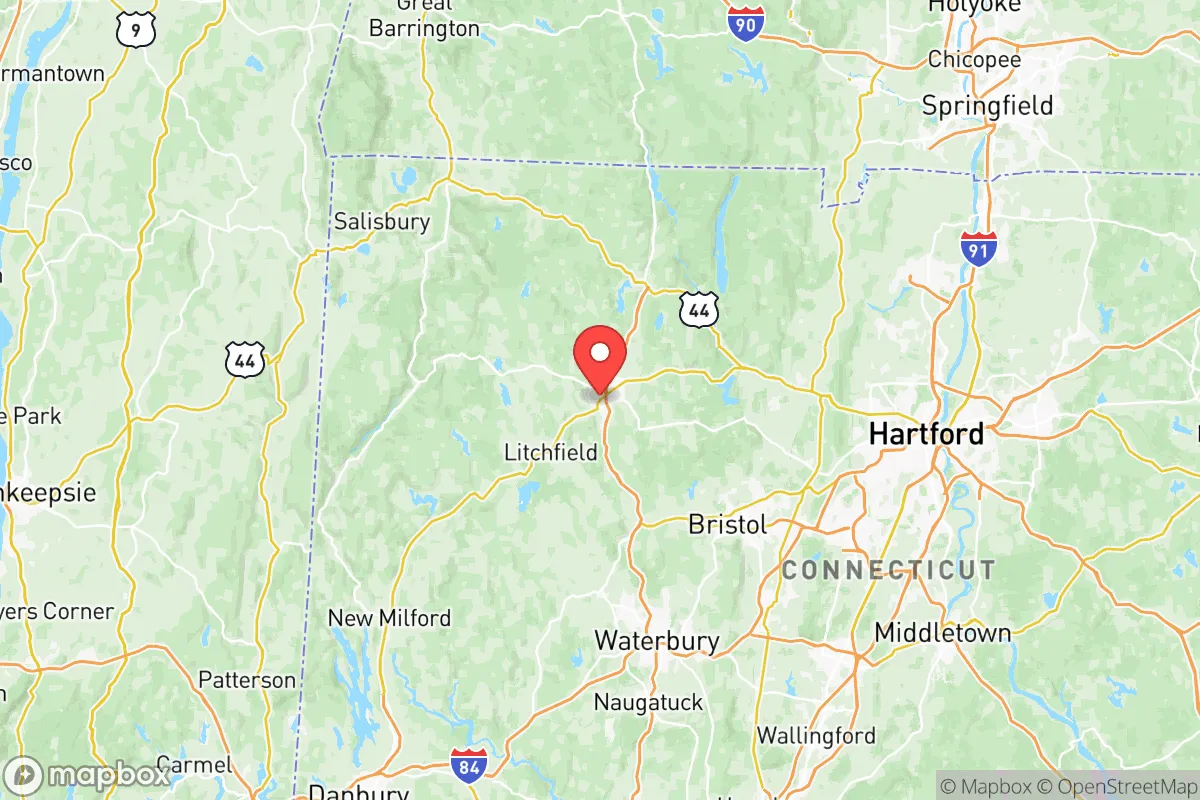
Northwest Hills Planning Region County, Connecticut, offers a broad spectrum of quality-of-life options, from walkable town centers with commuter rail access to quiet, wooded hillsides and working farms. The county’s character shifts noticeably from its southeastern edge, where larger towns like Torrington provide urban amenities, to its more remote northern and western reaches, where villages like Norfolk and Cornwall attract those seeking solitude and natural beauty. Residents are drawn to different parts of the county based on their tolerance for commuting, desire for cultural amenities, and preference for either a tight-knit village atmosphere or a more independent rural lifestyle.
Largest town(s) & population centers
Torrington, the county’s largest municipality with roughly 35,000 residents, serves as the primary commercial and civic hub. Daily life here centers on the downtown area along Main Street, which features a mix of local shops, restaurants, and the Warner Theatre for performing arts. The city offers a range of housing from historic Victorians to newer subdivisions, and its position along Route 8 provides a direct commute to Waterbury and, via connections, to Hartford and New Haven. Winsted, the second-largest population center in the county, is a smaller former mill town with a compact downtown and a strong sense of community, anchored by Northwestern Connecticut Community College. Both towns have a more urban feel than the rest of the county, with higher densities of apartments and multi-family homes, and they attract a mix of young professionals, families, and retirees who value walkability and local services.
Smaller towns & rural pockets
Beyond the population centers, the county is defined by its many smaller towns and unincorporated villages. Litchfield, the historic county seat, is a quintessential New England town with a well-preserved village green, upscale boutiques, and a reputation for excellent public schools. Kent, along the Housatonic River, draws artists and weekenders with its galleries and scenic covered bridges. Norfolk, in the county’s far north, is a true rural retreat with a population under 1,700, known for its music festival and vast state forest lands. Cornwall and Sharon are similarly remote, with winding roads, stone walls, and large tracts of conserved land. These smaller towns offer a lifestyle centered on outdoor recreation—hiking, fishing, and skiing at Mohawk Mountain—and a slower pace of life, but they require longer drives for groceries, medical care, and employment.
Cost & lifestyle range
The cost of living and lifestyle options vary dramatically across the county. The overall cost-of-living index is 105 (just above the national average), but this masks significant internal differences. At the higher end, towns like Litchfield and Kent command median home values well above the county’s $311,700 average, often exceeding $400,000 for single-family homes, with a correspondingly high concentration of professionals, second-home owners, and retirees. At the more affordable end, Torrington and Winsted offer median home values closer to $200,000–$250,000, with a median rent of $1,169 that is accessible to renters and first-time buyers. The average commute of 28.5 minutes is manageable for those working within the county or in nearby Waterbury, but residents commuting to Hartford or Fairfield County often face 45–60 minute drives. Lifestyle choices are stark: a family in Torrington can walk to a public library and a supermarket, while a family in Cornwall may need to drive 20 minutes for a gallon of milk but enjoys immediate access to hiking trails and zero light pollution.
This county is best suited for those who value a strong sense of place and are willing to trade some convenience for space, scenery, or community character. Young families and professionals thrive in Torrington and Winsted for their affordability and services, while retirees, artists, and remote workers gravitate toward the smaller towns for their tranquility and natural surroundings. The county’s diversity of settings means that almost anyone—from the urban-oriented to the back-to-the-lander—can find a niche, provided they are comfortable with a car-dependent lifestyle and a pace of life that slows considerably outside the main corridors.

Crime in Northwest Hills Planning Region County
Generally safer than 71% of comparable U.S. locations.
Violent CrimeViolent Crime Analysis
Property CrimeProperty Crime Analysis
Crime Analysis
Northwest Hills Planning Region County, Connecticut, is one of the safest regions in the state, with violent crime rates significantly below both state and national averages. The region's overall violent crime rate stands at just 110.2 incidents per 100,000 residents, while property crime occurs at a rate of 1,156.6 per 100,000. These figures place the Northwest Hills among the most secure rural and suburban areas in New England, though property crime remains a concern that residents should address through standard precautions.
Crime in context
To understand the safety of Northwest Hills, it is essential to compare its crime rates to broader benchmarks. The region's violent crime rate of 110.2 per 100,000 is roughly one-third the national average of approximately 380 per 100,000 and well below the Connecticut state average of about 190 per 100,000. Property crime in the region, at 1,156.6 per 100,000, is also lower than the national average of roughly 1,950 per 100,000 and slightly below the Connecticut average of around 1,300 per 100,000. These statistics reflect a region where serious violent offenses like homicide, robbery, and aggravated assault are rare events, and where property crimes such as burglary and larceny, while more common, are still less frequent than in most of the country. The data is compiled from the Connecticut State Police and local municipal reports, covering towns such as Torrington, Winsted, Litchfield, New Milford, and Kent.
What residents experience
For those living in the Northwest Hills, daily life is characterized by a strong sense of security, particularly in the smaller, more rural towns. Violent crime is so infrequent that a single incident often becomes a topic of local discussion for weeks. The most common safety concerns are thefts from unlocked vehicles, occasional burglaries in more isolated homes, and vandalism. Residents in towns like Litchfield and Kent report feeling safe walking at night and leaving doors unlocked during the day, though law enforcement advises against the latter. The region's low population density and strong community ties act as natural deterrents to crime. However, the more populated areas, such as Torrington, experience slightly higher rates of both violent and property crime, consistent with its status as the region's largest city and commercial hub. Torrington's rates, while higher than its rural neighbors, still remain below state averages.
Neighborhood-level variation and judicial concerns
While the Northwest Hills is overwhelmingly safe, there is notable variation between its towns and even within them. The most rural communities, such as Cornwall, Sharon, and Salisbury, consistently report the lowest crime rates in the region, often with violent crime rates approaching zero. In contrast, Torrington and Winsted see a higher volume of calls for service, including drug-related offenses and domestic disputes, which can elevate their crime statistics. A critical factor for residents to consider is the judicial environment. The region falls under the jurisdiction of the Litchfield Judicial District, which, while not as progressive as districts in larger cities like Hartford or New Haven, has seen increasing pressure from state-level policies that prioritize diversion programs and reduced incarceration. Progressive prosecutorial policies, even in a generally conservative rural area, can lead to shorter sentences and more plea deals for property offenders, potentially increasing recidivism and the number of criminals on the street. This is a particular concern for property crime, as repeat offenders may cycle through the system quickly. Residents in towns closer to the New Milford area, which borders more populous Fairfield County, should be especially vigilant, as cross-border crime from areas with more lenient justice systems can spill over. Overall, the Northwest Hills remains a very safe place to live, but the trend toward progressive criminal justice reform at the state level warrants attention from anyone prioritizing public safety.
* Values derived from national, state, county, city and local statistics and may differ in a specific area. Last updated: 2026-06-12T18:07:36.000Z
Narrative content on this page is AI-generated and may contain mistakes. Verify any details that matter before acting on them.
ReloMaps may earn a commission from affiliate links at no extra cost to you.

