 Popular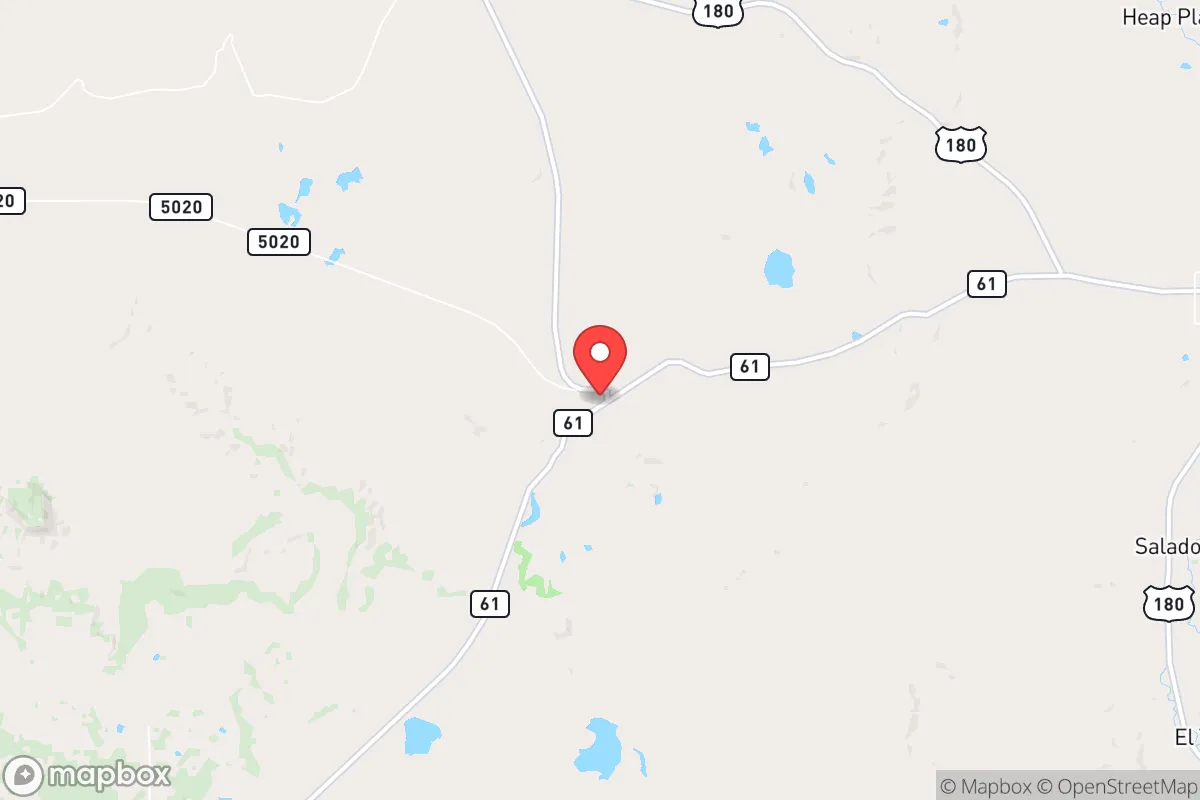
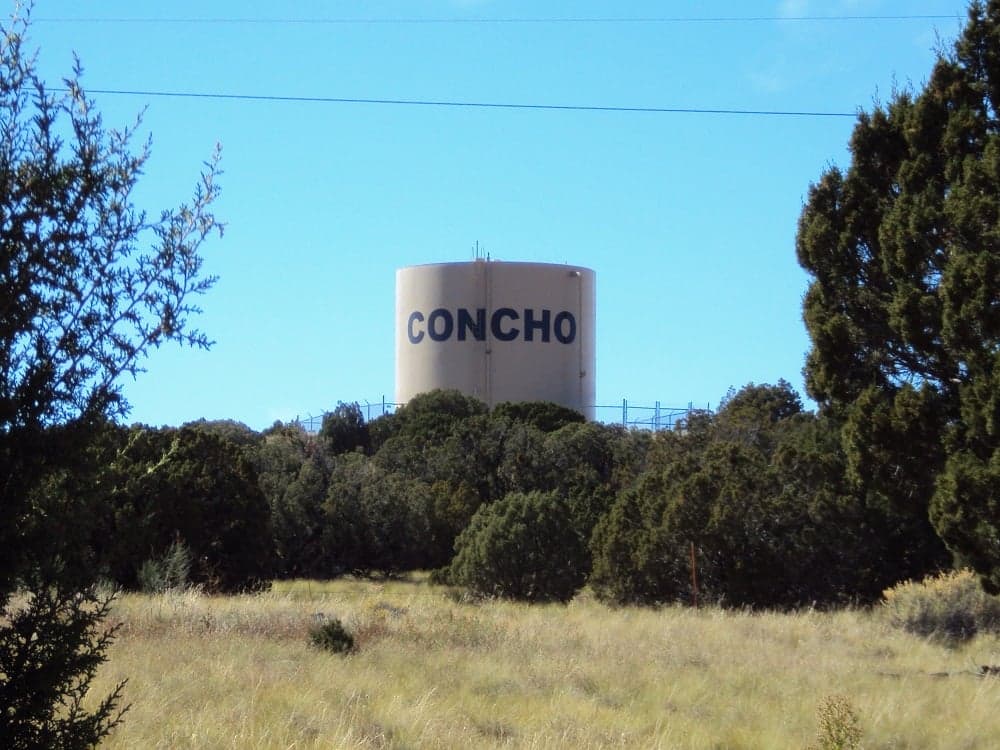
Photo: Wikipedia
Political ClimatePolitical Climate in Concho, AZ
District shown is the primary district for this city’s centroid. Cities may span multiple districts.
Local Political AnalysisPolitical Analysis of Concho, AZ
Concho leans solidly Republican, with a Cook PVI of R+7 that places it well to the right of the state of Arizona as a whole, which sits at EVEN. This isn't a recent shift—the area has been reliably red for decades, driven by a mix of ranching families, retirees from conservative states, and a strong independent streak. If you look at voting patterns in Apache County, Concho and its immediate surroundings consistently break for GOP candidates, even as the county itself sometimes flips blue thanks to the Navajo Nation and the college town of Show Low. The trajectory here is stable: no signs of a purple wave, just a quiet, steady conservatism that feels baked into the landscape.
How it compares
Compared to the rest of Arizona, Concho is a political outlier in a state that's become a national bellwether. The state's EVEN rating reflects a fierce tug-of-war between Maricopa County's suburban swing voters and the deep-blue strongholds of Tucson and the Navajo Nation. Concho, by contrast, is more like the rural counties of Graham or Greenlee—places where Democratic candidates rarely break 40%. Drive 30 minutes west to Show Low, and you'll find a more moderate mix, with a visible presence of second-home owners from Phoenix who lean center-right. Head south to Springerville, and the politics get even more conservative, almost libertarian in flavor. The real contrast is with Flagstaff, two hours northwest, which is a liberal island in northern Arizona—think college town, environmental activism, and a city council that pushes progressive housing policies. In Concho, those conversations feel like they're from another planet.
What this means for residents
For conservative residents, Concho is a comfortable fit. Local government is small and hands-off, property taxes are low, and there's little appetite for new regulations on land use or business. Gun rights are a given, and the Second Amendment isn't debated—it's assumed. You can shoot on your own property, and nobody blinks. For liberal residents, life is more about finding your niche. There's no organized progressive community, but the area's live-and-let-live ethos means you won't face open hostility—just a lot of polite disagreement. The nearest Democratic club is in Show Low, and it's a small, low-key group. Politically, you'll be in the minority, but the practical impact is muted: local issues like road maintenance, water rights, and wildfire management tend to be nonpartisan. National politics come up at the diner, but people mostly care about the price of hay and the elk season.
Culturally, Concho stands apart from the rest of Arizona in its pace and priorities. There's no HOA drama, no light rail debates, no city council fights over short-term rentals. The big policy distinction is water: Concho sits on a fragile aquifer, and the local conversation is about conservation and well permits, not the Colorado River compact that dominates Phoenix politics. You'll also notice a stronger libertarian streak than in the state as a whole—people here genuinely dislike being told what to do, whether by Phoenix or Washington. That independence is the real political identity of Concho, more than any party label. It's a place where your vote is your business, and your neighbor's vote is theirs, and the biggest political event of the year might be the county fair's pie contest.

State Political ClimatePolitical Climate in Arizona
State Political AnalysisPolitical Environment in the State
Arizona is the quintessential swing state, with a Cook Partisan Voting Index of EVEN that perfectly captures its knife’s-edge balance. Over the past 20 years, the state has shifted from a reliably Republican stronghold—where George W. Bush won by 11 points in 2004—to a true battleground decided by margins under one percent in 2020 and 2024. The dominant coalition is no longer the conservative Sun City retiree bloc; it’s a three-way tug-of-war between fast-growing Maricopa County suburbs, a resurgent Democratic base in Tucson and Phoenix, and deep-red rural counties that still deliver massive GOP margins. For a relocator, this means your vote will genuinely matter, but the political experience varies wildly depending on whether you land in Chandler, Flagstaff, or Yuma.
Urban vs. rural divide
The political map of Arizona is a story of two Arizonas. Maricopa County, home to 60% of the state’s population, is the entire battleground: it voted for Biden in 2020 by 2 points and for Trump in 2024 by roughly the same margin, swinging the state each time. Within Maricopa, the suburbs tell the real story. Mesa and Gilbert remain conservative strongholds, while Scottsdale and Paradise Valley have trended purple as wealthy professionals shift left on social issues. Chandler and Tempe are now reliably blue, driven by tech workers and Arizona State University’s 50,000 students. Meanwhile, Tucson (Pima County) is the state’s second Democratic anchor, voting blue by 15+ points, but its surrounding suburbs like Oro Valley and Marana lean red. Rural Arizona—Yavapai County (Prescott), Mohave County (Kingman, Lake Havasu City), and Cochise County (Sierra Vista)—votes 65-75% Republican, delivering margins that keep statewide races close. The Navajo Nation and Hopi Reservation in the northeast are reliably Democratic, though turnout is lower. The urban-rural gap here is as stark as any state outside the Deep South.
Policy environment
Arizona’s policy landscape is a mix of conservative fundamentals and pragmatic moderation. The state has a flat income tax rate of 2.5% (phased down from 4.5% in 2023), and no estate or inheritance tax. Property taxes are low—around 0.6% of assessed value—but sales taxes can hit 10%+ in cities like Phoenix and Tucson. The regulatory posture is business-friendly: Arizona is a right-to-work state with no state-level minimum wage above the federal $7.25 (though cities like Flagstaff have local ordinances at $15.50). Education policy is a flashpoint: the state has the nation’s most expansive Empowerment Scholarship Account (ESA) program, giving nearly all families access to public funds for private or homeschool use. Healthcare is mixed—Medicaid expansion under the Affordable Care Act was adopted in 2013, but the state has some of the loosest scope-of-practice laws for nurse practitioners. Election laws are a national bellwether: Arizona has no-excuse mail-in voting (used by 80%+ of voters), but also passed strict voter ID laws in 2022 requiring proof of citizenship for federal elections. The state’s 11 electoral votes and competitive U.S. Senate seats mean national attention is constant.
Recent policy direction
Over the past five years, Arizona has moved in a distinctly conservative direction on several fronts, while maintaining some libertarian quirks. Gun and self-defense law: In 2024, Arizona became a permitless carry state (HB 2744), allowing concealed carry without a permit. Stand-your-ground laws have been on the books since 2018. Parental and education rights: The ESA program expanded in 2022 to universal eligibility, and a 2023 law (SB 1699) requires schools to notify parents of any changes to a student’s mental, emotional, or physical health—a direct response to transgender student policies. Speech and privacy: No state-level shield law for journalists, but a 2022 law (HB 2586) bans “deepfake” electioneering. Medical and bodily autonomy: A near-total abortion ban from 1864 was briefly revived by the state Supreme Court in April 2024, then repealed by the legislature in May; abortion is now legal up to 15 weeks. Property rights: Arizona is a strong “right-to-farm” state, limiting nuisance lawsuits against agricultural operations. Taxation: The flat tax rate was locked in by a 2022 ballot measure (Prop 132) requiring a supermajority for future tax increases. Voting and ballot access: The 2022 “Secure the Vote” law (SB 1260) requires proof of citizenship for all voting methods, a policy currently tied up in federal court. The overall direction is toward lower taxes, expanded school choice, and tighter election security, with social issues remaining volatile.
Civil unrest & political movements
Arizona has been a flashpoint for organized activism on both sides. The 2020 election audit in Maricopa County—dubbed the “Cyber Ninjas” audit—became a national symbol of election integrity concerns, drawing protests from both Trump supporters and voting rights advocates. Immigration politics are ever-present: Yuma and Nogales see regular border-crossing surges, and the state’s 2010 SB 1070 “show me your papers” law was a landmark in state-level immigration enforcement. Today, Tucson and Phoenix have sanctuary-city policies limiting local police cooperation with ICE, while Cochise County sheriffs openly cooperate with federal border patrol. The “Build the Wall” movement has a strong presence in rural areas, with armed civilian patrols occasionally reported near the border. On the left, the “Red for Ed” teacher strikes in 2018 mobilized 50,000+ educators and led to a 20% pay raise. Abortion rights activists have been highly visible since the 2024 1864 law controversy, with Planned Parenthood Arizona reporting a 300% spike in out-of-state patients. Election integrity remains the most divisive issue: in 2022, a Cochise County supervisor refused to certify election results, sparking a state Supreme Court case. A new resident will see yard signs, bumper stickers, and occasional protests, but the state is not experiencing the kind of sustained civil unrest seen in Portland or Seattle.
Projection
Over the next 5-10 years, Arizona is likely to remain a true swing state, but the demographic winds favor a slight leftward drift. The state is growing by roughly 100,000 people per year, with most newcomers arriving from California, Illinois, and Texas. These transplants tend to be younger, more diverse, and more moderate-to-liberal on social issues—especially in Maricopa County’s booming suburbs like Buckeye and Queen Creek, which are currently red but trending purple. The Latino population, now 32% of the state, is growing faster than any other group, and while Latino voters are not a monolith, they lean Democratic by about 20 points. However, rural counties are also growing, and the GOP’s base in places like Prescott and Lake Havasu City is aging but still reliable. The wildcard is the state’s independent voters—now 34% of the electorate—who swing wildly between cycles. Expect Arizona to be a top-3 presidential battleground for the next decade, with state-level control of the legislature (currently GOP) and governorship (currently Democrat Katie Hobbs) remaining up for grabs. A relocator moving in now should expect to live in a state where every election is a nail-biter, and where policy can flip dramatically with each cycle.
For a new resident, the bottom line is this: Arizona offers a low-tax, business-friendly environment with a conservative tilt on fiscal and education policy, but it’s a live-fire zone on social issues and election integrity. If you’re a conservative, you’ll find a welcoming home in the suburbs and rural areas, with strong gun rights and school choice. If you’re a liberal, you’ll find solid ground in Phoenix, Tucson, and Flagstaff, with a growing activist community and competitive elections. The practical takeaway is to expect political volatility—your property values, school funding, and even your voting method could change significantly in the next five years. Come for the weather and the economy, but be ready to pay attention to politics, because in Arizona, your vote really does count.
* Values derived from national, state, county, city and local statistics and may differ in a specific area. Last updated: 2026-10-01T19:19:08.000Z
Narrative content on this page is AI-generated and may contain mistakes. Verify any details that matter before acting on them.
ReloMaps may earn a commission from affiliate links at no extra cost to you.

