 Popular
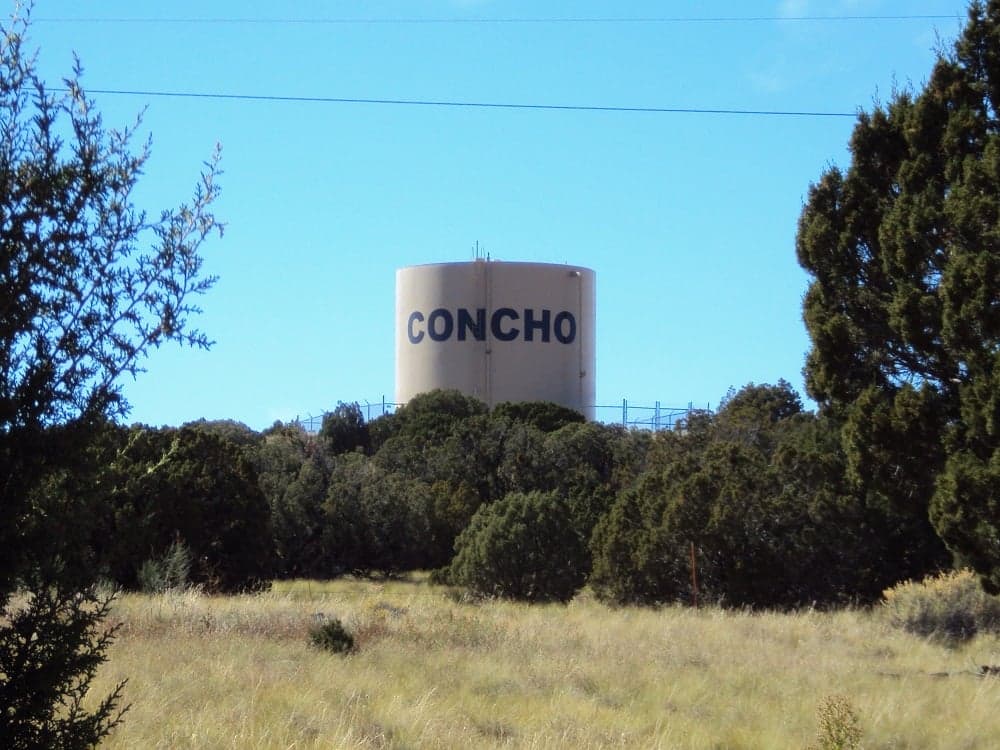
Photo: Wikipedia
Demographics of Concho, AZ
Affluence Level in Concho, AZ
A below-average socioeconomic profile. Incomes, home values, and educational attainment trail the U.S., with higher poverty and unemployment.
People of Concho, AZ
Concho, Arizona, is a small, unincorporated community in Apache County with a population of roughly 200–300 residents, characterized by a tight-knit, rural, and predominantly conservative identity. The population is overwhelmingly White (non-Hispanic), with a small Hispanic minority and very few other racial or ethnic groups, reflecting its history as a ranching and farming settlement. Distinctive markers include a strong Mormon pioneer heritage, a reliance on local agriculture and nearby employment in Springerville and St. Johns, and a quiet, family-oriented lifestyle centered on outdoor recreation and community churches. The area’s low density and sparse development mean that neighborhoods are loosely defined, but historic settlement patterns are still visible in the layout of the original townsite and surrounding ranchlands.
How the city was settled and grew
Concho’s human history begins in the late 19th century, when Mormon pioneers from Utah and the Little Colorado River settlements moved into the White Mountains region seeking fertile land and water for farming. The area was originally part of the vast Hispanic ranching frontier under Mexican and then American control, but the Mormon settlers—sent by church leaders to colonize the region—established the first permanent Anglo community in the 1880s. They built irrigation ditches from the Little Colorado River and its tributaries, creating a patchwork of small farms and cattle ranches. The original settlement clustered around what is now Old Concho, the historic core near the river, where the first homes, a school, and a meetinghouse were constructed. A second wave of homesteaders, including some non-Mormon ranchers and traders, arrived in the early 1900s, spreading into Concho Valley to the south and east, where larger ranches took shape. By 1950, the population remained under 100, with most families tied to cattle, hay, and small-scale dairy operations. The community never incorporated as a city, retaining its unincorporated status and a strong sense of pioneer identity.
Modern era (post-1965)
After the 1965 Immigration and Nationality Act, Concho saw little direct impact from new immigration, as the area’s remote location and limited job base did not attract significant foreign-born populations. Instead, the modern era has been defined by domestic in-migration, primarily of retirees, second-home buyers, and families seeking a rural lifestyle away from Phoenix and Tucson. This began in the 1970s and accelerated in the 1990s, as improved highways and the growth of Springerville and St. Johns made Concho a viable bedroom community. Newer subdivisions, such as Concho Estates and White Mountain Ranches, were platted on former ranchland, attracting a mix of out-of-state transplants from California, Colorado, and the Midwest. These areas are more dispersed and less dense than Old Concho, with larger lots and newer homes. The Hispanic population, historically small, grew modestly through the 2000s as some families moved from nearby Hispanic-majority towns like St. Johns for work in construction and services. However, Concho remains over 90% White non-Hispanic, with no significant Indian, East/Southeast Asian, or Arab communities. The population has hovered around 200–300 since 2000, with slow growth limited by water availability and the lack of major employers.
The future
Concho’s population is projected to remain small and stable, with modest growth driven by continued domestic in-migration of retirees and remote workers seeking affordable land and a conservative, rural environment. The community is not becoming more diverse; the Hispanic share may inch upward slightly, but the area’s cultural identity will likely stay rooted in its Mormon pioneer and ranching heritage. New development is concentrated in the Concho Estates and White Mountain Ranches subdivisions, where lots are large and water is provided by private wells, while Old Concho remains largely built out. The next 10–20 years will probably see a slow increase in population, perhaps to 400–500, as more people discover the area’s low cost of living and proximity to the Apache-Sitgreaves National Forest. However, water scarcity and the lack of municipal services will keep growth in check, preserving Concho’s character as a quiet, family-oriented enclave. For someone moving in now, Concho offers a stable, homogeneous community with strong social ties and a deliberate pace of life, but little ethnic or cultural diversity.
Concho is becoming a slightly older, more retiree-heavy version of its historic self, with a population that values privacy, self-sufficiency, and conservative values. For a family or individual seeking a low-density, rural setting with a clear cultural identity and minimal change, it remains a consistent choice—but those looking for diversity or urban amenities will find the area too isolated and homogeneous.

* Values derived from national, state, county, city and local statistics and may differ in a specific area. Last updated: 2026-10-01T19:19:08.000Z
Narrative content on this page is AI-generated and may contain mistakes. Verify any details that matter before acting on them.
ReloMaps may earn a commission from affiliate links at no extra cost to you.

