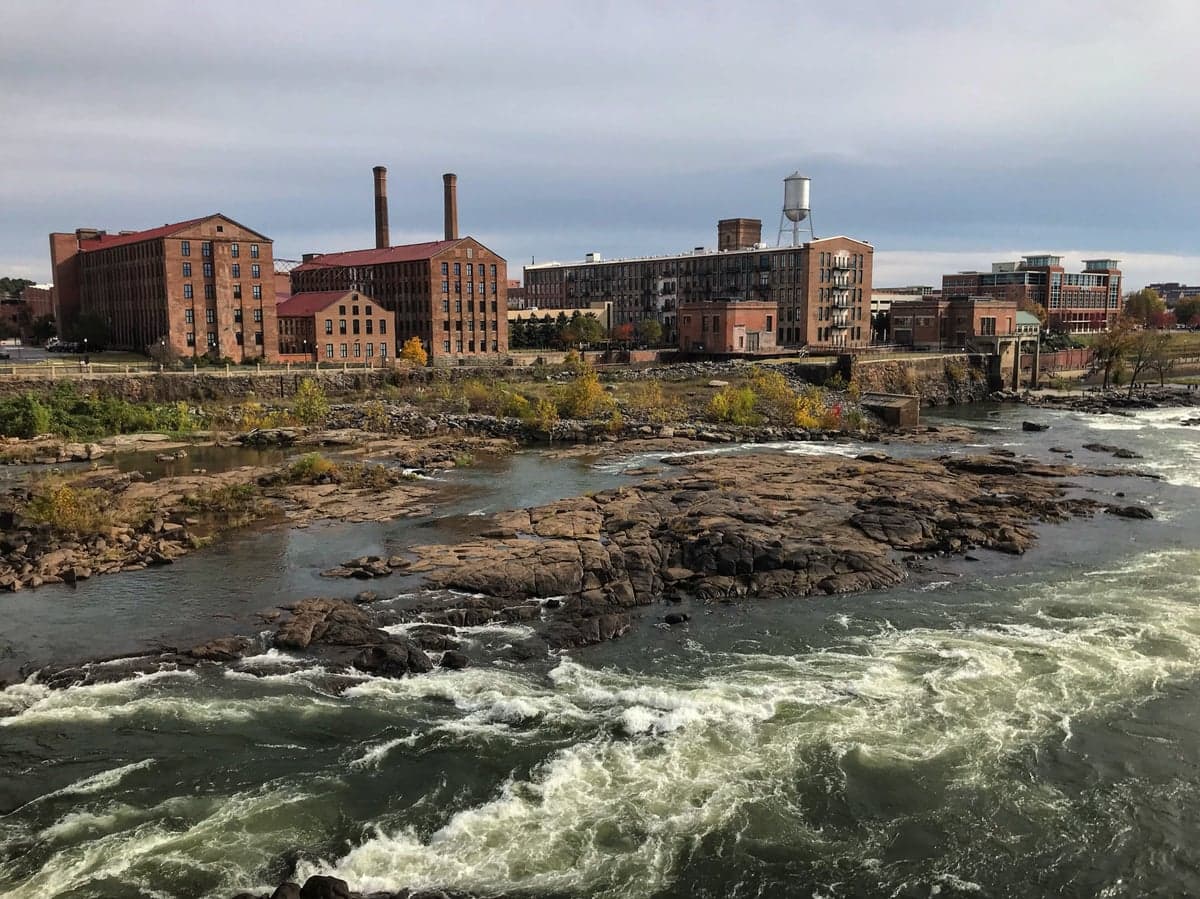
Photo: Wikipedia
Political ClimatePolitical Climate in Columbus, GA
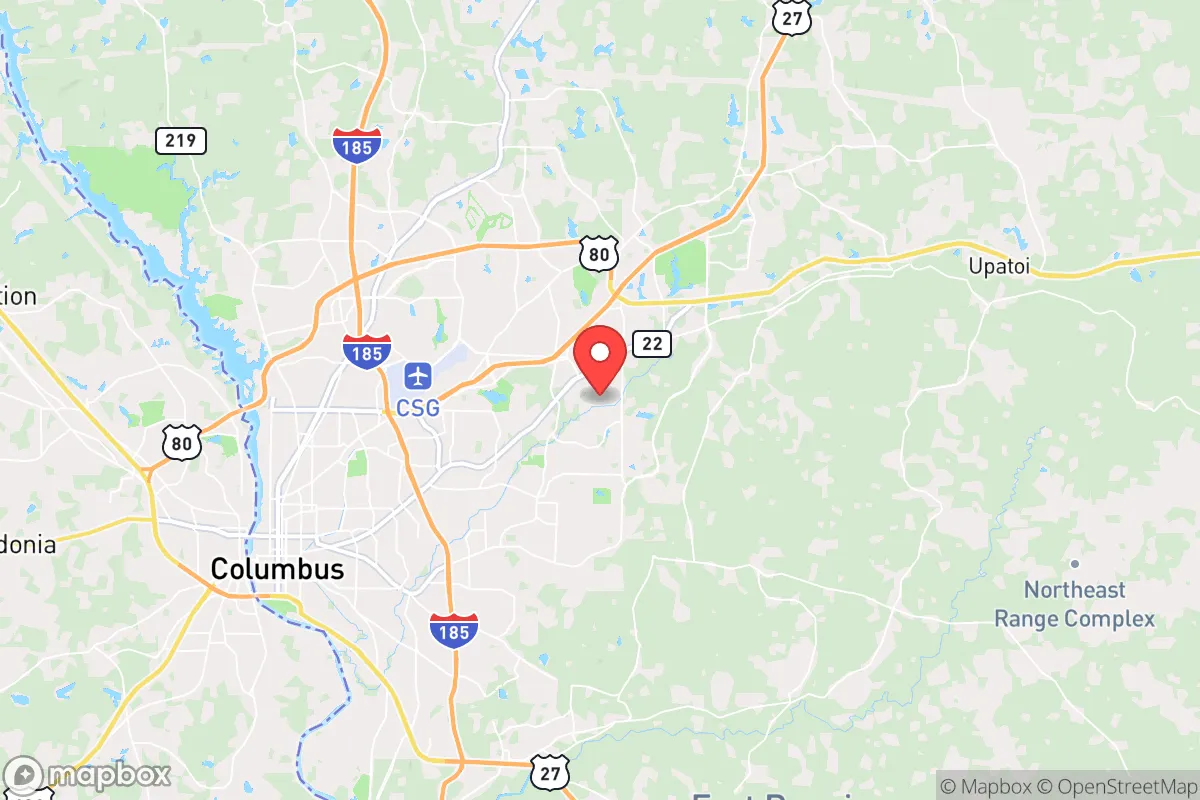
District shown is the primary district for this city’s centroid. Cities may span multiple districts.
Local Political AnalysisPolitical Analysis of Columbus, GA
Look, I’ve lived in Columbus long enough to remember when this town was a solid conservative stronghold, back when you could count on the local elections to reflect the values most of us grew up with. But over the last decade or so, the political climate has shifted noticeably. The Cook PVI now sits at D+4, meaning Columbus leans about four points more Democratic than the national average. That’s a real change from where we were, and it’s driven mostly by the growth of Fort Benning (now Fort Moore) bringing in a transient military population, plus an influx of folks from Atlanta and other blue areas who don’t always share the same priorities. The city council and county commission have gradually tilted left, and you see it in the policies they push—more regulations, higher taxes, and a general willingness to let government get involved in things that used to be left to families and local communities.
How it compares
If you drive just 20 minutes north to Phenix City, Alabama, or head east to Harris County, you’ll find a completely different political atmosphere. Those areas still vote reliably Republican, with local officials who are much more skeptical of government overreach. Even within Muscogee County, the contrast is stark: the rural parts of the county, like up near Midland, lean heavily conservative, while the city core and areas near the river have become increasingly progressive. It’s a tale of two worlds, really. Columbus itself is becoming an outlier in this part of Georgia, where most of the surrounding counties—like Lee, Russell, and Chambers in Alabama—are still solidly red. That means if you value limited government and personal freedoms, you might feel a bit out of step with the local leadership here.
What this means for residents
For those of us who’ve been here a while, the biggest concern is how this shift affects daily life. The city council has been more aggressive with zoning ordinances, business regulations, and even noise complaints—things that used to be handled informally. There’s also been a push for higher property taxes to fund social programs that many of us see as overreach. The school board has gotten more political too, with curriculum changes that prioritize progressive social agendas over traditional academics. If you’re a small business owner or a parent who wants to raise your kids with conservative values, you’re increasingly having to keep an eye on what the local government is doing. The good news is that the state legislature in Atlanta still leans conservative, so there are limits to how far Columbus can go—but that doesn’t stop the local push for more government control.
Culturally, Columbus has always had a strong military and Southern heritage, but you can feel the tension between that old-school identity and the new progressive wave. The city has embraced things like bike lanes, public art projects, and “equity” initiatives that feel more like a checklist from a coastal city than something that fits our community. There’s also been a noticeable uptick in property crime over the past few years, which some attribute to softer policing policies. If you’re considering a move here, just know that the political climate is in flux—and if you value personal freedom and limited government, you’ll want to pay close attention to local elections and maybe look at neighborhoods in the northern part of the county, where the conservative spirit still holds strong.

State Political ClimatePolitical Climate in Georgia
State Political AnalysisPolitical Environment in the State
Georgia has shifted from a reliably Republican stronghold to a true battleground state over the past two decades, with its 2020 presidential vote flipping blue for the first time since 1992 and both Senate seats going Democratic in 2021. The state’s overall lean is now a razor-thin +0.2% Republican at the presidential level, driven by explosive growth in the Atlanta metro area that has swamped the GOP’s traditional advantage in rural and exurban counties. For a conservative considering relocation, the key takeaway is that Georgia is no longer the safe red state it was in the 2000s—it’s a contested environment where your vote matters more than ever, but where state-level policy still largely reflects conservative priorities.
Urban vs. rural divide
The political map of Georgia is a study in stark contrasts. Metro Atlanta, home to roughly 60% of the state’s population, is the engine of Democratic gains. Fulton County (Atlanta) and DeKalb County are deep blue, delivering margins of 70-80% for Democrats. The real story is the suburban ring: Cobb, Gwinnett, and Henry counties—once reliably Republican—flipped blue in 2016 and have stayed there. In 2020, Gwinnett County gave Biden a 58-41 margin, a stunning reversal from its 52-47 Romney win in 2012. Meanwhile, rural south Georgia and the northern mountain counties remain deeply red. Murray County in the northwest voted 84% for Trump, while Bacon County in the southeast hit 88%. The exurban counties like Forsyth and Cherokee north of Atlanta are still solidly Republican (65-70% Trump), but they’re growing fast and seeing in-migration from blue areas, slowly eroding margins. The divide isn’t just urban vs. rural—it’s Atlanta vs. everywhere else, with the capital’s gravitational pull reshaping the entire state’s politics.
Policy environment
State-level policy in Georgia remains broadly conservative, even as the electorate tightens. The state has a flat income tax of 5.49%, with a scheduled phase-down to 4.99% by 2029, and no estate or inheritance tax. Property taxes are locally set but capped by the state’s homestead exemption. The regulatory climate is business-friendly, with Georgia ranking in the top 10 for ease of doing business. On education, the state has a robust school choice program—the Georgia Promise Scholarship Act (2024) provides $6,500 per student for private school or homeschooling expenses. Parents also have strong rights under the state’s parental involvement laws. Healthcare policy is mixed: Georgia did not expand Medicaid under Obamacare, but the state’s Waiver Program (2023) imposes work requirements on able-bodied adults. Election laws tightened after 2020 with SB 202 (2021), which requires photo ID for absentee ballots, limits drop boxes, and bans mobile voting. Critics call it voter suppression; supporters call it election integrity. For a conservative, the policy environment is largely favorable, but the constant pressure from Atlanta-based progressive activism means these gains require constant defense.
Trajectory & freedom
Georgia’s trajectory on personal freedom is a mixed bag trending in the right direction on most fronts. On gun rights, Georgia is a constitutional carry state since 2022 (HB 218), allowing permitless carry for anyone 21 or older who can legally possess a firearm. This was a major win for Second Amendment advocates. On parental rights, the state passed the Parents’ Bill of Rights (SB 449) in 2022, requiring schools to notify parents of any medical or counseling services and prohibiting instruction on sexual orientation or gender identity in K-3. Medical freedom took a hit with the state’s strict COVID-era mandates, but those have since expired. Property rights are strong—Georgia has no statewide rent control, and zoning is largely local. The biggest freedom concern is the growing influence of Atlanta’s progressive policies bleeding into state law. The 2024 “Safe Schools” bill (HB 147) that would have banned transgender athletes from women’s sports failed in the Senate, a sign that cultural battles are getting tougher. Overall, Georgia is becoming more free on guns and parental rights, but less free on cultural issues as the Atlanta metro’s values shift the state’s center of gravity.
Civil unrest & political movements
Georgia has seen its share of political flashpoints. The 2020 election aftermath was particularly intense, with Trump’s call to Secretary of State Brad Raffensperger and the subsequent Fulton County grand jury investigation creating a years-long political firestorm. The “Stop the Steal” movement had a strong presence in rural and exurban counties, with rallies at the state capitol. On the left, the Atlanta-based activist network has been highly organized, pushing for voting access, criminal justice reform, and defunding the police—though the latter failed to gain traction. The Cop City protests in 2023-2024, centered on a planned police training facility in DeKalb County, turned violent with arson attacks and a state of emergency declared. Immigration politics are heated: Georgia has a strict E-Verify mandate for employers (HB 87, 2011), but the influx of migrants through the southern border has put pressure on Atlanta’s social services. The Gaston County sanctuary city debate never materialized, but several Atlanta suburbs have declared themselves “welcoming cities.” For a new resident, the visible political tension is mostly in Atlanta proper—outside the perimeter, life is quieter, but the cultural divide is real and growing.
Projection
Over the next 5-10 years, Georgia will likely continue its slow drift toward purple status, driven by demographic trends that favor Democrats. The Atlanta metro is adding 100,000+ new residents annually, many from blue states like California and New York, and these newcomers tend to vote Democratic. The state’s Hispanic population, now 10% of the electorate, is growing and leans left. Rural counties will continue to shrink and redden, but they can’t outvote Atlanta’s growth. The 2026 governor’s race and 2028 presidential contest will be toss-ups. For a conservative moving in now, expect to see: continued Republican control of the state legislature (thanks to gerrymandered maps), but with narrower margins; more cultural battles over education and transgender issues; and a persistent effort by Atlanta progressives to pass statewide ballot initiatives on Medicaid expansion and voting rights. The state will not flip blue overnight, but the trend line is clear. The best bet for conservatives is to settle in exurban counties like Forsyth, Cherokee, or Paulding, where growth is still manageable and the political culture remains conservative.
Bottom line for a new resident: Georgia offers a low-tax, business-friendly environment with strong gun rights and school choice, but you’re moving into a battleground state where your political voice matters. If you’re a conservative, you’ll find plenty of like-minded communities in the exurbs and rural areas, but you’ll also face constant cultural and political pressure from Atlanta. The state is still a net positive for freedom compared to the Northeast or West Coast, but it’s no longer the safe red haven it was 20 years ago. Choose your county carefully—your vote and your lifestyle will depend on it.
* Values derived from national, state, county, city and local statistics and may differ in a specific area. Last updated: 2026-04-29T20:16:23.000Z
Narrative content on this page is AI-generated and may contain mistakes. Verify any details that matter before acting on them.
ReloMaps may earn a commission from affiliate links at no extra cost to you.

