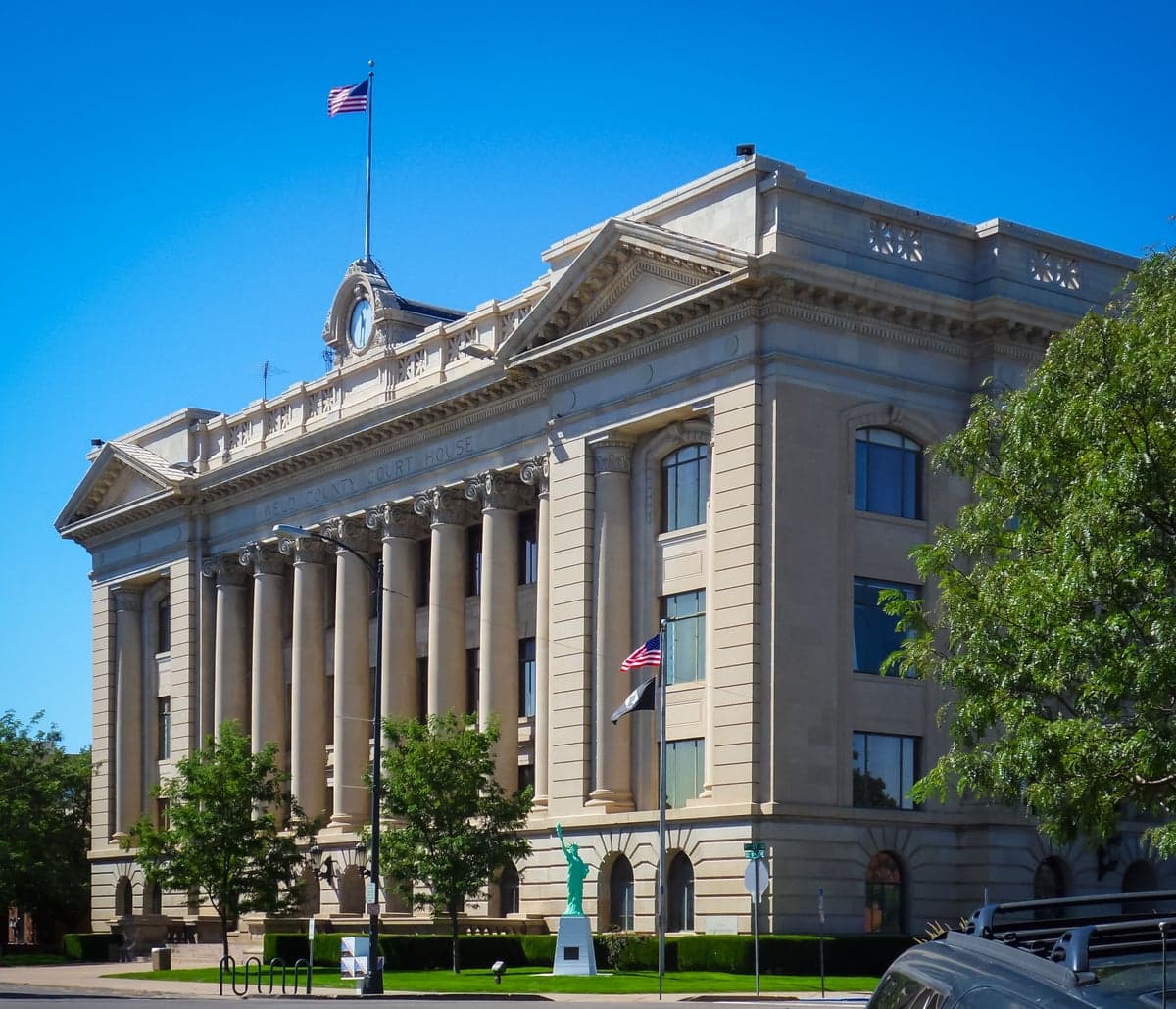
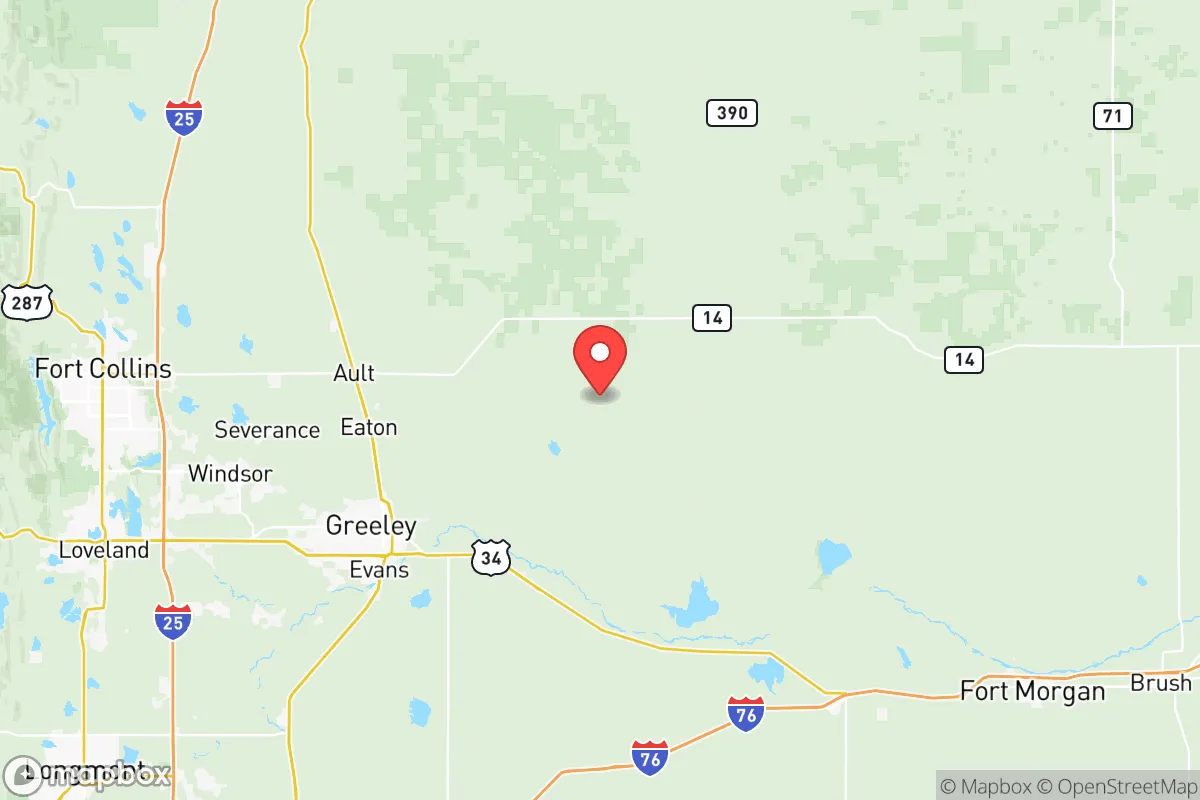
Photo: Wikipedia
Personal Sovereignty in Weld County
Viable for self-reliance. Generally workable, though some barriers may limit total independence.
What does Personal Sovereignty tell us?
Personal Sovereignty measures your capacity for self-reliance and independence with minimal government friction. Higher scores mean fewer barriers between you and the way you want to live... but it assumes you have the space you need and good neighbors.
What does this tell us?
Personal Sovereignty measures your capacity for self-reliance and independence with minimal government friction. Higher scores mean fewer barriers between you and the way you want to live... but it assumes you have the space you need and good neighbors.
State Policy
Energy independence: Net exporter (110% of energy produced in-state)
Personal Liberty
Homesteading

Personal Liberty Analysis
Weld County, Colorado, offers one of the strongest personal sovereignty environments in the Front Range, defined by a consistently low-tax, low-regulation county government that actively resists state-level mandates. For individuals and families prioritizing autonomy, the county’s ethos of self-reliance is backed by concrete policy: no county-level income tax, a property tax rate that remains among the lowest in metro-adjacent Colorado, and a Board of Commissioners that has repeatedly declared the county a "Second Amendment Sanctuary" and a "Sanctuary for the Unborn." This creates a governance climate where local control and individual decision-making are the default, not the exception, particularly when compared to neighboring Boulder or Denver counties.
Tax burden and regulatory posture in Weld County
Weld County’s tax structure is deliberately lean. The county levies no personal or corporate income tax, relying instead on a property tax rate that, as of 2025, averaged roughly 55 mills across the county — notably lower than Denver’s 75+ mills. Sales tax rates vary by municipality: Greeley sits at 7.65%, Windsor at 7.55%, and unincorporated areas often below 6%. The county’s regulatory posture is similarly light-touch. Building permit fees in unincorporated Weld are among the cheapest in the state, and the county planning department processes standard residential permits in under 30 days. There are no county-level rent control ordinances, no plastic bag bans, and no local energy moratoriums. However, readers should note that Johnstown and Firestone have adopted more restrictive oil and gas setback rules than the county standard, reflecting a patchwork of local control within the broader county. For a family or individual seeking to minimize tax drag and bureaucratic friction, Weld County’s unincorporated areas or smaller towns like Kersey or Pierce offer the lightest touch.
Self-defense and gun law specifics in Weld County
Weld County is one of Colorado’s most firearm-friendly jurisdictions. The county commission passed a Second Amendment Sanctuary resolution in 2019, and the Sheriff’s Office has publicly stated it will not enforce state-level magazine capacity limits or universal background check expansions that it deems unconstitutional. Concealed carry permits are issued on a shall-issue basis with a turnaround typically under 60 days; the county sheriff’s office processes applications directly and does not impose additional local restrictions beyond state law. Open carry is legal throughout the county, though individual municipalities like Greeley and Evans have ordinances prohibiting open carry in city buildings and parks. For daily carry, the practical environment is permissive: most businesses in rural and exurban Weld display no firearm restrictions, and the county’s gun culture is visible and normalized. The Weld County Shooting Range near Greeley provides a public, low-cost facility for practice. For a reader prioritizing self-defense rights, Weld County’s posture is among the strongest in Colorado, second only to more rural counties like Elbert or Lincoln.
Self-reliance and homesteading viability across Weld County
Weld County’s land use policies actively support homesteading and off-grid living, particularly in unincorporated areas. Minimum lot sizes in agricultural zones are 35 acres, which effectively prevents dense suburban encroachment and preserves space for private gardens, livestock, and alternative energy installations. The county has no building code requirement for grid-tied electricity; solar panels with battery storage are common, and several properties in New Raymer and Grover operate entirely off-grid. Rainwater collection is legal and encouraged, and the county allows composting toilets and private well installation with standard permitting. Zoning in unincorporated areas permits chickens, goats, and up to two horses per acre without special permits. However, readers should be aware that municipalities like Windsor and Severance have stricter HOA-driven covenants that limit livestock and outbuildings. For maximum self-reliance, the northeastern plains towns — Briggsdale, Stoneham, Hereford — offer the most permissive environment, with no zoning enforcement and minimal county oversight. The trade-off is distance from services: the nearest grocery store may be 30+ minutes away.
Personal liberties: parental rights, medical autonomy, speech, and property
Weld County’s governance reflects a strong presumption of individual liberty across several domains. Parental rights are explicitly protected: the county school board has adopted policies requiring parental notification for any curriculum involving sexual health or gender identity, and parents can opt children out of any lesson without penalty. Medical autonomy is respected in practice, with no county-level vaccine mandates and a health department that does not enforce state mask orders. Free speech is robustly protected; the county has not restricted public comment at meetings, and political signage is unregulated outside of municipal codes. Property rights are the bedrock of Weld’s identity: the county has a formal "Property Rights Task Force" that reviews any proposed regulation affecting land use, and eminent domain is rarely exercised. The county’s stance on short-term rentals is permissive — no county-level cap, though Greeley and Evans require a license. For a reader who values the ability to make decisions for their family without government interference, Weld County’s policy environment is intentionally designed to maximize that discretion.
Compared to other Colorado counties, Weld County ranks among the top tier for personal sovereignty, alongside Elbert, Lincoln, and Kiowa counties. Its advantage over more rural peers is proximity: Greeley and Windsor provide jobs, healthcare, and shopping within 20 minutes of most homestead-viable land. The trade-off is that Weld is growing fast — population increased roughly 20% between 2020 and 2025 — which brings pressure for more regulation. For now, the county’s political leadership and cultural identity remain firmly committed to low-tax, high-autonomy governance. For a single individual or family seeking a balance of freedom, affordability, and access to the Front Range economy, Weld County is arguably the strongest option in Colorado.

* Values derived from national, state, county, city and local statistics and may differ in a specific area. Last updated: 2026-06-23T19:19:41.000Z
Narrative content on this page is AI-generated and may contain mistakes. Verify any details that matter before acting on them.
ReloMaps may earn a commission from affiliate links at no extra cost to you.

