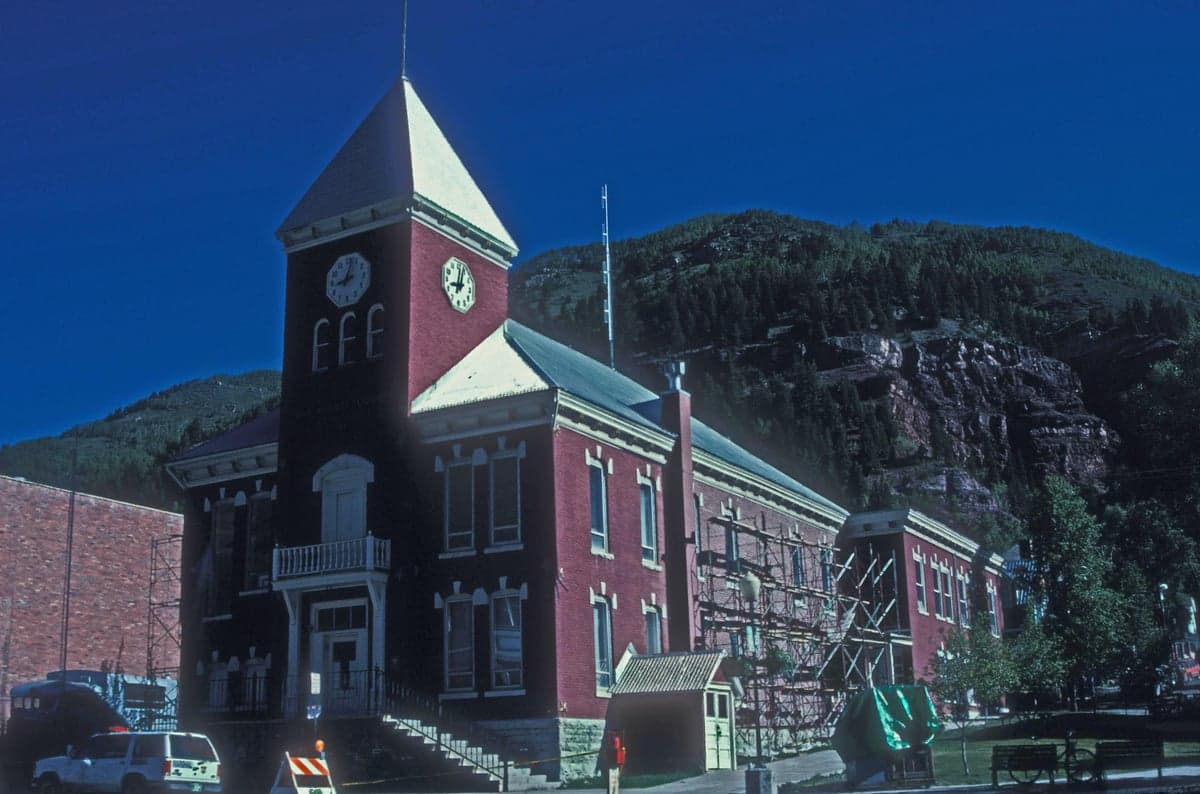
Photo: Wikipedia
Political ClimatePolitical Climate in San Miguel County
Showing district-level results — no local-only data available.
Local Political AnalysisPolitical Analysis of San Miguel County
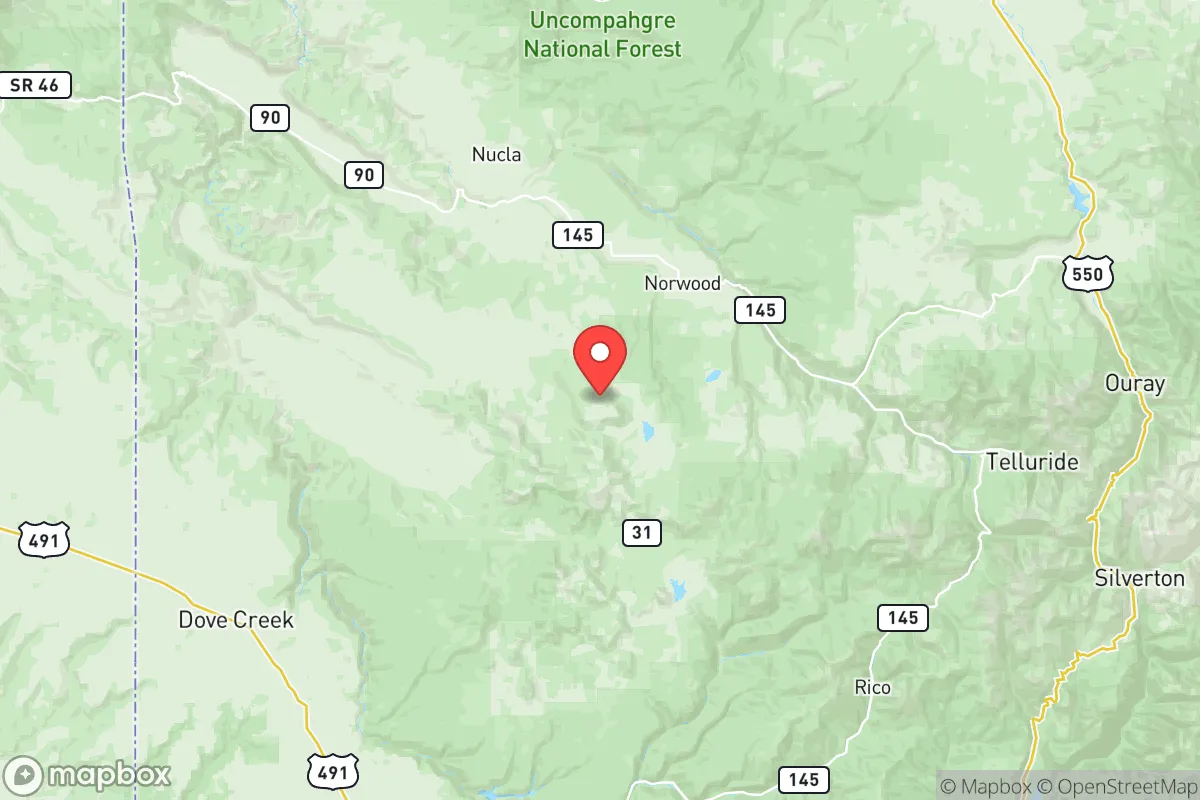
San Miguel County, Colorado, has historically been a place where folks valued their independence and didn't take kindly to outsiders telling them how to live, but over the last decade, it's shifted noticeably leftward. The Cook PVI now sits at R+5, which sounds moderate, but that's a far cry from the deep-red lean it once had, and the trajectory is concerning for anyone who values limited government and personal freedoms. The county's politics are a patchwork: the town of Telluride is a progressive stronghold, while Mountain Village and the more rural areas like Norwood and Placerville still hold onto a more traditional, live-and-let-live mindset. The real battleground is in the unincorporated areas around Sawpit and the San Miguel River corridor, where swing precincts can flip an election if enough locals show up.
How it compares
When you stack San Miguel County against the rest of Colorado, the contrast is stark and unsettling. The state as a whole has a Cook PVI of D+6, meaning it's solidly blue, driven by the Front Range cities like Denver and Boulder. San Miguel County's R+5 rating makes it one of the few remaining red-leaning counties in the western part of the state, but that's slipping fast. In the 2020 election, the county went for Biden by a narrow margin, a sign that the influx of wealthy, out-of-state transplants—many from blue states—is drowning out the voices of longtime ranchers, miners, and small-business owners. Compare that to neighboring Ouray County, which still leans red, or Montrose County, which is reliably conservative, and you see San Miguel becoming an outlier in its own region.
What this means for residents
For those of us who've been here a while, the political shift isn't just about election results—it's about daily life. The county government has increasingly pushed progressive policies that feel like government overreach, from strict short-term rental regulations that hurt property owners to land-use restrictions that make it harder to build a simple fence or add a shed without a pile of permits. There's a growing sense that your personal freedoms—like how you use your land, what you do with your vehicle, or even how you heat your home—are being nibbled away by well-meaning but intrusive ordinances. If you're a hunter, a rancher, or just someone who likes to be left alone, you're feeling the squeeze. The local school board and planning commission races are where the real fights happen now, and they're getting uglier every cycle.
Culturally, the divide is visible in Telluride versus the rest of the county. Telluride itself has become a playground for the ultra-wealthy, with a vibe that's more Aspen than authentic Colorado, while towns like Norwood and Placerville still have that old-school, no-nonsense character. The policy differences are sharp: Telluride has a plastic bag ban, strict noise ordinances, and a heavy focus on "equity" initiatives, while the rural areas push back on any new taxes or regulations. If you're considering a move here, know that where you buy matters—a lot. The county is beautiful, but the political climate is changing fast, and if you value personal liberty and a government that stays out of your business, you'll want to look hard at the rural precincts before you sign on the dotted line.

State Political ClimatePolitical Climate in Colorado
State Political AnalysisPolitical Environment in the State
Colorado has shifted from a classic purple swing state to a solidly Democratic-leaning state over the past two decades, with a Cook PVI of D+6 that masks deep internal divisions. The dominant coalition is a progressive urban-suburban axis centered in the Denver metro area, Boulder, and the I-25 corridor, which has consistently delivered statewide victories for Democrats since 2006. While the state still elects moderate Republicans in some local races, the overall trajectory has been a steady march leftward, accelerated by massive in-migration from blue states and a generational shift in the Front Range suburbs.
Urban vs. rural divide
The political map of Colorado is essentially a tale of two states. The urban core—Denver, Boulder, and the inner-ring suburbs like Aurora and Lakewood—votes overwhelmingly Democratic, often by 30-40 point margins. The I-25 corridor from Fort Collins down to Colorado Springs is a patchwork: Fort Collins and Loveland have trended blue, while Colorado Springs remains a conservative stronghold, though even there, El Paso County has shifted from R+15 to a more competitive R+5 over the last decade. The Western Slope and Eastern Plains are deeply red—places like Grand Junction (Mesa County) and Pueblo (once a union Democrat stronghold, now trending Republican) anchor the rural conservative vote. The key battleground has been the suburban ring: Jefferson County (Lakewood, Golden) flipped from red to blue in the 2010s, and Arapahoe County (Centennial, Littleton) is now reliably Democratic. The 2022 gubernatorial race saw Jared Polis win by 20 points statewide, but rural counties went for his Republican opponent by 30-40 points—a chasm that keeps the state politically tense.
Policy environment
Colorado’s policy environment is a mixed bag that leans progressive on most fronts, with some notable exceptions. The state income tax is a flat 4.4% (down from 4.55% in 2024 via a voter-approved reduction), and property taxes are relatively low compared to Texas or California, but the Taxpayer’s Bill of Rights (TABOR) still limits revenue growth and requires voter approval for tax hikes—a rare fiscal restraint that conservatives appreciate. However, the regulatory posture has become increasingly burdensome: the state has adopted California-style emissions standards, a strict oil and gas setback law (SB 19-181) that effectively bans new drilling near homes, and a paid family leave program funded by payroll taxes. Education policy is dominated by the teachers’ unions, with school choice limited compared to states like Florida or Arizona—charter schools exist but face heavy regulation. Healthcare is heavily regulated, with a state-run reinsurance program that has stabilized premiums but done little to lower costs. Election laws are among the most liberal in the nation: universal mail-in ballots, same-day registration, and no voter ID requirement at the polls (though a signature match is used). This has raised concerns about election integrity among conservatives, especially after the 2020 and 2022 cycles saw no major fraud but persistent distrust.
Trajectory & freedom
On the freedom index, Colorado is moving in the wrong direction for conservatives. The most alarming trend is the erosion of Second Amendment rights: in 2023, the legislature passed a ban on so-called “assault weapons” (SB 23-169) and raised the purchase age to 21, plus a three-day waiting period for all gun purchases. A 2024 law (HB 24-1349) imposed a 10-day waiting period and a “safe storage” mandate that critics say criminalizes lawful gun owners. Parental rights have taken hits too: the state passed a law (HB 21-1108) that allows minors to consent to certain medical procedures without parental notification, and a 2023 law (SB 23-188) expanded access to abortion and gender-affirming care for minors, overriding parental consent in some cases. Medical autonomy is under threat from vaccine mandates—Colorado had one of the strictest COVID-19 vaccine mandates for state employees, and while that’s expired, the precedent remains. Property rights are being squeezed by the aforementioned oil and gas setbacks and a 2024 “land use” bill (SB 24-213) that preempts local zoning to force higher-density housing, which many rural counties see as a federal-style overreach. On the positive side, the state has no income tax on Social Security benefits and a relatively low corporate tax rate, but the overall trajectory is toward more government control over daily life.
Civil unrest & political movements
Colorado has seen its share of political flashpoints. The 2020 protests in Denver were among the most intense in the country, with the city seeing over 100 consecutive nights of demonstrations, property damage, and a controversial police response that led to a consent decree with the DOJ. The “Defund the Police” movement had real traction in Denver, leading to a 2021 budget cut of $15 million from the police department, though most of that was later restored. On the right, the “Colorado Springs” model of conservative activism is alive, with groups like the Colorado Republican Party’s grassroots faction pushing for election integrity audits and school board takeovers. The 2022 election saw a wave of conservative school board wins in Douglas County and El Paso County, driven by parental rights concerns over critical race theory and LGBTQ curriculum. Immigration politics are a growing fault line: Denver has declared itself a “sanctuary city,” and the state passed a 2023 law (SB 23-276) that limits cooperation with ICE, leading to a surge of migrants bused from Texas. This has strained city resources and fueled backlash in suburbs like Aurora, where a 2024 city council election saw a conservative slate win on a platform of public safety and immigration enforcement. Election integrity remains a sore spot: the 2020 election saw a minor but vocal “Stop the Steal” movement in rural counties, and a 2022 audit of Dominion voting machines in Mesa County led to the indictment of the county clerk for allegedly allowing unauthorized access—a case that’s become a national symbol for both sides.
Projection
Looking ahead 5-10 years, Colorado is likely to continue its leftward drift, but with increasing friction. The demographic trends are clear: the Front Range is growing fast, with Colorado Springs and Fort Collins absorbing most of the new arrivals, many from California and Texas. These newcomers tend to be younger, more diverse, and more progressive, which will push the PVI further toward D+8 or D+10 by 2030. However, the rural-urban divide will widen, with the Eastern Plains and Western Slope becoming more radicalized against Denver’s control. The state’s housing crisis—driven by the 2024 land use bill and a shortage of 200,000 units—will likely fuel a backlash against overregulation, possibly leading to a TABOR-style tax revolt or a push for school choice expansion. The gun control laws will face legal challenges, but the state Supreme Court is now solidly liberal, so don’t expect relief there. The biggest wildcard is the 2026 gubernatorial race: if a moderate Republican can win back the suburbs, the trajectory could slow, but the current map suggests a Democratic hold. For a conservative moving in now, expect to live in a state where your vote in statewide races will be marginalized, but where local control in the suburbs and rural areas still offers some breathing room—for now.
For a new resident, the bottom line is this: Colorado offers stunning natural beauty, a strong economy, and relatively low taxes compared to the coasts, but you’ll be living in a state where the government is increasingly comfortable telling you what you can do with your property, your guns, and your kids. If you’re a conservative, you’ll want to settle in Colorado Springs, Douglas County, or the Western Slope—places where local politics still reflect your values. The Front Range suburbs are a battleground, and Denver is a lost cause. Come for the mountains, but be ready to fight for your freedoms at the ballot box and in the school board meetings.
* Values derived from national, state, county, city and local statistics and may differ in a specific area. Last updated: 2026-06-06T18:06:42.000Z
Narrative content on this page is AI-generated and may contain mistakes. Verify any details that matter before acting on them.
ReloMaps may earn a commission from affiliate links at no extra cost to you.

