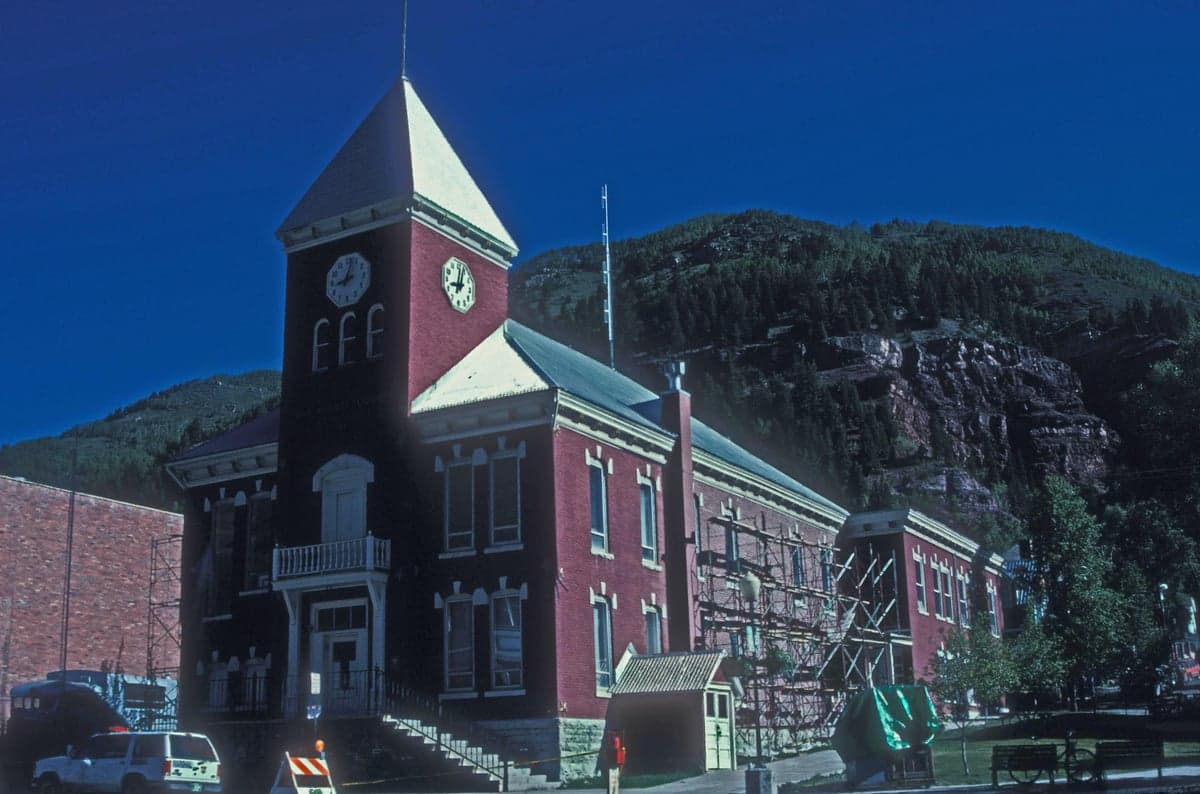
Photo: Wikipedia
Demographics of San Miguel County
Affluence Level in San Miguel County
An upper-middle-class area. Household wealth, education levels, and homeownership run ahead of national benchmarks.
People of San Miguel County
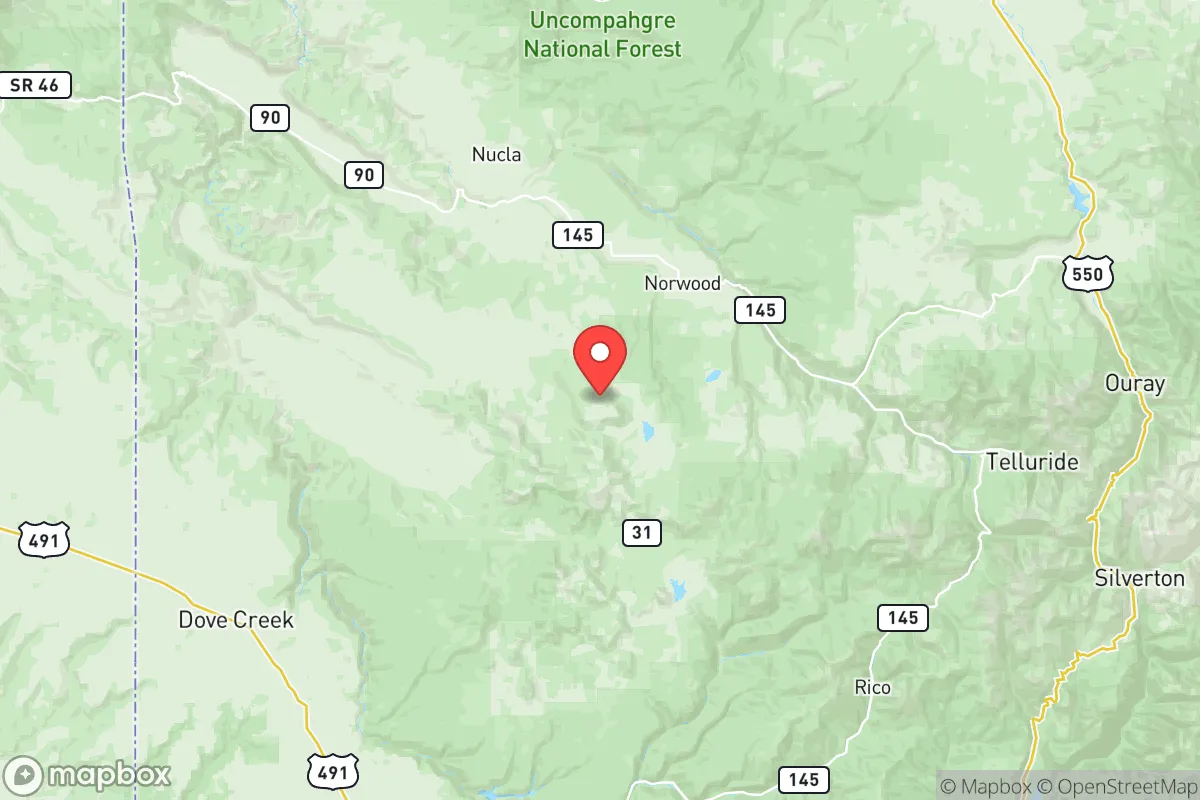
San Miguel County, Colorado, is home to roughly 8,000 residents, making it one of the state’s least densely populated counties, yet its character is defined by a striking blend of Old West mining heritage and modern, high-altitude luxury. The population is overwhelmingly White (84.6%) with a notable Hispanic minority (11.3%), and the county boasts an exceptionally high college attainment rate of 65.2%, reflecting its draw for educated professionals and second-home owners. The foreign-born share is low at 4.2%, and the county’s identity is shaped less by immigration and more by domestic migration of affluent outdoor enthusiasts and remote workers to towns like Telluride, Mountain Village, and Norwood. This is a place where the rugged individualism of 19th-century miners meets the lifestyle-driven relocation of 21st-century skiers and entrepreneurs.
Settlement & growth (pre-1960)
Long before European settlement, the Ute people, specifically the Weeminuche and Tabeguache bands, inhabited the San Juan Mountains, including the area now known as San Miguel County. They used the high valleys for summer hunting and seasonal travel, leaving behind trails and campsites that later became routes for miners. Spanish exploration touched the region in the 18th century, but no permanent Spanish settlements were established in this rugged terrain; the area remained Ute territory until the 1873 Brunot Treaty forcibly removed the Utes and opened the land to American mining claims.
The first major American wave arrived in the 1870s and 1880s, drawn by the discovery of gold and silver in the San Juan Mountains. Prospectors and miners—predominantly of Anglo-American, Irish, and Cornish stock—flooded into boomtowns like Telluride (founded 1878), Placerville, and Sawpit. These were rough, male-dominated camps where the promise of mineral wealth outweighed the dangers of avalanches, isolation, and labor disputes. The 1890s saw the arrival of immigrant miners from Italy, Austria, and Slovenia, who settled in Telluride’s “Smuggler” and “Liberty Bell” mine communities, forming small ethnic enclaves within the town. By 1900, Telluride’s population peaked at over 5,000, but the decline of hard-rock mining after World War I triggered a steep exodus. The county’s population fell to just 1,700 by 1930, and the region entered a long period of economic stagnation.
Agriculture and ranching provided a modest counterweight to mining’s decline. The town of Norwood, founded in the 1880s, became a hub for cattle and hay farming, attracting homesteaders from the Great Plains and the Midwest. The small community of Egnar, near the Utah border, served as a supply point for remote ranches. However, the county’s population remained sparse and predominantly Anglo through the 1950s, with a small Hispanic presence from earlier Spanish-Mexican ranching families in the western valleys. The post-war era brought little change; the county’s population hovered around 2,000 until the 1960s, when a new force began to reshape its destiny.
Modern era (post-1965)
The 1965 Hart-Cellar Act had minimal direct impact on San Miguel County, as its foreign-born population remains low (4.2%). Instead, the county’s modern demographic transformation was driven by domestic migration, beginning with the ski resort boom. The opening of the Telluride Ski Resort in 1972, followed by the development of Mountain Village in the 1980s, attracted a wave of affluent, college-educated migrants from coastal cities like New York, Los Angeles, and San Francisco. These newcomers were drawn by the promise of world-class skiing, stunning scenery, and a countercultural lifestyle that blended environmentalism with luxury. The county’s population more than doubled between 1970 and 2000, reaching 6,594 by the 2000 census.
This influx dramatically reshaped the county’s demographics. The Hispanic population, historically concentrated in Norwood and the western valleys, grew from a small share to 11.3% today, driven by both natural increase and migration of workers in construction, hospitality, and landscaping. Telluride and Mountain Village became enclaves of extreme wealth, with median home prices exceeding $1 million by the 2010s, while Norwood and Naturita (a small town on the county’s western edge) remained more affordable and working-class. The Black population (0.7%) and East/Southeast Asian population (0.2%) remain negligible, reflecting the county’s limited ethnic diversity and high cost of living. The Indian subcontinent population is effectively zero (0.0%).
The post-2020 remote work boom accelerated in-migration, particularly to Telluride and Mountain Village, as professionals from tech hubs bought second homes or relocated permanently. This has intensified housing shortages and cultural tensions between longtime locals—many of whom trace their roots to mining or ranching families—and newcomers who prioritize recreation and environmental preservation over resource extraction. The county’s college education rate of 65.2% is nearly double the national average, a direct result of this educated, affluent migration stream.
The future
San Miguel County is likely to continue its trajectory toward a bifurcated population: a wealthy, highly educated, predominantly White majority concentrated in Telluride and Mountain Village, and a smaller, more diverse working-class population in Norwood, Naturita, and Placerville. The Hispanic share is expected to grow modestly, driven by natural increase and continued labor demand in the service sector, but the county’s high housing costs will limit significant in-migration of lower-income groups. The foreign-born share will likely remain low, as the county lacks the industrial or agricultural base that attracts large immigrant communities elsewhere in Colorado.
The county is not homogenizing; rather, it is tribalizing into distinct economic and cultural enclaves. Telluride and Mountain Village will become even more exclusive, while Norwood and the western valleys may retain a more traditional, rural character. The cultural identity of the county is shifting from a mining-and-ranching ethos to a recreation-and-luxury ethos, a transition that is already well underway. Climate change poses a long-term risk: shorter ski seasons and increased wildfire danger could dampen future in-migration, but the county’s scenic beauty and cachet as a high-end destination are likely to sustain demand from wealthy buyers.
For someone moving in now, San Miguel County offers a choice between two distinct worlds: the high-cost, amenity-rich resort lifestyle of Telluride and Mountain Village, or the quieter, more affordable rural life of Norwood and the western valleys. The county is becoming a place where economic status increasingly determines social geography, and newcomers should expect a community that values environmental stewardship, outdoor recreation, and privacy—but also one where the gap between the wealthy and the working class is wide and growing. The population is stable in size but volatile in composition, and the next decade will likely see further consolidation of the county’s identity as a luxury mountain enclave with a working-class service periphery.

* Values derived from national, state, county, city and local statistics and may differ in a specific area. Last updated: 2026-06-06T18:06:42.000Z
Narrative content on this page is AI-generated and may contain mistakes. Verify any details that matter before acting on them.
ReloMaps may earn a commission from affiliate links at no extra cost to you.

