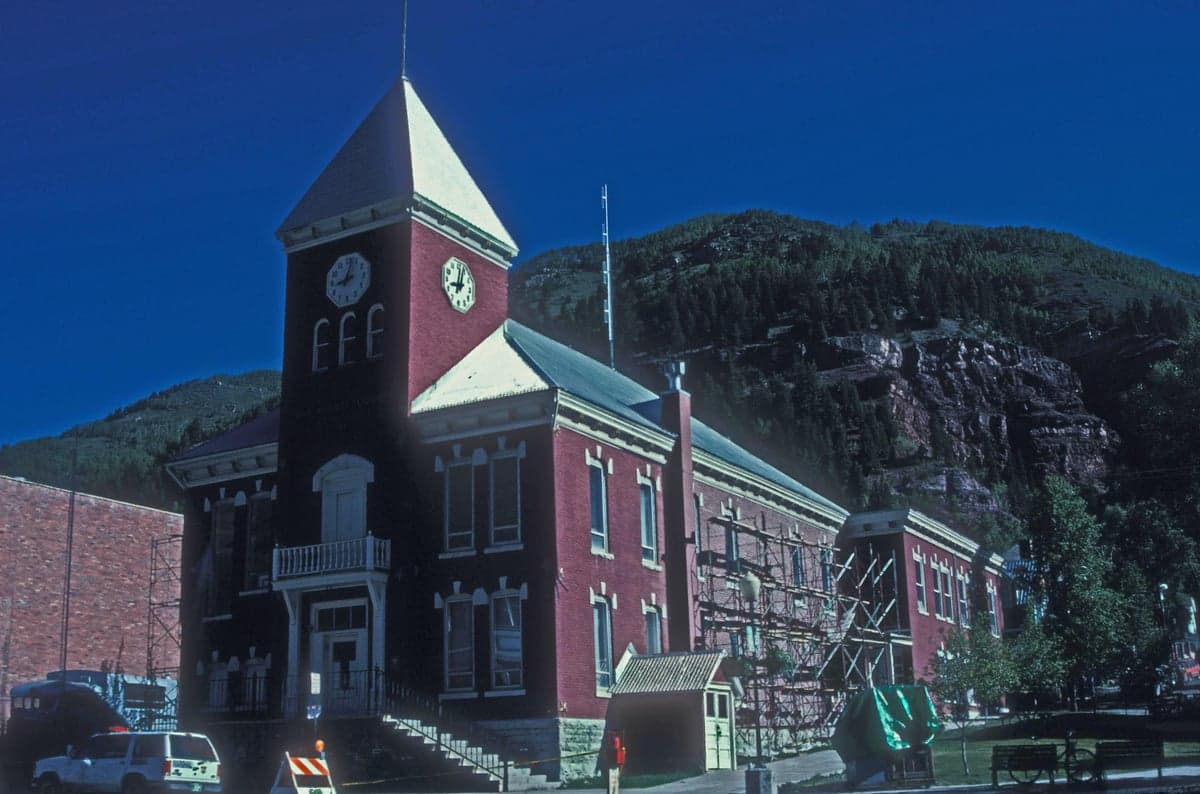
Photo: Wikipedia
Strategic Assessment of San Miguel County
Deep buffer from population centers and strategic targets. Low natural disaster risk and minimal exposure to border or coastal threats.
What does the Strategic Assessment tell us?
Our Strategic Assessment grades tactical survivability of an area. Major population centers, military targets, fallout zones, natural disasters, and border exposure all drive risk — lower exposure means a more defensible position in a crisis.
This is heavily inspired by Joel Skousen's Strategic Relocation book. Highly recommended you checkout the book ($)What does this tell us?
Our Strategic Assessment grades tactical survivability of an area. Major population centers, military targets, fallout zones, natural disasters, and border exposure all drive risk — lower exposure means a more defensible position in a crisis.
This is heavily inspired by Joel Skousen's Strategic Relocation book. Highly recommended you checkout the book ($)Strategic Pillars

Key Distances
Strategic Assessment Analysis
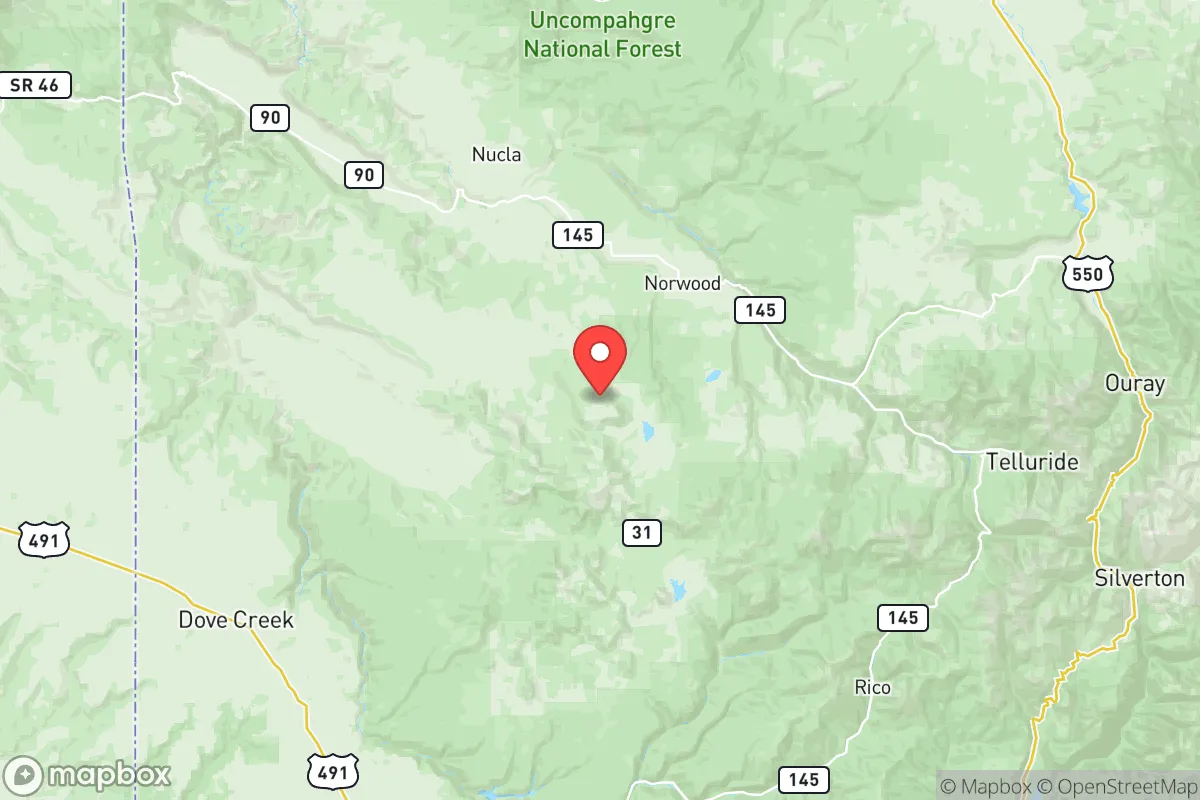
San Miguel County, Colorado, offers a compelling strategic position for those prioritizing resilience and distance from major population centers. Nestled in the remote San Juan Mountains, the county’s primary settlement, Telluride, sits roughly 330 miles from Denver and 250 miles from Salt Lake City—placing it well outside the immediate fallout zone of any major metropolitan target. The county’s rugged terrain and limited access routes create a natural buffer against the chaos of civic unrest, while its high-altitude environment (Telluride sits at 8,750 feet) provides a defensible redoubt for those willing to adapt to the challenges of mountain living.
Geographic position and natural advantages for long-term security
San Miguel County’s geography is its strongest asset. The county is defined by the Uncompahgre National Forest and the Lizard Head Wilderness, with the San Miguel River cutting through deep canyons. The only year-round paved access is via State Highway 145, which connects Telluride to the small towns of Mountain Village and Placerville. This single-point entry makes the area inherently defensible—anyone approaching from the east or west can be observed from miles away. The county’s elevation also means cooler summers and heavy snowfall in winter, which naturally limits the window for sustained ground travel by outsiders. For a relocator, the proximity to Norwood (population ~500) and Naturita (population ~500) provides small, self-sufficient communities that can serve as supply hubs without the vulnerability of a larger town. The San Juan Mountains also offer abundant water from snowmelt, with the San Miguel River and its tributaries providing year-round flow—a critical resource in any long-term scenario.
Risks, exposures, and proximity to fallout-relevant landmarks
While San Miguel County is remote, it is not without risks. The most significant exposure is the Moab uranium mill tailings site in Utah, roughly 90 miles west as the crow flies. Though the site is stabilized, any catastrophic event—natural or man-made—could release radioactive dust into prevailing winds, which typically blow eastward toward the Colorado Rockies. Additionally, the county sits within 150 miles of the Four Corners Power Plant and the San Juan Generating Station (both coal-fired), which, while not nuclear, represent industrial targets in a grid-down scenario. Closer to home, the Telluride Regional Airport (a general aviation field) could become a focal point for evacuation or resupply, but its single runway and high-altitude approach make it vulnerable to weather and sabotage. The county’s reliance on a single highway for evacuation is a double-edged sword: it limits access for outsiders but also creates a choke point if that road is blocked by avalanche, landslide, or civil unrest. For those concerned with mass casualty events, the nearest Level I trauma center is in Grand Junction, 130 miles north—a critical gap in medical infrastructure.
Practical resilience for a relocator: food, water, energy, and defensibility
For a relocator serious about self-sufficiency, San Miguel County offers a mixed bag. Water is abundant: the San Miguel River and its tributaries (including the Dolores River to the west) provide reliable surface water, but most residential properties rely on wells or municipal systems that could fail in a prolonged grid outage. Telluride’s municipal water supply comes from the Bridal Veil Creek and Ingram Creek, both gravity-fed, which is a plus—no pumps needed. Food security is a challenge: the growing season at 8,000+ feet is short (typically June to September), and the soil is rocky and thin. Most food must be imported from the Western Slope or the Front Range, making the county dependent on trucking routes that could be disrupted. Placerville and Norwood have small-scale farms and ranches, but they cannot support the county’s population of roughly 8,000 in a crisis. Energy is a bright spot: the county has high solar potential (over 300 sunny days per year), and many homes already have off-grid solar setups. The Ames Hydroelectric Plant, one of the oldest AC power plants in the world, still operates near Telluride, providing a localized power source that could be repurposed in a grid-down scenario. Defensibility is excellent: the terrain is steep and forested, with natural chokepoints at the San Miguel River canyon and the Dallas Divide. A small, well-armed group could hold the main access routes indefinitely, but the county’s dispersed population (many second homes and vacation rentals) means you’ll have neighbors who may not be prepared—or who may become liabilities.
The overall strategic picture for San Miguel County is one of high reward with significant trade-offs. It offers one of the best natural redoubts in the lower 48—remote, defensible, and water-rich—but demands serious preparation for winter survival, food storage, and medical self-reliance. The county’s conservative lean (San Miguel County voted +14 for Trump in 2020, though Telluride itself is more liberal) aligns with a prepper mindset, but the local economy’s dependence on tourism and second-home owners means many residents lack the grit for long-term hardship. For a single individual or family willing to invest in off-grid infrastructure and build relationships with the local ranching community in Norwood or Naturita, this area could serve as a viable fallback position. Just don’t expect to ride out a crisis in Telluride’s ski condos—the real resilience lies in the remote valleys and the people who already live there year-round.

* Values derived from national, state, county, city and local statistics and may differ in a specific area. Last updated: 2026-06-06T18:06:42.000Z
Narrative content on this page is AI-generated and may contain mistakes. Verify any details that matter before acting on them.
ReloMaps may earn a commission from affiliate links at no extra cost to you.

