Photo: Wikipedia
Quality of Life in Saguache County
A livable area that tracks near national norms for affordability, walkability, and neighborhood health.
What does Quality of Life tell us?
Quality of Life measures an area by evaluating factors like cost of living, nearby amenities, country club access, airport proximity, socioeconomic signals and neighborhood character. For large states, this is a general average — quality of life can vary dramatically between metro areas, suburbs, and rural communities within the same state.
What does this tell us?
Quality of Life measures an area by evaluating factors like cost of living, nearby amenities, country club access, airport proximity, socioeconomic signals and neighborhood character. For large states, this is a general average — quality of life can vary dramatically between metro areas, suburbs, and rural communities within the same state.
Cost of Living
33% below national average
95%
The Real Cost of Living in Saguache County for 2026
| Tier | Individual | Family (4) |
|---|---|---|
| Survival | $12k | $22k |
| Comfortable | $39k | $57k |
| Luxury | $98k+ | $152k+ |
| Elite (Top 5%) | $144k+ | $224k+ |
Quality-of-Life Analysis
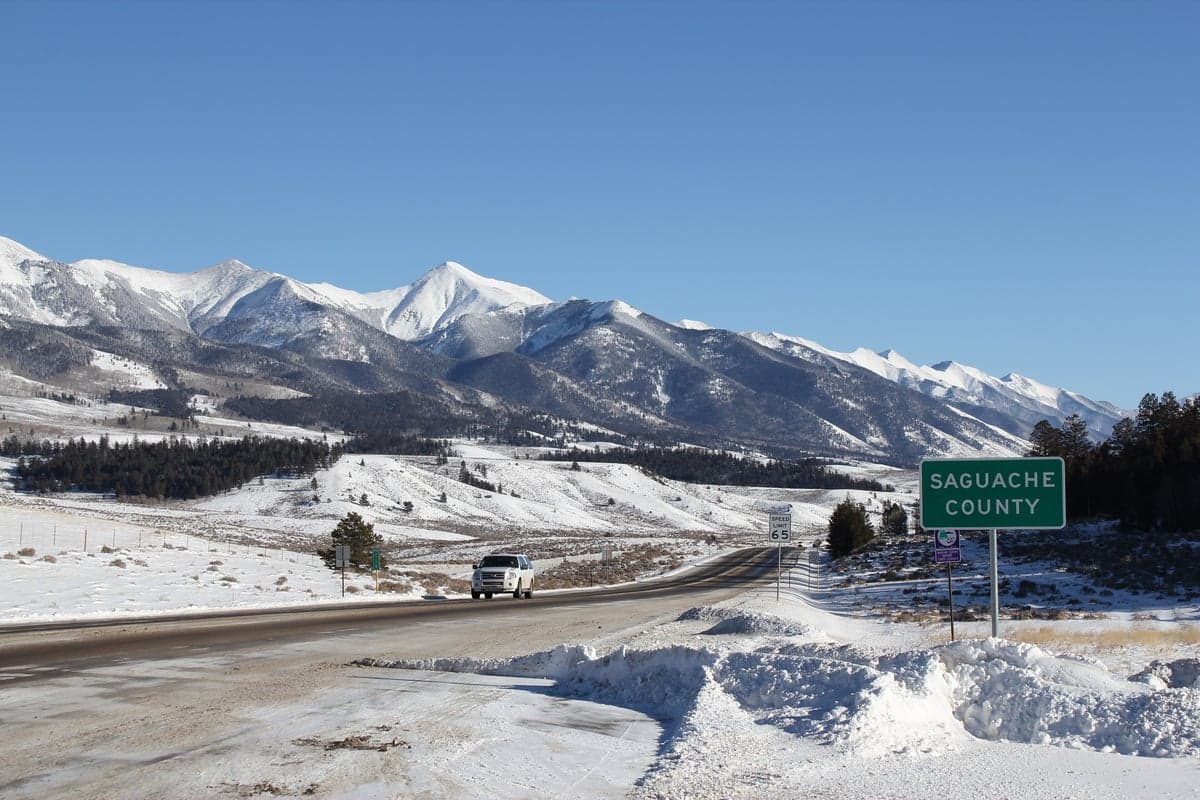
Saguache County, Colorado, offers a spectrum of quality-of-life options that range from the modest commercial hub of Center to the remote, off-grid homesteads scattered across the San Luis Valley floor. The county’s character is defined by its extreme rurality, high-altitude desert landscape, and a population of roughly 6,000 spread across 3,168 square miles. People drawn here typically fall into two camps: those seeking the lowest cost of living in Colorado and a quiet, agricultural lifestyle, and those pursuing complete solitude in the county’s most isolated pockets, where the nearest grocery store may be 40 minutes away.
Largest town(s) & population centers
The county’s largest population center is Center (pop. ~2,300), a working-class agricultural town that serves as the commercial and service hub for the southern end of the county. Daily life in Center revolves around potato farming, vegetable processing, and the local school district. The town has a small grocery store, a few fast-food outlets, a hardware store, and a medical clinic. The median home value in Saguache County is $200,000, and in Center, a three-bedroom home can often be found for $150,000–$180,000, making it one of the most affordable places to buy a house in all of Colorado. The county seat, Saguache (pop. ~500), is the administrative center, with the courthouse, a library, a post office, and a handful of locally owned businesses. Life in Saguache is quieter than in Center, with a stronger sense of history and a slower pace. The average commute across the county is just 20 minutes, reflecting how most residents work locally in agriculture, government, or small businesses, though some commute to Alamosa (30 minutes south) or Salida (45 minutes north) for employment.
Smaller towns & rural pockets
Beyond the two main towns, Saguache County contains several smaller communities and unincorporated areas that offer distinctly different living experiences. Crestone (pop. ~140) is the county’s most famous outlier — a spiritual and artistic enclave at the base of the Sangre de Cristo Mountains, home to multiple Buddhist and Hindu meditation centers, a ziggurat, and a small but dedicated community of artists and retirees. Life in Crestone is intentionally simple, with limited services (no gas station, one small market) and a strong off-grid ethos. Moffat (pop. ~120) is a tiny agricultural hamlet on the valley floor, where life centers on ranching and the local church. Villa Grove (pop. ~100) sits along U.S. 285 near the northern county line, offering a handful of homes and a post office, with residents often commuting to Salida for work and shopping. The most remote rural pockets are found along the county’s western edge, near the Rio Grande National Forest, where unpaved roads lead to isolated homesteads with no municipal water, sewer, or power — a lifestyle that appeals to those seeking maximum self-sufficiency and minimum government presence.
Cost & lifestyle range
The cost of living in Saguache County is exceptionally low by Colorado standards, with a composite index of 67 (100 = U.S. average). This figure masks a wide internal spread. At the low end, a renter in Center or Moffat can find a one-bedroom apartment for $746 (the county median rent), and a buyer can purchase a fixer-upper home for under $150,000. At the higher end, Crestone’s unique character drives up prices: a small cabin on a few acres near the mountain can sell for $300,000–$400,000, and rental options are scarce and often seasonal. The lifestyle range is equally broad. In Center, daily life includes access to a K-12 school, a library, a medical clinic, and a small supermarket. In Crestone, residents trade those conveniences for stunning mountain views, a tight-knit spiritual community, and a 30-minute drive to the nearest full-service grocery store in Alamosa. In the most remote rural areas west of Saguache, residents rely on solar panels, propane, and well water, and may drive 45 minutes to an hour for basic supplies. The county has no hospital, no chain big-box stores, and no movie theater — amenities that residents in any part of the county must travel to Alamosa, Salida, or even Colorado Springs (2.5 hours east) to access.
The person who thrives in Saguache County is someone who values space, quiet, and affordability over convenience and urban amenities. The county works well for agricultural workers, remote workers with stable internet (available in Center and Saguache, less reliable in Crestone and rural areas), retirees on fixed incomes, and those seeking a spiritual or off-grid lifestyle. It is not a fit for anyone who needs frequent access to healthcare, shopping, or entertainment, or who expects modern infrastructure in the more remote pockets. For the right person, however, the combination of $200,000 median home values, a 20-minute average commute, and the vast, open landscapes of the San Luis Valley offers a quality of life that is increasingly rare in Colorado.

Crime in Saguache County
Higher crime rates than 57% of comparable U.S. locations.
Violent CrimeViolent Crime Analysis
Property CrimeProperty Crime Analysis
Crime Analysis
Saguache County, a sprawling, rural expanse in Colorado's San Luis Valley, presents a complex safety picture defined by crime rates that significantly exceed state and national averages. With a violent crime rate of 428.1 per 100,000 residents and a property crime rate of 2,177.4 per 100,000, the county faces challenges that are more typical of urbanized areas than its remote, agricultural landscape would suggest. The sparse population—roughly 6,500 residents spread across towns like Saguache, Center, and Crestone—means that even a small number of incidents can dramatically skew per-capita statistics, but the raw data still warrants careful consideration for anyone researching relocation to the area.
Crime in context
To understand the severity, Saguache County's violent crime rate of 428.1 per 100,000 is nearly 20% higher than the Colorado state average and roughly double the national rate. Property crime, at 2,177.4 per 100,000, also outpaces both state and U.S. benchmarks. These figures place Saguache among the higher-crime rural counties in Colorado, a distinction shared with neighboring Alamosa and Rio Grande counties. The 12th Judicial District, which covers Saguache, Alamosa, Conejos, Mineral, and Rio Grande counties, has seen a progressive shift in prosecutorial philosophy in recent years, with district attorneys emphasizing diversion programs and reduced sentencing for non-violent offenses. While intended to reduce recidivism, critics argue this approach has contributed to a revolving-door effect, particularly for property crimes like burglary and theft, which account for the bulk of the county's criminal activity. The town of Center, a small agricultural hub, has reported a disproportionate share of these incidents, often linked to transient labor populations and limited law enforcement resources.
What residents experience
Daily life in Saguache County varies dramatically by location. In the unincorporated county seat of Saguache, residents frequently cite theft from vehicles and outbuildings as a persistent nuisance, with the sheriff's office responding to multiple calls per week during summer months. The town of Crestone, a spiritual and artistic enclave at the base of the Sangre de Cristo Mountains, experiences lower violent crime but has seen a rise in drug-related property offenses, including copper wire theft from vacant homes. Conversely, the tiny community of Villa Grove, with fewer than 200 residents, reports almost no violent crime, though its isolation means response times from the Saguache County Sheriff's Office can exceed 30 minutes. The county's lack of a municipal police force—relying entirely on the sheriff's department and Colorado State Patrol—means that proactive patrols are limited, and residents often rely on neighborhood watch groups and personal security measures. Domestic violence incidents, which make up a significant portion of the violent crime rate, are underreported in many rural areas, but local advocates note that the county's remote geography can make it difficult for victims to access shelters or restraining orders.
Neighborhood-level variation is stark but predictable. The most concentrated crime occurs along the U.S. Highway 285 corridor, particularly near the town of Saguache and the intersection with State Highway 17, where transient populations and seasonal workers congregate. In contrast, the western portion of the county, including the Baca Grande subdivision near Crestone, sees lower crime rates, though property crimes spike during the off-season when second homes sit vacant. The town of Moffat, with a population under 100, is considered the safest settlement, with no reported violent crimes in recent years. For prospective residents, the key takeaway is that property crime is the primary concern across the county, while violent crime is concentrated in specific, well-known areas. Anyone considering a move to Saguache County should budget for security systems, secure outbuildings, and maintain good relationships with neighbors—the most effective crime deterrent in this vast, under-policed landscape.
* Values derived from national, state, county, city and local statistics and may differ in a specific area. Last updated: 2026-07-20T00:50:21.000Z
Narrative content on this page is AI-generated and may contain mistakes. Verify any details that matter before acting on them.
ReloMaps may earn a commission from affiliate links at no extra cost to you.

