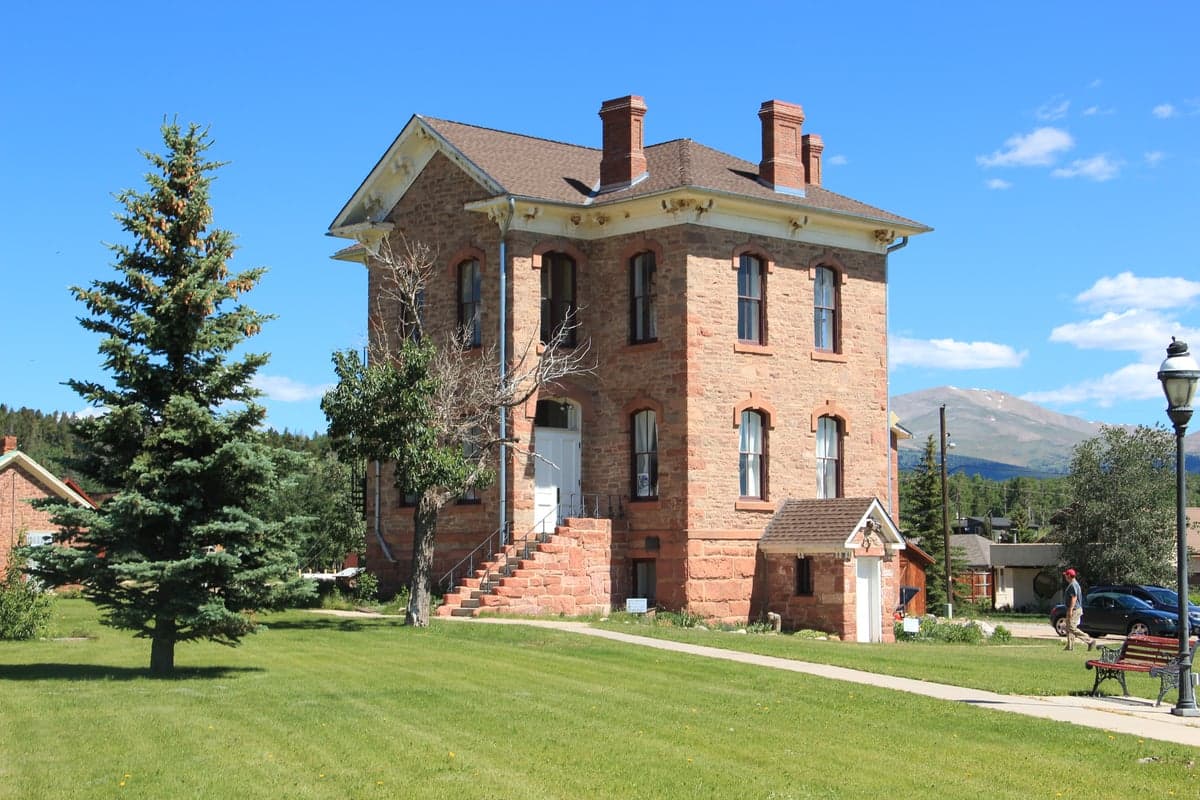
Photo: Wikipedia
Personal Sovereignty in Park County
Viable for self-reliance. Generally workable, though some barriers may limit total independence.
What does Personal Sovereignty tell us?
Personal Sovereignty measures your capacity for self-reliance and independence with minimal government friction. Higher scores mean fewer barriers between you and the way you want to live... but it assumes you have the space you need and good neighbors.
What does this tell us?
Personal Sovereignty measures your capacity for self-reliance and independence with minimal government friction. Higher scores mean fewer barriers between you and the way you want to live... but it assumes you have the space you need and good neighbors.
State Policy
Energy independence: Net exporter (110% of energy produced in-state)
Personal Liberty
Homesteading

Personal Liberty Analysis
Park County, Colorado offers one of the strongest personal sovereignty environments in the Front Range region, largely because its rural character, low population density, and county-level governance have resisted the progressive policy shifts seen in Denver and Boulder. For those prioritizing autonomy—whether from tax burdens, regulatory overreach, or restrictions on self-defense and family life—Park County presents a compelling alternative. The county’s 18,000 residents enjoy a political culture that leans heavily conservative, with a 2024 election margin of roughly +35 points for Republican candidates, and local officials consistently vote against state-level mandates on land use, energy, and health. However, sovereignty here is not absolute: Colorado’s state government imposes significant constraints on gun laws, property taxes, and medical freedom, so the real question is how much buffer Park County’s local enforcement and cultural resistance can provide.
Tax burden and regulatory posture: how Park County compares to the Denver metro
Park County’s property tax rate is among the lowest in Colorado, with a residential assessment rate of 6.95% and a mill levy that averages around 50 mills, translating to roughly $1,200 annually on a $400,000 home—less than half what a similar property costs in Jefferson County. The county has no local income tax, and sales tax sits at 2.9%, with the state’s 2.9% on top, totaling 5.8% in unincorporated areas. Towns like Fairplay and Alma add their own sales taxes (3% and 2% respectively), but overall the burden is light. Regulatory posture is equally favorable: Park County has no building codes in unincorporated areas, no zoning for agricultural or rural residential parcels over 35 acres, and no county-wide noise or light ordinances. This means a landowner near Jefferson or Como can build a cabin, install a septic system, or run a generator without county permits—something impossible in most Colorado counties. The trade-off is limited services: no county-wide trash pickup, no public water or sewer outside towns, and a planning department that processes permits in weeks, not months. For those fleeing the regulatory thicket of the Front Range, this is a feature, not a bug.
Self-defense and gun law specifics: what the Second Sanctuary designation means on the ground
Park County is a certified Second Amendment Sanctuary, meaning the sheriff’s office has publicly stated it will not enforce state-level gun restrictions it deems unconstitutional. In practice, this means no local enforcement of Colorado’s 2023 magazine capacity ban (over 15 rounds) or the 2024 universal background check expansion for private sales. The sheriff in Fairplay has explicitly said his deputies will not confiscate legally owned firearms, even if state law changes. Open carry is legal throughout the county, and concealed carry permits are issued with a 30-day turnaround—no training requirement beyond a basic safety course. The gun culture is deeply embedded: shooting ranges are common on private land, and the county’s annual “Freedom Festival” in Bailey features firearm demonstrations and self-defense classes. However, state preemption still applies to some areas: Denver’s assault weapons ban does not extend here, but the state’s red flag law (extreme risk protection orders) can be enforced by any judge, and Park County judges have issued fewer than 5 such orders since 2020. For preppers, the key takeaway is that local law enforcement is on your side, but a determined state attorney general could still prosecute under state law. The buffer is cultural, not legal.
Self-reliance and homesteading viability: lot sizes, zoning, and off-grid feasibility across Park County
Park County is one of the most homestead-friendly areas in Colorado, thanks to minimal zoning and large rural parcels. Unincorporated land—which covers 95% of the county—has no minimum lot size for single-family dwellings, and parcels as small as 1 acre can be developed with a well and septic. The county’s Platte Canyon area (near Bailey) has 5-acre minimums in some subdivisions, but further south around Hartsel and Lake George, 35-acre parcels are common and often sold raw with no covenants. Off-grid living is fully legal: solar panels, wind turbines, and propane generators require no permits, and composting toilets are allowed if they meet state health standards. The county’s water rights are complex—most wells require a permit from the state engineer, but exempt wells for domestic use (up to 15 gallons per minute) are routinely approved. The biggest constraint is altitude: most of Park County sits above 9,000 feet, with growing seasons of only 60-90 days, making traditional gardening difficult. Greenhouses and hydroponics are common workarounds. For those seeking true self-reliance, the South Park valley (around Fairplay) offers flat, irrigated land for hay and livestock, while the Mosquito Range foothills near Alma provide remote, forested parcels with year-round springs. The county’s lack of building codes means you can construct a shipping container home, a yurt, or a log cabin without inspections—but you also bear full liability for structural safety.
Personal liberties: parental rights, medical autonomy, speech, and property protections
Park County’s school board in the Park County RE-2 district (covering Fairplay, Alma, and Jefferson) has adopted a parental rights resolution that explicitly affirms parents’ authority over their children’s education, medical decisions, and curriculum opt-outs. The district does not teach critical race theory or comprehensive sex education, and parents can review all instructional materials. Medical autonomy is more constrained by state law: Colorado’s vaccine mandates for school attendance still apply, though Park County has the highest exemption rate in the state (over 15% of kindergartners). The county’s health department does not enforce mask mandates or business closures, and the sheriff has stated he will not enforce any future state-level health orders that restrict movement or assembly. Free speech is robust—the county has no hate speech ordinances, and public meetings in Fairplay regularly feature heated debates on land use and federal overreach. Property rights are the strongest in the region: Park County has no county-wide zoning, no rent control, and no short-term rental restrictions outside of Fairplay and Alma. The county’s comprehensive plan explicitly states that “private property rights shall not be infringed without just compensation,” and eminent domain has not been used in over 20 years. For those concerned about government overreach, this is a rare pocket where local officials actively resist state and federal mandates.
Overall, Park County ranks among the top 10% of Colorado counties for personal sovereignty, but it is not a libertarian utopia. State-level constraints on gun magazines, vaccine mandates, and water rights remain enforceable, and the county’s remote location means limited access to healthcare, supplies, and emergency services. Compared to Costilla County (which has a similar off-grid culture but weaker gun protections) or Huerfano County (which has more permissive water laws), Park County offers a balanced mix of low taxes, minimal regulation, and a deeply conservative local government. For preppers and survivalists, the key advantage is the cultural alignment: your neighbors, sheriff, and county commissioners share your distrust of centralized authority. The trade-off is that you must be self-sufficient—no one is coming to help if your well freezes or your solar panels fail. If that trade-off sounds like freedom, Park County is one of the best bets in the West.

* Values derived from national, state, county, city and local statistics and may differ in a specific area. Last updated: 2026-06-04T04:18:23.000Z
Narrative content on this page is AI-generated and may contain mistakes. Verify any details that matter before acting on them.
ReloMaps may earn a commission from affiliate links at no extra cost to you.

