
Photo: Wikipedia
Political ClimatePolitical Climate in Jefferson County
Showing district-level results — no local-only data available.
Local Political AnalysisPolitical Analysis of Jefferson County
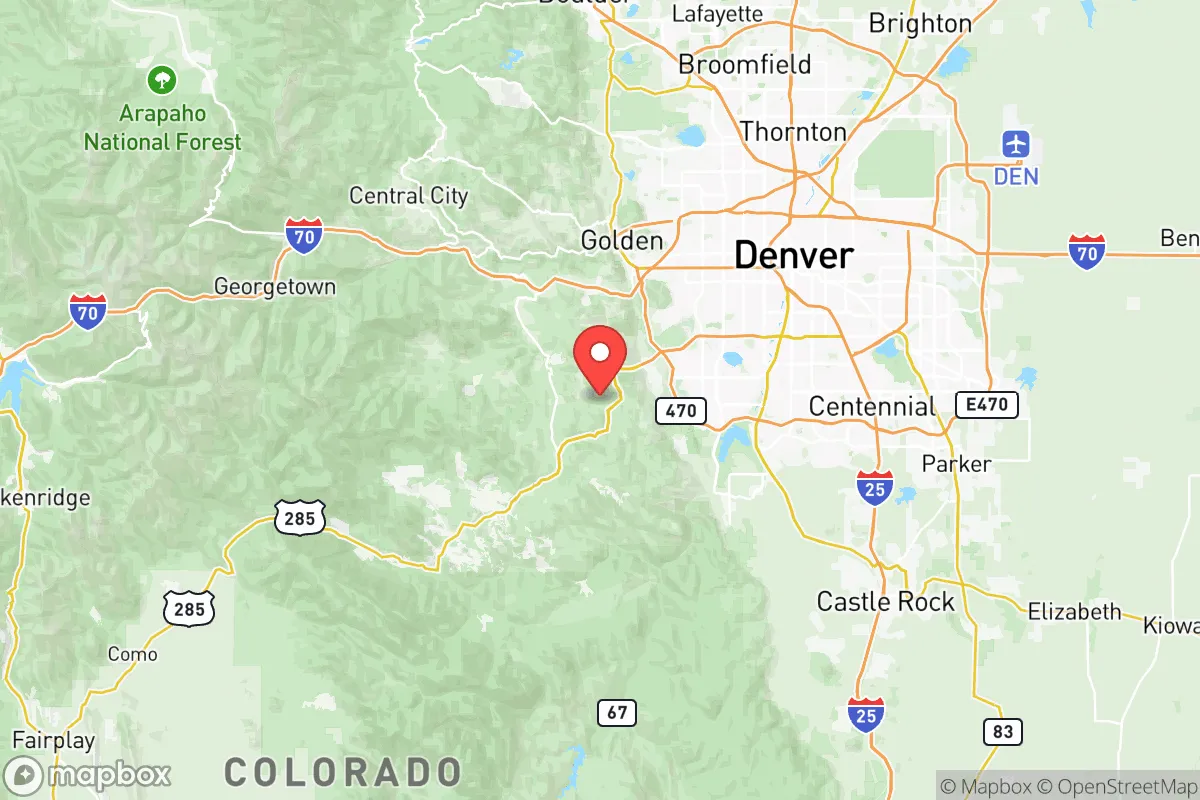
Jefferson County, Colorado, has shifted from a classic swing county to a solidly Democratic-leaning area, carrying a Cook Partisan Voting Index (PVI) of D+8. This means the county votes about eight points more Democratic than the national average, a significant move leftward from its purple status just a decade ago. The county’s trajectory is clearly blue, outpacing the state of Colorado’s overall D+6 PVI, making Jeffco a key driver of the state’s Democratic trend. You can see this most clearly in the northern and central parts of the county, where the shift has been most pronounced.
How it compares
Jefferson County’s D+8 PVI is two points more Democratic than Colorado’s statewide D+6, meaning the county is a relative Democratic stronghold within an already blue-leaning state. This wasn’t always the case—Jeffco was a bellwether for decades, voting for the winner in every presidential election from 1988 to 2012. The shift is largely driven by the suburban Denver metro area, with cities like Lakewood and Golden now reliably blue. Lakewood, the county’s largest city, consistently delivers Democratic margins of 15-20 points in presidential races. In contrast, the southern and western parts of the county, including Conifer and Evergreen, remain more conservative, often voting Republican by 5-10 points. The swing precincts are now concentrated in the central corridor around Wheat Ridge and Arvada, where results can flip depending on the election cycle. For example, in 2020, Arvada’s precincts were nearly evenly split, while Lakewood and Golden leaned heavily toward Biden.
What this means for residents
For liberal residents, Jeffco’s lean means local policies often align with their values, from environmental initiatives to funding for public transit and affordable housing. The county commission has been Democratic-controlled since 2018, pushing forward on renewable energy projects and expanding social services. For conservative residents, the reality is more nuanced. While they are a minority in countywide elections, they still hold sway in local races in the southern foothills and unincorporated areas. School board and city council elections in places like Evergreen can still be competitive, and the county’s overall growth has brought a mix of viewpoints. The practical effect is that Jeffco is not a monolith—you’ll see Trump signs in Conifer and Harris signs in Lakewood within the same drive. The county’s political climate is increasingly defined by this urban-rural split, with the urban core driving the blue trend and the rural fringe holding the line for conservatives.
Culturally, this split shows up in policy debates. Jefferson County has been a battleground over land use and development, with liberal areas pushing for denser housing near transit and conservative areas fighting to preserve open space and rural character. The county’s school board elections have also been flashpoints, with conservative candidates winning seats in 2021 before Democrats retook control in 2023. For residents, this means the political climate is less about a single dominant ideology and more about a constant negotiation between two distinct visions for the county’s future. The long-term trend, however, points toward continued Democratic gains as the Denver metro area expands westward, bringing more liberal voters into formerly red precincts. If you’re moving here, expect a politically engaged community where your vote matters—but the direction of the county is clearly set toward blue.

State Political ClimatePolitical Climate in Colorado
State Political AnalysisPolitical Environment in the State
Colorado has shifted from a classic purple swing state to a solidly Democratic-leaning one, carrying a Cook PVI of D+6. The dominant coalition is a blend of urban progressives, suburban moderates, and a growing Latino electorate, but the state’s political identity is far from uniform—it’s a story of two Colorados. Over the past 20 years, the Front Range metros have pulled the state left, while rural and exurban areas have hardened their conservative stance, creating a political landscape that feels like a battleground even when the statewide results aren’t close.
Urban vs. rural divide
The political map of Colorado is essentially a tale of the I-25 corridor versus everything else. The Denver metro area, including Denver, Aurora, and Boulder, is the engine of Democratic power, routinely delivering margins of 70% or more for statewide Democrats. Boulder County is one of the most liberal counties in the nation, while Denver proper has become a progressive stronghold on housing, transit, and social policy. The other major metro, Colorado Springs, remains a conservative anchor—home to the Air Force Academy, Focus on the Family, and a robust military and evangelical community. El Paso County (Colorado Springs) reliably votes Republican, but its growing population hasn’t kept pace with the Denver metro’s growth, so its influence is diluted. The Western Slope, including Grand Junction and Montrose, is deeply red, while the San Luis Valley and mountain resort towns like Aspen and Telluride lean blue. The key flip in recent cycles has been Jefferson County (the suburbs west of Denver) and Arapahoe County (southeast Denver suburbs)—both once swing counties that now consistently vote Democratic, driven by college-educated professionals and younger families moving in from out of state.
Policy environment
Colorado’s policy environment is a mix of moderate and progressive, with a strong libertarian streak on certain issues. The state has a flat income tax rate of 4.4% (voted down from 4.55% in 2024 via Proposition HH’s defeat), and sales taxes vary widely by locality. Property taxes are relatively low compared to the national average, thanks to the Taxpayer’s Bill of Rights (TABOR), which caps revenue growth and requires voter approval for tax increases. This creates a tight fiscal environment that both parties have to navigate. On education, Colorado has a school choice system with charter schools and open enrollment, but funding per pupil remains below the national average. Healthcare policy is mixed: the state expanded Medicaid under the Affordable Care Act and has a state-run insurance exchange (Connect for Health Colorado), but it also has a robust private market. Election laws are among the most accessible in the nation—universal mail-in voting is the norm, with every registered voter automatically receiving a ballot. Voter ID is required, but the accepted forms are broad. The state also has same-day voter registration.
Recent policy direction
Over the last five years, Colorado’s legislature has moved decisively left on several fronts. On gun and self-defense law, the state passed a red flag law (Extreme Risk Protection Orders) in 2019, a three-day waiting period for firearm purchases in 2023, and a ban on the sale of certain semi-automatic firearms (the 2024 “assault weapons” ban, currently facing legal challenges). Magazine capacity limits (15 rounds) are also in effect. For parental and education rights, the state has expanded universal preschool and increased funding for public schools, but also passed laws protecting LGBTQ+ students’ rights and prohibiting school boards from banning books based on viewpoint. On speech and privacy, Colorado has a strong privacy law (CPA) and has banned the use of facial recognition by government agencies in most cases. Medical and bodily autonomy is fully protected: abortion is legal without gestational limits, and the state has a shield law protecting providers and patients from out-of-state prosecution. Property rights are generally strong, but local zoning battles are intense—Denver and Boulder have passed upzoning laws to allow duplexes and townhomes in single-family neighborhoods, while rural counties fiercely defend their land-use autonomy. Taxation remains constrained by TABOR, but voters have approved several local tax increases for transit and affordable housing. Voting and ballot access remains wide open, with no recent restrictions; in fact, the state expanded automatic voter registration at DMVs in 2023.
Civil unrest & political movements
Colorado has seen its share of political flashpoints. The 2020 protests in Denver over George Floyd’s murder were large and occasionally violent, leading to property damage and a lasting debate over police reform. The state passed a police accountability law (SB20-217) that eliminated qualified immunity for officers, one of the first in the nation. On the right, the Weld County area (north of Denver) has been a hotbed of “constitutional sheriff” movements and election integrity activism. In 2022, a group of county clerks from rural counties faced legal challenges over their handling of voting machines. Immigration politics are tense: Denver has declared itself a sanctuary city, and the state has a law limiting local law enforcement’s cooperation with ICE. However, the influx of migrants from the southern border in 2023-2024 strained Denver’s resources, leading to a backlash from some residents and a more cautious tone from the mayor. Secession rhetoric flares up occasionally in rural counties—Weld County and parts of the Eastern Plains have floated the idea of forming a separate state (the “State of Jefferson” movement), but it remains symbolic. The most visible political movement is the Colorado Republican Party’s internal civil war between establishment conservatives and more populist, Trump-aligned factions, which has weakened the party’s ability to compete statewide.
Projection
Over the next 5-10 years, Colorado’s Democratic lean is likely to solidify further, but not without friction. The Front Range will continue to grow, driven by in-migration from California, Texas, and the Midwest, bringing more college-educated, moderate-to-liberal voters. The Denver metro will become even more dominant politically, while rural areas will lose population and political clout. However, the Colorado Springs area is growing too, and its conservative base may become a more organized counterweight. The wild card is the Latino vote, which is growing fast but is not monolithic—many Latino voters in the San Luis Valley and on the Eastern Plains lean conservative on social issues, while those in Denver and Aurora lean left. Expect continued fights over housing affordability (which could push some moderate voters right), water rights (a perennial issue that unites rural and urban conservatives), and energy policy (the state is pushing for 100% renewable electricity by 2040, which will face legal and economic hurdles). The Republican Party will need to rebuild a coalition that can win back suburban women and moderate independents, or it will remain a minority party in statewide races.
For a new resident, the bottom line is this: if you lean conservative, you’ll find your people in Colorado Springs, Grand Junction, or the rural Eastern Plains, but you’ll be voting in a state where your party rarely wins statewide office. You’ll benefit from low property taxes and school choice, but you’ll live under a state government that is actively expanding gun control, protecting abortion access, and prioritizing renewable energy. If you lean liberal, you’ll feel at home in Denver, Boulder, or Fort Collins, but you’ll pay higher local sales taxes and deal with intense housing competition. Either way, Colorado’s political climate is not a monolith—it’s a state where you can find a community that matches your values, but you’ll have to accept that the state as a whole is moving in a direction that may not always align with your own. The key is to pick your county wisely.
* Values derived from national, state, county, city and local statistics and may differ in a specific area. Last updated: 2026-07-07T10:41:54.000Z
Narrative content on this page is AI-generated and may contain mistakes. Verify any details that matter before acting on them.
ReloMaps may earn a commission from affiliate links at no extra cost to you.

