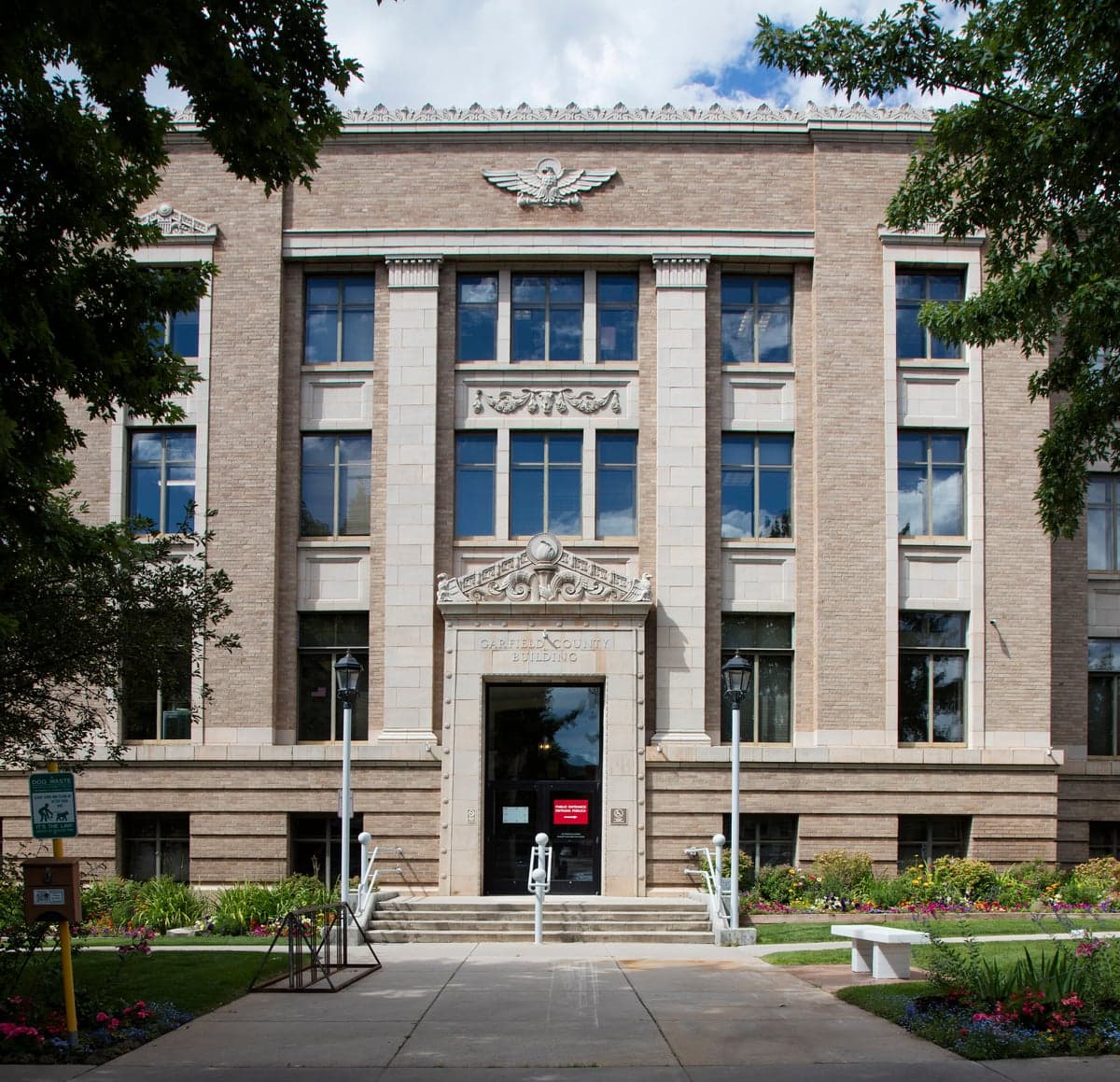
Photo: Wikipedia
Political ClimatePolitical Climate in Garfield County
Showing district-level results — no local-only data available.
Local Political AnalysisPolitical Analysis of Garfield County
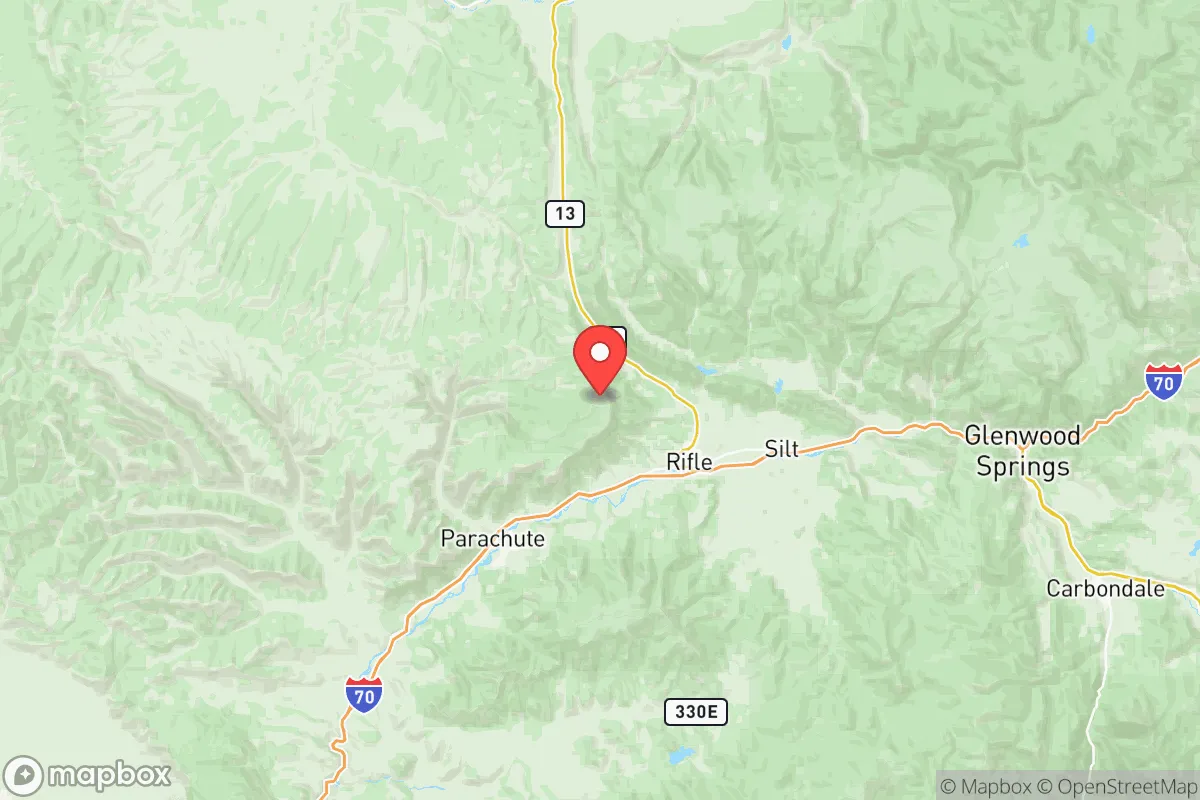
Garfield County, Colorado, is a classic Western swing county that has been drifting rightward in recent cycles, now carrying a Cook PVI of R+5. That puts it about 11 points to the right of Colorado as a whole, which sits at D+6, but the county's politics are far from monolithic. The real story is the sharp divide between the liberal-leaning resort town of Carbondale and the more conservative ranching and energy communities like Rifle, Silt, and Parachute, with Glenwood Springs acting as the unpredictable swing hub that often decides local races.
How it compares
Colorado's statewide shift to blue over the past decade has been driven by the Front Range, but Garfield County has moved in the opposite direction. While the state as a whole voted for Joe Biden by a comfortable margin in 2020, Garfield County went for Donald Trump by about 6 points. The gap is even wider in the county's rural eastern and western precincts — places like New Castle and Parachute routinely vote 65-70% Republican. Meanwhile, Carbondale precincts often hit 70-75% Democratic, making it one of the most reliably blue pockets west of the Continental Divide. Glenwood Springs, the county seat, is the true bellwether: it voted for Barack Obama twice, then flipped to Trump in 2016, then narrowly went for Biden in 2020. That volatility means local candidates can't take any base for granted.
What this means for residents
For conservative residents, Garfield County feels like a relative safe haven compared to the Front Range. Local government in Rifle and Parachute is reliably red, and the county commission has a Republican majority that generally supports energy development and property rights. For liberal residents, especially in Carbondale, the county's rightward tilt can feel frustrating, but they hold real power in municipal elections and have successfully pushed for affordable housing initiatives and environmental protections at the town level. The practical effect is that state-level policies from Denver — like stricter oil and gas regulations or gun laws — often create friction here, with local officials pushing back or refusing to enforce them. That tension is the defining feature of daily political life in the county.
One cultural distinction worth noting: Garfield County's politics are less about national culture-war issues and more about land use, water rights, and the balance between tourism and extractive industry. The energy sector — natural gas in particular — still employs a significant number of people in the western part of the county, while the tourism economy dominates around Glenwood Springs and Carbondale. That economic split drives the political divide more than anything else. Don't expect the county to flip blue anytime soon, but don't expect it to become a deep-red stronghold either — the swing precincts in Glenwood Springs will keep things competitive for the foreseeable future, especially as more remote workers from Denver and California settle in the area.

State Political ClimatePolitical Climate in Colorado
State Political AnalysisPolitical Environment in the State
Colorado is a classic swing state turned solidly blue, with a Cook PVI of D+6 that reflects a dramatic 20-year shift. The state’s political center of gravity moved decisively leftward after 2004, driven by explosive growth in the Denver-Aurora-Lakewood metro and the Front Range corridor, while the rural Eastern Plains and Western Slope remain deeply conservative. For a conservative relocator, the reality is that Colorado’s state-level politics are now dominated by Democrats, but the state’s libertarian streak and direct democracy traditions still offer some checks and balances.
Urban vs. rural divide
The political map of Colorado is a story of two Colorados. The Front Range urban crescent — Denver, Boulder, Fort Collins, and Colorado Springs — holds over 80% of the state’s population and drives the blue lean. Denver and Boulder are deep blue, with Boulder County voting +40 D in 2024. Colorado Springs, once a conservative stronghold, has shifted purple as tech and defense industries brought in younger, more moderate voters; El Paso County now votes only +8 R. The rural Eastern Plains (counties like Yuma, Kit Carson, and Prowers) vote +50 to +60 R, while the Western Slope (Mesa County, home to Grand Junction) remains reliably red but is seeing slow in-migration from Front Range refugees. The key battleground is the suburban ring around Denver — Jefferson, Arapahoe, and Douglas counties. Douglas County, once a GOP fortress, flipped to D+2 in 2020 and is now a true swing area. The 2024 election saw Denver metro turnout hit 78%, cementing the urban-rural split.
Policy environment
Colorado’s policy environment is a mix of progressive state laws and strong local control. The state income tax is a flat 4.4%, with a ballot measure in 2024 to lower it to 4.25% failing narrowly. Property taxes are relatively low (average effective rate 0.55%), but the Gallagher Amendment, which capped residential property tax growth, was repealed in 2020, leading to gradual increases. The Taxpayer’s Bill of Rights (TABOR) still requires voter approval for tax increases, a major check on Democratic ambitions. Education policy is centralized: the state funds schools through a formula that favors wealthier districts, leading to a 2024 lawsuit over equity. Healthcare is heavily regulated, with a state-run reinsurance program that lowered premiums 15% since 2020. Election laws are among the most accessible in the nation: all-mail voting, same-day registration, and automatic voter registration. The state has no right-to-work law, and union membership is around 9%.
Recent policy direction
The last five years have seen a sharp progressive push. On guns, Colorado passed a 2023 law banning the sale of semiautomatic rifles to anyone under 21, and a 2024 law requiring a 10-day waiting period for all firearm purchases. Self-defense law remains Castle Doctrine, but “stand your ground” is not codified. Parental rights took a hit with the 2023 “Healthy Families and Workplaces Act,” which expanded paid family leave and mandated comprehensive sex education in schools, with an opt-out rather than opt-in requirement. On speech, the state has no hate speech law, but a 2024 law criminalizes “harassment” based on gender identity, which conservatives argue chills speech. Privacy and surveillance: Colorado passed one of the nation’s strongest data privacy laws in 2021 (CPA), but also expanded police use of automated license plate readers in 2023. Medical and bodily autonomy: abortion is codified as a “fundamental right” under the 2022 Reproductive Health Equity Act, and the state funds gender-affirming care for minors. Property rights are generally strong, but a 2023 law restricts oil and gas drilling near homes, which landowners in Weld County see as a taking. Voting access is expansive, but a 2024 law requiring signature verification on mail ballots was a rare bipartisan compromise.
Civil unrest & political movements
Colorado has a history of high-profile protests. The 2020 George Floyd protests in Denver were among the largest per capita in the nation, leading to a $14 million settlement over police use of force. The 2022 protests over the Supreme Court’s Dobbs decision saw 10,000 people in Denver. On the right, the “Colorado Project” is a coordinated effort by conservative activists to flip state legislative seats through precinct-level organizing, with some success in 2024 (they picked up two state House seats). Immigration politics are a flashpoint: Denver is a sanctuary city, and the 2023-2024 migrant surge from the southern border overwhelmed shelters, leading to a $42 million emergency fund. The state has no “sanctuary state” law, but Denver’s policy prohibits city resources from being used for federal immigration enforcement. Secession talk is real: the “State of Jefferson” movement in the Eastern Plains and Western Slope has circulated petitions, but no serious legislative action. Election integrity controversies flared in 2020 when Mesa County Clerk Tina Peters was indicted for allegedly tampering with voting machines; she was convicted in 2024, a case that energized both sides. Visible flashpoints: you’ll see “Don’t California My Colorado” bumper stickers on the Western Slope, and “Trans Rights Are Human Rights” signs in Boulder.
Projection
Over the next 5-10 years, Colorado will likely become more blue, but not uniformly. The Denver metro will continue to grow, adding 500,000 people by 2035, mostly from out-of-state migration (California, Texas, and the Midwest). This will push the PVI toward D+8 or D+9. However, the rural exodus is slowing, and some counties (El Paso, Douglas) are seeing a modest rightward shift as conservative Front Range refugees move to Colorado Springs and Castle Rock. The state’s libertarian streak — TABOR, legal marijuana, and a strong outdoor recreation culture — may moderate the most extreme progressive impulses. Expect continued fights over water rights (the Colorado River Compact renegotiation will dominate), housing policy (a 2024 law preempting local zoning for density is already being challenged), and energy (the state aims for 100% renewable electricity by 2040, but Weld County’s oil and gas industry will fight every step). A new resident moving in now should expect a state where state-level politics are firmly Democratic, but local control means your experience will vary wildly — a conservative in Douglas County will feel more at home than one in Boulder.
Bottom line for a conservative relocator: Colorado offers a high quality of life with strong property rights, low taxes by blue-state standards, and a culture of outdoor freedom. But you’ll be living under a Democratic state government that is actively expanding gun control, parental rights restrictions, and progressive social policies. If you’re willing to engage in local politics and accept that your vote for president won’t matter much, the state’s natural beauty and economic opportunity may still be worth it. If you want a state where your values are reflected in state law, look to Wyoming or Utah instead.
* Values derived from national, state, county, city and local statistics and may differ in a specific area. Last updated: 2026-07-18T14:02:29.000Z
Narrative content on this page is AI-generated and may contain mistakes. Verify any details that matter before acting on them.
ReloMaps may earn a commission from affiliate links at no extra cost to you.

