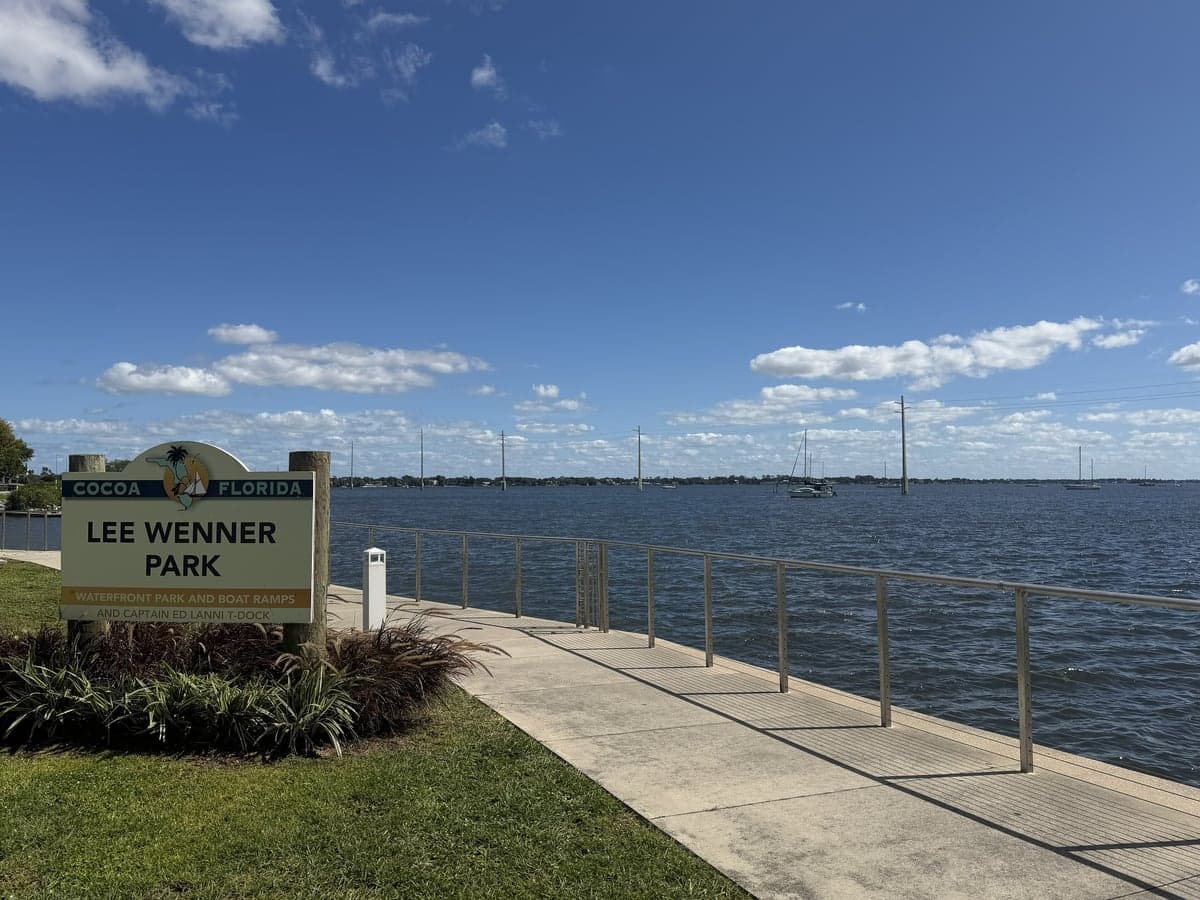
Photo: Wikipedia
Strategic Assessment of Cocoa, FL
Meaningful friction. Expect exposure to either population pressure, blast zones, or natural disaster risk. Consider buying a retreat property.
What does the Strategic Assessment tell us?
Our Strategic Assessment grades tactical survivability of an area. Major population centers, military targets, fallout zones, natural disasters, and border exposure all drive risk — lower exposure means a more defensible position in a crisis.
This is heavily inspired by Joel Skousen's Strategic Relocation book. Highly recommended you checkout the book ($)What does this tell us?
Our Strategic Assessment grades tactical survivability of an area. Major population centers, military targets, fallout zones, natural disasters, and border exposure all drive risk — lower exposure means a more defensible position in a crisis.
This is heavily inspired by Joel Skousen's Strategic Relocation book. Highly recommended you checkout the book ($)Strategic Pillars

Key Distances
Regional Safe Places
Below is our recommended "safe zones" in Florida and the surrounding area based on our strategic heuristics. For most people, it's unrealistic to live in a “safe zone” full-time due to work, family or other personal reasons. They tend to be more rural. However, many of these areas are perfect for second homes and retreat properties that double as a vacation home or even a short-term rental.

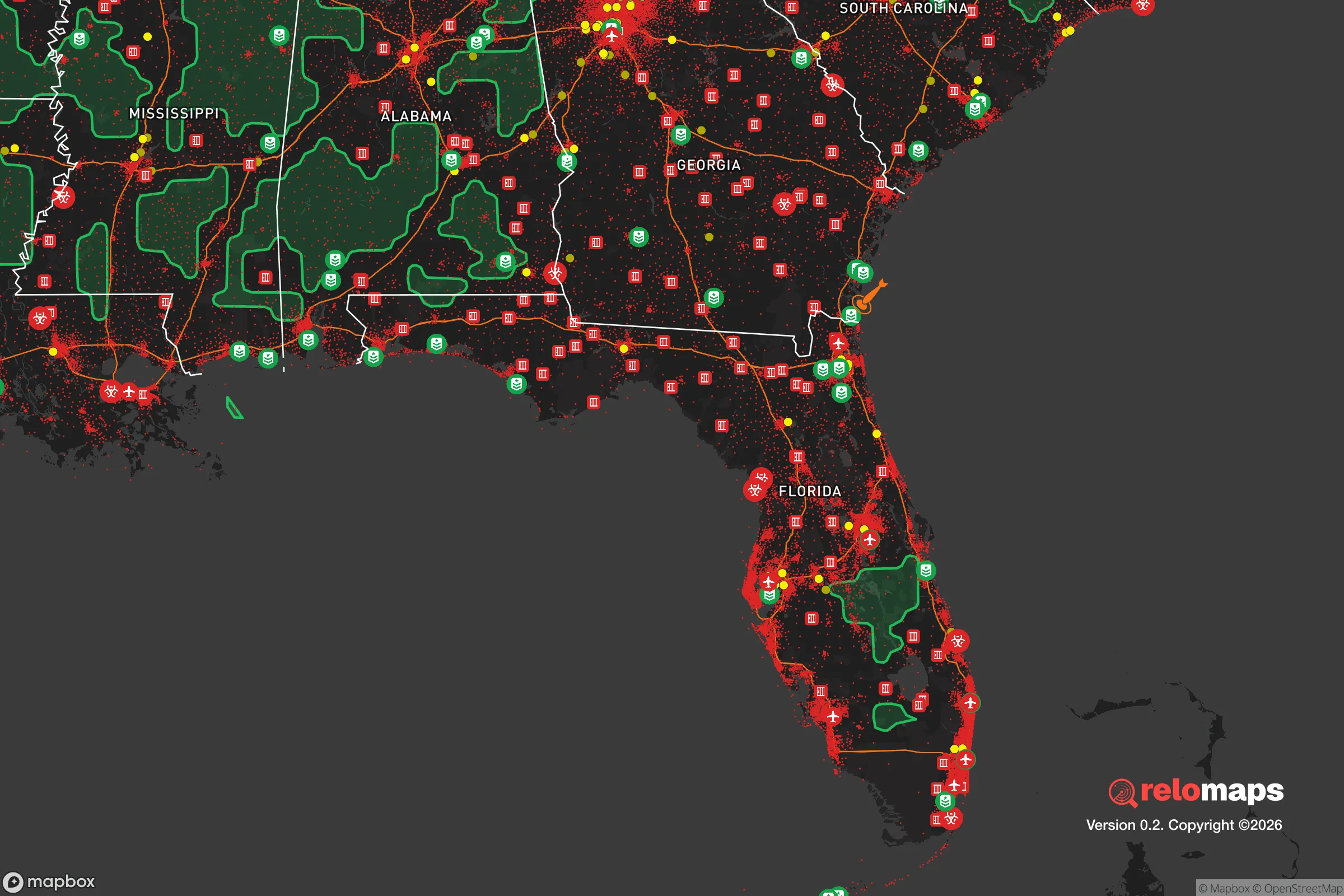


Important Note: For informational purposes only. This does not mean nothing bad ever happens in the green zones. Please use common sense. This is based on public data and modeled with AI. We tried to take a conservative approach but mistakes happen. We update this regularly as new information becomes available.
Solar Generator Recommendations
Backup power matters more here than in safer locations. We've picked three solar generators across budgets and capacity tiers — start with the budget unit if you only need a few essentials, or step up if you want to run a fridge and HVAC for days at a time.

Jackery Portable Power Station Explorer 300
Budget OptionPower on the Go: Weighing only 11 lbs, it's convenient to set up and store with book-sized foldable solar panels

BLUETTI Portable Power Station AC180
Designed for both indoor and outdoor scenarios, AC180 is highly capable as it has a robost capacity and continuous output power.

EF ECOFLOW DELTA Pro Ultra Power Station
Upgraded PickEcoFlow DELTA Pro Ultra is a whole-home energy system designed to grow with your family. Integrated with the Smart Home Panel 2, it scales to meet your evolving energy needs — keeping your home powered, intelligent, and secure through every stage of life.
We earn a commission, at no additional cost to you.
Strategic Assessment Analysis
Cocoa, Florida, occupies a strategic position on the Space Coast that offers a mix of genuine resilience advantages and notable vulnerabilities for a relocator prioritizing disaster readiness and self-sufficiency. Situated on a barrier island and the mainland along the Indian River Lagoon, the area benefits from a relatively low population density compared to Orlando or Miami, yet it sits within striking distance of major infrastructure and potential fallout targets. For a conservative-leaning individual or family thinking seriously about preparedness, Cocoa presents a workable base—provided you understand its exposure to hurricanes, its proximity to Cape Canaveral, and the practical steps needed to secure food, water, and energy.
Geographic position and natural advantages for self-sufficiency
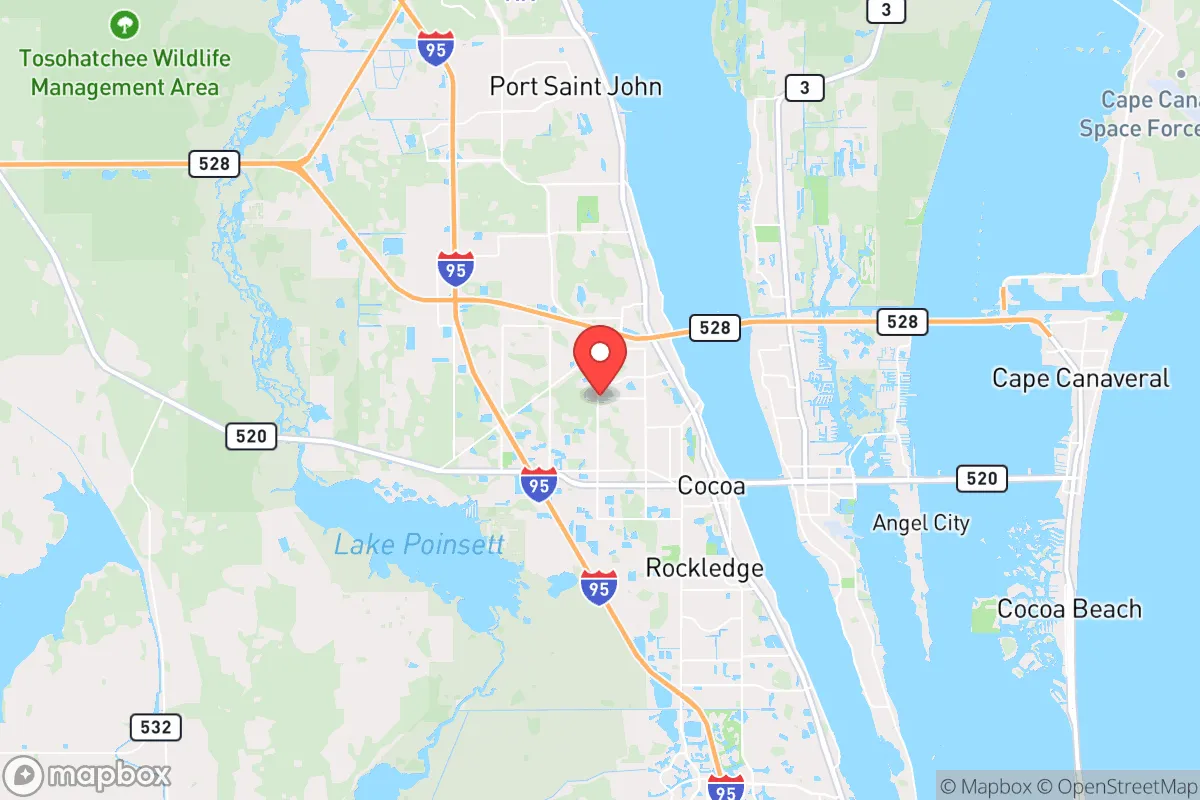
Cocoa's location on Florida's east coast places it roughly 45 miles east of Orlando and 35 miles south of Daytona Beach, giving it a buffer from the densest urban corridors while still offering access to their resources. The area's defining geographic feature is the Indian River Lagoon, a 156-mile-long estuary that separates the mainland from the barrier islands (Merritt Island and Cocoa Beach). This lagoon provides a natural barrier against storm surge for mainland Cocoa, which sits at an average elevation of about 20 feet above sea level—significantly higher than many coastal Florida communities. The mainland's elevation, combined with its position roughly 10 miles inland from the Atlantic, reduces the risk of direct hurricane storm surge damage compared to beachfront properties. The surrounding Brevard County is characterized by flat, sandy terrain with extensive pine flatwoods and scrub habitats, which offer limited natural cover but also minimal wildfire risk compared to the pine forests of north Florida. The area's subtropical climate means a year-round growing season, a major advantage for anyone pursuing food self-sufficiency: you can cultivate vegetables, citrus, and tropical fruits like mangoes and avocados with relative ease. The Indian River Lagoon itself is a rich fishery, providing access to redfish, trout, and flounder, though water quality issues (algae blooms from agricultural runoff) are a recurring concern that affects both fishing and local water sources.
Risks, exposures, and proximity to fallout-relevant landmarks
The most significant risk for Cocoa is its hurricane exposure. The area lies in a zone that has been directly hit by major storms, including Hurricane Irma (2017) and Hurricane Nicole (2022), which caused widespread power outages and flooding in low-lying areas. Storm surge from the Atlantic can push up the Banana River and Indian River Lagoon, threatening mainland properties within a mile of the water. The 2024 hurricane season reinforced that even Category 1 storms can knock out power for 5–7 days across Brevard County. Beyond weather, Cocoa's proximity to Cape Canaveral Space Force Station and Kennedy Space Center—roughly 15 miles south—is a double-edged sword. These facilities are critical national infrastructure and potential targets in a conflict scenario, whether from cyberattack, conventional strike, or electromagnetic pulse (EMP). A detonation over the Cape could disrupt electronics across a wide area, including Cocoa. Additionally, the area is within 50 miles of Patrick Space Force Base and the Port Canaveral naval facility, both of which are strategic assets that could draw attention. On the plus side, Cocoa is far enough from major metropolitan centers like Orlando (45 miles) and Miami (180 miles) to avoid the immediate fallout of a urban crisis, but close enough that a major event in those cities could send refugees streaming east on I-95 and State Road 528. The presence of the St. Johns River to the west and the Atlantic to the east means evacuation routes are limited—primarily I-95 north/south and SR 528 west to Orlando—which could become choked in a rapid evacuation scenario.
Practical resilience for a relocator: food, water, energy, and defensibility
For a relocator serious about self-sufficiency, Cocoa offers a mixed bag. Water is the most critical concern: the area relies on the Floridan Aquifer, which is generally abundant and of good quality, but shallow wells in the region can be vulnerable to saltwater intrusion during droughts or over-pumping. Municipal water comes from the Cocoa Water and Sewer Department, which draws from the aquifer and treats it with chlorine and fluoride. For off-grid capability, a deep well (200+ feet) is advisable, and rainwater collection is feasible given the area's 53 inches of annual rainfall, though you'll need to account for the dry season (October–May). Food production is a strong suit: the growing season runs 10–11 months, and soil is sandy but amendable with compost. Local farmers' markets (e.g., the Cocoa Village Farmers Market) and agricultural supply stores like Tractor Supply Co. in Rockledge make it easy to source seeds, tools, and livestock supplies. Backyard chickens are legal within city limits with a permit, and larger properties in unincorporated Brevard County allow goats and pigs. Energy resilience is a weak point: Florida Power & Light (FPL) serves the area, and outages are common during storms. Solar is viable—Cocoa averages 237 sunny days per year—but net metering policies have become less favorable in Florida since 2022, and battery storage (e.g., Tesla Powerwall) is essential for true off-grid capability. Natural gas is available in parts of Cocoa, which can power generators and cooking, but propane is more common for rural properties. Defensibility is moderate: Cocoa's mainland neighborhoods range from older, walkable areas like Cocoa Village (with narrow streets and good sightlines) to sprawling subdivisions with cul-de-sacs that are harder to secure. The area has a lower crime rate than Orlando or Miami, but property crime (theft, burglary) is above the national average, so a hardened perimeter and good neighbors are practical investments. The local sheriff's office (Brevard County Sheriff's Department) is well-regarded and has a strong community presence, but response times in rural areas can exceed 20 minutes.
The overall strategic picture for Cocoa is one of moderate resilience with clear trade-offs. Its geographic position offers a buffer from the worst of urban chaos and storm surge, while the year-round growing season and abundant aquifer provide a foundation for self-sufficiency. However, the hurricane risk is real and requires serious preparation—reinforced roofing, impact windows, a generator, and a 30-day supply of food and water are non-negotiable. The proximity to Cape Canaveral and Patrick SFB is a vulnerability that cannot be ignored, but it's a calculated risk: the economic benefits of the Space Coast (stable jobs, strong community) may outweigh the strategic downside for many relocators. For a conservative-leaning family or individual who values preparedness, Cocoa is a viable option if you're willing to invest in hardening your property, securing a reliable water source, and building local networks. It's not a bug-out location—it's a live-and-prepare location, where daily life is pleasant and the risks are manageable with forethought. The key is to treat the area as a base, not a fortress, and to have a secondary plan for evacuation if a major storm or geopolitical event forces a move inland.

* Values derived from national, state, county, city and local statistics and may differ in a specific area. Last updated: 2026-08-22T17:11:04.000Z
Narrative content on this page is AI-generated and may contain mistakes. Verify any details that matter before acting on them.
ReloMaps may earn a commission from affiliate links at no extra cost to you.

