Photo: Wikipedia
Demographics of Cocoa, FL
Affluence Level in Cocoa, FL
A middle-class area roughly in line with national averages across income, home values, education, and employment.
People of Cocoa, FL
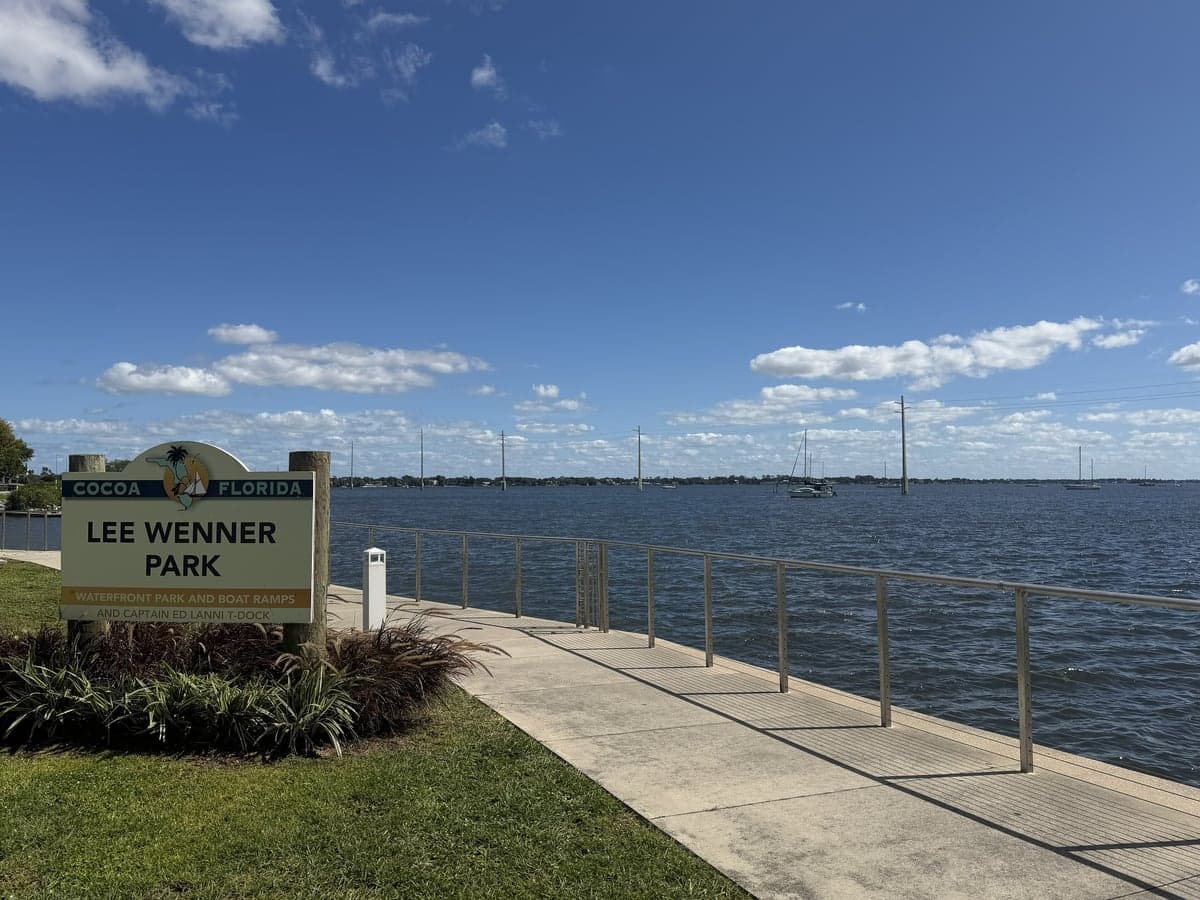
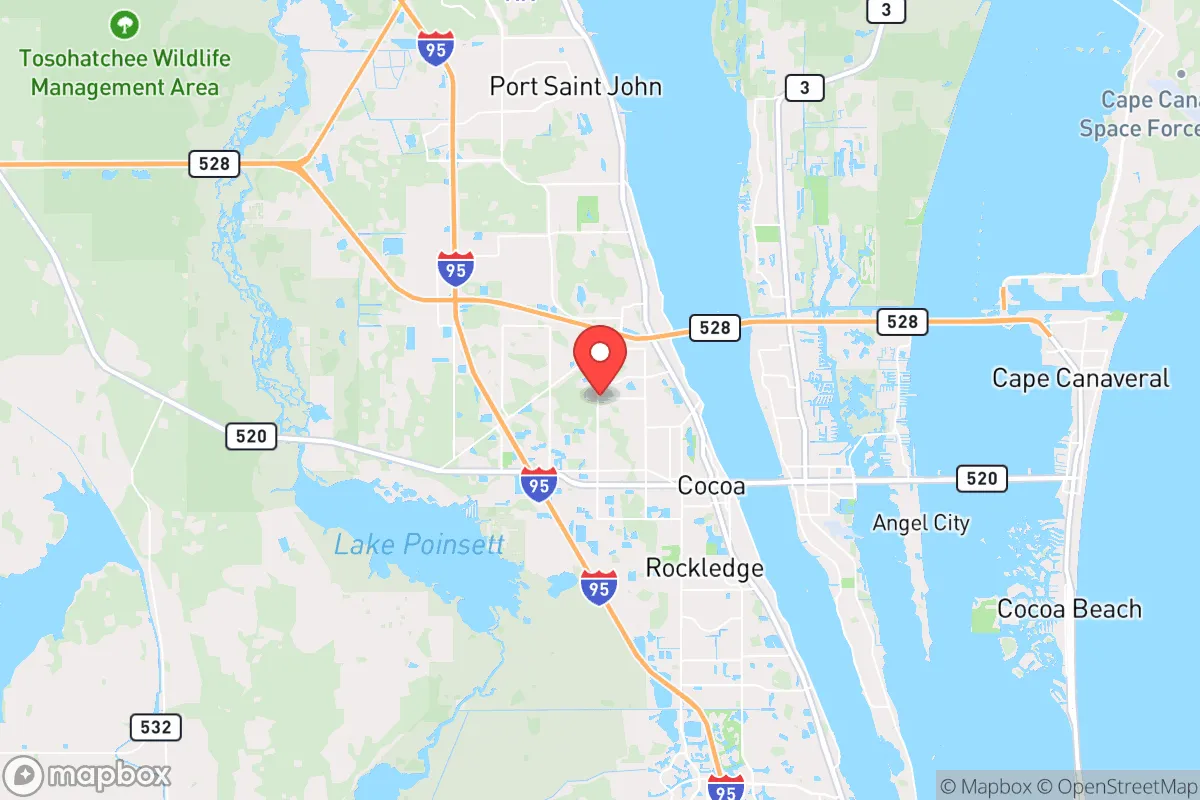
The people of Cocoa, Florida today form a compact, majority-minority city of 19,330 residents, where no single racial or ethnic group holds a numerical majority. With a 49.9% white population, 24.7% Black or African American, and 20.9% Hispanic or Latino, Cocoa is notably more diverse than Brevard County as a whole, yet it remains a distinctly working-class community—only 21.8% of adults hold a bachelor’s degree, well below state and national averages. The city’s identity is shaped by its history as a railroad and citrus hub that later became a bedroom community for the Space Coast, and its neighborhoods still reflect the settlement patterns of the waves that built it.
How the city was settled and grew
Cocoa’s population history begins not with Spanish colonization but with the arrival of American settlers after the Civil War. The area was originally inhabited by the Ais people, but by the 1880s, the land was being cleared for citrus groves and pineapple plantations. The city was officially incorporated in 1895, and its early growth was driven by the extension of the Florida East Coast Railway, which made Cocoa a shipping point for citrus. The original white settlers—mostly from the U.S. South and Midwest—built homes in what is now the Cocoa Village Historic District, the city’s original commercial and residential core along the Indian River. African American laborers, many of them former slaves and their descendants, arrived to work the citrus groves and railroad, settling in the West Cocoa area, a historically Black neighborhood that remains a cultural anchor today. By 1910, Cocoa’s population was roughly 1,000, with a clear racial divide: whites in the village and along the riverfront, Black families in West Cocoa and the Dixie Village area near the railroad tracks.
Modern era (post-1965)
The 1960s and 1970s brought the most transformative demographic shift, driven by the Space Race and the opening of the Kennedy Space Center just north of Cocoa. The city’s population more than doubled between 1960 and 1980, reaching 16,000, as engineers, technicians, and support staff moved in. This wave was overwhelmingly white and middle-class, and they settled in newer subdivisions like Lake Pointe and Riverside Park, areas with larger lots and better schools that pulled the city’s center of gravity away from the historic village. At the same time, the Hart-Cellar Immigration Act of 1965 began reshaping Cocoa’s ethnic composition. Hispanic residents—primarily of Puerto Rican and Mexican descent—arrived to work in construction, hospitality, and agriculture, concentrating in the Clearlake and Port St. John areas (the latter technically unincorporated but functionally part of Cocoa’s commuting zone). The Black population, which had been stable at around 30% through the 1960s, began to decline slightly as middle-class Black families moved to newer subdivisions in neighboring Rockledge and Viera, while West Cocoa experienced disinvestment. By 2000, Cocoa was 58% white, 28% Black, and 10% Hispanic—a profile that has since shifted dramatically as white flight to unincorporated Brevard and the rise of Hispanic immigration have made the city majority-minority.
The future
Cocoa’s population is becoming more Hispanic and more diverse, while the white share continues to contract. Between 2010 and 2020, the Hispanic share rose from 15% to 21%, and the Asian share (East/Southeast Asian) remained negligible at 0.4%, with Indian-subcontinent residents at just 0.1%. The foreign-born share of 5.9% is low by Florida standards, suggesting that most growth is domestic—driven by young families and retirees seeking lower housing costs than coastal Brevard. New residential construction is concentrated in the Viera area (technically a master-planned community in unincorporated Brevard but adjacent to Cocoa) and in infill developments near the Space Coast Regional Airport. The historic Cocoa Village is seeing a modest revival, with new apartments and townhouses attracting younger professionals priced out of Melbourne and Satellite Beach. Over the next 10–20 years, Cocoa is likely to become a more Hispanic and more working-class city, with the Black share stabilizing and the white share continuing to decline. The city’s cultural identity is evolving from a sleepy citrus-and-railroad town into a more diverse, blue-collar satellite of the Space Coast economy.
For someone moving in now, Cocoa offers a more affordable, less homogenized alternative to the beachside communities, with a real sense of neighborhood history—but also with the challenges of a city in demographic transition, including lower educational attainment and a tax base that lags behind its neighbors. It is a place where the past is still visible in the architecture of West Cocoa and the village, and where the future is being written by Hispanic families and young workers drawn by the space industry’s expansion.

* Values derived from national, state, county, city and local statistics and may differ in a specific area. Last updated: 2026-08-22T17:11:04.000Z
Narrative content on this page is AI-generated and may contain mistakes. Verify any details that matter before acting on them.
ReloMaps may earn a commission from affiliate links at no extra cost to you.

