Political ClimatePolitical Climate in Clearwater, TX
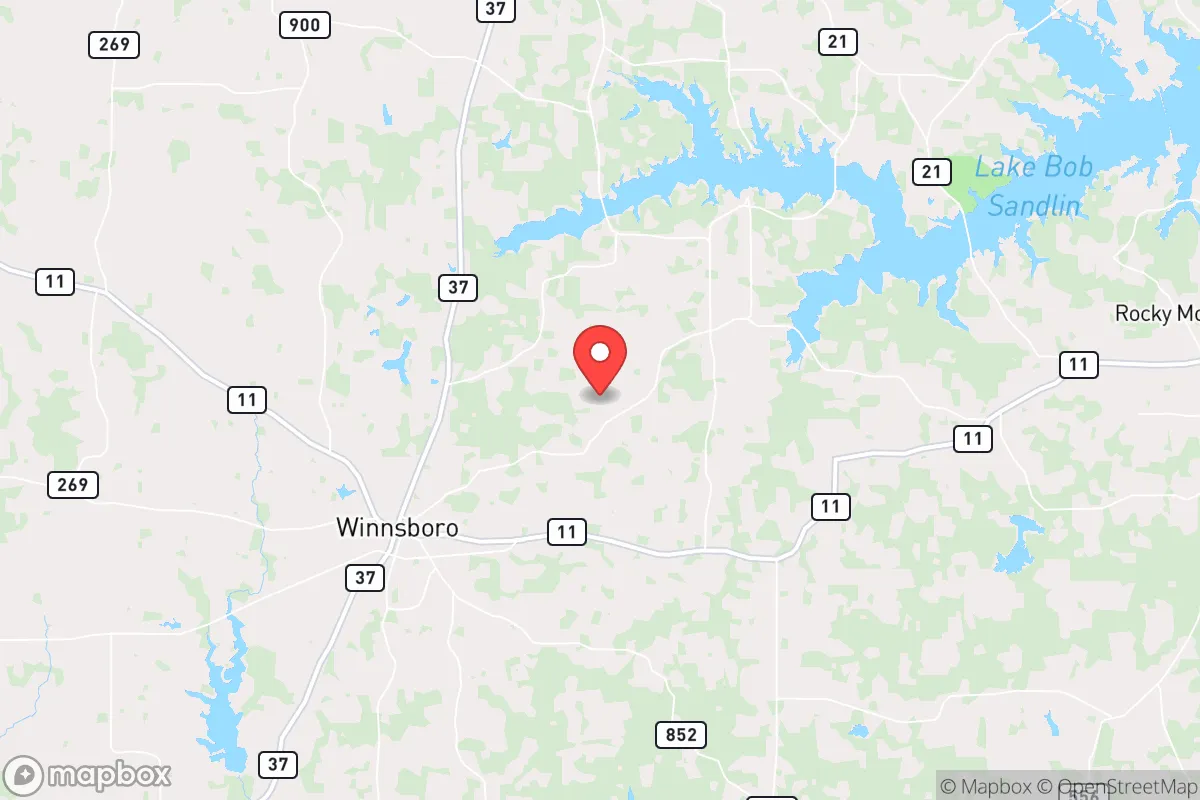
District shown is the primary district for this city’s centroid. Cities may span multiple districts.
Local Political AnalysisPolitical Analysis of Clearwater, TX
Clearwater, Texas, sits in a solidly conservative pocket of the state, with a Cook Partisan Voting Index of R+10. That means the area leans about ten points more Republican than the national average, and in practice, you see that reflected in local elections and the general feel of the place. The trajectory here has been pretty steady—it’s not a place that’s flipped or swung wildly in recent cycles. If anything, the conservative tilt has deepened a bit over the last decade, as folks moving in from bluer parts of Texas (like Austin or Houston) tend to be looking for exactly this kind of political and cultural environment.
How it compares
Compared to Texas as a whole, Clearwater is noticeably more Republican. The state of Texas has a Cook PVI that is not publicly assigned, but statewide elections typically lean Republican by a margin closer to R+5 or R+6 in recent cycles. So Clearwater’s R+10 puts it about four or five points to the right of the state average. That’s a meaningful gap. For context, if you drive an hour east to a place like College Station, you’ll find a similar conservative vibe, but head west toward the Hill Country or down toward San Antonio, and you’ll hit pockets that are more purple. Clearwater’s neighbors—small towns like Liberty Hill and Bertram—tend to vote similarly, but the county seat itself is where the Republican machine is most visible, with strong turnout at local GOP events and a county commission that’s been reliably red for decades.
What this means for residents
For conservative residents, this is a comfortable place to live. Local policies tend to align with their values—lower taxes, fewer regulations, and a general hands-off approach from county government. You’ll find plenty of churches, gun-friendly attitudes, and a school board that’s cautious about curriculum changes. For liberal residents, it’s a different story. You’re likely in the minority, and that can feel isolating at times. There aren’t many progressive organizing groups, and local elections are often decided in the Republican primary. That said, Clearwater isn’t hostile—most folks are neighborly regardless of politics—but you won’t see many yard signs for Democratic candidates, and the local library’s programming tends to reflect the community’s conservative values. If you’re liberal and moving here, you’ll want to be comfortable being the odd one out at a block party or PTA meeting.
One cultural distinction worth noting: Clearwater has a strong sense of local identity that predates the recent political shifts. The annual rodeo and the county fair are big deals, and they’re not overtly political—they’re just community gatherings where everyone shows up. That said, the area’s politics do shape daily life in subtle ways. For instance, the local newspaper’s opinion page leans heavily conservative, and the city council rarely debates hot-button social issues because there’s broad consensus. If you’re looking for a place where politics is a constant topic of conversation, Clearwater isn’t it—most people just go about their business. But if you’re paying attention, the R+10 lean is baked into everything from zoning decisions to school funding priorities. It’s a stable, predictable political environment, for better or worse, and that’s exactly why many people choose to call it home.

State Political ClimatePolitical Climate in Texas
State Political AnalysisPolitical Environment in the State
Texas has been a reliably Republican state for the past three decades, but the margin has been shrinking. In 2024, Donald Trump carried the state by about 9 points, down from 11 points in 2020 and 16 points in 2012. The dominant coalition is a mix of rural conservatives, suburban moderates, and a growing number of Hispanic voters who have shifted right. However, explosive growth in the urban cores of Houston, Dallas-Fort Worth, San Antonio, and Austin is steadily turning the state more competitive, with Democrats now competitive in the suburbs of Collin County and Fort Bend County.
Urban vs. rural divide
The political map of Texas is a stark checkerboard. The major metros — Houston, Dallas, San Antonio, and Austin — are Democratic strongholds. Harris County (Houston) alone delivered over 1 million votes for Joe Biden in 2020. Meanwhile, the vast rural expanse, from the Panhandle down to the Rio Grande Valley, votes heavily Republican. The suburbs are the real battleground: Collin County (north of Dallas) flipped from +17 R in 2016 to +9 R in 2024, while Fort Bend County (southwest of Houston) flipped to Biden in 2020 and stayed blue. The Rio Grande Valley has seen a dramatic shift, with counties like Starr and Zapata moving 20+ points toward Republicans since 2016, driven by conservative social values and economic concerns. El Paso remains a Democratic island in West Texas, while Lubbock and Amarillo are reliably red.
Policy environment
Texas has no state income tax, which is the single biggest policy draw for relocators. Property taxes are high to compensate — the average effective rate is around 1.6%, among the highest in the nation. The regulatory posture is business-friendly: no state-level minimum wage above the federal $7.25, weak union protections, and fast permitting for development. Education policy is decentralized, with school districts funded heavily by local property taxes, leading to wide disparities between wealthy suburbs and rural areas. The state has expanded charter schools and passed a school voucher-like program in 2023. Healthcare is a flashpoint: Texas has the highest uninsured rate in the country (about 17%), and has refused to expand Medicaid under the ACA. Election laws were tightened in 2021 (SB 1), adding ID requirements for mail-in ballots and limiting drive-through voting. Abortion is effectively banned after about six weeks (SB 8, 2021), with no exceptions for rape or incest.
Recent policy direction
The last five years have seen a sharp conservative turn on several fronts. Gun and self-defense law: Texas became a permitless carry state in 2021 (HB 1927), allowing most adults to carry handguns without a license. Parental and education rights: The 2023 "Parental Bill of Rights" (SB 1515) requires schools to notify parents of any changes to a child's mental or physical health, effectively targeting LGBTQ+ curriculum. Speech: A 2021 law (HB 20) restricts social media platforms from moderating content based on viewpoint, though it's been tied up in court. Privacy and surveillance: Texas passed a data privacy law (HB 4390) in 2023, giving residents the right to opt out of data collection, but it's weaker than California's. Medical and bodily autonomy: The near-total abortion ban (SB 8) is the most restrictive in the nation, with no exceptions for rape or incest. Property rights: The state has strong eminent domain protections for landowners, but oil and gas mineral rights often override surface rights. Taxation: No income tax, but property taxes are high and rising. Voting/ballot access: SB 1 (2021) made it harder to vote by mail, banned 24-hour voting, and gave partisan poll watchers more access. The direction is clear: Texas is doubling down on conservative social policy and deregulation, while the economic engine keeps pulling in new residents from blue states.
Civil unrest & political movements
Texas has a long history of political activism on both sides. The 2020 protests over George Floyd's death in Minneapolis sparked large demonstrations in Austin, Houston, and Dallas, with some turning violent in Austin. The state legislature responded with a 2021 law (HB 9) that increased penalties for rioting and protected drivers who hit protesters. Immigration politics are a constant flashpoint: Governor Greg Abbott's Operation Lone Star (2021) deployed state troopers and National Guard to the border, bused migrants to northern cities, and installed razor wire along the Rio Grande. The state has sued the Biden administration over border policy dozens of times. Secession rhetoric is mostly fringe, but the Texas Nationalist Movement has a small but vocal following. Election integrity remains a hot topic: after 2020, the state conducted a controversial forensic audit of four counties (including Harris and Dallas), finding no widespread fraud but fueling ongoing distrust. A new resident will see "Keep Texas Red" and "Beto" signs in equal measure in the suburbs, and the political divide is visible in everyday life — from bumper stickers to church signs.
Projection
Over the next 5-10 years, Texas is likely to become more competitive at the statewide level, but not necessarily blue. The in-migration from California and the Northeast is heavily concentrated in the suburbs of Austin, Dallas, and Houston, and these new arrivals tend to be moderate-to-liberal on social issues but fiscally conservative. However, the rural and exurban areas are growing too, and the Hispanic shift toward Republicans could offset urban gains. The state's political future probably looks like a perennial toss-up for president and Senate, with Republicans holding a structural advantage in the state legislature due to gerrymandering. The policy direction will likely remain conservative on social issues (abortion, guns, education) but could see a slight moderation on healthcare and property taxes as the population ages and diversifies. A new resident moving in now should expect a state that is politically competitive but still leans right, with a government that is skeptical of federal authority and protective of local control.
For a new resident, the bottom line is this: Texas offers a low-tax, low-regulation environment that appeals to conservatives and libertarians, but the social policies — especially on abortion and education — are among the most restrictive in the country. If you're a conservative, you'll find a state that largely aligns with your values and is actively pushing those policies. If you're a liberal, you'll find vibrant blue cities and a growing political opposition, but you'll also face a state government that is actively hostile to many of your priorities. The political climate is intense but not chaotic — most people live their daily lives without much friction, but the culture war is never far from the surface. Choose your county carefully, because in Texas, local politics matters as much as state politics.
* Values derived from national, state, county, city and local statistics and may differ in a specific area. Last updated: 2026-10-17T15:09:37.000Z
Narrative content on this page is AI-generated and may contain mistakes. Verify any details that matter before acting on them.
ReloMaps may earn a commission from affiliate links at no extra cost to you.

