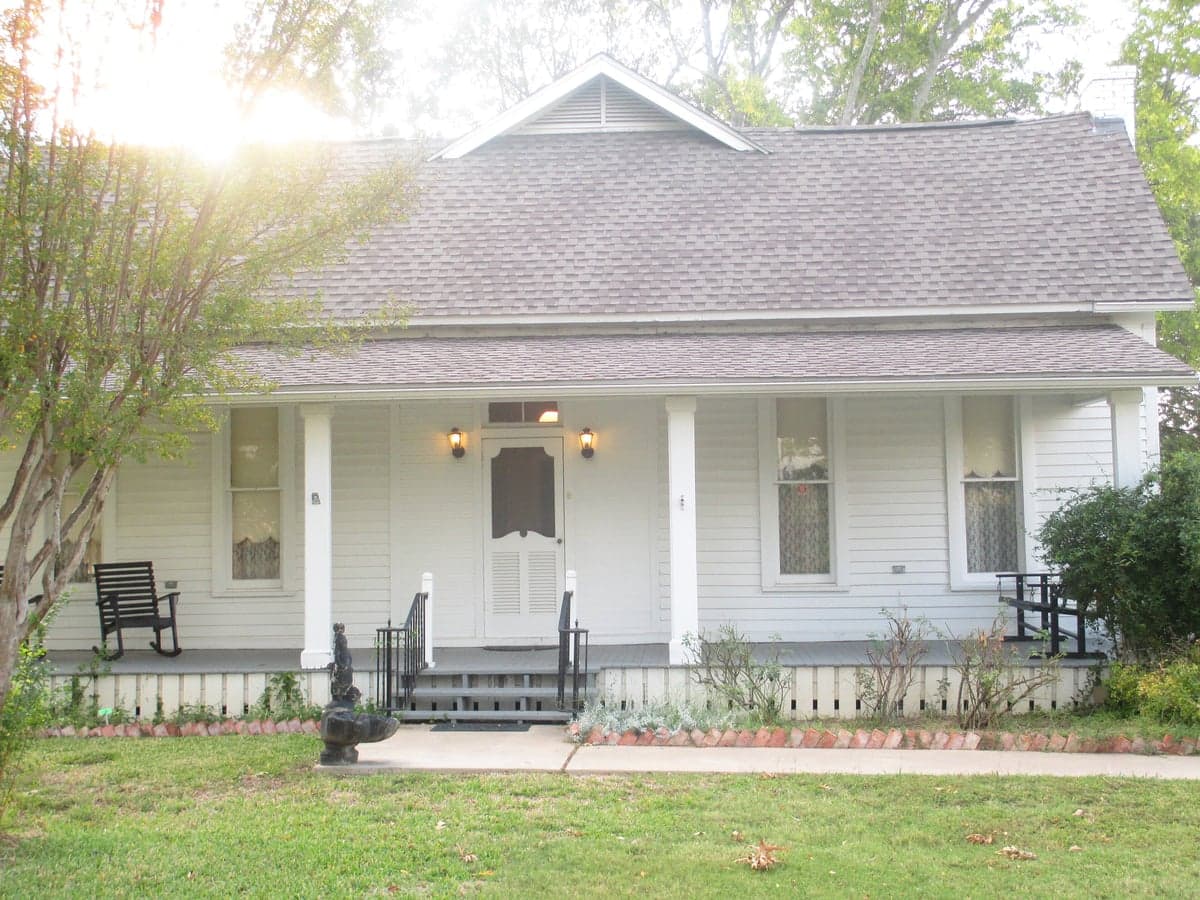
Photo: Wikipedia
Political ClimatePolitical Climate in Canton, TX
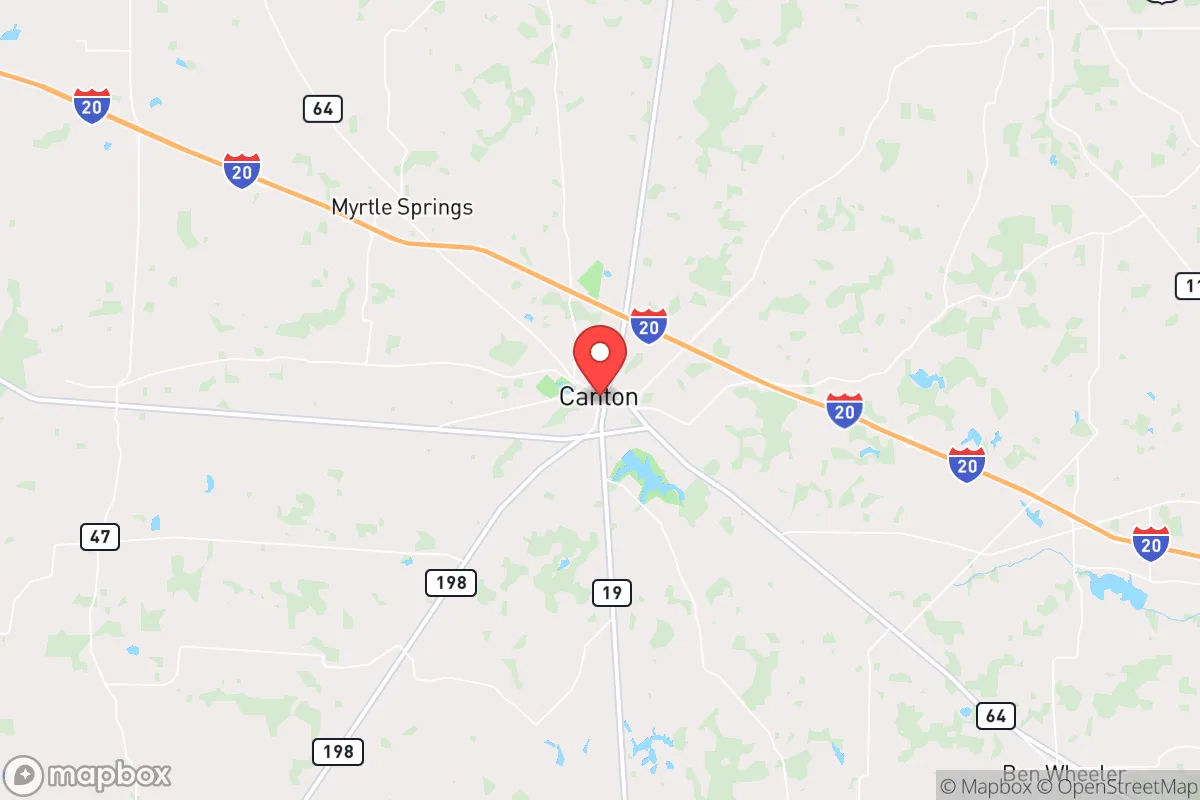
District shown is the primary district for this city’s centroid. Cities may span multiple districts.
Local Political AnalysisPolitical Analysis of Canton, TX
Canton, Texas, is a reliably conservative community, with the surrounding Van Zandt County carrying a Cook Partisan Voting Index (PVI) of R+13. That number tells you the area votes about 13 points more Republican than the national average, and it’s been that way for decades. The political lean here isn’t a recent shift—it’s a deep-rooted cultural norm. You’ll see Trump signs on farm fences and in downtown windows, and local elections are dominated by Republicans. The trajectory is steady: Canton isn’t trending purple or blue; if anything, the rural-urban divide is hardening, with the area becoming more solidly conservative as nearby Dallas-Fort Worth suburbs like Forney and Terrell grow more diverse and competitive.
How it compares
Compared to Texas as a whole, Canton is notably more conservative. Texas statewide has a Cook PVI of R+5 (as of 2024), meaning the state leans Republican but is far more competitive—think close Senate races and competitive House districts in the suburbs. Van Zandt County’s R+13 is a different world. In the 2024 presidential election, Van Zandt County gave Donald Trump about 80% of the vote, while statewide Texas gave him roughly 56%. The contrast is even sharper if you drive 30 minutes west to Kaufman County, which is still red but trending purple as exurban growth brings in more moderate and Democratic-leaning voters from Dallas. Head east to Tyler or Longview, and you’ll find similar deep-red territory, but Canton sits in a pocket where the conservative identity feels more personal and less partisan—it’s less about national politics and more about local values like church, family, and self-reliance.
What this means for residents
For conservative residents, Canton’s political climate is a comfortable fit. Local policies tend to align with their views: low taxes, limited regulation, and a strong law-and-order approach. You’ll find plenty of churches, gun-friendly ordinances, and a school board that emphasizes traditional curricula. For liberal residents, life here can feel isolating. There’s no visible Democratic Party infrastructure, and progressive viewpoints are rarely voiced in public forums. That said, Canton isn’t hostile—it’s more that political disagreement is handled quietly. Most folks just avoid the topic at the dinner table or the feed store. The practical reality is that your vote won’t change the outcome of a county election, but your daily life won’t be affected by political tension unless you seek it out. The area’s trajectory suggests this dynamic will persist: as long as Canton remains a small-town agricultural and oil-and-gas hub, the political climate will stay deeply conservative, with little incentive for either party to invest heavily here.
Culturally, Canton stands out for its strong sense of community and self-governance. The annual First Monday Trade Days draw hundreds of thousands of visitors, and that event reflects the local ethos: commerce, tradition, and neighborliness. Policy-wise, you’ll notice a hands-off approach from county government—few zoning laws, minimal public transit, and a reliance on volunteer fire departments. This isn’t a place where government solves problems; it’s a place where people solve problems themselves. For anyone moving here, the political climate is less about party labels and more about a shared expectation that you’ll pull your own weight and respect your neighbor’s right to do the same. That’s the real Canton—a red dot on the map that’s more about independence than ideology.

State Political ClimatePolitical Climate in Texas
State Political AnalysisPolitical Environment in the State
Texas has been a reliably Republican state for the past three decades, but the margin has been tightening. In 2024, Donald Trump won the state by roughly 9 points, down from 11 points in 2020 and 16 points in 2012. The dominant coalition remains a mix of rural conservatives, suburban moderates, and evangelical voters, but explosive growth in the urban crescent—from Dallas-Fort Worth down through Austin to San Antonio and Houston—is steadily shifting the state’s political center of gravity. For a relocator, this means you’re moving into a state that still leans right but is becoming more competitive and internally divided by the year.
Urban vs. rural divide
The political map of Texas is a study in extremes. The major metros—Houston, Dallas, San Antonio, and Austin—are blue or trending blue. Harris County (Houston) and Dallas County have voted Democratic in every presidential election since 2008, and Travis County (Austin) is one of the most liberal jurisdictions in the South. Meanwhile, the vast rural expanse—places like the Panhandle around Lubbock, East Texas timber country, and the Hill Country west of Austin—votes Republican by 60-80% margins. The suburbs are the real battleground: Collin County (north of Dallas) and Fort Bend County (southwest of Houston) have flipped from solid red to purple or even blue in recent cycles, driven by educated professionals and Asian-American voters. The Rio Grande Valley, once a Democratic stronghold, has shifted right, with counties like Starr and Hidalgo moving 20+ points toward Republicans since 2016.
Policy environment
Texas operates under a conservative policy framework that has been remarkably stable. There is no state income tax—funded instead by high property taxes and a 6.25% state sales tax (local add-ons can push it to 8.25%). The regulatory posture is famously business-friendly: no state-level minimum wage above the federal $7.25, weak unions (right-to-work law since 1947), and streamlined permitting for energy and construction. Education policy is dominated by the school choice debate—the 2023 legislative session saw a major push for education savings accounts (ESAs) that ultimately failed due to rural Republican opposition. Healthcare remains a flashpoint: Texas has the highest uninsured rate in the nation (roughly 17%), having refused Medicaid expansion under the ACA. Election laws were tightened in 2021 with Senate Bill 1, which added ID requirements for mail ballots, limited drive-through voting, and banned 24-hour polling places. For a relocator, the practical takeaway is low taxes on income but high costs on property, limited public transit, and a healthcare system that relies heavily on employer-sponsored insurance.
Recent policy direction
The last five years have seen Texas move aggressively on several fronts. On gun rights, the state enacted permitless carry (HB 1927) in 2021, allowing most adults to carry a handgun without a license or training. On abortion, Texas passed SB 8 in 2021, banning the procedure after roughly six weeks and enabling private enforcement lawsuits—effectively ending most abortion access in the state. In 2023, the legislature passed a near-total ban (HB 3058) with no exceptions for rape or incest. On parental rights, the state passed the “Save Women’s Sports Act” (SB 29) in 2023, barring transgender athletes from female school sports, and a law requiring school libraries to remove books deemed “sexually explicit.” On property rights, Texas has no state-level rent control and weak eminent domain protections for landowners. On voting, the 2021 SB 1 remains the most significant change, though a 2023 bill (HB 315) added further restrictions on third-party ballot collection. On privacy and surveillance, Texas passed a state data privacy law (HB 4390) in 2023, giving residents some control over how companies use their personal data, but it’s weaker than California’s. For a relocator, this means the state is moving decisively toward a model of maximum individual liberty on guns and parental control, while sharply restricting medical and bodily autonomy.
Civil unrest & political movements
Texas has seen significant political activism on both sides. The 2020 protests in Austin and Houston over George Floyd’s death were among the largest in the country, with Austin’s protests lasting weeks and leading to a city council defunding of the police by $150 million (later partially restored). On the right, the “constitutional sheriff” movement has gained traction in rural counties, with sheriffs in places like Montgomery County publicly refusing to enforce certain state gun laws. Immigration remains the hottest flashpoint: Governor Greg Abbott’s Operation Lone Star has deployed thousands of National Guard troops to the border, bused migrants to northern cities, and installed razor wire along the Rio Grande—leading to ongoing legal battles with the Biden administration. Secession rhetoric, while mostly symbolic, has a real presence: the Texas Nationalist Movement claims tens of thousands of supporters, and a 2022 state GOP platform included a call for a referendum on secession. Election integrity controversies persist, with the 2020 and 2022 cycles seeing Republican calls for audits in Harris County (Houston), where a 2022 voting machine issue led to a state takeover of elections. For a new resident, these aren’t abstract debates—you’ll see National Guard vehicles on highways near the border, hear secession talk at local diners in the Hill Country, and encounter polarized local news coverage in every metro.
Projection
Over the next 5-10 years, Texas is likely to become more politically competitive but not necessarily more liberal. The in-migration from California and the Northeast—roughly 1,000 people per day—is concentrated in the suburbs of Dallas, Austin, and Houston, and these newcomers tend to be moderate Republicans or independents, not hard-left Democrats. The state’s Hispanic population, long assumed to be a Democratic lock, is shifting right, especially among working-class voters in the Rio Grande Valley and San Antonio. Meanwhile, rural areas are depopulating, which will slowly erode the Republican base. The most likely outcome is a state that remains Republican-leaning but by narrower margins—think 3-5 points in presidential races—with continued conservative dominance in the legislature due to gerrymandering. For a relocator, this means you’ll find a state that is still broadly conservative on taxes and guns, but where local politics in the big cities are increasingly progressive, and where the culture war fights over schools and libraries will only intensify.
For a new resident, the bottom line is that Texas offers a low-tax, high-freedom environment for conservatives, with strong gun rights, school choice options (via charter schools and homeschooling), and a business-friendly climate. For liberals, the state provides vibrant urban communities in Austin, Houston, and Dallas with progressive local governments, but you’ll be living under state laws that restrict abortion, limit voting access, and prioritize parental rights over LGBTQ+ protections. The practical takeaway: choose your county carefully. Your experience in Travis County will be radically different from Collin County or Lubbock County, and the state’s political trajectory means those differences will only grow.
* Values derived from national, state, county, city and local statistics and may differ in a specific area. Last updated: 2026-10-05T03:23:34.000Z
Narrative content on this page is AI-generated and may contain mistakes. Verify any details that matter before acting on them.
ReloMaps may earn a commission from affiliate links at no extra cost to you.

