Photo: Wikipedia
Personal Sovereignty in Canonsburg, PA
Strong independent fundamentals that actively favor personal liberty and low regulation.
What does Personal Sovereignty tell us?
Personal Sovereignty measures your capacity for self-reliance and independence with minimal government friction. Higher scores mean fewer barriers between you and the way you want to live... but it assumes you have the space you need and good neighbors.
What does this tell us?
Personal Sovereignty measures your capacity for self-reliance and independence with minimal government friction. Higher scores mean fewer barriers between you and the way you want to live... but it assumes you have the space you need and good neighbors.
State Policy
Energy independence: Net exporter (150% of energy produced in-state)
Personal Liberty
Homesteading

Personal Liberty Analysis
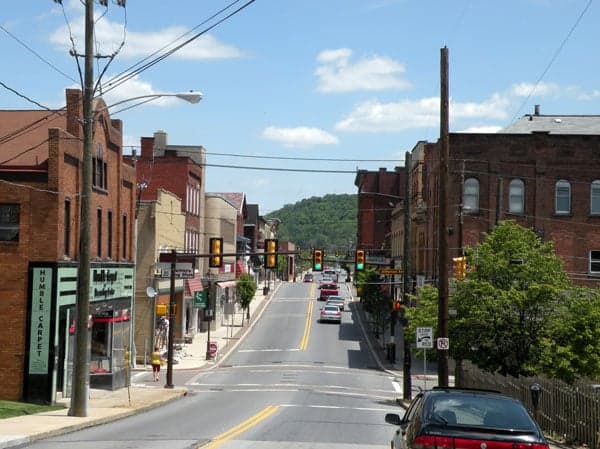
Canonsburg, Pennsylvania offers a notably strong environment for personal sovereignty, where state-level preemption and a historically individualistic local culture combine to give residents wide latitude over their lives. The borough itself operates with a light administrative touch on most day-to-day matters, while Pennsylvania’s legal framework provides a solid foundation for self-defense, property rights, and parental decision-making. For those prioritizing autonomy over convenience or government services, Canonsburg presents a compelling balance of rural-adjacent freedoms within a small-town Washington County setting, roughly 20 miles southwest of Pittsburgh.
Tax burden and regulatory posture: How Pennsylvania’s framework shapes local autonomy
Pennsylvania’s tax structure is a mixed bag for sovereignty-minded residents, but the overall burden is moderate compared to neighboring states. The state levies a flat 3.07% personal income tax—one of the lowest flat rates in the nation—and a 6% state sales tax (no tax on clothing or groceries). Canonsburg adds a 1% local earned income tax and a modest property tax rate that, combined with Washington County and school district levies, typically lands between 2.5% and 3.5% of assessed value. For a median-priced home around $200,000, annual property taxes run roughly $5,000–$7,000—noticeably higher than parts of the South but lower than most of the Northeast. There is no local sales tax beyond the state’s 6%.
Regulatory posture in Canonsburg is best described as pragmatic rather than intrusive. The borough enforces standard building codes (based on the 2018 International Residential Code) and requires permits for structural work, but does not impose the kind of hyper-specific zoning overlays found in wealthier Pittsburgh suburbs. Home-based businesses are permitted by right in most residential zones, with no special licensing beyond a simple zoning permit for customer traffic. The borough’s zoning code allows accessory dwelling units (ADUs) on lots of at least 10,000 square feet, giving homeowners flexibility for multi-generational living or rental income. Pennsylvania’s Uniform Construction Code is enforced statewide, but local inspectors in Washington County are generally described as reasonable and accessible, not adversarial. For those who chafe at red tape, Canonsburg’s regulatory environment is a clear step lighter than Allegheny County’s.
Self-defense and gun law specifics: What Pennsylvania’s preemption means for Canonsburg residents
Pennsylvania is a shall-issue state for concealed carry permits, meaning Washington County’s sheriff must issue a License to Carry Firearms (LTCF) to any qualified applicant—no discretionary denial, no “good cause” requirement. The process is straightforward: a $20 fee, a brief background check, and typically a same-day or next-day issuance at the sheriff’s office in Washington, PA. Open carry is legal without a permit for anyone who can legally possess a firearm, though it becomes concealed carry once inside a vehicle. No permit is required to purchase a rifle, shotgun, or handgun from a private seller (though handgun purchases from dealers require a Pennsylvania Instant Check System approval).
Canonsburg itself has no local gun ordinances beyond what state law allows. Pennsylvania’s strong preemption statute (18 Pa.C.S. § 6120) prohibits municipalities from enacting any firearm regulations stricter than state law, so there are no local magazine bans, assault weapon restrictions, or waiting periods. The borough’s police department does not maintain a firearm registry or require reporting of lost or stolen guns. Stand-your-ground principles apply under Pennsylvania’s Castle Doctrine, which presumes a reasonable fear of death or serious bodily injury when an intruder unlawfully enters an occupied home, vehicle, or business. There is no duty to retreat in one’s home or place of business. For self-defense law, Canonsburg residents operate under some of the most protective state-level statutes in the Northeast, comparable to Ohio or Indiana.
Self-reliance and homesteading viability: Lot sizes, zoning, and off-grid feasibility
Canonsburg is an older borough with a traditional grid layout, so large-acreage homesteading within the municipal limits is limited. Typical residential lots range from 5,000 to 12,000 square feet, with a few larger parcels near the borough’s edges. The zoning code permits keeping chickens (hens only, no roosters) on lots of at least 6,000 square feet, with a maximum of six birds and a required coop setback of 15 feet from property lines. Goats, sheep, and other livestock are not permitted within the borough limits—those require moving to the surrounding townships of North Strabane or Chartiers, where lot sizes of 1–5 acres are common and agricultural zoning allows for more robust homesteading.
Off-grid feasibility is limited within Canonsburg itself. The borough requires connection to municipal water and sewer, so full independence from utilities is not possible. However, rainwater collection for irrigation is unrestricted, and solar panels are permitted by right as an accessory use, with no HOA-style aesthetic restrictions. The borough’s building code does not mandate grid-tied solar, so a resident could theoretically install a battery-backed system for partial independence, but the municipal water/sewer requirement remains. For those seeking true off-grid living, the rural townships within a 15-minute drive—such as Amwell Township or East Finley Township—offer 5–20 acre parcels with private wells and septic, no zoning beyond basic agricultural exemptions, and no building permits for structures under 200 square feet. Canonsburg itself is best seen as a base for self-reliance within a suburban framework, not a homesteading destination.
Personal liberties: Parental rights, medical autonomy, speech, and property
Pennsylvania law provides strong protections for parental rights in education and healthcare. The state’s Parental Access to Student Records law gives parents broad rights to review curriculum and opt their children out of any instruction they find objectionable, including sex education and health screenings. Canonsburg’s school district, the Canon-McMillan School District, has a conservative-leaning school board that has consistently upheld parental notification policies and resisted state-level mandates on gender-related accommodations. Parents have successfully challenged curriculum materials in recent years, reflecting a district responsive to community input.
Medical autonomy is robust. Pennsylvania has no state-level vaccine mandate for adults, and while school attendance requires certain immunizations, medical and religious exemptions are available with minimal paperwork. The state does not track or restrict off-label use of prescription drugs, and there are no laws prohibiting the purchase or use of dietary supplements, herbal remedies, or alternative treatments. Telehealth access is unrestricted, and residents can consult with out-of-state providers for second opinions or specialized care. The borough has no local health ordinances beyond basic sanitation codes.
Free speech and property rights are well-protected. Pennsylvania has no state-level hate speech law that criminalizes expression, and Canonsburg has no local noise or signage ordinances that would restrict political or religious speech on private property. Home-based businesses are permitted by right, as noted, and short-term rentals (Airbnb/VRBO) are allowed with a simple registration—no cap on nights or number of units. Property taxes are reassessed only upon sale, so long-term owners are not subject to annual valuation increases that could price them out of their homes. Eminent domain is rarely exercised in Washington County, and the borough has not used it for private development in over two decades.
Overall, Canonsburg delivers a high degree of personal sovereignty relative to most of the Northeast and Mid-Atlantic. The tax burden is moderate but predictable, the gun laws are among the most protective in the region, and the regulatory environment respects individual choice in education, healthcare, and property use. The main trade-off is that true off-grid homesteading requires moving outside the borough limits, but the surrounding townships offer that option within a short drive. For a single person or family who values autonomy over urban amenities, Canonsburg represents a rare pocket of individual liberty in a state that otherwise leans toward collective governance—a place where the default answer from local government is “yes, unless there’s a clear problem,” rather than “no, unless you get a variance.”

* Values derived from national, state, county, city and local statistics and may differ in a specific area. Last updated: 2026-10-23T21:47:04.000Z
Narrative content on this page is AI-generated and may contain mistakes. Verify any details that matter before acting on them.
ReloMaps may earn a commission from affiliate links at no extra cost to you.

