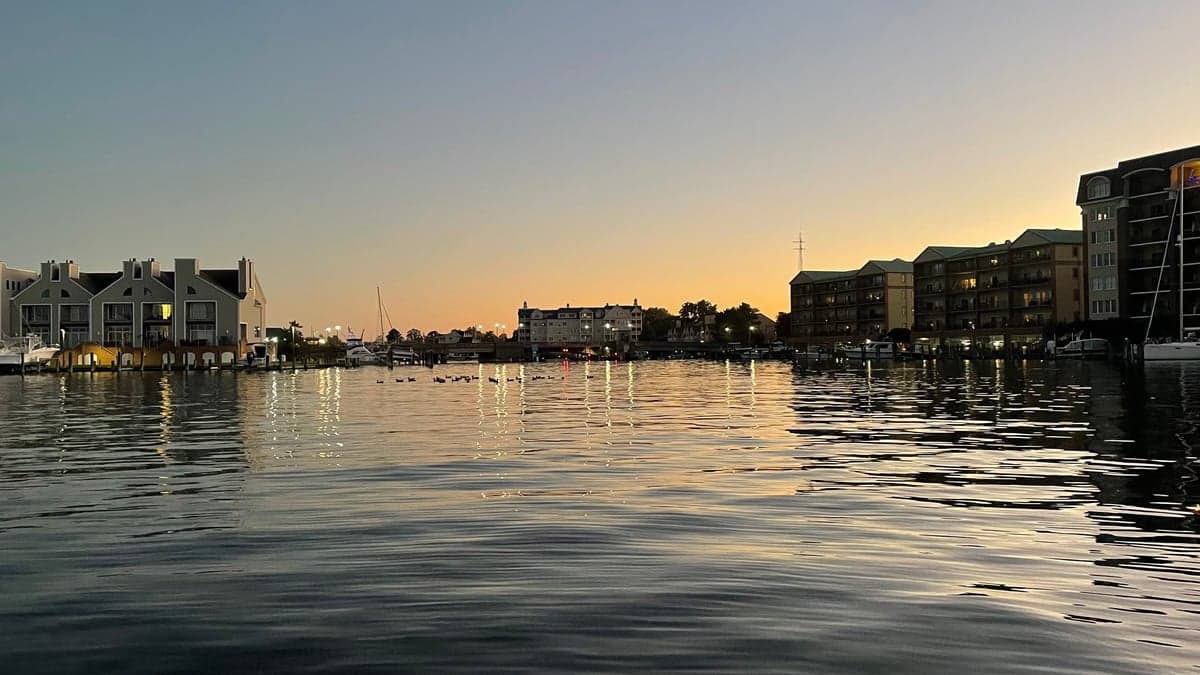
Photo: Wikipedia
Political ClimatePolitical Climate in Cambridge, MD
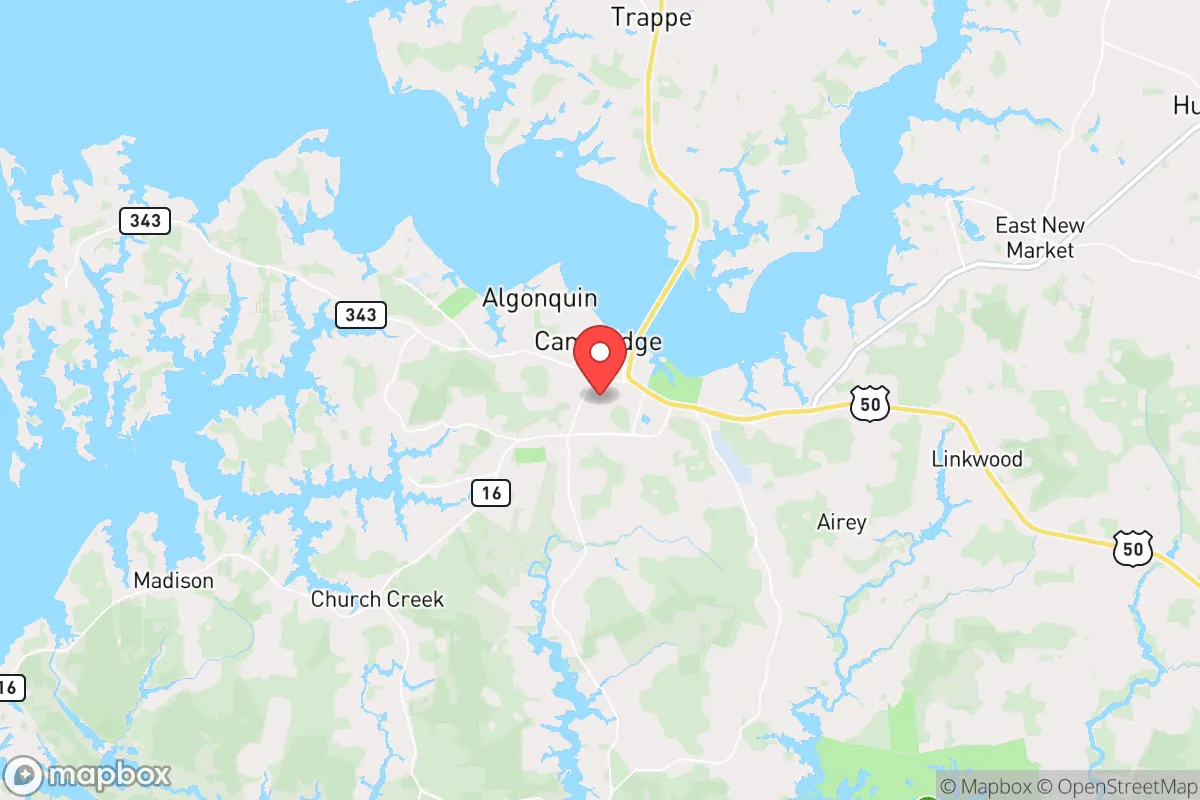
District shown is the primary district for this city’s centroid. Cities may span multiple districts.
Local Political AnalysisPolitical Analysis of Cambridge, MD
Cambridge, Maryland, sits in a county that leans reliably conservative, with a Cook PVI of R+8, but the town itself has seen a noticeable cultural and political shift in recent years that has some of us longtime residents watching closely. The surrounding rural areas and nearby towns like Easton and Salisbury still vote solidly red, but inside Cambridge city limits, you’re seeing more progressive energy—especially in local government and school board meetings. It’s not a full flip by any means, but the trajectory is concerning if you value limited government and personal freedoms. The old-school, live-and-let-live attitude that defined this place for decades is slowly being replaced by a push for more regulations and social engineering from the top down.
How it compares
Drive ten minutes outside Cambridge, and you’re in a different world politically. Towns like Trappe and Hurlock are still deeply conservative, with voters who prioritize gun rights, low taxes, and minimal interference from Annapolis. Even Dorchester County as a whole votes reliably Republican in statewide races. But Cambridge itself has become a bit of an outlier—a blue dot in a red county. The contrast is stark when you look at local elections: city council candidates who run on “equity” and “inclusion” platforms are winning seats, while the county commissioners remain mostly conservative. It creates a weird tension where you’ve got two sets of rules depending on which side of the highway you live on. If you’re coming from a place like Ocean City or even Salisbury, you’ll notice the difference in how aggressively the city enforces things like rental inspections, noise ordinances, and business licensing. It feels like government creep, plain and simple.
What this means for residents
For folks who just want to be left alone, the writing is on the wall. The push for more progressive policies in Cambridge means you can expect higher fees, more permitting hurdles, and a general attitude that the city knows better than you do about how to run your life. Property taxes have crept up, and there’s talk of adding new local taxes to fund programs that a lot of us never asked for. The school board has also become a battleground, with some members pushing curriculum changes that prioritize ideology over basics like math and reading. If you’re a small business owner or a homeowner who values your Second Amendment rights, you’ll want to pay close attention to who’s running for office next cycle. The long-term trend is clear: Cambridge is drifting away from the common-sense conservatism that made this area a great place to raise a family, and it’s happening faster than most people realize.
One thing that really stands out is the cultural divide. Cambridge has a proud history as a working waterfront town, but the new wave of activism is trying to rewrite that narrative in ways that feel forced. You see it in the push to rename streets and remove historical markers—things that divide the community rather than unite it. Meanwhile, the county’s rural areas are holding the line, fighting against state mandates on everything from septic systems to land use. If you’re considering a move here, I’d say the county is still a solid bet for conservative values, but inside Cambridge itself, you’re going to have to keep your head on a swivel. The next few elections will tell us whether this is just a phase or a permanent shift toward the kind of overreach that drove a lot of us out of bigger cities in the first place.

State Political ClimatePolitical Climate in Maryland
State Political AnalysisPolitical Environment in the State
Maryland has long been a solidly blue state, but the reality on the ground is far more divided than the statewide numbers suggest. The Democratic stronghold is driven almost entirely by the Washington, D.C. suburbs and Baltimore City, while the rest of the state—especially the Eastern Shore, Western Maryland, and much of Southern Maryland—votes reliably Republican. Over the past 20 years, the state has shifted leftward on cultural and economic issues, but that shift is almost entirely a function of population growth in the D.C. exurbs, not a genuine conversion of the rural and small-town electorate.
Urban vs. rural divide
The political map of Maryland is a textbook case of the urban-rural split. Montgomery County and Prince George’s County, both D.C. suburbs, together cast nearly a third of the state’s votes and deliver margins of 70-80% for Democrats. Baltimore City adds another deep-blue anchor. Meanwhile, the Eastern Shore counties—Worcester, Wicomico, Talbot, Queen Anne’s—vote Republican by 15-25 points. Western Maryland, including Garrett County and Allegany County, is even redder, with Garrett County voting +40 for Trump in 2020. The real battleground is the suburban ring around Baltimore and the I-95 corridor: Howard County, Anne Arundel County, and Harford County. Harford, once reliably red, has drifted purple as D.C. commuters push north, while Howard County is now solidly blue. The result is a state where a Republican can win a county like Carroll or Frederick but still lose the statewide race by 20 points.
Policy environment
Maryland’s policy environment is heavily progressive, with a tax burden that ranks among the highest in the nation. The state income tax tops out at 5.75%, but counties add their own piggyback taxes, pushing combined rates over 8% in Baltimore City and Montgomery County. Property taxes are also high, especially in the D.C. suburbs. The regulatory posture is business-friendly on paper but burdensome in practice—environmental regulations, especially around the Chesapeake Bay, add significant costs for farmers and developers. Education policy is dominated by the Blueprint for Maryland’s Future, a massive funding plan that pours billions into public schools but has done little to close achievement gaps. School choice is virtually nonexistent; charter schools are rare and tightly controlled. Election laws are among the most permissive in the country: no-excuse mail-in voting, same-day registration, and automatic voter registration are all in place. The state also has a strict gun control regime, including a ban on assault weapons, a handgun permit requirement that was effectively a “may issue” system until the Supreme Court’s Bruen decision forced a shift to “shall issue.”
Trajectory & freedom
Maryland is becoming less free by almost any measure, and the trend has accelerated since 2020. The most significant recent contraction of personal liberty came with the passage of the Firearm Safety Act of 2013 and its subsequent expansions, which effectively banned the sale of many common rifles and imposed a 10-round magazine limit. In 2023, the legislature passed a bill requiring a permit to purchase any firearm, adding a 10-day wait and a training requirement—a law that is currently being challenged in court. On medical freedom, Maryland was one of the first states to impose strict COVID-19 vaccine mandates for healthcare workers and state employees, and it has not rolled them back. Parental rights have taken a hit with the passage of the Healthy Youth Act, which mandates comprehensive sex education in public schools, including instruction on sexual orientation and gender identity, without an opt-out provision for parents. Property rights are under pressure from the state’s aggressive approach to zoning and environmental regulation, particularly the “Smart Growth” policies that limit development in rural areas. The state also passed a law in 2024 that allows non-citizens to vote in local elections in some municipalities, a move that has sparked significant backlash.
Civil unrest & political movements
Maryland has a long history of political activism, but the flashpoints have shifted. The 2015 Baltimore riots following the death of Freddie Gray were a national story and left deep scars, but the city has been relatively quiet since. More recently, the political energy has come from the right. The “We the People” movement in Frederick County and the “Moms for Liberty” chapters in Carroll and Harford counties have been vocal on school board issues, parental rights, and library content. The state’s sanctuary policies—Maryland is a “sanctuary state” by executive order, meaning state law enforcement is prohibited from cooperating with federal immigration authorities—have been a persistent source of tension, especially in rural counties like Washington and Allegany, where local sheriffs have publicly refused to comply. Election integrity remains a hot-button issue: the 2020 election saw widespread use of mail-in ballots, and the state’s new automatic voter registration system has raised concerns about duplicate registrations. There have been no major secession movements, but the “Western Maryland secession” rhetoric flares up periodically, especially after progressive legislation passes. The most visible flashpoint for a new resident would be the constant political signage: in rural areas, you’ll see “Trump 2024” and “Defund the Police” signs within a few miles of each other.
Projection
Over the next 5-10 years, Maryland will likely become even more Democratic as the D.C. suburbs continue to grow and diversify. The state’s population is projected to increase by about 5% by 2030, with nearly all of that growth concentrated in Montgomery, Prince George’s, and Howard counties. The Eastern Shore and Western Maryland will continue to lose population, further diluting their political influence. The state’s tax burden is unlikely to decrease; in fact, the Blueprint for Maryland’s Future will require sustained revenue increases, likely through higher income taxes or a new sales tax on services. Gun control will tighten further—a “red flag” law is already in place, and a ban on “ghost guns” passed in 2022. The biggest wildcard is the potential for a Republican governor to win in 2026, which could slow the leftward momentum but is unlikely to reverse it. For a conservative moving in now, the expectation should be that the state will continue to feel more like a progressive enclave, especially in the areas where most jobs and amenities are located.
For a new resident, the bottom line is that Maryland offers a high quality of life in terms of natural beauty, proximity to D.C., and strong public services, but at a steep cost in personal freedom and tax burden. If you value low taxes, gun rights, school choice, and limited government, you will find yourself increasingly at odds with the state’s political trajectory. The best bets for a conservative are the rural counties—Garrett, Allegany, Carroll, and the Eastern Shore—but even there, you’ll be fighting a losing battle on state-level issues. If you’re moving for a job in D.C. or Baltimore, be prepared to live in a blue bubble; if you’re moving for a slower pace of life, the Eastern Shore or Western Maryland can still offer a red oasis, but the desert is shrinking.
* Values derived from national, state, county, city and local statistics and may differ in a specific area. Last updated: 2026-04-22T02:31:13.000Z
Narrative content on this page is AI-generated and may contain mistakes. Verify any details that matter before acting on them.
ReloMaps may earn a commission from affiliate links at no extra cost to you.

