Photo: Wikipedia
Demographics of Cambridge, MD
Affluence Level in Cambridge, MD
A below-average socioeconomic profile. Incomes, home values, and educational attainment trail the U.S., with higher poverty and unemployment.
People of Cambridge, MD
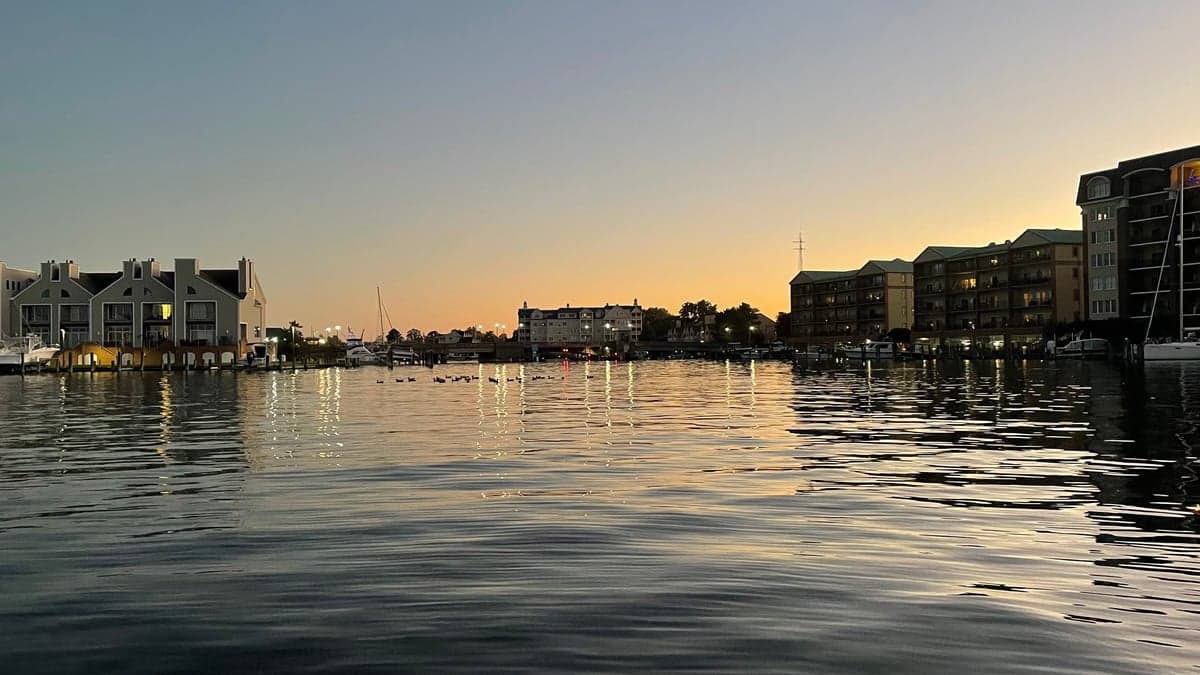
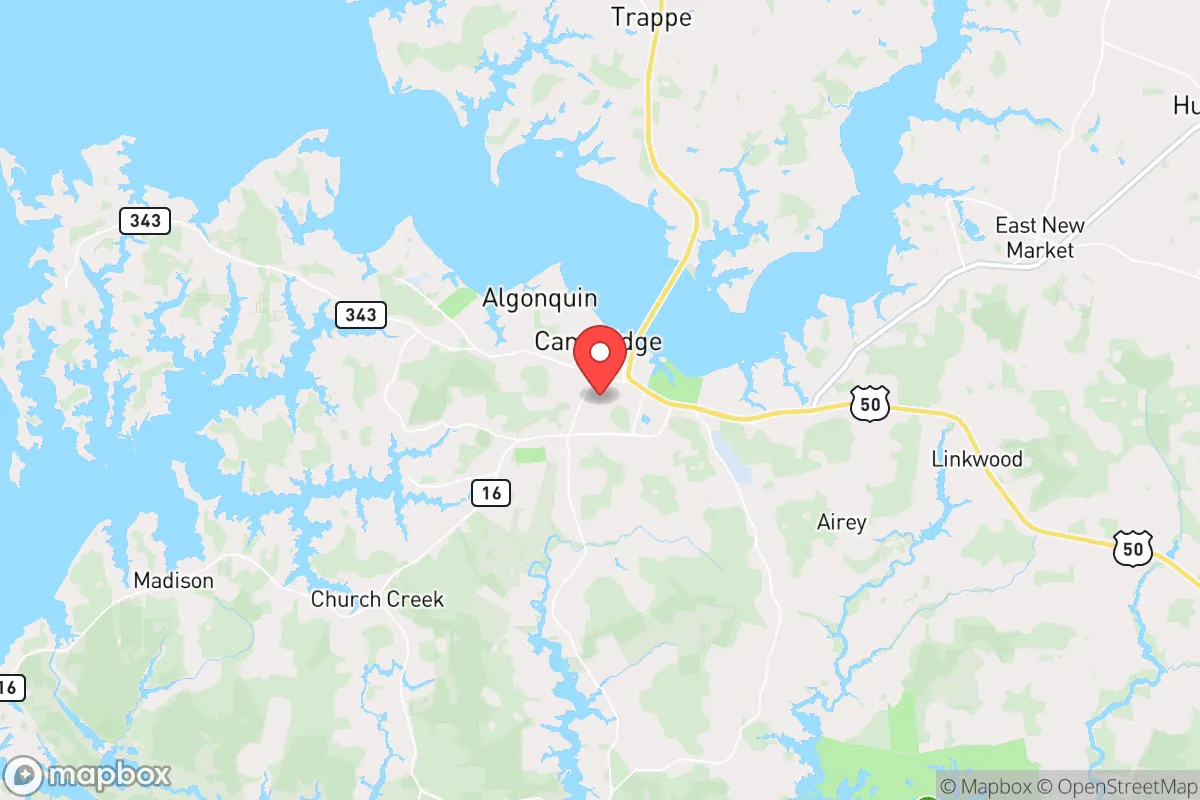
The people of Cambridge, Maryland today form a majority-minority population of roughly 13,100, defined by a near-even split between Black (44.2%) and White (37.2%) residents, with a growing Hispanic presence (7.5%) and small East/Southeast Asian (2.1%) and foreign-born (2.1%) communities. The city is notably less educated than state averages, with only 19.1% of adults holding a bachelor’s degree, and its population has been essentially flat for decades, giving it a stable, small-town character with deep roots in the seafood industry and a history of racial division that still shapes neighborhood boundaries. Distinctive identity markers include a strong African American cultural heritage centered on the Pine Street corridor, a working-class waterfront identity tied to the Choptank River, and a small but visible Hispanic enclave emerging in the city’s eastern blocks.
How the city was settled and grew
Cambridge was founded in 1684 as a port town on the Choptank River, drawing English settlers who established tobacco plantations on land grants like the 1,000-acre “Choptank” tract. By the mid-18th century, enslaved Africans formed the majority of the labor force, and their descendants built the city’s earliest Black neighborhoods, most notably Pine Street, which became the commercial and social heart of African American life by the 1800s. The 19th-century seafood boom—oysters, crabs, and fish packing—attracted a second wave of Black workers from the Eastern Shore’s rural farms, as well as a small number of Irish and German immigrants who settled near the waterfront in West End. By 1900, Cambridge was a majority-Black city, with White residents concentrated in the High Street and Race Street areas near the courthouse and churches, while Black families were largely confined to Pine Street and the Washington Street corridor. The early 20th century brought a modest influx of Italian and Polish immigrants who worked in the canneries, settling in the North Cambridge neighborhood around Glasgow Street.
Modern era (post-1965)
The 1965 Hart-Cellar Act had minimal direct effect on Cambridge’s foreign-born population—still only 2.1% today—but the post-civil rights era reshaped the city internally. The 1967 Cambridge race riots, sparked by police brutality and segregation, accelerated White flight to surrounding Dorchester County and the Cambridge South area near Route 50, leaving the city core increasingly Black. By 1980, the White share had fallen below 50%, and the Black share rose above 50%, a shift that concentrated in the historic Pine Street and Willow Grove neighborhoods. The 1990s and 2000s saw a small but steady Hispanic inflow, primarily Mexican and Central American workers drawn to the poultry plants and crab houses; they settled in the East Cambridge blocks near the industrial waterfront, where a handful of bodegas and Spanish-language churches now operate. The East/Southeast Asian population (2.1%) is almost entirely Vietnamese and Filipino families who arrived after 2000, working in healthcare and hospitality, and living in the Cambridge Commons apartment complex near the hospital. The Indian-subcontinent population is effectively zero, reflecting the city’s lack of tech or professional sectors that attract that group.
The future
Cambridge’s population is not homogenizing but rather tribalizing into distinct, stable enclaves. The Black majority is aging and slowly declining as younger residents leave for Salisbury or Baltimore, while the White share has stabilized at roughly 37% due to a small influx of retirees and telecommuters buying waterfront properties in the High Street Historic District. The Hispanic share is the only group growing noticeably, projected to reach 10-12% by 2035, driven by family reunification and continued demand for seafood-processing labor. The East/Southeast Asian community is plateauing, as the hospital and casino that drew them are not expanding. The foreign-born share will likely remain below 5%, making Cambridge one of the least immigrant-diverse cities on the Eastern Shore. The next 10-20 years will see a slow, quiet diversification of the Hispanic enclave in East Cambridge, but the overall population will remain flat or decline slightly, with no major new industry or housing development on the horizon.
For a conservative-leaning individual or family moving in now, Cambridge is becoming a place where neighborhood identity matters more than ever: Pine Street remains the Black cultural core, High Street is the White historic district, and East Cambridge is the emerging Hispanic corridor. The city is not integrating across these lines but rather solidifying them, so newcomers should choose a neighborhood that matches their lifestyle and priorities, understanding that the city’s small size and flat growth mean little demographic change is coming.

* Values derived from national, state, county, city and local statistics and may differ in a specific area. Last updated: 2026-04-22T02:31:13.000Z
Narrative content on this page is AI-generated and may contain mistakes. Verify any details that matter before acting on them.
ReloMaps may earn a commission from affiliate links at no extra cost to you.

