Photo: Wikipedia
Personal Sovereignty in Ventura County
Viable for self-reliance. Generally workable, though some barriers may limit total independence.
What does Personal Sovereignty tell us?
Personal Sovereignty measures your capacity for self-reliance and independence with minimal government friction. Higher scores mean fewer barriers between you and the way you want to live... but it assumes you have the space you need and good neighbors.
What does this tell us?
Personal Sovereignty measures your capacity for self-reliance and independence with minimal government friction. Higher scores mean fewer barriers between you and the way you want to live... but it assumes you have the space you need and good neighbors.
State Policy
Energy independence: Importer (33% of energy produced in-state)
Personal Liberty
Homesteading

Personal Liberty Analysis
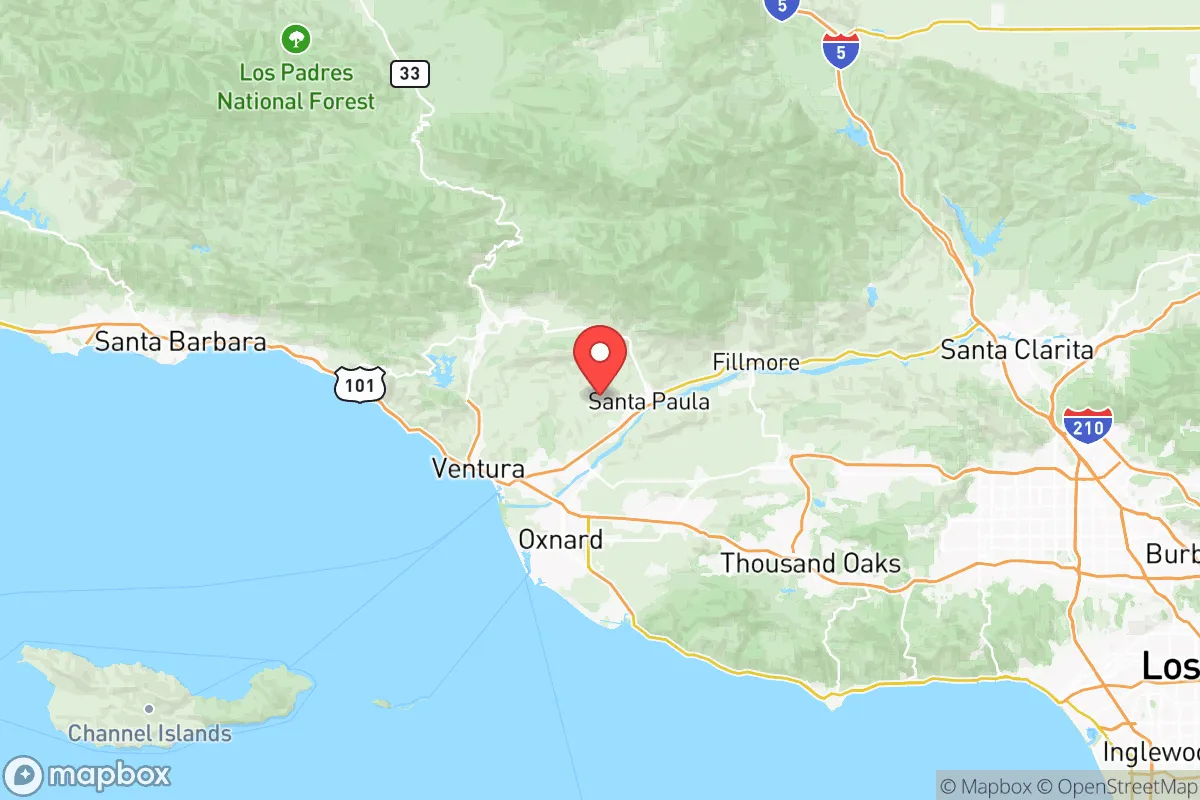
Ventura County presents a complex personal sovereignty landscape where state-level mandates often clash with local conservative and libertarian-leaning cultures, creating a patchwork of autonomy that varies significantly by city. While California’s overall regulatory environment is heavy-handed, Ventura County offers pockets of relative freedom, particularly in its inland agricultural and exurban communities like Fillmore, Santa Paula, and Ojai, where residents enjoy more breathing room than in the coastal, more progressive enclaves of Ventura City or Oxnard. For a relocation-minded individual or family prioritizing personal independence, the key is understanding which specific jurisdictions within the county align with your values on taxes, self-defense, self-reliance, and personal liberties.
Tax burden and regulatory posture in Ventura County versus other California regions
California’s state income tax (top marginal rate of 13.3%) and sales tax (base 7.25%, with local add-ons) apply uniformly, but Ventura County’s property tax environment is relatively favorable due to Proposition 13, which caps annual increases at 2% and keeps base rates around 1% of assessed value. The county’s regulatory posture is lighter than the Bay Area or Los Angeles County, particularly in unincorporated areas and smaller cities like Moorpark and Simi Valley, where planning departments are more pragmatic about home-based businesses and minor construction permits. However, the California Environmental Quality Act (CEQA) still imposes significant hurdles for any development or land-use change, and the county’s coastal zone (stretching from Ventura to Malibu) triggers additional California Coastal Commission oversight, making property modifications near the ocean far more burdensome than inland. For a conservative-leaning household, the tax burden is moderate by California standards but high nationally; the trade-off is access to well-funded public services and infrastructure, though many residents in Thousand Oaks and Camarillo report that local government responsiveness is better than in larger metro areas.
Self-defense rights and gun law specifics in Ventura County
California’s strict gun laws apply statewide, including a 10-day waiting period, universal background checks, an assault weapons ban, and a 10-round magazine limit. However, Ventura County is notably more gun-friendly in practice than coastal urban counties like Los Angeles or San Francisco. The Ventura County Sheriff’s Office, which serves unincorporated areas and contracts with cities like Fillmore and Santa Paula, has historically been more accommodating of CCW (carry concealed weapon) permits, especially after the Supreme Court’s Bruen decision in 2022, which forced California to adopt a “shall-issue” standard. As of 2026, the sheriff’s department processes applications efficiently, with approval rates above 80% for qualified applicants who complete training. In contrast, the Ventura Police Department (serving Ventura City) and Oxnard Police Department have been more restrictive, with longer wait times and higher denial rates. For self-defense-minded residents, living in the sheriff’s jurisdiction or in a city that contracts with the sheriff (like Moorpark or Simi Valley) is a strategic advantage. Open carry is prohibited, and storage laws require firearms to be locked when not in use, but the county’s rural areas—particularly the Ojai Valley and Lockwood Valley—have a strong hunting and sport shooting culture, with several private ranges and BLM land available for recreational use.
Self-reliance and homesteading viability: lot sizes, zoning, and off-grid feasibility
Homesteading and off-grid living are viable in Ventura County only in specific zones, primarily the unincorporated agricultural areas and the mountainous interior. Minimum lot sizes in agricultural zones (AG) are typically 10 to 40 acres, with Fillmore and Santa Paula offering the most affordable land for small-scale farming, often under $20,000 per acre for raw parcels. The Ojai Valley has stricter hillside ordinances and higher land costs ($50,000–$100,000+ per acre), but allows limited livestock and gardening on smaller lots (1–5 acres) with a conditional use permit. Off-grid feasibility is limited by California building codes: new homes must connect to the electrical grid unless a solar-plus-battery system is approved, and rainwater catchment is legal but regulated (max 200,000 gallons per property without a permit). Composting toilets and greywater systems are permitted but require county health department approval, which can be a multi-month process. The county’s zoning code explicitly prohibits “primitive” dwellings (yurts, tiny houses on wheels, or RV living as primary residences) in most zones, though Lockwood Valley (northeast of Ojai) has fewer enforcement resources and a more laissez-faire reputation among off-gridders. For families seeking true self-reliance, the regulatory hurdles are significant but not insurmountable; the Santa Clara River Valley (around Fillmore and Santa Paula) offers the best balance of affordable land, agricultural zoning, and a community of like-minded homesteaders.
Personal liberties: parental rights, medical autonomy, speech, and property
Parental rights in Ventura County are shaped by California’s progressive education laws, which mandate LGBTQ+ inclusive curriculum and restrict parental opt-outs for sex education, though local school boards in Simi Valley and Moorpark have pushed back with parental notification policies and opt-in requirements for certain materials. Homeschooling is legal and relatively straightforward, requiring a private school affidavit filed with the state, and the county has several active homeschool co-ops and support groups, particularly in the Thousand Oaks and Camarillo areas. Medical autonomy is limited by California’s vaccine mandates for school attendance and healthcare workers, though exemptions (medical and personal belief for some vaccines) are available. The county has a robust network of independent healthcare providers, including naturopaths and functional medicine practitioners, especially in Ojai. Free speech protections are strong in public forums, but local noise ordinances and permit requirements for public gatherings can be restrictive in coastal cities; inland cities like Fillmore and Santa Paula are more tolerant of political expression and community events. Property rights are constrained by California’s rent control laws (statewide Costa-Hawkins limits, plus local ordinances in Ventura City and Oxnard), and by CEQA, which allows third-party lawsuits against development projects—a tool often used to block new housing or commercial construction. For property owners, the most freedom is found in unincorporated areas and smaller cities where zoning changes are rare and local government is more deferential to individual landowners.
Overall, Ventura County offers a moderate-to-high level of personal sovereignty relative to other California regions, but it falls short of the autonomy found in states like Texas, Idaho, or Arizona. The county’s inland and agricultural communities—Fillmore, Santa Paula, Ojai, and Simi Valley—provide the best environment for those prioritizing self-defense rights, homesteading, and parental control, while the coastal cities of Ventura and Oxnard lean more progressive and regulatory. For a conservative-leaning family or individual, the strategic move is to choose a jurisdiction within the county that aligns with your specific priorities, rather than expecting uniform freedom across the entire area. The trade-offs are real: lower taxes and lighter regulation in the inland valleys, but with fewer amenities and longer commutes; more services and cultural opportunities on the coast, but with higher costs and more oversight. Ventura County is not a libertarian paradise, but for those willing to navigate its complexities, it offers a viable middle ground between California’s heavy-handed state apparatus and the desire for personal independence.

* Values derived from national, state, county, city and local statistics and may differ in a specific area. Last updated: 2026-06-15T19:36:17.000Z
Narrative content on this page is AI-generated and may contain mistakes. Verify any details that matter before acting on them.
ReloMaps may earn a commission from affiliate links at no extra cost to you.

