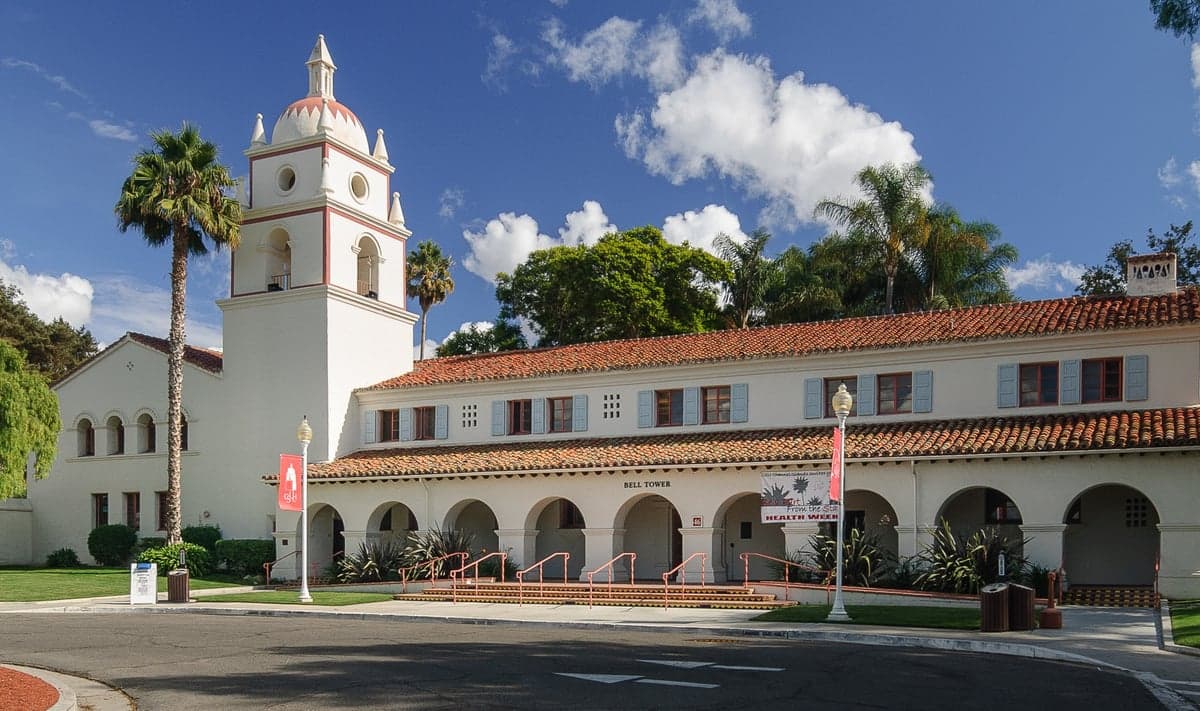
Photo: Wikipedia
Demographics of Ventura County
Affluence Level in Ventura County
An upper-middle-class area. Household wealth, education levels, and homeownership run ahead of national benchmarks.
People of Ventura County
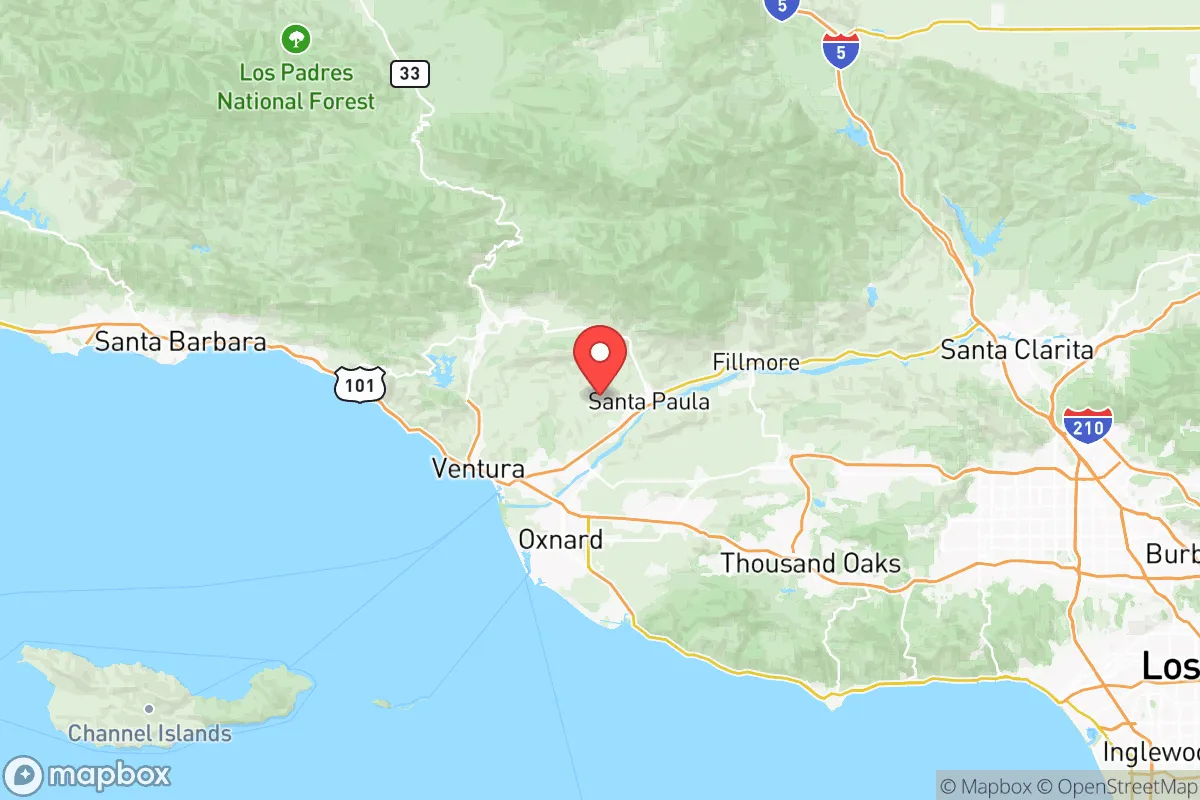
Ventura County's 838,259 residents form a distinctive blend of coastal California life and agricultural heritage, where a near-even split between Hispanic (43.8%) and White (42.9%) populations defines the region's character. The county sits between the sprawling Los Angeles metropolis and the more rural Central Coast, creating a unique identity that is neither fully suburban nor fully rural. With only 10.3% foreign-born and 35.7% college-educated, Ventura County attracts families and individuals seeking a quieter, more affordable alternative to Los Angeles while maintaining access to coastal amenities and a strong agricultural economy.
Settlement & growth (pre-1960)
The original inhabitants of Ventura County were the Chumash people, who lived along the coast and inland valleys for thousands of years before European contact. Their settlements dotted the coastline from what is now Malibu to Santa Barbara, with significant villages near present-day Ventura (the county seat) and Ojai. The Chumash were among the most advanced Native societies in California, known for their sewn-plank tomols (canoes) and extensive trade networks.
Spanish colonization began in earnest with the founding of Mission San Buenaventura in 1782, established by Father Junípero Serra near the present-day city of Ventura. The mission system brought Spanish soldiers, missionaries, and settlers, who established ranchos that would shape the region's land-use patterns for centuries. After Mexico gained independence from Spain in 1821, large land grants were distributed to Mexican families, creating the rancho system that dominated the region through the mid-19th century. The Mexican-American War (1846-1848) transferred California to the United States, and by the 1850s, Anglo-American settlers began arriving, drawn by the promise of agricultural land and the region's Mediterranean climate.
The late 19th and early 20th centuries saw the arrival of waves of immigrants who would shape Ventura County's agricultural economy. Oxnard, founded in 1903 as a company town for the American Beet Sugar Company, attracted a diverse workforce of European immigrants, including Italians, Portuguese, and Germans, who worked in the sugar beet fields and processing plants. The city's name itself honors the Oxnard brothers, who established the sugar beet industry. Simultaneously, Chinese immigrants who had helped build the transcontinental railroad found work in agriculture and railroad maintenance, though discriminatory laws limited their numbers. Japanese immigrants began arriving in the early 1900s, establishing successful farming operations in the Oxnard Plain and Camarillo areas, growing strawberries, lima beans, and other crops.
The Dust Bowl migration of the 1930s brought thousands of displaced farmers from Oklahoma, Texas, and Arkansas to Ventura County, where they found work in the citrus groves and agricultural fields. These "Okies" and "Arkies" settled primarily in Oxnard and Santa Paula, where they formed tight-knit communities that maintained their cultural traditions for generations. The post-World War II era saw a surge in population as returning veterans and their families moved to the region, drawn by the expanding aerospace and defense industries in neighboring Los Angeles County and the growing agricultural sector. The construction of the Ventura Freeway (US 101) in the 1950s and 1960s made commuting to Los Angeles feasible, spurring suburban development in Thousand Oaks, Newbury Park, and Simi Valley.
Modern era (post-1965)
The 1965 Hart-Cellar Immigration Act fundamentally reshaped Ventura County's demographics, as it did across California. The most significant change has been the growth of the Hispanic population, which rose from a modest share in 1960 to 43.8% today. Mexican immigrants and their descendants form the largest Hispanic subgroup, drawn by agricultural work in the Oxnard Plain and Santa Clara River Valley, as well as construction and service jobs in the growing suburban cities. Oxnard has become the county's Hispanic cultural and commercial hub, with a vibrant downtown and strong ties to Mexico. Santa Paula and Fillmore also have large Hispanic majorities, reflecting their agricultural roots and proximity to the fields.
East and Southeast Asian communities, now 5.6% of the population, have grown steadily since the 1970s. Filipino immigrants, many with ties to the U.S. Navy and healthcare industries, settled in Oxnard and Ventura, where they established churches and community organizations. Vietnamese and Chinese immigrants arrived later, drawn by the county's reputation for good schools and safe neighborhoods, particularly in Thousand Oaks and Simi Valley. The Indian subcontinent population, at 1.5%, is a smaller but growing presence, with professionals in technology and healthcare settling in the same suburban communities.
Domestic migration has been equally transformative. The 1970s through the 1990s saw a steady influx of families from Los Angeles County seeking lower crime rates, better schools, and more affordable housing. Thousand Oaks and Simi Valley became classic Sun Belt-style suburbs, with master-planned communities, good school districts, and a predominantly White, middle-class population. This migration pattern slowed after the 2008 recession but resumed in the 2010s, with a notable shift: the new arrivals are more diverse, including Hispanic and Asian families who previously lived in Los Angeles. The Black population, at 1.7%, remains small and is concentrated in Oxnard and Ventura, with no historically Black neighborhoods comparable to those in larger cities.
The county's political geography reflects these demographic patterns. Simi Valley and Thousand Oaks lean conservative, while Oxnard and Ventura are more Democratic. The agricultural interior—Santa Paula, Fillmore, and Ojai—has its own distinct character, blending rural conservatism with a growing Hispanic electorate.
The future
Ventura County is becoming more diverse, but at a slower pace than neighboring Los Angeles County. The Hispanic population is projected to continue growing, potentially becoming the majority within the next 10-15 years, as younger Hispanic families have higher birth rates and continued immigration from Mexico and Central America. The White population is aging and declining in share, though it remains the largest single group in the suburban cities. East and Southeast Asian communities are growing modestly, particularly in Thousand Oaks and Newbury Park, where good schools and safe neighborhoods attract professional families. The Indian subcontinent population, while small, is growing faster than the East Asian population, driven by the technology sector.
The most significant demographic trend is the dispersal of Hispanic families from traditional agricultural centers like Oxnard and Santa Paula into the suburban cities of Simi Valley and Thousand Oaks. This is creating a more integrated county, though economic segregation persists: the coastal cities remain more expensive and less diverse than the inland agricultural communities. The county's cultural identity is evolving from a simple agricultural-suburban binary into a more complex mosaic, with Hispanic culture becoming increasingly mainstream in all parts of the county.
Housing affordability will be the key constraint on future growth. Ventura County's median home price exceeds $800,000, pricing out many young families and forcing some to move to inland areas like Santa Clarita or the Central Valley. This could slow population growth and accelerate the aging of the White population, as younger adults leave for more affordable regions. The county's agricultural land, protected by the Save Open-space and Agricultural Resources (SOAR) initiative, limits new development and preserves the rural character that attracts many residents.
For someone moving to Ventura County now, the region offers a stable, family-oriented environment with strong schools, low crime rates in the suburban cities, and access to both coastal recreation and agricultural open space. The county is becoming more diverse and more politically competitive, but it retains a fundamentally conservative, family-focused character that distinguishes it from the more liberal coastal counties to the north and south. The agricultural heritage remains visible in the fields and packing houses of the Oxnard Plain, even as the suburban cities continue to grow and diversify. Ventura County is not a place of rapid change or dramatic transformation, but of steady, incremental evolution—a quality that appeals to those seeking stability and community in an increasingly volatile state.

* Values derived from national, state, county, city and local statistics and may differ in a specific area. Last updated: 2026-06-15T19:36:17.000Z
Narrative content on this page is AI-generated and may contain mistakes. Verify any details that matter before acting on them.
ReloMaps may earn a commission from affiliate links at no extra cost to you.

