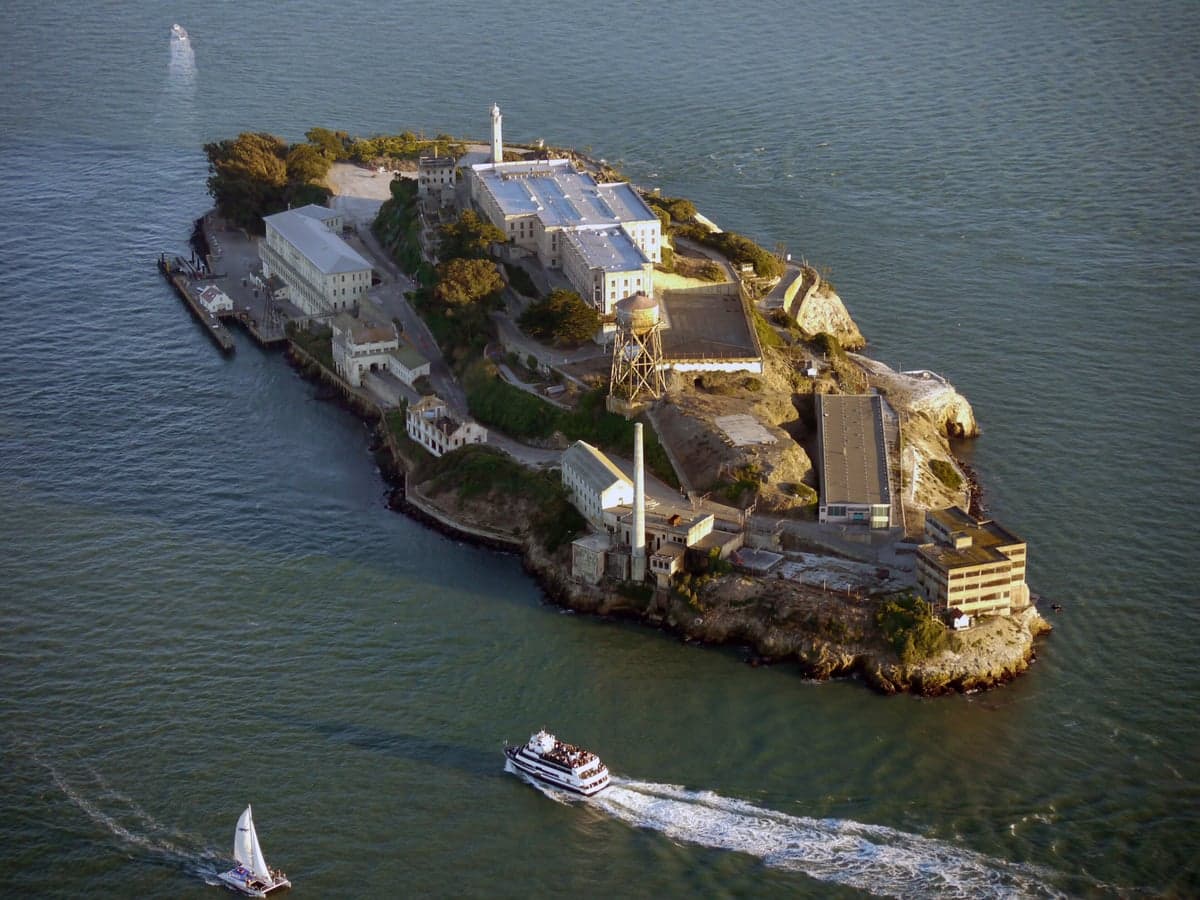
Photo: Wikipedia
Political ClimatePolitical Climate in San Francisco County
Showing county-level results — no local-only data available.
Lean and PVI are calculated from this county’s 2020 and 2024 presidential results, Cook-style.
Political rankings in California
- Most Conservative Cities in California
- Most Liberal Cities in California
- Best Conservative-Leaning Towns on the West Coast
- Affordable Small Towns for Conservatives
- Most Affordable Liberal-Leaning Small Towns in the U.S.
- Safest Liberal-Leaning Cities in the U.S.
- Most Conservative Counties in California
- Most Liberal Counties in California
Local Political AnalysisPolitical Analysis of San Francisco County
San Francisco County is one of the most reliably Democratic jurisdictions in the United States, with a Cook Partisan Voting Index (PVI) of D+35, meaning it votes about 35 points more Democratic than the national average. This isn't a recent shift—the county has been a Democratic stronghold for decades, but the intensity has deepened. In the 2024 presidential election, Kamala Harris won the county with roughly 83% of the vote, while Donald Trump received about 13%. The trajectory is toward even deeper blue: the county's Republican registration has fallen below 7%, while "no party preference" voters now outnumber registered Republicans. The real political action isn't between Democrats and Republicans, but between the moderate and progressive wings of the Democratic Party, especially in local races for supervisor, district attorney, and school board.
How it compares
Compared to the state of California as a whole, San Francisco County is significantly more liberal. While California has a Democratic lean of roughly D+13 to D+15 statewide, San Francisco's D+35 is more than double that. The county is the epicenter of the state's progressive movement, often pushing policies—like rent control expansions, sanctuary city laws, and police reform measures—that are later debated statewide. Within the county itself, there is notable political variation by neighborhood. The western neighborhoods, such as the Sunset and Richmond districts, tend to be more moderate, with higher concentrations of Asian American voters who sometimes split tickets in local races. In contrast, the Mission District, Castro, and Haight-Ashbury are solidly progressive, often backing candidates who call for defunding the police or abolishing cash bail. The Pacific Heights and Marina neighborhoods lean Democratic but are more centrist on economic issues, favoring pro-business candidates. There are no red precincts in the county—even the most conservative areas vote about 60% Democratic—but the swing precincts are in the Excelsior and Portola districts, where working-class Latino and Asian voters sometimes break for moderate Democrats over progressives in close races.
What this means for residents
For liberal residents, San Francisco County offers a political environment where their values are the default. Progressive policies on housing, transit, and social services are constantly being debated and often implemented. However, the dominance of one party means that primary elections are where most decisions are made, and voter turnout in these primaries is low—often below 30%—meaning a small, highly engaged group of activists can have outsized influence. For conservative residents, the reality is that they are a permanent minority. They have little to no representation on the Board of Supervisors or in the state legislature, and their votes rarely affect the outcome of general elections. That said, conservative viewpoints are not entirely silenced; they often surface in local ballot measures, such as those on property tax limits or police funding, where moderate and conservative voters can band together. The practical effect is that conservative residents often focus on neighborhood issues—like school quality or park maintenance—where political affiliation matters less than local engagement.
One cultural distinction that sets San Francisco County apart from the rest of California is its tradition of direct democracy and activist-driven policy. The county has a long history of ballot initiatives on everything from soda taxes to net neutrality, and residents are accustomed to voting on highly specific local laws. This creates a political culture that is both participatory and exhausting—every election cycle brings a dozen or more local measures. Another distinction is the county's strong labor union presence, particularly from the Service Employees International Union (SEIU) and the United Educators of San Francisco, which wield significant influence in local elections. For newcomers, the key takeaway is that politics here is not a spectator sport: whether you're liberal or conservative, your voice is most effective at the neighborhood level, in community meetings and local nonpartisan races, where the one-party dominance of the county's national politics gives way to genuine debate over how to run a city.

State Political ClimatePolitical Climate in California
State Political AnalysisPolitical Environment in the State
California is a deeply blue state where Democrats hold every statewide office and supermajorities in both legislative chambers, but the political reality is far more complex than a simple partisan label suggests. Over the past 20 years, the state has shifted from a competitive purple battleground—it voted for George W. Bush in 1988 and was within 5 points in 2004—to a solidly Democratic stronghold where Republicans haven’t won a statewide race since 2006. However, that blue veneer masks a fierce urban-rural civil war, a growing moderate backlash in the suburbs, and a libertarian streak that surprises many outsiders. For a conservative-leaning relocator, the key takeaway is that California offers starkly different political experiences depending on whether you land in downtown San Francisco, the Central Valley, or inland San Diego County.
Urban vs. rural divide
The political map of California is a tale of two nations. The coastal metros—San Francisco, Los Angeles, Oakland, and San Jose—drive the state’s blue lean, with Democratic margins exceeding 40 points in many precincts. These areas are home to the state’s most progressive activists, tech-funded PACs, and labor unions. In contrast, the interior is a Republican stronghold: the Central Valley counties like Kern (Bakersfield) and Tulare vote +20 to +30 Republican, while the far north—Shasta County (Redding) and Modoc—are among the reddest places in the entire country. The real action is in the suburbs. Orange County, once a GOP fortress, flipped blue in 2018 and has stayed there, but inland suburbs like Murrieta and Temecula in Riverside County remain reliably conservative. The 2022 gubernatorial race saw Gavin Newsom win by 18 points statewide, but he lost 40 of 58 counties—a reminder that California’s blue majority is concentrated in a handful of dense population centers.
Policy environment
California’s policy environment is defined by high taxes, heavy regulation, and a progressive social agenda that can feel jarring to a conservative newcomer. The state has the highest top marginal income tax rate in the nation (13.3%), a 7.25% sales tax that local add-ons push to over 10% in many cities, and some of the highest gas taxes and property taxes (Prop 13 caps annual increases at 2%, but base rates vary). On education, California spends over $20,000 per pupil but ranks near the bottom in reading and math proficiency—a paradox that frustrates both left and right. Healthcare is dominated by the state’s massive Medi-Cal system, which covers nearly 40% of residents, and the state has aggressively expanded abortion access and gender-affirming care. Election laws are among the most liberal: universal mail-in voting (every registered voter gets a ballot), same-day registration, and no voter ID requirement. For a conservative, the regulatory environment is the biggest shock—permitting for a new home can take 18 months, and the California Environmental Quality Act (CEQA) is routinely used to block development, including housing and solar farms.
Recent policy direction
The last five years have seen California accelerate its progressive agenda in ways that directly affect the liberties a relocator might care about. On gun rights, the state now bans most semiautomatic rifles, requires a 10-day waiting period, and mandates a "gun violence restraining order" process that allows family members or police to petition for temporary seizure of firearms—a law upheld by the 9th Circuit. Parental and education rights have been a flashpoint: the state passed AB 1955 in 2024, which prohibits school districts from requiring parental notification when a child changes their gender identity or pronouns, overriding local school board policies. On speech, California has a robust anti-SLAPP law that protects critics, but also criminalizes "hate speech" in certain contexts (e.g., cross-burning) and allows public universities to disinvite speakers deemed a security risk. Privacy and surveillance are mixed: the California Consumer Privacy Act (CCPA) gives residents strong data rights, but the state also has one of the nation’s largest automated license plate reader networks. Medical and bodily autonomy is fully protected for abortion and gender-affirming care, but the state has also legalized physician-assisted suicide (End of Life Option Act). Property rights are weak: rent control is expanding (AB 1482 caps annual increases at 5% plus inflation), and the state has preempted local zoning to force higher-density housing. Taxation is trending higher: a 2024 ballot measure (Prop 5) to lower the threshold for local tax increases failed, but the state’s progressive tax structure means high earners pay more every year. Voting and ballot access is the most liberal in the nation: no ID, automatic registration, and ballot harvesting are legal.
Civil unrest & political movements
California has been a national epicenter for political protest and activism on both sides. The 2020 George Floyd protests in Los Angeles and Oakland were among the largest and most destructive in the country, with billions in property damage and a lasting shift in public sentiment toward law-and-order politics. The "recall Newsom" movement in 2021 gathered over 1.6 million signatures and came within 4 points of ousting him—a sign of deep frustration with lockdowns and homelessness. On the right, the "California Exodus" narrative is real: the state lost a congressional seat after the 2020 census for the first time in its history, driven by net domestic outmigration of over 700,000 people between 2020 and 2024. The secessionist "Calexit" movement has fizzled, but the "State of Jefferson" movement in the far north (Shasta, Siskiyou, Modoc counties) still pushes for a separate, conservative state. Immigration politics are a daily reality: California is a "sanctuary state" (SB 54), limiting local police cooperation with federal immigration enforcement, and the border crisis has hit San Diego and Imperial County hard, with over 200,000 border crossings in 2023 alone. Election integrity controversies are less intense than in swing states, but the 2022 recall election saw widespread allegations of ballot harvesting in Los Angeles County, though no major fraud was proven.
Projection
Over the next 5-10 years, California’s political trajectory points toward a slow but steady moderation at the margins, driven by demographic shifts and outmigration. The state’s population is aging and becoming more Latino (now 40% of the population), a group that leans Democratic but is more socially conservative on issues like abortion and parental rights. The tech industry, once a reliable Democratic donor base, is fracturing over housing costs, crime, and AI regulation—many tech workers are moving to Austin and Miami, but those who stay are increasingly voting for moderate Democrats or even Republicans in local races. The housing crisis will force policy changes: expect more preemption of local zoning (SB 9 and SB 10 are just the start) and a gradual loosening of CEQA, which could shift the political calculus in the suburbs. The Republican Party in California is in a deep hole—it hasn’t won a statewide race in 18 years—but the "moderate Democrat" wing is growing, as seen in the 2024 election of Kevin McCarty as mayor of Sacramento, a centrist who ran on public safety. For a conservative moving in now, the realistic expectation is that California will remain a blue state with a strong progressive core, but the suburbs and inland areas will become more politically competitive, and the state’s policy direction will be forced to address affordability and crime.
For a conservative relocator, the bottom line is that California offers a deeply polarized experience. If you move to San Francisco or West Hollywood, you’ll live in a progressive bubble where your politics are the minority. But if you choose Bakersfield, Redding, or Temecula, you’ll find a conservative community with lower taxes (relatively), strong churches, and a school board that fights back against state mandates. The trade-off is that state-level policy—taxes, gun laws, education—will always lean left, and you’ll be paying for it. The practical takeaway: do your homework on the specific county and city, because in California, the zip code matters more than the state flag.
* Values derived from national, state, county, city and local statistics and may differ in a specific area. Last updated: 2026-11-21T00:28:17.000Z
Narrative content on this page is AI-generated and may contain mistakes. Verify any details that matter before acting on them.
ReloMaps may earn a commission from affiliate links at no extra cost to you.

