
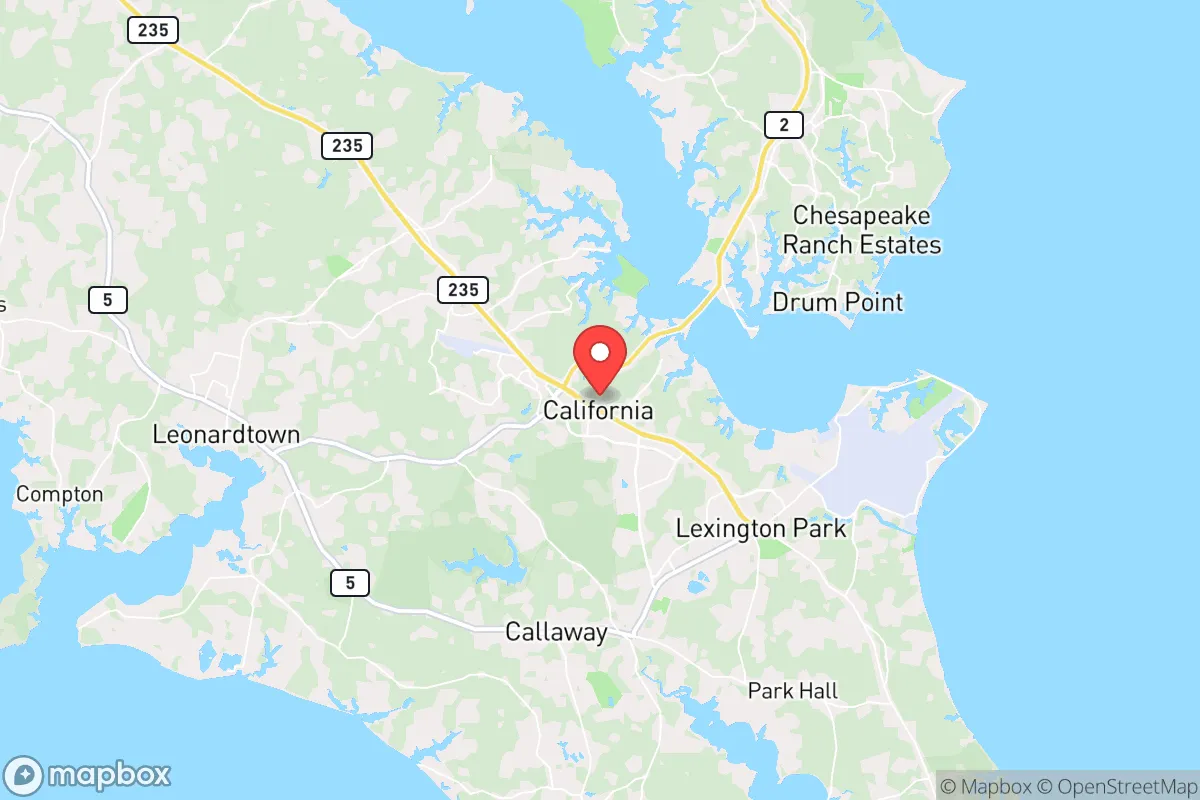
Photo: Wikipedia
Quality of Life in California, MD
A high quality of life with strong walkability, manageable living costs, healthy neighborhood signals, and solid amenity access.
What does Quality of Life tell us?
Quality of Life blends cost of living, nearby amenities, socioeconomic signals, and neighborhood character. City-level scores represent the whole municipality; individual neighborhoods can differ.
What does this tell us?
Quality of Life blends cost of living, nearby amenities, socioeconomic signals, and neighborhood character. City-level scores represent the whole municipality; individual neighborhoods can differ.
Cost of Living
41% above national average
The Real Cost of Living in California, MD for 2026
| Tier | Individual | Family (4) |
|---|---|---|
| Survival | $29k | $54k |
| Comfortable | $66k | $97k |
| Luxury | $190k+ | $295k+ |
| Elite (Top 5%) | $224k+ | $347k+ |
117%
The Area Signal
A metric tracking the socioeconomic signals of the area.
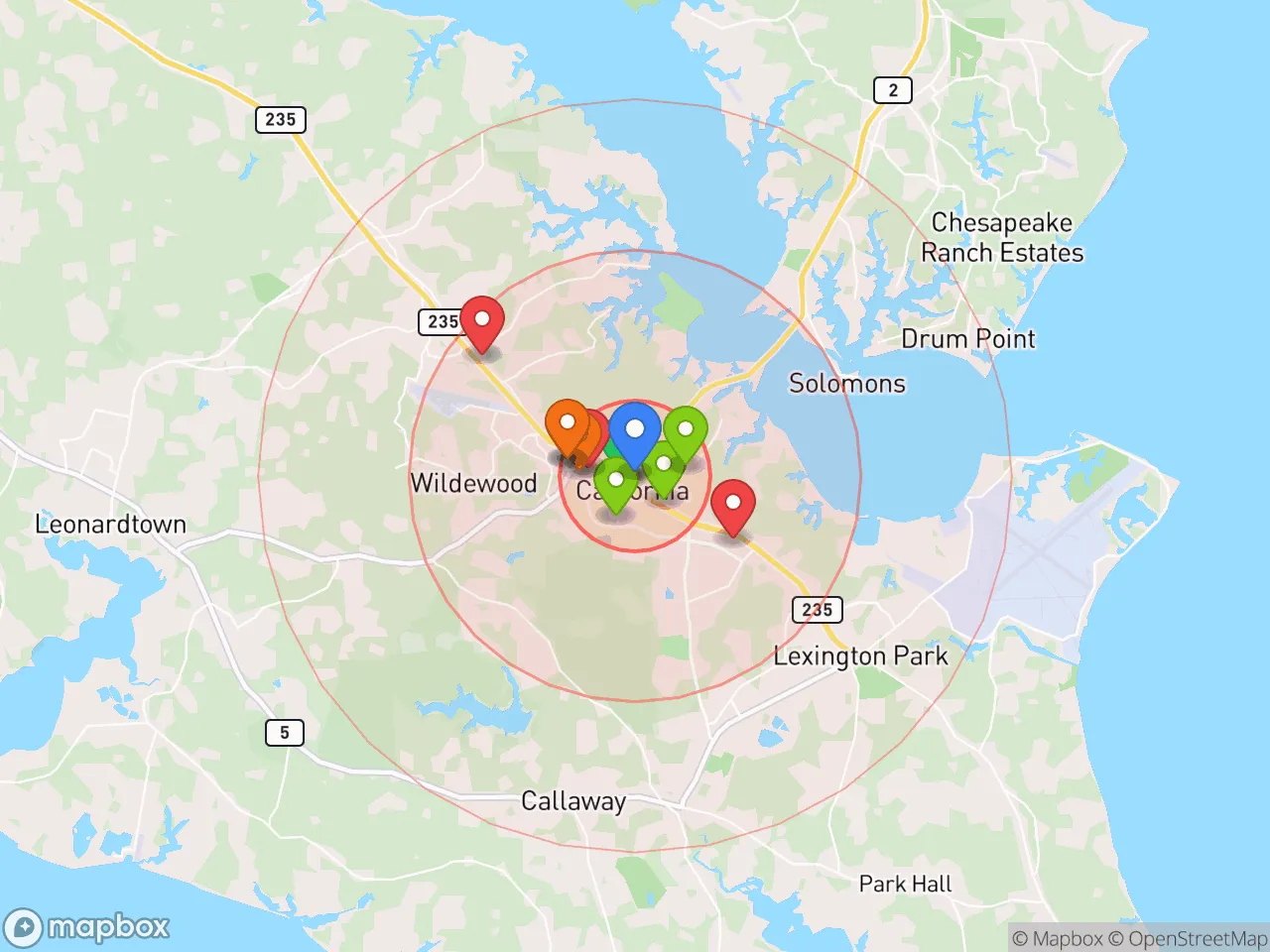
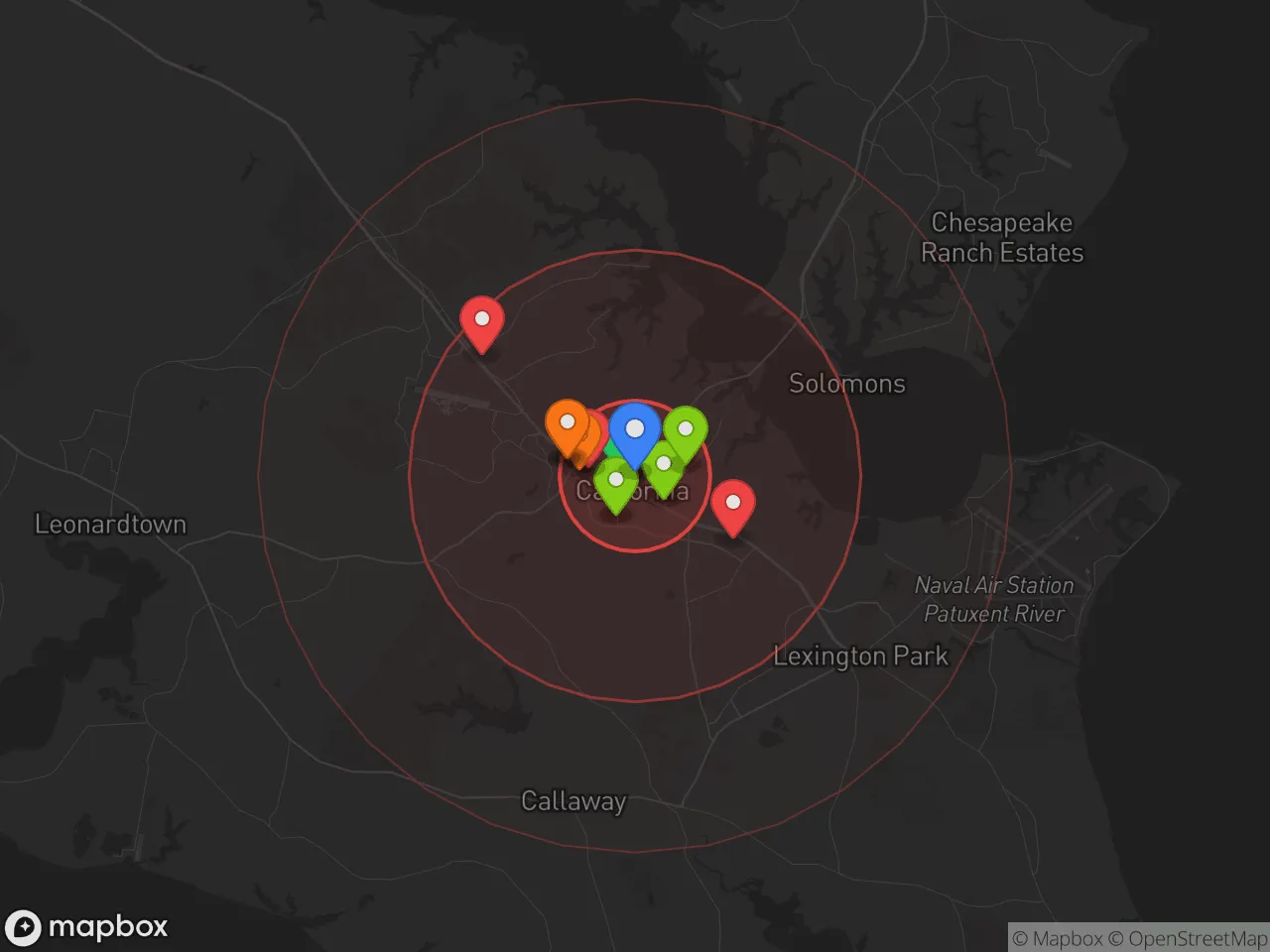
Hobbies
Explore the areaGroceries
7 within 10 miles
Gas
20 within 10 miles
Hospital
1 within 20 miles
Airport
DCA — Ronald Reagan Washington National
Post Office
USPS — California, MD
Critical Amenities
Quality-of-Life Analysis
California, Maryland, is an affluent unincorporated community in St. Mary’s County where the cost of living index of 141 (100 = U.S. average) signals a lifestyle that is 41% more expensive than the national norm, attracting a mix of naval personnel, defense contractors, and professionals seeking suburban tranquility near the Patuxent River. The area’s median home value of $337,900 and median rent of $1,805 reflect a housing market that is notably more affordable than the Washington, D.C., suburbs to the north, yet still commands a premium over rural Southern Maryland. With an average commute of just over 24 minutes—well below the regional average—residents enjoy a rare balance of proximity to major employment hubs like Patuxent River Naval Air Station and a daily pace that avoids the grinding congestion of the D.C. beltway.
Cost of living, housing, and how it compares to nearby areas
California’s cost of living index of 141 places it roughly on par with other St. Mary’s County communities such as Lexington Park (index ~138) but significantly below the D.C. suburbs of Charles County (index ~150) or Montgomery County (index ~160). The median home value of $337,900 is a key draw: it is roughly $100,000 less than the median in neighboring Calvert County and about $200,000 less than in Prince George’s County, making California one of the more attainable options for buyers seeking a single-family home within a reasonable drive of the Naval Air Station. Renters face a median of $1,805, which is competitive with Leonardtown ($1,750) but higher than in rural areas like Mechanicsville ($1,600). The trade-off is that while housing is a relative bargain for the region, groceries and utilities in St. Mary’s County run about 10-15% above the national average, and property taxes—at a rate of roughly 0.95% of assessed value—are moderate compared to Maryland’s higher-tax counties.
Amenities, schools, and the daily-life rhythm
Daily life in California revolves around outdoor recreation and a tight-knit community feel, with the Patuxent River waterfront offering boating, fishing, and kayaking at spots like the nearby St. Mary’s River State Park. The St. Mary’s County Public School system serves the area, with Leonardtown High School earning a GreatSchools rating of 7/10 and California’s own elementary and middle schools generally scoring in the 6-8 range, reflecting solid but not elite academic performance. Shopping and dining are concentrated along Route 235, with national chains like Walmart and Lowe’s alongside local eateries such as the popular Ruddy Duck Seafood & Ale. The community’s rhythm is shaped by the Naval Air Station’s schedule: the average commute of 24 minutes means most workers are home well before 6 p.m., leaving evenings for Little League games at the California Recreation Center or weekend trips to the Chesapeake Bay beaches. Healthcare access is adequate, with MedStar St. Mary’s Hospital in Leonardtown (10 minutes away) providing emergency and specialty care, though residents often travel to Waldorf or Annapolis for more complex procedures.
This area is best suited for military families, defense contractors, and professionals who prioritize a shorter commute over urban nightlife and who value a slower, nature-oriented lifestyle. Retirees may find the cost of living manageable if they downsize, but the lack of walkable downtown amenities and limited public transit make a car essential. For those who work at the Naval Air Station or in nearby defense industries, California offers a rare combination of affordable housing, low crime rates (St. Mary’s County violent crime is 40% below the national average), and a commute that frees up time for family and outdoor pursuits—a compelling equation for anyone seeking a stable, suburban base in Southern Maryland.

Crime in California, MD
Higher crime rates than 58% of comparable U.S. locations.
Violent CrimeViolent Crime Analysis
Property CrimeProperty Crime Analysis
Crime Analysis
California, Maryland, a census-designated place in St. Mary’s County, presents a crime profile that is notably safer than the national average for violent offenses but requires careful scrutiny of its property crime rate and the broader regional justice environment. With a violent crime rate of 365.5 incidents per 100,000 residents and a property crime rate of 1,854.1 per 100,000, the area’s safety picture is mixed. However, as part of the Washington, D.C., metropolitan area, California is subject to the policies of a large metro region where progressive district attorneys and judges often prioritize offender rehabilitation over strict enforcement, a factor that directly elevates risk for law-abiding residents.
Crime in context
California’s violent crime rate is 5% lower than the national average of roughly 380 per 100,000, a relative bright spot. Property crime, however, runs about 8% higher than the U.S. median of 1,700 per 100,000. These figures place California in a middle tier among Maryland communities. The state’s overall crime picture is influenced by progressive criminal justice policies—such as bail reform and reduced sentencing guidelines—that have been championed in the D.C. metro area. While St. Mary’s County itself is more conservative, its proximity to jurisdictions with liberal prosecutors (e.g., Prince George’s County) means that regional crime spillover and recidivism from lenient courts are real concerns. Readers should understand that these policies, while sympathetic to offenders, result in more criminals on the street, undermining public safety.
What residents experience
Daily life in California involves a tangible awareness of property crime. Vehicle break-ins and package thefts are the most commonly reported incidents, particularly near the shopping corridors along Route 235. Violent crime is less frequent but not absent; aggravated assaults and robberies occur, often tied to domestic disputes or drug-related activity. The presence of the Patuxent River Naval Air Station provides a stabilizing influence, as military personnel and federal employees contribute to a lower-crime daytime population. However, the area’s rapid growth—driven by commuters to D.C. and Northern Virginia—has strained local law enforcement resources. Residents often report feeling safe in their homes but cautious after dark, especially in isolated subdivisions or near commercial zones.
Neighborhood-level variation is significant. Newer subdivisions near the naval base (e.g., Wildewood, Hickory Hills) experience the lowest crime rates, often below 200 violent crimes per 100,000. In contrast, older rental-heavy areas closer to the Lexington Park border see elevated property crime, with rates exceeding 2,500 per 100,000. The lack of a dense urban core means that crime is diffuse rather than concentrated, but the progressive justice policies of the broader metro area create a revolving door for repeat offenders. For families and professionals, choosing a home in the base-adjacent communities is the strongest hedge against these risks.
* Values derived from national, state, county, city and local statistics and may differ in a specific area. Last updated: 2026-11-18T00:35:20.000Z
Narrative content on this page is AI-generated and may contain mistakes. Verify any details that matter before acting on them.
ReloMaps may earn a commission from affiliate links at no extra cost to you.

