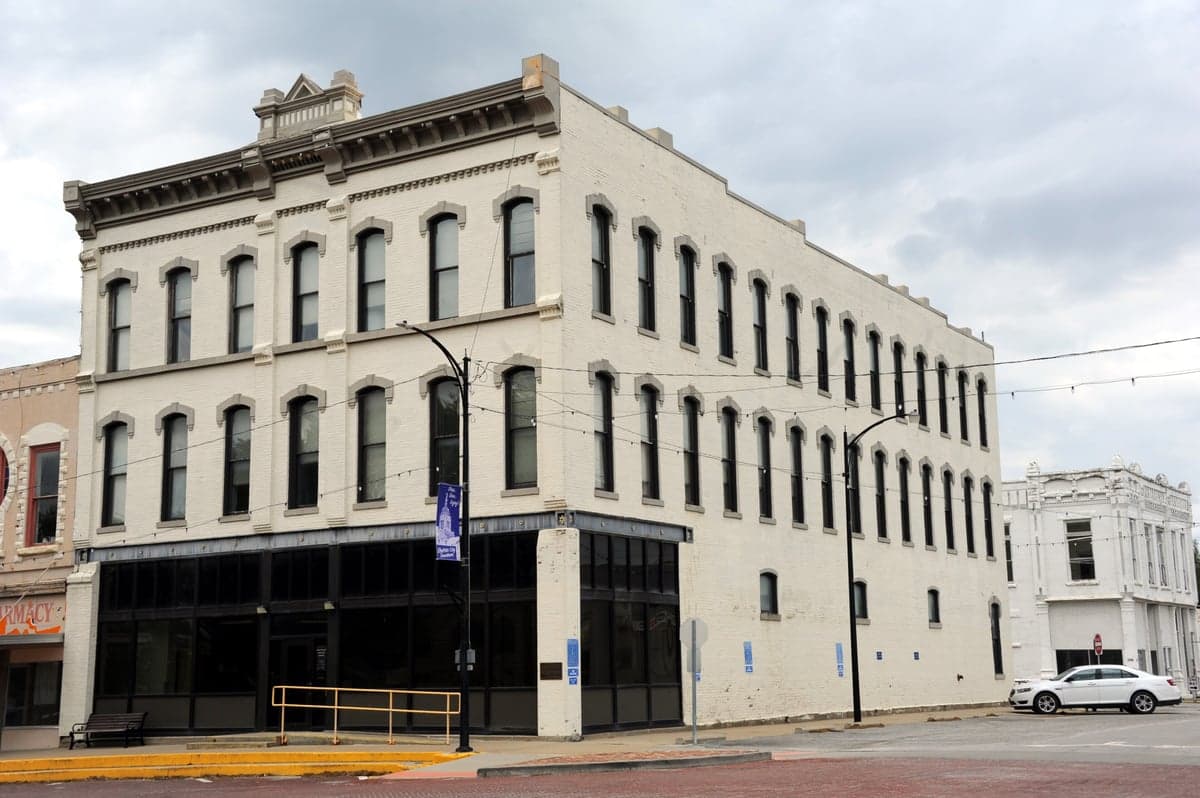
Photo: Wikipedia
Strategic Assessment of Butler, MO
Workable tactical position. Some exposure to population density or targets, but generally defensible in a crisis.
What does the Strategic Assessment tell us?
Our Strategic Assessment grades tactical survivability of an area. Major population centers, military targets, fallout zones, natural disasters, and border exposure all drive risk — lower exposure means a more defensible position in a crisis.
This is heavily inspired by Joel Skousen's Strategic Relocation book. Highly recommended you checkout the book ($)What does this tell us?
Our Strategic Assessment grades tactical survivability of an area. Major population centers, military targets, fallout zones, natural disasters, and border exposure all drive risk — lower exposure means a more defensible position in a crisis.
This is heavily inspired by Joel Skousen's Strategic Relocation book. Highly recommended you checkout the book ($)Strategic Pillars

Key Distances
Regional Safe Places
Below is our recommended "safe zones" in Missouri and the surrounding area based on our strategic heuristics. For most people, it's unrealistic to live in a “safe zone” full-time due to work, family or other personal reasons. They tend to be more rural. However, many of these areas are perfect for second homes and retreat properties that double as a vacation home or even a short-term rental.


Important Note: For informational purposes only. This does not mean nothing bad ever happens in the green zones. Please use common sense. This is based on public data and modeled with AI. We tried to take a conservative approach but mistakes happen. We update this regularly as new information becomes available.
Solar Generator Recommendations
Backup power matters more here than in safer locations. We've picked three solar generators across budgets and capacity tiers — start with the budget unit if you only need a few essentials, or step up if you want to run a fridge and HVAC for days at a time.

Jackery Portable Power Station Explorer 300
Budget OptionPower on the Go: Weighing only 11 lbs, it's convenient to set up and store with book-sized foldable solar panels

BLUETTI Portable Power Station AC180
Designed for both indoor and outdoor scenarios, AC180 is highly capable as it has a robost capacity and continuous output power.

EF ECOFLOW DELTA Pro Ultra Power Station
Upgraded PickEcoFlow DELTA Pro Ultra is a whole-home energy system designed to grow with your family. Integrated with the Smart Home Panel 2, it scales to meet your evolving energy needs — keeping your home powered, intelligent, and secure through every stage of life.
We earn a commission, at no additional cost to you.
Strategic Assessment Analysis
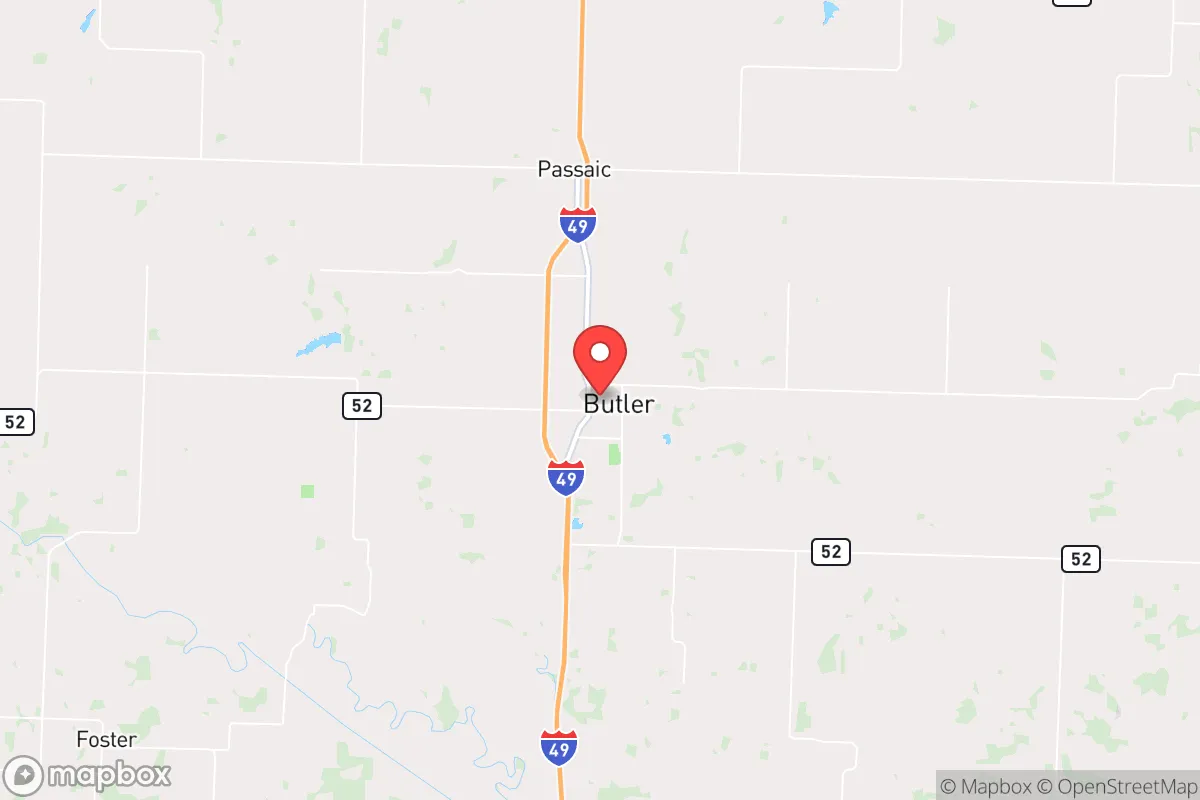
Butler, Missouri presents a compelling case for the relocation-minded reader prioritizing resilience and self-sufficiency, offering a blend of small-town stability and strategic positioning that is rare in the modern Midwest. Sitting in Bates County, roughly 60 miles south of the Kansas City metro, Butler benefits from being far enough from a major population center to avoid the worst of urban collapse scenarios—riots, supply chain choke points, and fallout from a nuclear event—yet close enough to access specialized medical care, heavy equipment, and regional logistics hubs when needed. The town’s population hovers around 4,200, giving it a quiet, manageable scale where neighbors know each other and local governance is accessible, a key advantage for anyone serious about building long-term community resilience.
Geographic position and natural advantages for long-term security
Butler’s location in west-central Missouri places it in a zone of relatively low seismic risk, far from the New Madrid fault line that threatens the southeastern part of the state. The area sits atop the Osage Plains, a region of gently rolling hills and fertile soil that is not prone to the flash flooding that plagues river towns like Kansas City or St. Louis. The nearby Marais des Cygnes River and numerous creeks provide surface water sources, but the real advantage is the underlying aquifer: the Ozark Plateau aquifer system offers reliable groundwater at moderate depths, making well drilling a practical option for those seeking water independence. The climate is temperate, with hot summers and cold winters, but the growing season is long enough (roughly 180 days) to support substantial home food production—corn, soybeans, and hay are the dominant local crops, and small-scale orchards and vegetable gardens thrive with proper management. For a relocator, this means the land itself can sustain life without heavy reliance on fragile supply chains, provided you secure a property with good soil and water access.
Risks, exposures, and proximity to fallout-relevant landmarks
No location is risk-free, and Butler’s strategic profile includes several exposures that a serious planner must weigh. The most significant is its proximity to the Kansas City metropolitan area, which sits roughly 60 miles to the north. In a major disaster—whether a nuclear detonation, a large-scale EMP event, or a pandemic-driven societal breakdown—Kansas City would become a source of refugees, resource competition, and potential violence. The I-49 corridor, which runs north-south through Butler, would be a primary evacuation route, meaning the town could see significant traffic and pressure from fleeing populations. Additionally, Whiteman Air Force Base, home to the B-2 Spirit stealth bomber, is located about 30 miles northwest in Knob Noster. While this base is a strategic asset for national defense, it is also a high-value target in a conflict scenario, and its proximity means Butler lies within the potential fallout zone of a ground burst or a secondary attack on the base’s support infrastructure. Tornado risk is real—Bates County sits in the heart of Tornado Alley, and the 2011 Joplin tornado (about 90 miles southwest) serves as a reminder that severe weather can level even well-built structures. Flooding is less of a concern than in river towns, but low-lying areas near the Marais des Cygnes can flood during heavy rain events. For the relocator, the key takeaway is that Butler is not a remote bunker; it is a semi-rural town with real exposure to regional threats, but those threats are manageable with proper planning—reinforced storm shelters, fuel reserves, and a solid community network.
Practical resilience for a relocator: food, water, energy, and defensibility
Butler’s practical resilience is where the town shines for the self-sufficiency-minded. The local economy is anchored by agriculture—Bates County is a major producer of cattle, corn, and soybeans—which means food security is built into the landscape. Farmers’ markets, local meat processors, and grain elevators are within easy reach, and the soil quality supports home gardens with minimal amendment. Water is the critical resource, and the area’s groundwater is generally good, though well depth varies; a typical domestic well in the region runs 100 to 300 feet, with yields of 10 to 30 gallons per minute, sufficient for a household and small livestock operation. The city water supply comes from the Marais des Cygnes River and is treated at a municipal plant, but a relocator should plan for a backup well or rainwater catchment system to ensure independence. Energy resilience is moderate: the local power grid is served by Evergy, a regional utility that has invested in grid hardening, but rural outages are common during storms. Solar potential is good—the area averages about 200 sunny days per year—and net metering policies in Missouri allow homeowners to offset grid usage, though the state’s regulatory environment is less favorable than in some western states. Natural gas is available in town, but propane is the standard for rural properties, and a 500-gallon tank with a backup generator is a wise investment. Defensibility is a mixed bag: Butler’s layout is typical of a small Midwestern town, with a compact downtown and sprawling residential areas. A property on the outskirts with good sightlines, a perimeter fence, and a well-designed entry point offers strong natural defense, but the town itself is not easily fortified against a determined group. The real strength here is community—Bates County has a strong tradition of mutual aid, volunteer fire departments, and a sheriff’s office that is responsive and locally accountable. For a relocator, the best strategy is to buy land outside of town (within a 10- to 15-minute drive) and build a self-sufficient homestead, using Butler as a supply hub and social anchor rather than a primary residence.
Overall, Butler offers a balanced strategic picture for the serious relocator: it is not a remote survivalist retreat, but it is a functional, resilient community with the agricultural base, water access, and community cohesion needed to weather most disruptions. The proximity to Kansas City and Whiteman Air Force Base introduces real risks, but those are offset by the town’s distance from the urban core and its position in a region of low seismic and flood risk. For a family or individual willing to invest in well water, solar power, and a storm shelter, Butler provides a solid foundation for a self-sufficient lifestyle without the isolation of a deep rural location. The key is to treat it as a base of operations—a place where you can build relationships, stockpile supplies, and grow food, while maintaining the ability to bug in or bug out depending on the threat. If you are looking for a place that balances accessibility with resilience, Butler deserves a serious look.

* Values derived from national, state, county, city and local statistics and may differ in a specific area. Last updated: 2026-10-06T18:16:03.000Z
Narrative content on this page is AI-generated and may contain mistakes. Verify any details that matter before acting on them.
ReloMaps may earn a commission from affiliate links at no extra cost to you.

