Photo: Wikipedia
Political ClimatePolitical Climate in Burlington, WY
District shown is the primary district for this city’s centroid. Cities may span multiple districts.
Inherited from parent state — no local data available.
Local Political AnalysisPolitical Analysis of Burlington, WY
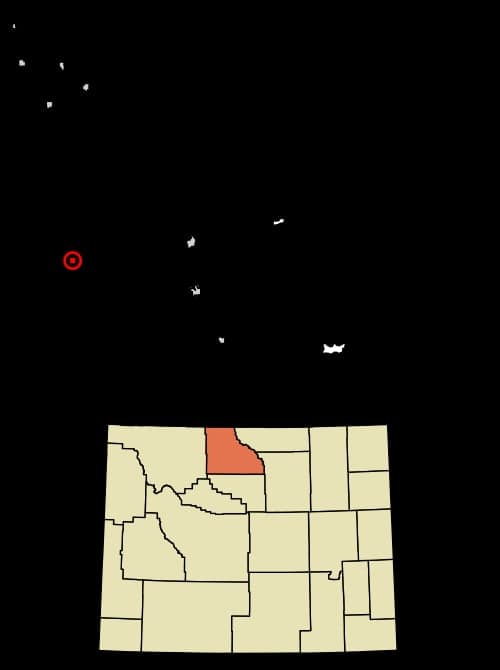
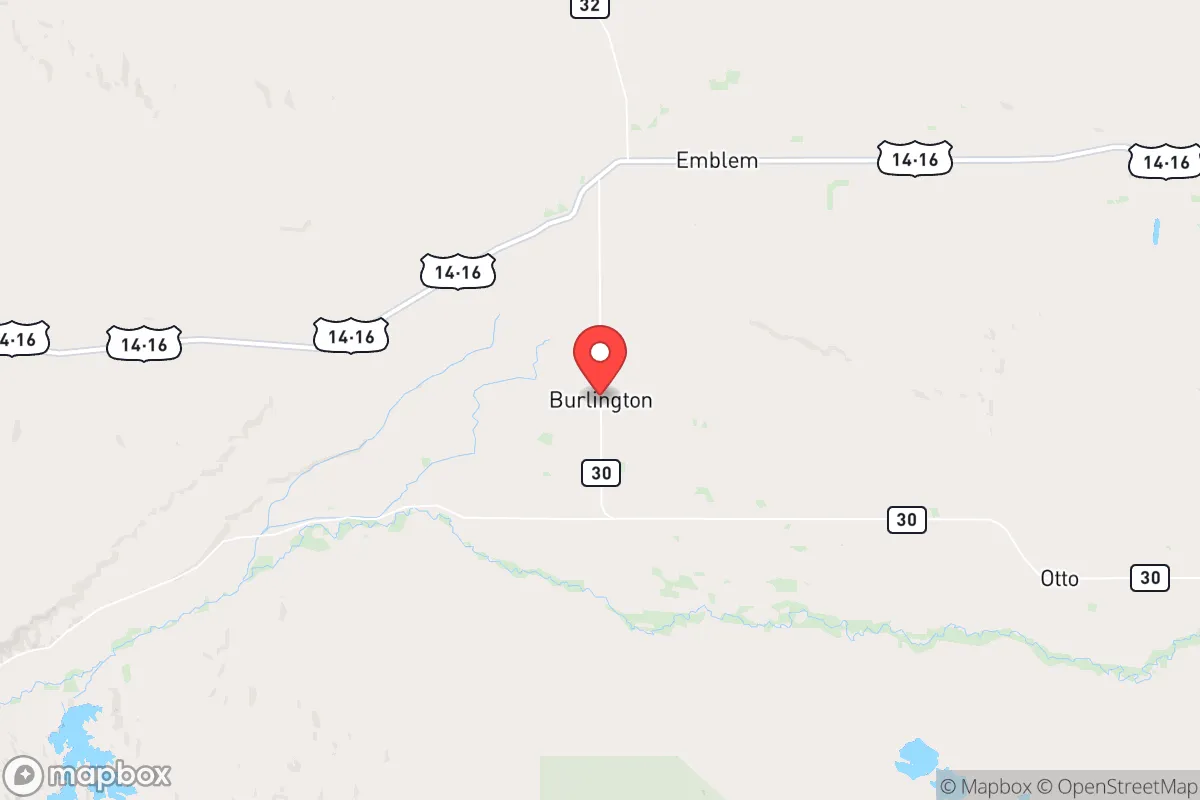
Burlington, Wyoming, is about as reliably red as it gets, with a Cook PVI of R+23 that places it squarely in the same deeply conservative territory as the rest of the state. If you’ve spent any time in the Big Horn Basin, you know that’s not just a number — it’s a way of life. The area has been solidly Republican for decades, and if anything, the political lean has only hardened in recent years as national trends have reinforced local values. You won’t find much swing here; Burlington votes like the surrounding county, and that county votes like the state.
How it compares
When you compare Burlington to the broader state of Wyoming — which also carries a Cook PVI of R+23 — the political alignment is nearly identical. That’s unusual in a state where small towns can sometimes diverge from the statewide average. For example, while Jackson Hole in Teton County leans blue (PVI D+16) and Laramie in Albany County is more purple, Burlington is a mirror of the state’s dominant political identity. The nearest town of any size, Cody, is similarly conservative, though its tourism economy brings in a slightly more transient population. Head south to Worland or east to Greybull, and you’ll find the same story: deep red, with local elections often decided in the Republican primary. Burlington’s political climate is less an outlier and more a concentrated version of the state’s overall character.
What this means for residents
For conservative residents, Burlington feels like home in every sense. Local policy reflects their values — from low taxes and limited regulation to a strong emphasis on gun rights and local control. School board meetings, county commission decisions, and even zoning debates tend to align with a small-government, traditionalist worldview. For liberal residents, the reality is more isolating. There’s no active Democratic party presence in town, and progressive viewpoints are rarely represented in local government or public discourse. That doesn’t mean you can’t live here comfortably — most folks are neighborly and respectful — but you’ll likely keep your political opinions to yourself in casual conversation. The social pressure to conform is real, and it’s something newcomers from more diverse areas often notice first.
One cultural distinction worth noting: Burlington sits in Big Horn County, which has a significant Native American population through the Crow Reservation just across the Montana line. That adds a layer of political complexity that you don’t see in many other parts of Wyoming. Tribal sovereignty issues, land use disputes, and cross-border economic ties create occasional friction between local and tribal governments, though day-to-day interactions are generally pragmatic. Looking ahead, the political trajectory seems stable — Burlington isn’t trending toward purple anytime soon. If anything, the area’s reliance on agriculture, energy, and outdoor recreation reinforces the conservative status quo. For anyone considering a move here, the takeaway is simple: if you’re looking for a place where your vote matches your neighbors’ and the political temperature stays cool, Burlington delivers. If you’re hoping for ideological diversity or a lively local debate, you’ll need to drive to Cody — and even then, don’t expect much.

State Political ClimatePolitical Climate in Wyoming
State Political AnalysisPolitical Environment in the State
Wyoming is one of the most reliably Republican states in the nation, with a Cook Partisan Voting Index of R+23, meaning it votes about 23 points more Republican than the national average. The state hasn't voted for a Democratic presidential candidate since 1964, and in 2024, Donald Trump carried it by roughly 40 points. Over the last 10-20 years, the dominant coalition has been a blend of traditional Western libertarians, fiscal conservatives, and a growing contingent of populist conservatives, with the Democratic Party reduced to a small minority in most counties. The trajectory has been a steady rightward shift, driven by out-migration of younger, more liberal residents and in-migration of conservatives seeking lower taxes and fewer regulations.
Urban vs. rural divide
The political map of Wyoming is defined by a sharp urban-rural split, though even the "urban" areas are small by national standards. Cheyenne, the state capital and largest city, is the most politically competitive area, with Laramie County occasionally electing Democrats to local office and voting slightly more moderate than the rest of the state. Casper, the second-largest city, leans Republican but has a more pragmatic, energy-industry-focused conservatism. Laramie, home to the University of Wyoming, is the state's most liberal enclave, with Albany County often being the only county to vote Democratic in statewide races. In contrast, rural counties like Sublette, Lincoln, and Niobrara routinely vote 80%+ Republican. The divide is less about culture war issues and more about economic dependence on extractive industries like oil, gas, and coal, which dominate the rural landscape and shape political priorities around energy policy and federal land management.
Policy environment
Wyoming's policy environment is defined by a low-tax, low-regulation posture. The state has no personal or corporate income tax, and sales tax is capped at 4% statewide, though local options can push it to 6%. Property taxes are among the lowest in the nation, with no tax on intangible property and a generous homestead exemption for veterans and the elderly. The regulatory climate is business-friendly, particularly for energy extraction, agriculture, and manufacturing. Education policy is locally controlled, with school funding heavily reliant on mineral royalties, which has created disparities between resource-rich and resource-poor districts. Healthcare policy is limited, with the state declining Medicaid expansion until 2021, and even then only after a ballot initiative forced the legislature's hand. Election laws are straightforward: voter ID is required, same-day registration is not available, and absentee voting is allowed without an excuse. The state has no automatic voter registration, but turnout is consistently high by national standards.
Recent policy direction
Recent legislation in Wyoming has moved decisively toward expanding individual liberties in several areas. On gun rights, the state passed a permitless carry law in 2021, allowing any adult who can legally possess a firearm to carry concealed without a permit. In 2023, the legislature passed a law prohibiting the enforcement of federal gun regulations that conflict with state law, a direct challenge to federal authority. On education and parental rights, Wyoming enacted a Parents' Bill of Rights in 2023, requiring schools to notify parents of curriculum changes and allowing them to opt their children out of certain materials. The state also passed a law banning transgender girls from participating in girls' sports in 2023. On medical and bodily autonomy, Wyoming has some of the most restrictive abortion laws in the country, with a near-total ban passed in 2022, though it has been tied up in court challenges. The state has no law protecting medical marijuana, though CBD oil is legal for certain conditions. On property rights, Wyoming has strong eminent domain protections and a robust right-to-farm law that shields agricultural operations from nuisance lawsuits. On privacy and surveillance, the state passed a law in 2023 prohibiting the use of facial recognition technology by law enforcement without a warrant. On voting and ballot access, the state has not moved toward restrictive voter ID laws or widespread mail-in voting, maintaining a relatively stable election system. The overall direction is toward expanding personal freedom in areas like gun rights and parental control, while restricting it in areas like abortion and transgender rights.
Civil unrest & political movements
Wyoming has a history of libertarian and anti-federal sentiment, but large-scale civil unrest is rare. The most visible political movements are tied to federal land management, with the "Sagebrush Rebellion" and its modern iterations, like the Bundy Ranch standoff in 2014, which had strong support in rural Wyoming. The state has seen periodic protests over energy policy, particularly around coal and oil leasing on federal lands. Immigration politics are less heated than in border states, but there is a vocal minority pushing for stricter enforcement, and the state has no sanctuary policies. Election integrity controversies have been minimal, though some counties saw calls for hand-counting ballots after the 2020 election. The most notable flashpoint in recent years was the 2021 controversy over critical race theory in schools, which led to a handful of school board recalls in Campbell County and Sweetwater County. Overall, the political climate is stable, with most activism channeled through the legislature rather than the streets.
Projection
Over the next 5-10 years, Wyoming's political trajectory is likely to continue its rightward shift, but with some nuance. In-migration from blue states, particularly Colorado and California, is bringing a new wave of conservative-leaning residents who are often more culturally conservative than the state's traditional libertarians. This could push the state further on issues like school choice, gun rights, and abortion restrictions. However, the state's aging population and out-migration of young people could moderate some of the more extreme positions, particularly on economic issues like Medicaid expansion and education funding. The energy transition away from coal will be a major political fault line, with rural communities in Campbell County and Sweetwater County facing economic decline that could shift their political priorities toward economic diversification. The Democratic Party is unlikely to become competitive at the state level, but local races in Albany County and Teton County (Jackson) may become more contested as those areas grow. Someone moving in now should expect a state that remains deeply Republican but increasingly divided between traditional libertarians and a newer, more populist conservatism.
For a new resident, the bottom line is that Wyoming offers a political environment that is highly favorable to conservatives, with low taxes, strong gun rights, and a hands-off government approach to most aspects of daily life. Liberals will find themselves in a small minority, with limited political influence and a policy environment that is often hostile to their priorities. The state is stable, with little civil unrest, but the political culture is deeply individualistic and skeptical of federal authority. If you value personal freedom, low taxes, and a rural lifestyle, Wyoming is a strong fit. If you prefer a more diverse, urban, or progressive environment, you may find the state politically isolating.
* Values derived from national, state, county, city and local statistics and may differ in a specific area. Last updated: 2026-06-21T12:40:24.000Z
Narrative content on this page is AI-generated and may contain mistakes. Verify any details that matter before acting on them.
ReloMaps may earn a commission from affiliate links at no extra cost to you.

