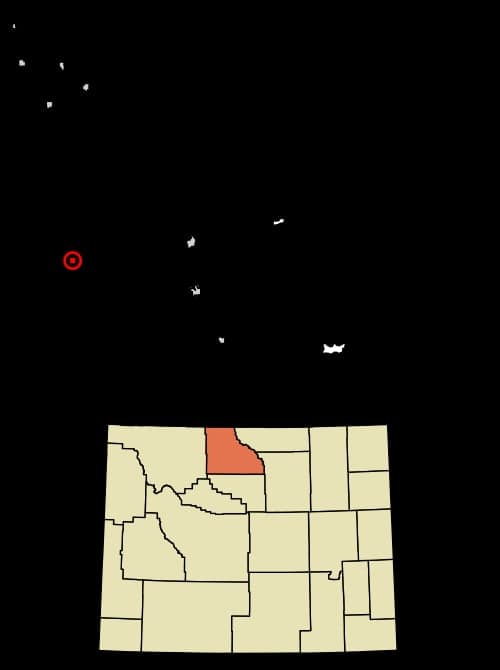
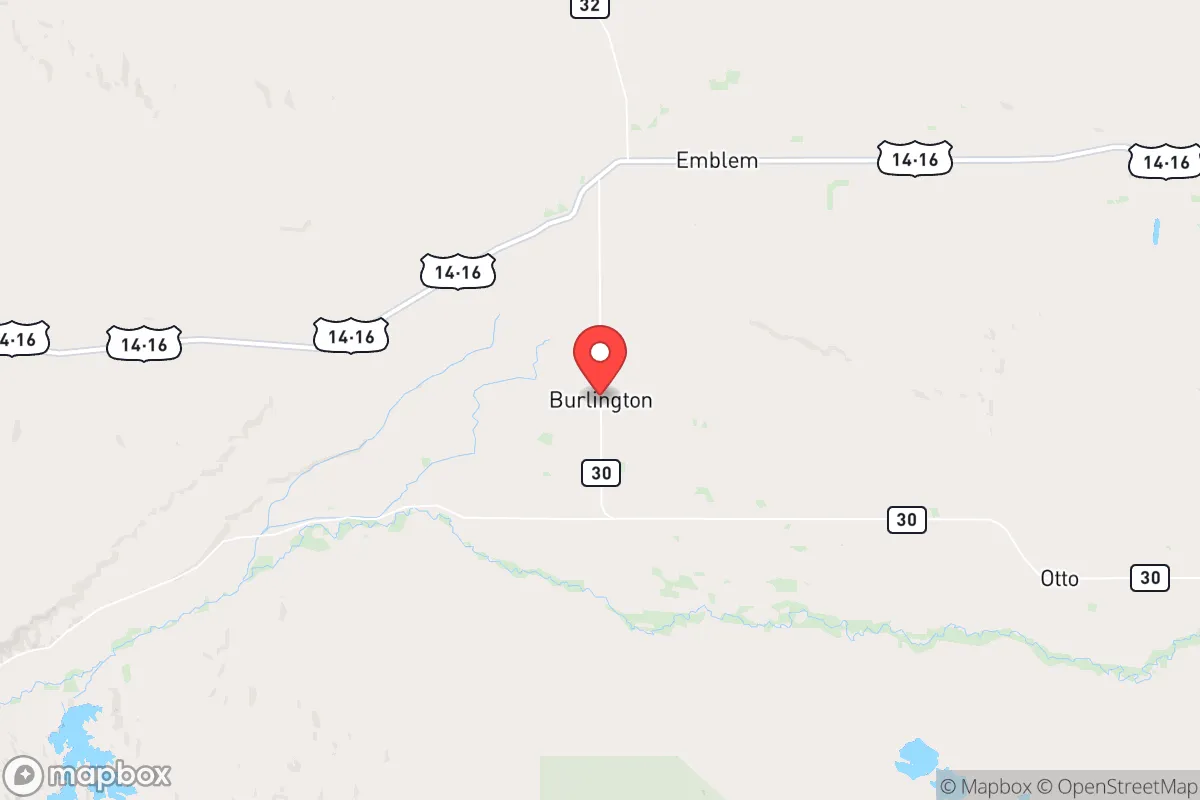
Photo: Wikipedia
Demographics of Burlington, WY
Affluence Level in Burlington, WY
A middle-class area roughly in line with national averages across income, home values, education, and employment.
People of Burlington, WY
Burlington, Wyoming, is a small, tight-knit community of 237 residents, overwhelmingly White (87.8%) with a Hispanic population of 7.2% and no foreign-born residents. The city is characterized by a high educational attainment rate of 42.7% holding a college degree, a figure that suggests a population of professionals and remote workers drawn to the area's quiet, rural character. Distinctively, Burlington is a place where nearly everyone shares a similar cultural and ethnic background, creating a strong sense of familiarity and shared local identity.
How the city was settled and grew
Burlington's human history begins not with a boom, but with the railroad. Founded in the early 1900s as a station stop along the Chicago, Burlington & Quincy Railroad, the town was originally a service point for the surrounding agricultural and ranching economy. The first permanent settlers were predominantly of Northern European descent—English, German, and Scandinavian homesteaders—who were drawn by the promise of land under the Homestead Act and the railroad's need for local labor. These founding families built the original core of the town, now referred to as Old Town Burlington, centered around the railroad depot and Main Street. A second, smaller wave of settlement occurred during the Dust Bowl era of the 1930s, when families from the Great Plains, many of them of similar ethnic stock, moved into the area and established small farms on the outskirts, in what is still known locally as the North Bench area. The population remained remarkably stable and homogeneous through the mid-20th century, shaped by the rhythms of agriculture and the railroad.
Modern era (post-1965)
Unlike many American towns, Burlington did not experience significant demographic shifts following the 1965 Immigration and Nationality Act. The town's population has remained overwhelmingly White and native-born, with the 2020 data showing zero foreign-born residents. The major change in the modern era has been domestic out-migration, as younger residents left for larger cities, followed by a modest in-migration of retirees and remote workers seeking a low-cost, low-crime lifestyle. This new wave has settled primarily in the West End Addition, a small subdivision of newer homes built on the western edge of town. The Hispanic population, now at 7.2%, is a recent development, largely consisting of families who moved from larger Wyoming towns like Cody or Powell for work in the local oil and gas fields or in agricultural support services. These families are dispersed throughout the town, with a small concentration in the older, more affordable housing stock along Railroad Avenue. The overall character of Burlington remains culturally and ethnically homogeneous, with the primary social divisions being between long-time ranching families and newer arrivals from outside the region.
The future
The demographic trajectory for Burlington points toward continued stability and slight decline, rather than diversification. The population has hovered around 250 for decades, and the lack of major employers or housing development suggests this will continue. The town is not becoming more diverse; the Hispanic population is expected to remain a small minority, and there are no indicators of growth among Asian, Black, or other groups. The most significant demographic trend is aging: the median age is likely rising as younger adults leave for college and careers elsewhere. New residents will almost certainly continue to be domestic migrants—retirees, remote workers, and a few families seeking a rural lifestyle—who will settle in the South Ridge area, where a handful of newer, larger homes have been built on larger lots. The cultural identity of Burlington is likely to remain rooted in its agricultural and ranching heritage, with a strong emphasis on self-reliance, community volunteerism, and a conservative social outlook.
For someone moving in now, Burlington offers a stable, predictable, and deeply rooted community where nearly everyone shares a common cultural background and a connection to the land. It is not a place of rapid change or growing diversity, but rather a quiet, family-oriented town where the primary draw is a safe, slow-paced life in a beautiful, open landscape. The kind of person who will thrive here is someone who values continuity, neighborly familiarity, and a low-key existence over urban amenities or demographic variety.

* Values derived from national, state, county, city and local statistics and may differ in a specific area. Last updated: 2026-06-21T12:40:24.000Z
Narrative content on this page is AI-generated and may contain mistakes. Verify any details that matter before acting on them.
ReloMaps may earn a commission from affiliate links at no extra cost to you.

