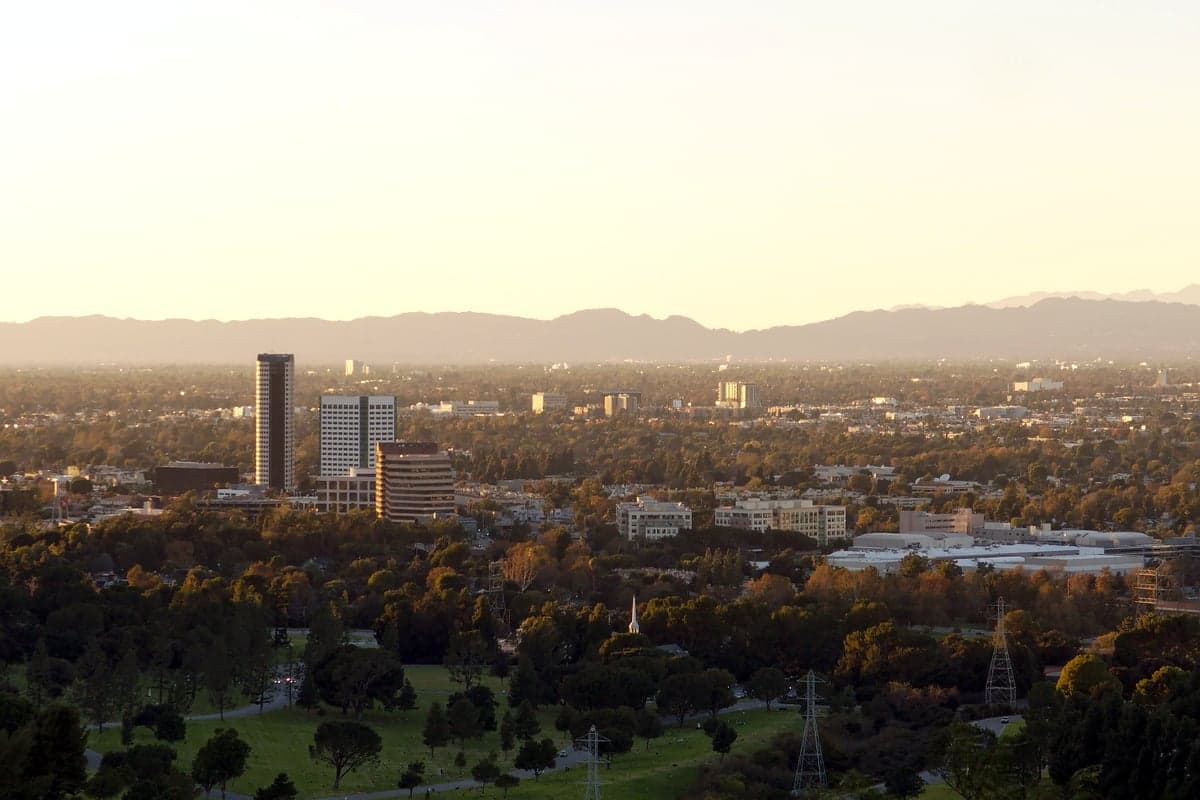
Photo: Wikipedia
Political ClimatePolitical Climate in Burbank, CA
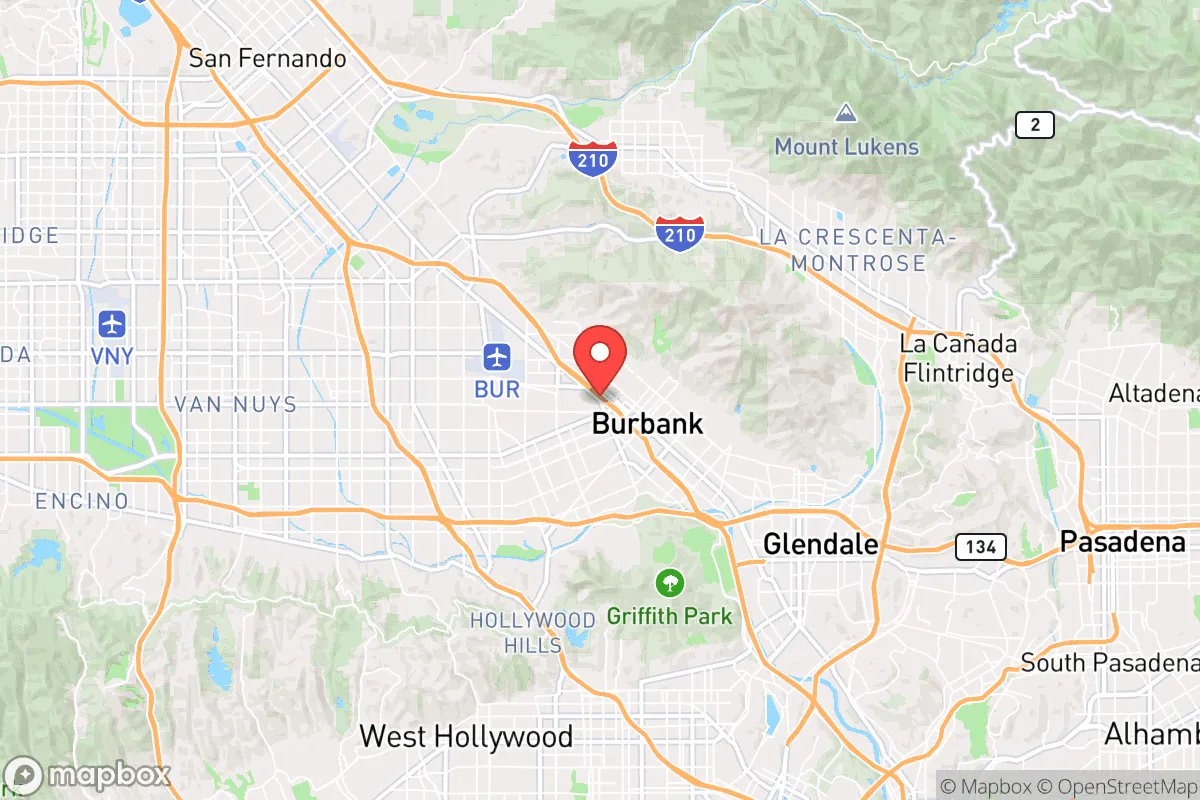
District shown is the primary district for this city’s centroid. Cities may span multiple districts.
Local Political AnalysisPolitical Analysis of Burbank, CA
Burbank is a solidly Democratic city, and it’s been that way for a long time. With a Cook Partisan Voting Index (PVI) of D+22, it’s about as blue as a city gets in Los Angeles County—think of it as a reliable anchor in a sea of blue. The trajectory here isn’t shifting dramatically; if anything, the city’s politics have become more entrenched over the last decade, mirroring the broader trend in California where suburban and urban areas have moved left. You won’t find much of a swing-voter vibe here; it’s a place where local elections often feel like a formality for the Democratic slate, though the city council races can get feisty over development and housing issues.
How it compares
Compared to the rest of California, Burbank is actually a bit more liberal than the state average. California as a whole has a Cook PVI of D+13, so Burbank’s D+22 puts it nearly 10 points to the left of the state’s baseline. That’s a meaningful gap. For context, nearby Glendale (D+15) and Pasadena (D+18) are also blue but slightly less so, while Santa Clarita (R+5) and parts of the San Fernando Valley like Chatsworth (R+2) lean conservative. Burbank sits in a pocket of deep blue surrounded by a mix of purple and red suburbs. The contrast is stark: drive 20 minutes north to Santa Clarita, and you’ll see Trump signs in yards and a local GOP that’s still active. In Burbank, you’re more likely to see “Black Lives Matter” or “Hate Has No Home Here” signs. The city’s politics are shaped by its dense, diverse population—lots of entertainment industry workers, young professionals, and immigrant communities—which pushes it left of even the state’s already progressive lean.
What this means for residents
For liberal residents, Burbank is a comfortable fit. You’ll find city policies that align with your values—strong rent control measures, a robust public transit push, and a city council that’s openly supportive of LGBTQ+ rights and environmental initiatives. The local Democratic Party chapter is active, and you can easily plug into volunteer opportunities or neighborhood groups. For conservative residents, it’s a different story. You’re in the minority, and you’ll feel it in local elections where your vote rarely tips the scale. But it’s not hostile; Burbank is a civically engaged city where people are generally polite, even if they disagree. You can still find conservative-leaning churches and a few Republican clubs, but don’t expect much political representation on the city council. The practical effect is that taxes and regulations tend to lean progressive—think higher sales tax (10.25%) and strict zoning laws—which can frustrate small business owners or homeowners who want more flexibility. Still, the city’s overall stability and quality of life mean most residents, regardless of party, find common ground on things like public safety and parks.
Culturally, Burbank has a distinct identity that sets it apart from the rest of California. It’s known as the “Media Capital of the World” thanks to Warner Bros. and Disney studios, which gives the city a creative, industry-driven vibe. That translates into a local culture that’s more pragmatic than ideological—people here are focused on getting the job done, whether it’s a film shoot or a neighborhood cleanup. Policy-wise, Burbank has been ahead of the curve on sustainability, with a goal of 100% renewable energy by 2030, and it’s one of the few cities in LA County with its own police force, which residents take pride in. The city also has a strong sense of localism—people care deeply about the downtown area, the airport noise, and the school system. It’s not a place where national politics dominate every conversation; instead, you’ll hear more about the new Trader Joe’s or the latest development project. That’s the Burbank way: blue on the ballot, but neighborly in practice.

State Political ClimatePolitical Climate in California
State Political AnalysisPolitical Environment in the State
California is a deeply Democratic state, with Democrats holding every statewide office and supermajorities in both legislative chambers, but its reputation as a monolithic liberal bastion oversimplifies a far more complex reality. The state hasn't voted Republican in a presidential election since 1988, and in 2024, Kamala Harris carried it by roughly 20 points. However, that blue veneer masks a dramatic urban-rural schism, a slow but steady rightward shift in inland areas, and a policy environment that is increasingly driving conservative-leaning families to reconsider whether the trade-offs are worth it. Over the last 20 years, the state has lurched left on social and environmental policy while simultaneously creating a business and regulatory climate that has pushed tens of thousands of residents to Texas, Arizona, and Idaho.
Urban vs. rural divide
The political map of California is essentially a coastal fortress versus an inland rebellion. The major metros—Los Angeles, San Francisco, San Jose, Oakland, and San Diego—generate the vast majority of Democratic votes. In 2024, Los Angeles County alone gave Harris a margin of over 1.5 million votes, effectively deciding the statewide outcome before rural votes are even counted. San Francisco and Alameda County routinely vote 80-85% Democratic. But drive an hour inland, and the landscape flips hard. Bakersfield, Fresno, Redding, and the Central Valley's agricultural counties are reliably Republican, often voting 60-70% for the GOP candidate. The most dramatic shift has been in Orange County, once a conservative stronghold (think Richard Nixon and Ronald Reagan), which has trended purple-to-blue over the last decade, driven by Asian-American and Latino suburban voters. Meanwhile, San Bernardino and Riverside counties (the Inland Empire) are emerging as swing territory, with Trump improving his margins there in 2020 and 2024 as working-class voters, especially in logistics and warehousing, grew frustrated with cost-of-living and crime policies. The rural north—Shasta, Siskiyou, and Modoc counties—is as red as any county in Texas, with some precincts voting 80% Republican. The divide isn't just political; it's cultural and economic, with coastal residents often viewing inland areas as backward, and inland residents seeing the coast as out-of-touch and over-regulating.
Policy environment
California's policy environment is defined by high taxes, heavy regulation, and expansive government services. The state has a progressive income tax with a top marginal rate of 13.3% (the highest in the nation), a state sales tax that can exceed 10% in some cities, and some of the highest gas taxes in the country. Property taxes are capped at 1% of assessed value under Proposition 13, but reassessment upon sale can still sting. The regulatory posture is aggressive: California has its own environmental standards (CARB), its own labor laws (including a $16 minimum wage that rises with inflation), and its own strict building codes that make housing construction expensive and slow. Education policy is dominated by the California Teachers Association, a powerful union; per-pupil spending is above the national average, but outcomes in urban districts like Oakland Unified and Los Angeles Unified remain poor. Healthcare is heavily regulated, with the state running its own insurance exchange (Covered California) and expanding Medi-Cal to cover all low-income adults regardless of immigration status. Election laws are among the most liberal in the country: universal mail-in voting, same-day registration, and no voter ID requirement. For a conservative relocator, the practical effect is a state where your taxes are high, your business faces constant compliance costs, and your vote in statewide elections is effectively meaningless—but your local school board and city council races in places like Huntington Beach or Temecula can still be fiercely contested and consequential.
Recent policy direction
The last five years have seen California accelerate leftward on nearly every front a relocator might care about. On gun and self-defense law, the state has passed some of the nation's strictest measures: SB 2 (2023) effectively bans concealed carry in most public places, and the state's assault weapons ban and magazine capacity limits remain in effect despite ongoing court challenges. On parental and education rights, AB 1955 (2024) prohibits school districts from requiring parental notification when a child changes their gender identity or pronouns, a direct response to conservative school boards in places like Chino Valley and Rocklin that had passed notification policies. On speech and privacy, the state has expanded digital privacy protections (CCPA/CPRA) but also passed laws that critics argue chill speech, such as AB 587 (2023) requiring social media platforms to report their content moderation policies. On medical and bodily autonomy, California has become a "sanctuary state" for abortion, passing laws to shield providers and patients from out-of-state prosecution and funding travel for low-income women seeking abortions. On property rights, the state has tightened rent control (AB 1482) and made it harder to evict tenants, while also attempting to streamline housing approvals (SB 9, SB 10) with mixed results. On taxation, the trend is toward higher taxes on the wealthy, with a new wealth tax proposal (Assembly Bill 2596) being debated in 2025. On voting and ballot access, the state has made it easier to vote than almost anywhere else, but also passed laws that ban voter ID requirements and restrict the ability of counties to clean voter rolls. For a conservative, the net effect is a state that is actively hostile to gun ownership, parental notification, and property rights, while being aggressively protective of abortion access and voting without ID.
Civil unrest & political movements
California has a long history of political activism, and the last decade has been particularly volatile. The 2020 George Floyd protests in Los Angeles, Oakland, and San Francisco were among the largest and most destructive in the nation, with looting and arson causing billions in damage. The "defund the police" movement had real policy impact in Oakland, where the city council cut the police budget by $18 million, and in San Francisco, where the district attorney (Chesa Boudin) pursued progressive prosecution policies until he was recalled in 2022. Immigration politics are a constant flashpoint: California is a "sanctuary state" under SB 54, which limits local law enforcement cooperation with federal immigration authorities, leading to ongoing tension with the Trump administration. The state has seen a rise in organized conservative activism, particularly in suburban school boards and city councils. The "Recall Newsom" movement in 2021 gathered over 1.7 million signatures and came within 4 points of ousting the governor, driven largely by frustration with COVID lockdowns, business closures, and homelessness. Secession rhetoric—the "Calexit" movement—has faded since 2020, but talk of splitting the state into three or six smaller states (as proposed by venture capitalist Tim Draper) resurfaces periodically. Election integrity controversies are less pronounced than in swing states, but conservative activists have raised concerns about the state's universal mail-in voting system and the lack of voter ID, particularly after the 2020 election saw record turnout with minimal fraud prosecutions. A new resident in a coastal city will see frequent protests and political street art; in inland areas, you'll see more Trump flags and "Don't California My Arizona" bumper stickers.
Projection
Over the next 5-10 years, California's political trajectory is likely to remain blue, but the intensity of that blue may moderate slightly due to demographic and economic pressures. The state is losing population for the first time in its history—about 500,000 residents net out-migration since 2020—and those leaving are disproportionately middle-class families and conservatives heading to Texas, Idaho, and Tennessee. The people replacing them are largely international immigrants and young professionals from other blue states, which reinforces the Democratic lean. However, the cost of living and housing crisis is pushing working-class voters—especially Latinos and Asian-Americans—toward the GOP in places like the Central Valley and Inland Empire. In 2024, Trump improved his performance among Latino voters statewide by about 10 points compared to 2020. If that trend continues, California could become a more competitive 55-45 state rather than 60-40, but it will not flip Republican in a presidential election anytime soon. The state's policy direction will likely continue leftward on social issues (abortion, transgender rights, gun control) while potentially moderating on economic issues as the homelessness and housing crises force pragmatic compromises. A conservative moving to California in 2026 should expect to live in a state where their vote for president is effectively symbolic, but where local elections in suburbs like Simi Valley or Murrieta can still produce conservative majorities on city councils and school boards. The practical reality is that California will remain a high-tax, high-regulation, socially liberal state, but with significant internal variation—and the inland areas will continue to push back against coastal dominance.
For a conservative relocator, the bottom line is this: California offers unmatched natural beauty, economic opportunity in certain sectors (tech, entertainment, agriculture), and a climate that's hard to beat, but you will pay heavily for it in taxes, regulation, and political marginalization. Your vote for president won't matter, but your vote for city council in Huntington Beach or Temecula might. You'll need to accept that your children's school may not notify you about gender identity changes, that carrying a firearm for self-defense is effectively illegal in most places, and that your property rights are weaker than in most other states. If you can afford the cost of living and are willing to fight for your values at the local level, California still has plenty of conservative-friendly enclaves. If you want a state where your vote counts and your values are reflected in state policy, you're better off looking at Texas, Florida, or Tennessee. Choose accordingly.
* Values derived from national, state, county, city and local statistics and may differ in a specific area. Last updated: 2026-08-20T05:11:06.000Z
Narrative content on this page is AI-generated and may contain mistakes. Verify any details that matter before acting on them.
ReloMaps may earn a commission from affiliate links at no extra cost to you.

