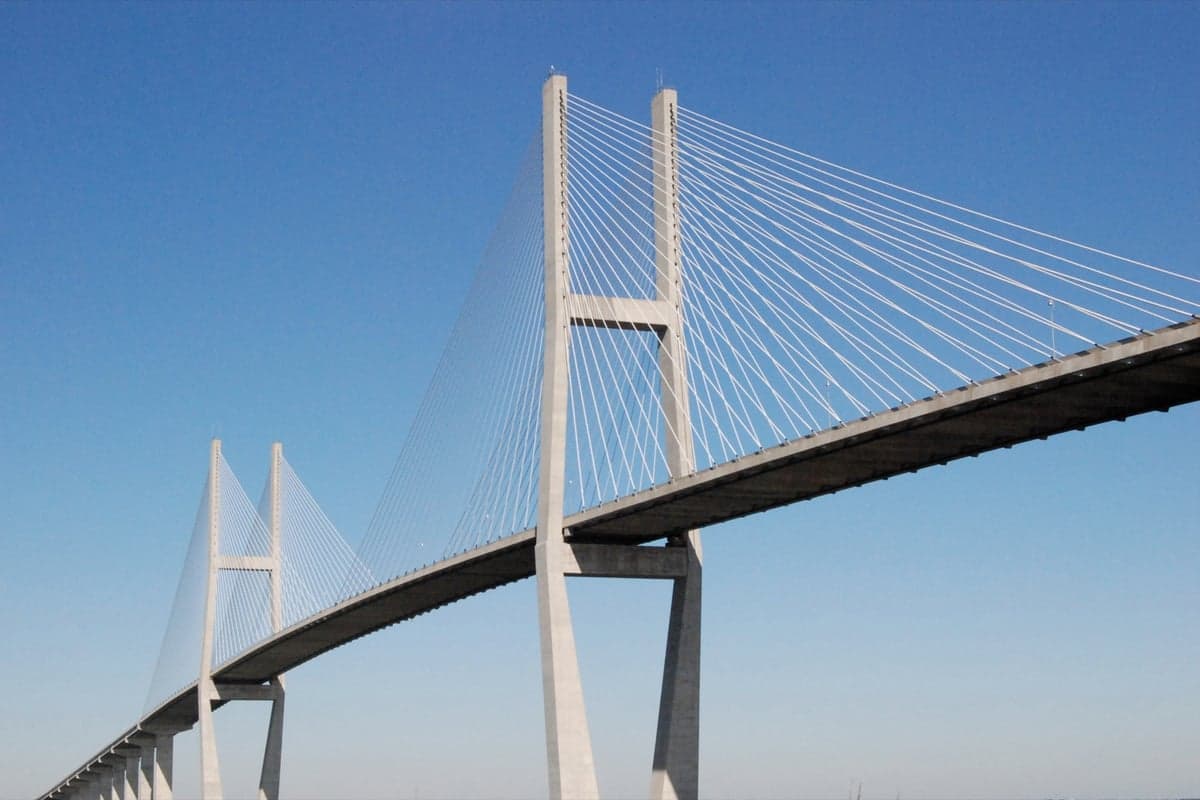
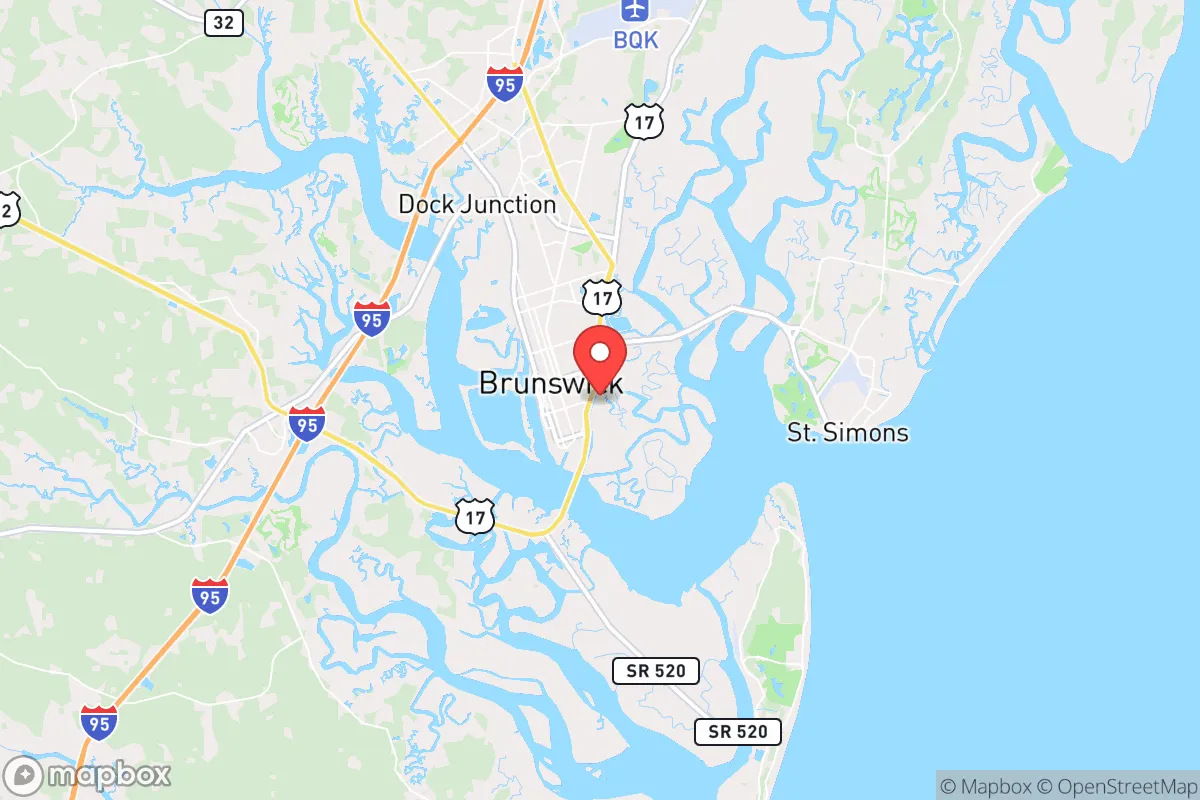
Photo: Wikipedia
Demographics of Brunswick, GA
Affluence Level in Brunswick, GA
A below-average socioeconomic profile. Incomes, home values, and educational attainment trail the U.S., with higher poverty and unemployment.
People of Brunswick, GA
The people of Brunswick, Georgia, today form a predominantly Black (61.4%) and historically rooted community of roughly 15,248 residents, creating a cultural identity shaped by deep Gullah-Geechee heritage, maritime industry, and a small but growing Hispanic (7.9%) population. With only 28.4% of residents identifying as White and a foreign-born share of just 3.5%, Brunswick remains less diverse than many coastal Georgia cities, though its character is distinctively working-class and family-oriented. The city’s population density and tight-knit neighborhoods reflect a place where generational ties run strong, and where recent in-migration is slowly shifting the demographic landscape.
How the city was settled and grew
Brunswick’s human history begins with the Creek and Guale peoples who inhabited the coastal islands and marshes before European contact. The city itself was founded in 1771 as a planned port on the Turtle River, named after the German duchy of Brunswick-Lüneburg, but it remained a small outpost through the early 19th century. The first major population wave came with the plantation economy, which brought enslaved Africans—primarily from the rice and Sea Island cotton regions of West Africa—to work the surrounding rice fields and timber operations. After the Civil War, many of these freed families settled in what became the historic African American neighborhoods of Dublin and Risley, areas that still anchor the city’s Black community today. The late 19th and early 20th centuries saw a second wave: European immigrants, mostly Greeks and Italians, arrived to work in the burgeoning shrimp and timber industries, establishing the Old Town district near the waterfront. By 1920, Brunswick had grown to about 14,000 residents, with a clear racial and ethnic geography—Black families concentrated in Dublin and Risley, White families in the grid of Old Town and the newer Arco neighborhood to the north.
Modern era (post-1965)
The post-1965 period brought significant demographic change, driven by the collapse of the local timber industry and the rise of the Port of Brunswick as a major automobile and cargo hub. The 1970s and 1980s saw White flight to suburban Glynn County, particularly to the St. Simons Island and Country Club Estates areas, leaving Brunswick’s core increasingly Black and lower-income. By 1990, the city’s Black population had risen to over 60%, where it has remained relatively stable. The Hispanic share, while still modest at 7.9%, has grown steadily since 2000, driven by Mexican and Central American workers drawn to the port’s warehouse and logistics jobs. These newer arrivals have concentrated in the southern end of Old Town and along the Glynn Avenue corridor, where affordable rental housing and proximity to industrial employment are available. The Asian population remains negligible at 0.2%, and the Indian subcontinent population is effectively zero—a reflection of Brunswick’s lack of the tech or medical sectors that attract those groups to larger Georgia cities. The college-educated share is low at 18.8%, consistent with a blue-collar economy centered on the port, seafood processing, and manufacturing.
The future
Brunswick’s population is projected to remain stable or grow slowly, with the most notable shift being a gradual increase in Hispanic residents as the port expands and the seafood industry seeks younger labor. The Black share is likely to decline slightly as older generations age out and younger families move to more affordable suburbs like Dock Junction or unincorporated Glynn County. The White population, already a minority within city limits, may continue to shrink as retirees and professionals favor St. Simons Island or the mainland suburbs. The city’s cultural identity is becoming more layered, with Hispanic-owned businesses appearing along Norwich Street and in Old Town, while the Gullah-Geechee heritage remains strongest in Dublin and Risley. Gentrification pressures are minimal compared to Savannah or Charleston, but the Brunswick Landing redevelopment project—a former naval air station turned industrial park—could attract new residents and jobs over the next decade, potentially diversifying the population slightly.
For someone moving to Brunswick now, the city offers a deeply rooted, majority-Black community with a working-class ethos, a growing Hispanic presence, and a port-driven economy that provides stable employment but limited upward mobility. The population is becoming slightly more diverse, but the pace is slow, and the city’s identity remains firmly tied to its historic neighborhoods and maritime heritage. New arrivals should expect a place where family and church networks matter, where the cost of living is low, and where the cultural texture is authentic rather than curated for newcomers.

* Values derived from national, state, county, city and local statistics and may differ in a specific area. Last updated: 2026-10-29T21:43:08.000Z
Narrative content on this page is AI-generated and may contain mistakes. Verify any details that matter before acting on them.
ReloMaps may earn a commission from affiliate links at no extra cost to you.

