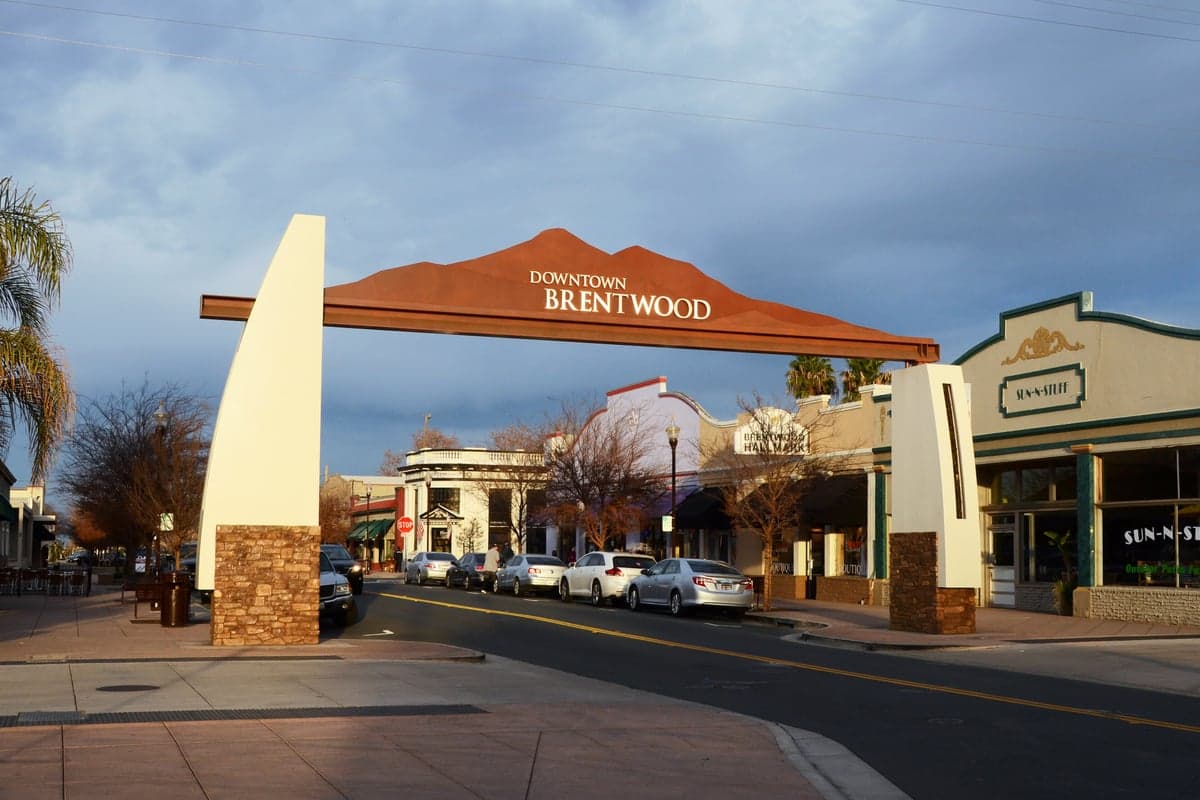
Photo: Wikipedia
Political ClimatePolitical Climate in Brentwood, CA
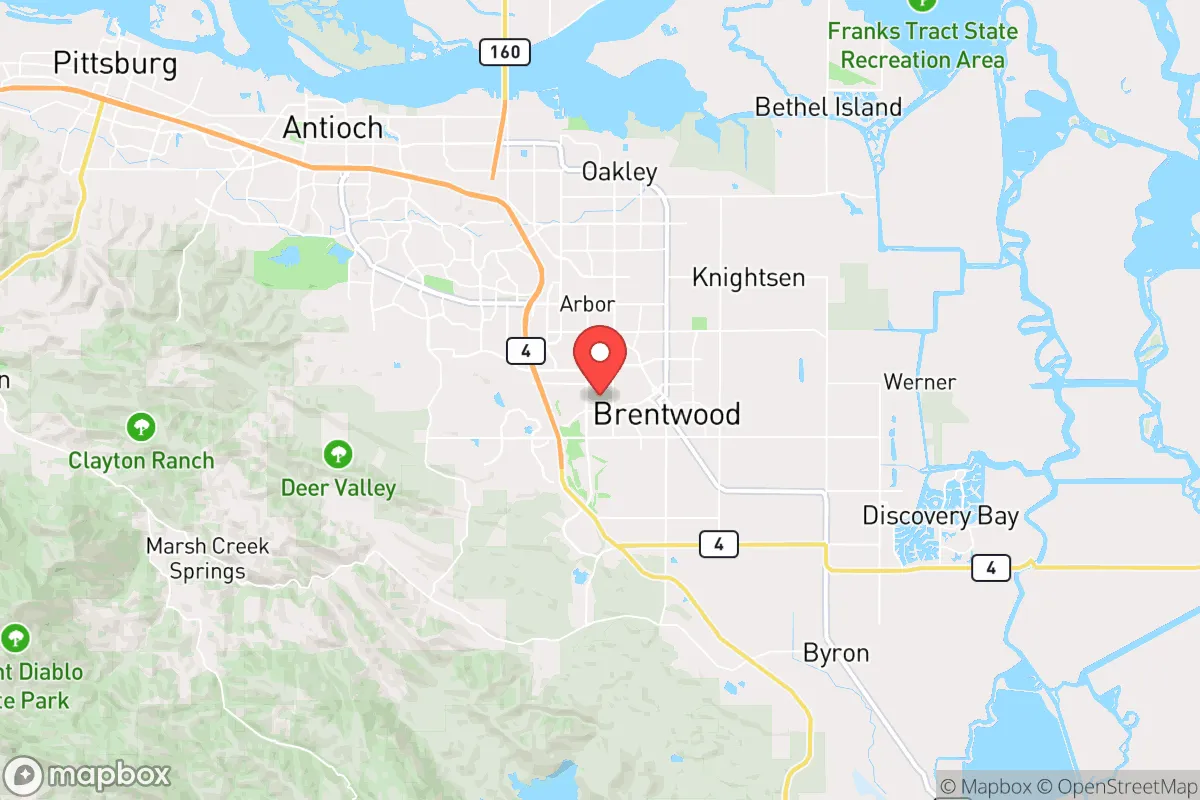
District shown is the primary district for this city’s centroid. Cities may span multiple districts.
Political rankings in California
- Most Conservative Cities in California
- Most Liberal Cities in California
- Best Conservative-Leaning Towns on the West Coast
- Affordable Small Towns for Conservatives
- Most Affordable Liberal-Leaning Small Towns in the U.S.
- Safest Liberal-Leaning Cities in the U.S.
- Most Conservative Counties in California
- Most Liberal Counties in California
Local Political AnalysisPolitical Analysis of Brentwood, CA
Brentwood, California, leans solidly Democratic, with a Cook Partisan Voting Index (PVI) of D+18, meaning it votes about 18 points more Democratic than the national average. This makes it a reliably blue city within a reliably blue state, but the political reality here is more nuanced than the raw number suggests. Over the past decade, Brentwood has shifted leftward alongside much of the Bay Area, driven by an influx of younger families and commuters from more expensive coastal cities. However, it still retains a noticeable conservative streak compared to neighbors like Berkeley or Oakland, largely due to its agricultural roots and a sizable population of long-time residents who remember when this was a small farming town.
How it compares
Compared to California as a whole, Brentwood is actually a bit more moderate than the state's most liberal pockets. While the state's overall PVI is not officially calculated in the same way, California consistently votes Democratic by roughly 20-25 points in presidential elections, so Brentwood's D+18 puts it slightly to the right of the statewide average. The real contrast, though, is with surrounding towns. Head west to Danville or San Ramon, and you'll find communities that are still reliably Democratic but with a stronger moderate-to-conservative undercurrent, especially on fiscal issues. Drive east to Oakley or Antioch, and the politics get more mixed—Antioch has a large working-class population that leans left on economics but can be more conservative on crime and public safety. Brentwood sits in the middle of this spectrum: it's not as uniformly progressive as Berkeley, but it's also not the kind of place where you'll see many Trump signs in a front yard. The city council and local school board are generally Democratic-leaning, but candidates who emphasize fiscal responsibility and public safety often find a receptive audience here.
What this means for residents
For liberal residents, Brentwood is a comfortable place to live politically. You'll find plenty of like-minded neighbors, local Democratic clubs are active, and the city's policies generally align with progressive priorities on housing, environmental issues, and social services. Conservative residents, while in the minority, are not isolated. There are still active Republican groups, and local elections often feature competitive races where conservative viewpoints get a fair hearing, especially on issues like development density, water rights, and law enforcement funding. The practical effect of the D+18 lean is that Democratic candidates almost always win citywide races, but the margin of victory can be close enough that conservative voices can influence policy debates, particularly on land use and taxes. In day-to-day life, most people don't talk politics at the grocery store, but when they do, the conversations tend to be more pragmatic than ideological.
Culturally, Brentwood stands out from much of the Bay Area for its strong agricultural identity—the city is famous for its cherry and corn festivals, and many residents still have a direct connection to farming. This creates a policy distinction: while coastal California cities often prioritize environmental regulations that can limit farming, Brentwood's local government tends to be more supportive of agricultural interests, even when that means pushing back on certain state-level mandates. The city also has a notably high number of veterans and active-duty military families, which gives local politics a patriotic, service-oriented tone that you don't always find in more urban parts of the state. Looking ahead, as Brentwood continues to grow—its population has more than doubled since 2000—the political center of gravity will likely keep shifting left, but the city's unique blend of suburban, agricultural, and family-oriented values means it will probably never become as uniformly progressive as its neighbors to the west.

State Political ClimatePolitical Climate in California
State Political AnalysisPolitical Environment in the State
California is a deeply blue state where Democrats hold every statewide office and supermajorities in both legislative chambers, but the reality on the ground is far more complicated than the national headlines suggest. Over the past 20 years, the state has shifted from a competitive purple battleground—where Republicans like Arnold Schwarzenegger and Pete Wilson won statewide—to a solidly Democratic stronghold, driven largely by the explosive growth of the coastal metro areas and a steady exodus of conservative-leaning voters from the Central Valley and inland regions. The 2024 presidential election saw Kamala Harris carry the state by roughly 30 points, but that margin masks a state where nearly 6 million people voted for Donald Trump, and where dozens of counties, particularly in the interior, have moved rightward over the past decade.
Urban vs. rural divide
The political map of California is a study in extremes. The coastal metros—Los Angeles, San Francisco, San Diego, and Oakland—are the engine of the state’s Democratic dominance, producing massive vote margins that swamp the rest of the state. In 2024, Los Angeles County alone delivered over 2 million more votes for Harris than Trump, while San Francisco County gave Harris a 75-point margin. Meanwhile, the vast interior—the Central Valley, the Sierra foothills, and the far north—is overwhelmingly Republican. Counties like Kern (Bakersfield), Tulare (Visalia), and Shasta (Redding) routinely vote +30 to +40 points Republican. The Inland Empire, including Riverside and San Bernardino counties, has become a key swing region, trending rightward as working-class Latino and white voters there have shifted toward the GOP. Suburbs like Orange County, once a conservative bastion, have flipped blue in presidential races since 2016, though local offices there remain competitive. The net effect is a state where a conservative moving to Bakersfield or Redding will find themselves in a deep-red community, while a liberal moving to San Francisco or Berkeley will be in one of the most progressive environments in the country.
Policy environment
California’s policy environment is defined by high taxes, heavy regulation, and a progressive social agenda that directly impacts daily life. The state has a progressive income tax with a top marginal rate of 13.3%, the highest in the nation, and a state sales tax that averages over 8.5% when local add-ons are included. Property taxes are capped at 1% of assessed value under Proposition 13, but reassessment upon sale can create significant tax jumps for new buyers. The regulatory posture is aggressive: California has its own environmental review process (CEQA) that can delay or kill development, strict emissions standards that effectively set national policy, and a labor-friendly legal environment with strong union protections. Education policy is dominated by the California Teachers Association, with per-pupil spending above the national average but outcomes that lag in many districts. Healthcare is heavily regulated, with a state-run insurance exchange (Covered California) and a push toward a single-payer system that has stalled in the legislature. Election laws are among the most accessible in the country: all registered voters receive a mail-in ballot, same-day registration is available, and the state has no voter ID requirement. For a conservative relocator, the practical takeaway is that California’s policy environment is designed to maximize government involvement in daily life, from the gas pump to the doctor’s office.
Recent policy direction
Over the past five years, California has moved decisively left on a range of issues that matter to relocators weighing personal freedoms. On gun rights, the state has some of the strictest laws in the nation, including an assault weapons ban, a 10-day waiting period, and a requirement for a Firearm Safety Certificate. In 2023, the legislature passed a law (SB 2) that effectively bans carrying firearms in most public places, though it is currently tied up in court. On parental and education rights, the state has moved in the opposite direction of many red states: a 2023 law (AB 1078) prohibits school boards from banning books on the basis of race or LGBTQ+ content, and a 2024 law (AB 1955) bars school districts from requiring parental notification when a child changes their gender identity. On speech, California has a strong free-speech tradition, but recent laws targeting hate speech and disinformation have raised concerns about overreach. Privacy and surveillance are mixed: the California Consumer Privacy Act (CCPA) gives residents strong data rights, but the state also has a massive surveillance apparatus, including license plate readers and facial recognition in some cities. Medical and bodily autonomy is broadly protected, with abortion and gender-affirming care enshrined in state law. Property rights are weak: rent control is expanding, and the state’s housing crisis has led to laws that override local zoning in favor of denser development. Taxation continues to climb, with a 2024 ballot measure (Proposition 5) that would have made it easier to raise property taxes failing narrowly. Voting access is wide open, with no voter ID and universal mail-in ballots, which has led to ongoing debates about election integrity, though no major fraud has been proven.
Civil unrest & political movements
California has a long history of political activism, and recent years have seen both left- and right-wing movements flare up visibly. The 2020 George Floyd protests in Los Angeles, Oakland, and San Francisco were among the largest and most destructive in the country, with widespread looting and property damage. The state’s sanctuary laws, which limit cooperation between local law enforcement and federal immigration authorities, have made California a flashpoint in national immigration politics, with cities like Los Angeles and San Francisco openly defying ICE detainers. On the right, the “California exodus” narrative has fueled a growing secessionist movement, with groups like the “State of Jefferson” pushing for rural northern counties to break away, though this remains a fringe effort. Election integrity controversies have been muted compared to swing states, but conservative activists have raised concerns about the state’s mail-in ballot system, particularly after the 2020 election saw a surge in ballot harvesting. A new resident in a blue city like San Francisco will encounter frequent protests and visible homelessness, while a resident in a red area like Bakersfield will see more Trump flags and gun shows than political demonstrations.
Projection
Over the next 5-10 years, California’s political trajectory points toward a continued leftward drift at the state level, but with growing internal friction as the conservative interior becomes more vocal and organized. Demographic trends favor the Democrats: the state’s Latino population, while not monolithic, leans Democratic, and the white working-class voters who once formed the GOP base are aging out or leaving. In-migration from other states is net negative, with more people moving out than in, and those leaving tend to be more conservative and middle-income. The state’s housing crisis will likely force further policy shifts toward denser development, which could accelerate gentrification and displacement in blue cities while deepening the urban-rural divide. A conservative moving in now should expect to live in a state where their vote for president or Senate is effectively meaningless, but where local and county elections in red areas remain competitive. The practical reality is that California will remain a one-party state at the statewide level for the foreseeable future, but the internal culture war between its blue cities and red hinterlands will only intensify.
For a new resident, the bottom line is that California offers a stark choice: live in a deep-blue coastal city where your taxes are high, your gun rights are limited, and your vote for statewide office is irrelevant, but where you’ll have access to world-class amenities and progressive social policies; or live in a red inland community where your vote matters locally, your cost of living is lower, and your lifestyle is more traditional, but where you’ll be governed by a state legislature that often seems hostile to your values. The state’s political climate is not monolithic, and a savvy relocator can find a community that fits their preferences—but they should go in with eyes wide open about the trade-offs.
* Values derived from national, state, county, city and local statistics and may differ in a specific area. Last updated: 2026-11-26T15:51:48.000Z
Narrative content on this page is AI-generated and may contain mistakes. Verify any details that matter before acting on them.
ReloMaps may earn a commission from affiliate links at no extra cost to you.

