Photo: Wikipedia
Demographics of Brentwood, CA
Affluence Level in Brentwood, CA
An upper-middle-class area. Household wealth, education levels, and homeownership run ahead of national benchmarks.
People of Brentwood, CA
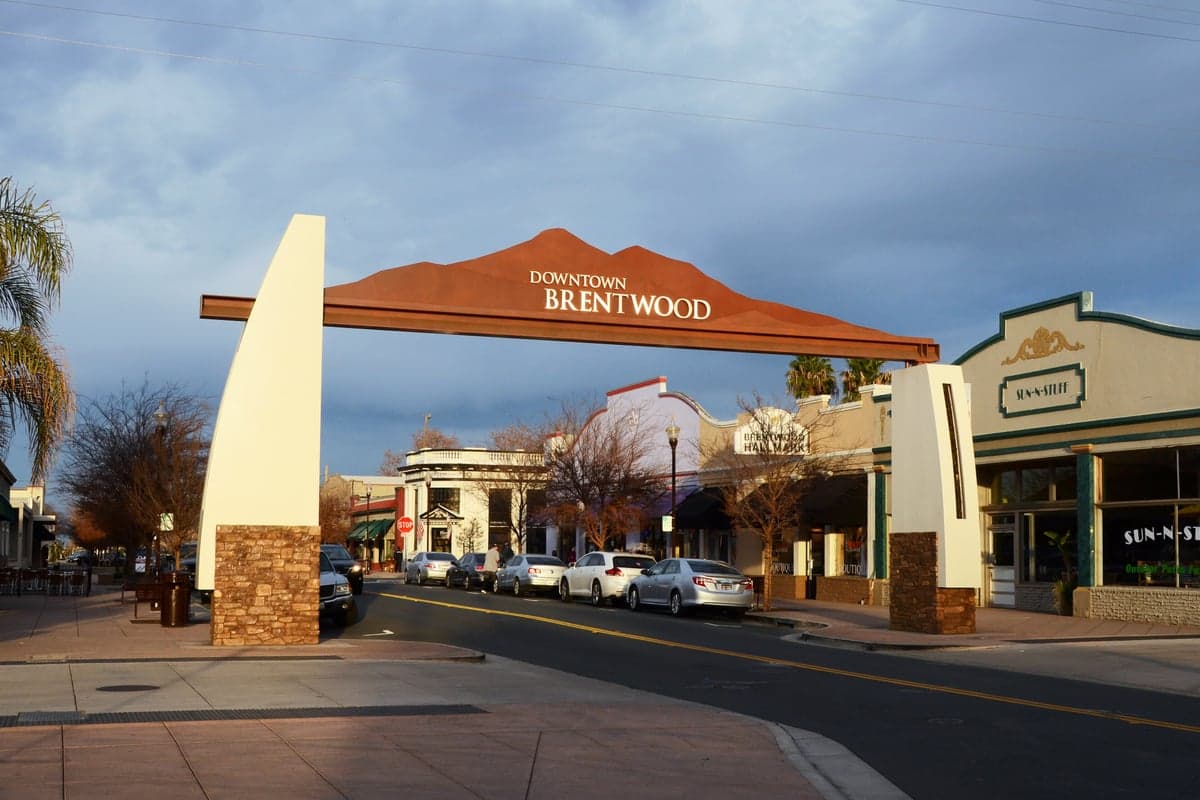
Brentwood, California, is a city of 64,609 residents that has transformed from a quiet agricultural hub into a diverse, family-oriented suburb. Its population is characterized by a notable mix of racial and ethnic groups, with a White plurality at 43.0%, a substantial Hispanic community at 24.8%, and growing East/Southeast Asian (12.3%) and Black (9.4%) populations. The city’s identity is shaped by its relatively low foreign-born share of 7.2% and a college-educated rate of 38.8%, reflecting a stable, middle-to-upper-middle-class community with deep local roots.
How the city was settled and grew
Brentwood’s human history begins with the original inhabitants, the Bay Miwok people, who lived along the Marsh Creek watershed for millennia. Spanish land grants, particularly the 1840s Rancho Los Meganos, drew the first European settlers, who established vast wheat and cattle ranches. The city’s modern founding came in the late 19th century with the arrival of the railroad, which transformed the area into a shipping hub for agricultural products. The original population was overwhelmingly White, with many families of English, German, and Irish descent settling in the downtown core around Oak Street and Second Street. Early 20th-century waves included Italian and Portuguese immigrants who worked the orchards and vineyards, establishing a farming community that defined Brentwood for decades. The historic Brentwood Corners area became a commercial and social center for these agricultural families.
Modern era (post-1965)
The post-1965 era brought significant demographic change, driven by the Immigration and Nationality Act and the broader suburbanization of the East Bay. The city’s population began to diversify as families from the San Francisco and Oakland areas sought affordable housing and larger lots. The 1980s and 1990s saw an influx of Hispanic families, many of whom worked in the remaining agricultural sector and settled in the Marsh Creek and Brentwood Hills neighborhoods. These areas became the heart of the Hispanic community, with local businesses and churches reflecting this cultural influence. The 2000s brought a wave of East/Southeast Asian families—primarily Chinese, Filipino, and Vietnamese—who moved into newer subdivisions like Deer Ridge and Summer Lake, drawn by the city’s highly rated schools and newer housing stock. Black families also began to move into these same master-planned communities, contributing to the city’s growing diversity. The Indian-subcontinent population, now at 4.2%, concentrated in neighborhoods like Shadow Lakes and Brentwood Glen, often drawn by professional opportunities in the Tri-Valley tech corridor. The White population, while still the largest single group, declined from a near-majority in 2000 to 43.0% today, as the city became more ethnically varied.
The future
Brentwood’s population is projected to become more diverse, with the Hispanic and East/Southeast Asian shares expected to grow steadily over the next 10-20 years. The White population is likely to continue its gradual decline, while the Black and Indian-subcontinent communities are expected to hold steady or increase slightly. New residential developments, such as the Brentwood Hills Estates and the Sand Creek area, are attracting a mix of first-time homebuyers and families from the Bay Area, many of whom are Hispanic or Asian. The city’s cultural identity is evolving from its agricultural roots toward a more suburban, multi-ethnic character, with local events like the Brentwood Farmers Market and the CornFest reflecting this blend. The low foreign-born share suggests that most new residents are domestic migrants, often from other parts of California, which may temper the pace of cultural change.
For someone moving in now, Brentwood is becoming a stable, family-oriented suburb with a growing diversity that is still anchored by a White plurality. The city offers a middle ground between the rapid change of the inner East Bay and the more homogeneous suburbs of the Central Valley, making it attractive to families seeking good schools, newer homes, and a community that is both welcoming and rooted in its agricultural past. The next decade will likely see continued diversification, but at a measured pace that preserves the city’s suburban character.

* Values derived from national, state, county, city and local statistics and may differ in a specific area. Last updated: 2026-11-26T15:51:48.000Z
Narrative content on this page is AI-generated and may contain mistakes. Verify any details that matter before acting on them.
ReloMaps may earn a commission from affiliate links at no extra cost to you.

