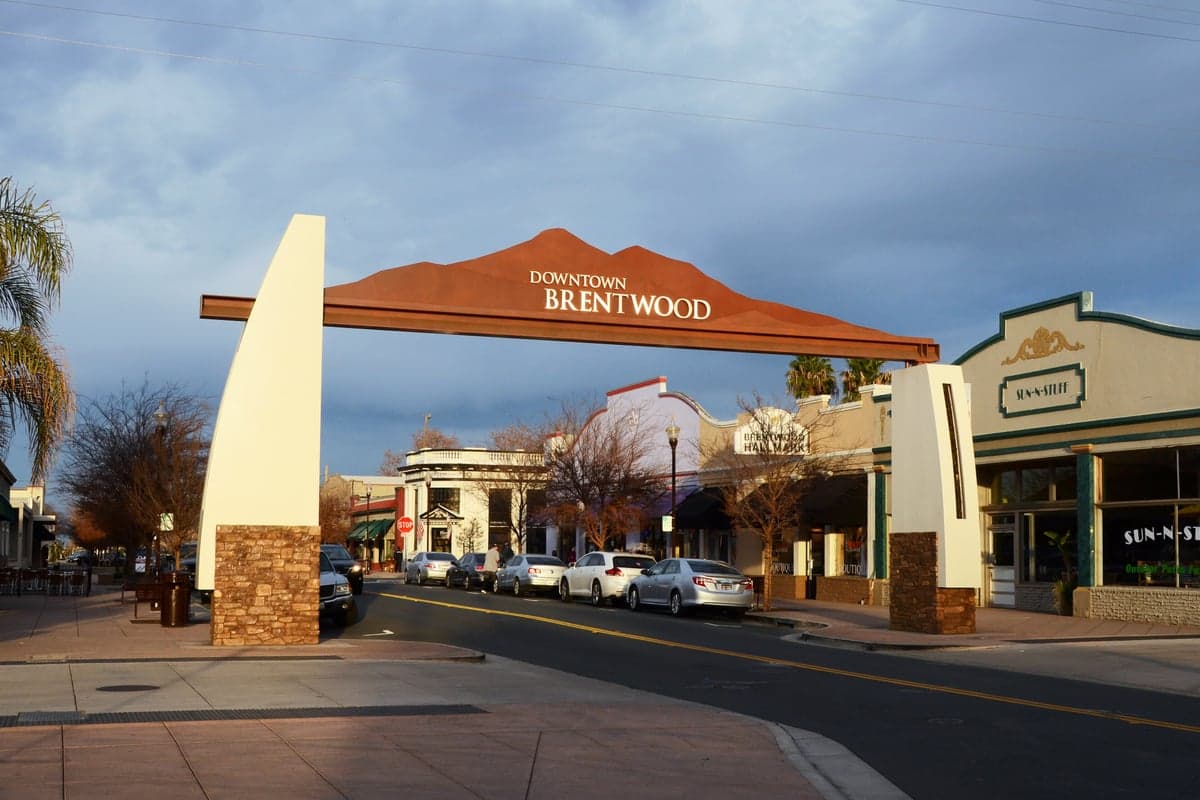
Photo: Wikipedia
Personal Sovereignty in Brentwood, CA
Moderate friction. Expect trade-offs in some aspect of personal liberty and independence.
What does Personal Sovereignty tell us?
Personal Sovereignty measures your capacity for self-reliance and independence with minimal government friction. Higher scores mean fewer barriers between you and the way you want to live... but it assumes you have the space you need and good neighbors.
What does this tell us?
Personal Sovereignty measures your capacity for self-reliance and independence with minimal government friction. Higher scores mean fewer barriers between you and the way you want to live... but it assumes you have the space you need and good neighbors.
State Policy
Energy independence: Importer (25% of energy produced in-state)
Personal Liberty
Homesteading

Personal Liberty Analysis
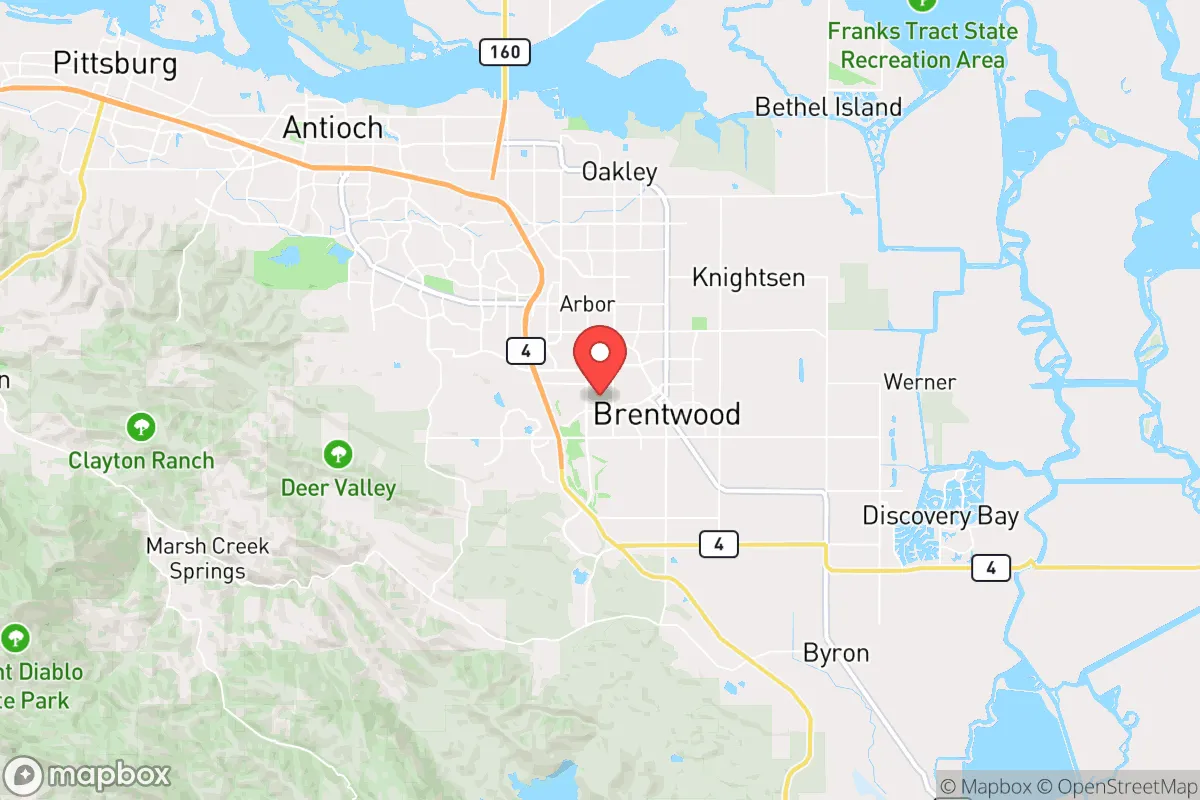
Brentwood, California, presents a complex personal sovereignty environment where state-level regulatory density often clashes with local realities, creating a nuanced landscape for those prioritizing autonomy. While California’s overall governance leans heavily toward collective mandates, Brentwood’s position in far eastern Contra Costa County—closer to the agricultural Central Valley than to San Francisco—offers residents a tangible buffer from the most intense urban regulatory pressures. For the individual or family weighing self-reliance, the key question is not whether California is a high-regulation state (it is), but how Brentwood’s specific mix of tax burden, gun laws, zoning flexibility, and cultural norms shapes day-to-day personal freedom compared to other Bay Area options.
Tax burden and regulatory posture in Contra Costa County
California’s state-level tax burden is among the highest in the nation, with a progressive income tax topping out at 13.3% on high earners and a state sales tax rate of 7.25% (plus local add-ons, bringing Brentwood’s total to roughly 8.75%). Property taxes, however, are a relative bright spot for long-term residents due to Proposition 13, which caps annual increases at 2% of the assessed value and sets the base rate at 1% of the purchase price. This means a homeowner who bought in Brentwood a decade ago likely pays significantly less in property tax than a new buyer, creating a strong incentive for stability but a higher barrier for newcomers. The regulatory posture in Brentwood itself is notably more permissive than in coastal Contra Costa cities like Walnut Creek or Lafayette. The city’s general plan allows for single-family residential zoning on lots as small as 6,000 square feet in many neighborhoods, but also permits larger agricultural parcels (up to 20+ acres) in the city’s eastern fringe. Business licensing is straightforward, with no gross receipts tax on most small operations, though any home-based business must comply with state-level environmental and labor regulations. The overall regulatory environment is best described as moderate-to-heavy at the state level, but light-touch at the local level for residential property owners—a trade-off that rewards those who can navigate California’s bureaucratic overhead.
Self-defense rights and California gun law specifics in Brentwood
California’s firearm laws are among the most restrictive in the United States, and Brentwood residents operate entirely within that framework. The state requires a 10-day waiting period and a Firearm Safety Certificate for all purchases, with a background check through the California Department of Justice. Assault weapons (as defined by state statute) are banned, as are magazines capable of holding more than 10 rounds. Concealed carry permits (CCWs) are issued by the Contra Costa County Sheriff’s Office, which has historically been may-issue—meaning the sheriff has discretion. However, following the U.S. Supreme Court’s Bruen decision (2022), the county has moved toward a more objective standard, and as of 2025, applicants who complete a training course and demonstrate good cause (broadly interpreted) are generally approved. The process takes roughly 3-6 months and costs around $300 in fees and training. Open carry is prohibited in virtually all circumstances. For the self-defense-minded resident, the practical reality is that owning a handgun for home defense is straightforward, but carrying one outside the home requires significant time and expense. Brentwood’s crime rate is low relative to the Bay Area—violent crime sits at about 150 incidents per 100,000 residents (compared to the national average of 380)—so the need for defensive carry is less acute than in urban centers. The regulatory burden here is high by national standards, but the local sheriff’s office is not actively hostile to lawful gun ownership.
Self-reliance and homesteading viability: lot sizes, zoning, and off-grid feasibility
Brentwood’s agricultural heritage makes it one of the more viable locations in the Bay Area for those seeking a self-reliant lifestyle. The city’s zoning code includes an Agricultural (A) district that permits parcels as small as 1 acre for farming, though most agricultural-zoned land is in the eastern part of the city, near the Delta. In standard residential zones (R-1), lots typically range from 6,000 to 10,000 square feet, which is large enough for a substantial vegetable garden, a few fruit trees, and small livestock like chickens or rabbits—backyard chickens are permitted in most residential zones with a limit of 6 hens and no roosters. Goats, sheep, and larger animals require a minimum lot size of 1 acre and a conditional use permit. Off-grid feasibility is limited by state building codes: California requires all new homes to be connected to the electrical grid, though solar panels with battery storage are encouraged via net metering. Rainwater catchment is legal for non-potable uses (irrigation) without a permit, but potable rainwater systems require a state-approved filtration and disinfection system. Composting toilets are allowed under the California Plumbing Code but must meet strict health standards. The city’s water supply comes from the Delta, and wells are rare within city limits; most residents rely on municipal water. For the serious homesteader, the best option is to purchase land in the unincorporated county areas east of Brentwood (e.g., Knightsen or Byron), where zoning is more permissive and well-and-septic systems are standard. Within Brentwood proper, the regulatory environment is moderately supportive of small-scale self-reliance but not conducive to full off-grid living.
Personal liberties: parental rights, medical autonomy, speech, and property
California’s state-level policies on parental rights and medical autonomy are among the most interventionist in the nation, and Brentwood residents are subject to them. The state mandates that public schools cannot notify parents of a student’s gender identity or sexual orientation without the student’s consent (AB 1955, effective 2024), which has been a flashpoint for conservative families. Private schools and homeschooling are legal alternatives: homeschooling requires filing a Private School Affidavit with the state and meeting basic subject requirements, but there is no state oversight of curriculum. Medical autonomy is constrained by California’s mandatory vaccination laws for school attendance (no personal belief exemptions for K-12), though medical exemptions are available. The state also has strict regulations on alternative medicine: naturopathic doctors must be licensed, and many supplements are regulated by the California Department of Public Health. Free speech protections are robust under both the U.S. and California constitutions, and Brentwood has no local ordinances restricting political signage or public assembly beyond standard time-place-manner rules. Property rights are limited by the California Environmental Quality Act (CEQA), which can be used to delay or block development projects, and by the Coastal Commission’s jurisdiction (though Brentwood is inland, so this is less relevant). The city’s zoning code does not impose rent control, and there are no local eviction moratoria as of 2025. For the property owner, the main constraint is the state’s transfer tax (0.11% of sale price) and the documentary transfer tax (county level, roughly $1.10 per $1,000 of value). Overall, personal liberties in Brentwood are strong on speech and property use, moderate on medical choice, and constrained on parental rights in education—a mix that reflects the tension between state mandates and local values.
Compared to other Bay Area suburbs, Brentwood offers a notably higher degree of personal sovereignty for those willing to accept California’s state-level framework. The tax burden is high but predictable, gun laws are restrictive but navigable, and the homesteading potential is real for those who choose the right lot. The city’s cultural conservatism—reflected in its voting patterns (Brentwood leans Republican relative to the region) and its agricultural roots—provides a social environment where self-reliance is respected rather than discouraged. For the relocation researcher, Brentwood represents a pragmatic compromise: not a libertarian haven, but a place where an individual or family can carve out significant autonomy within a heavily regulated state. The key is to enter with eyes open, understanding that the trade-offs are real but manageable for those who prioritize personal freedom.

* Values derived from national, state, county, city and local statistics and may differ in a specific area. Last updated: 2026-11-26T15:51:48.000Z
Narrative content on this page is AI-generated and may contain mistakes. Verify any details that matter before acting on them.
ReloMaps may earn a commission from affiliate links at no extra cost to you.

