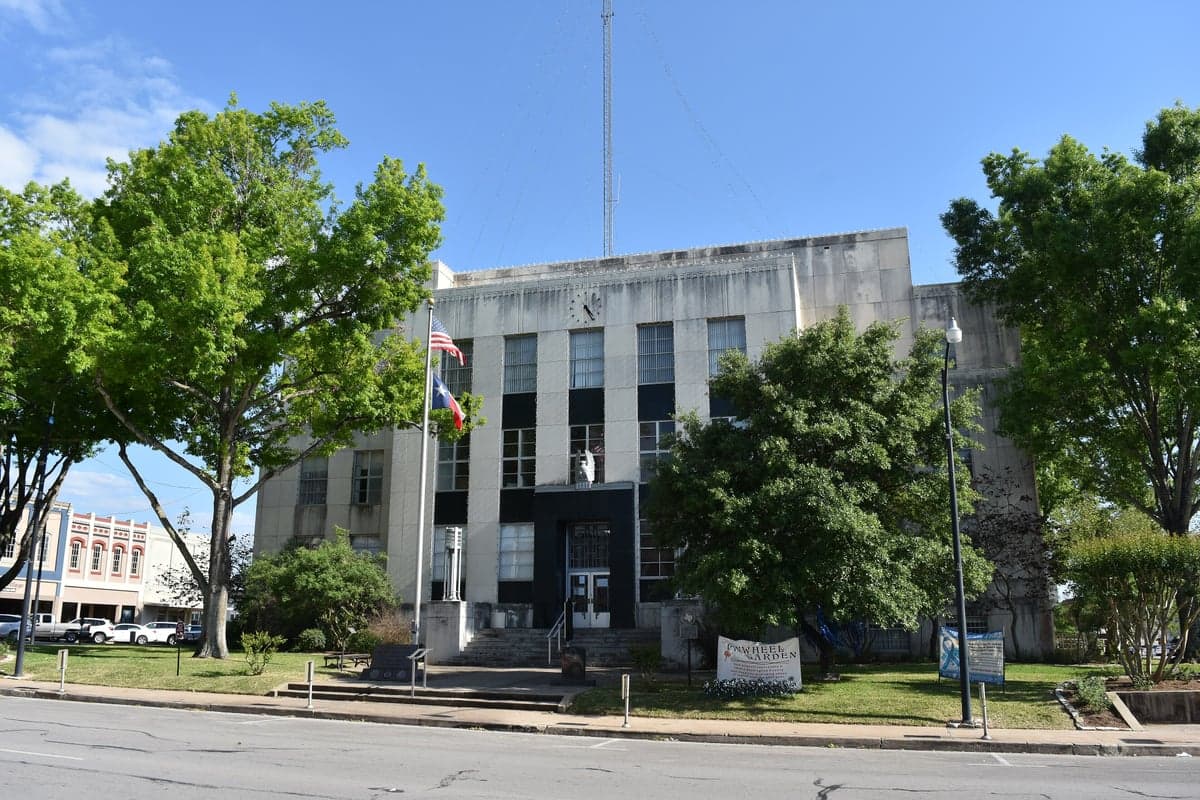
Photo: Wikipedia
Political ClimatePolitical Climate in Brenham, TX
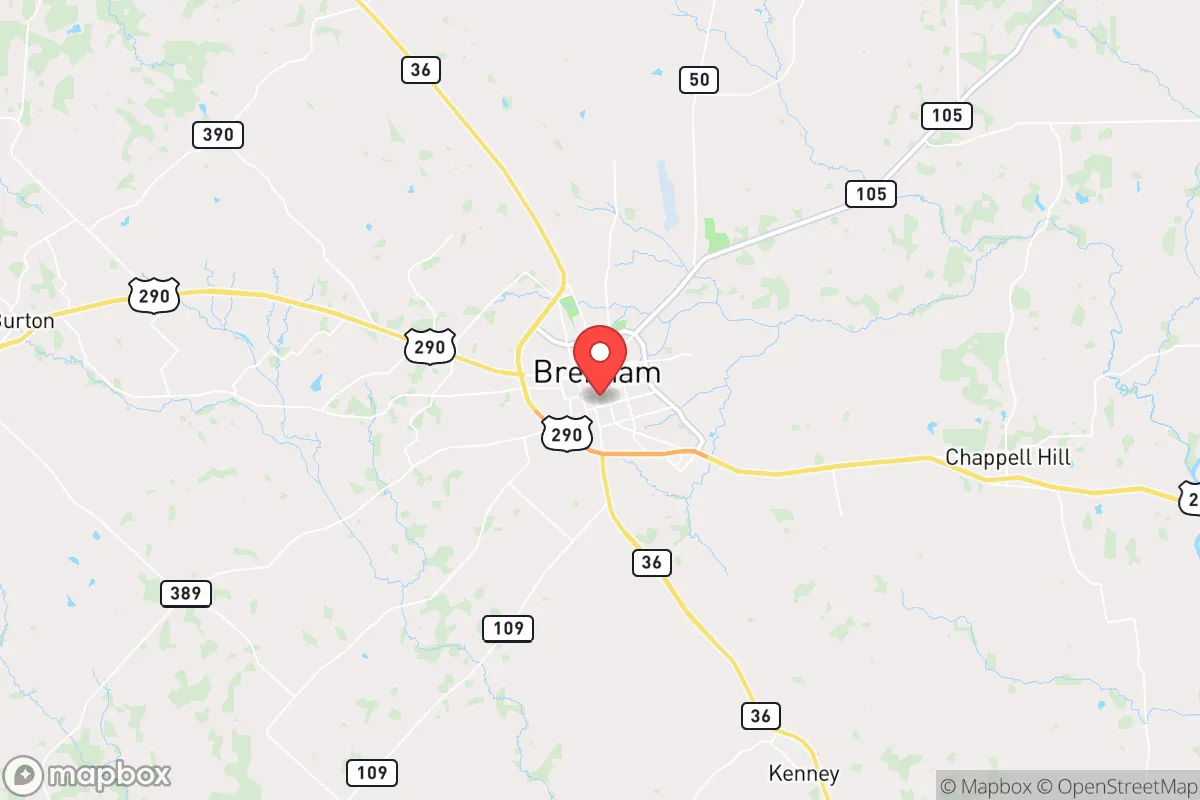
District shown is the primary district for this city’s centroid. Cities may span multiple districts.
Local Political AnalysisPolitical Analysis of Brenham, TX
Brenham leans solidly Republican, with a Cook Partisan Voting Index of R+14, meaning the area votes about 14 points more conservative than the national average. That’s a deep red number, and it’s been trending that way for a while—Washington County hasn’t voted for a Democratic presidential candidate since 1964, and the margins have only widened since the 2010s. Locals will tell you the shift really accelerated after 2016, when the rural-urban divide sharpened, and Brenham’s small-town, agricultural base pulled further right. The county’s population is around 35,000, with Brenham itself being the hub, and the political vibe here is less about loud partisan fights and more about a quiet, steady conservatism that shows up in local school board races and county commissioner elections.
How it compares
Compared to Texas as a whole, Brenham is noticeably more conservative. The state’s overall Cook PVI isn’t officially published, but Texas is generally considered R+5 or R+6, meaning Brenham is roughly 8-9 points redder than the state average. That gap matters: while Texas has competitive suburban districts around Dallas, Houston, and Austin, Washington County is solidly rural and small-town, with none of the suburban swing that’s made places like Collin County or Fort Bend County more purple. Nearby cities like College Station (home to Texas A&M) lean Republican but are more moderate, while Austin, about 90 minutes west, is a deep blue outlier. Even within the region, Brenham feels more conservative than neighboring Bellville or La Grange, though all are reliably red. The contrast is sharpest with Houston’s western suburbs, like Katy or Sugar Land, where Asian and Hispanic growth has shifted politics toward the center; Brenham’s demographic stability—over 70% white, with a significant but historically rooted Black population—keeps its politics more predictable.
What this means for residents
For conservative residents, Brenham’s lean means local government is generally aligned with their values: low taxes, limited regulation, and a strong emphasis on Second Amendment rights and religious freedom. The Washington County Commissioners Court is reliably Republican, and the school board tends to reflect that, though it’s not monolithic—there are occasional debates over curriculum and spending. For liberal residents, the reality is more about finding community than changing policy. There’s a small but active Democratic club in Brenham, and the local NAACP chapter has a long history, but progressive candidates rarely win countywide office. Socially, most people get along fine—Brenham is a friendly, neighborly place—but political conversations at the coffee shop or church potluck will skew conservative. The biggest practical impact is on policy: zoning is minimal, property taxes are moderate (around 1.8% of assessed value), and the county has resisted some state-level pushes on issues like mask mandates or vaccine requirements, preferring local control.
Culturally, Brenham stands out for its strong German-Czech heritage, which shows up in the annual Maifest and the local sausage-and-beer scene, and for being the home of Blue Bell ice cream. That heritage gives the area a distinct identity that’s less about partisan politics and more about tradition, community, and a slower pace of life. The biggest policy distinction from more urban parts of Texas is the emphasis on agriculture and land rights: Washington County is one of the top milk-producing counties in the state, and farming interests shape everything from water policy to road funding. For newcomers, the political climate here is straightforward: if you’re conservative, you’ll feel at home; if you’re liberal, you’ll find your people but won’t change the election results. Either way, the area’s trajectory is likely to stay red, driven by an aging population and limited in-migration from blue states, unlike the explosive growth corridors around Austin and Dallas that are slowly shifting Texas’s political map.

State Political ClimatePolitical Climate in Texas
State Political AnalysisPolitical Environment in the State
Texas has been a reliably Republican state for over two decades, but the margin has been tightening with each election cycle. In 2024, Donald Trump won the state by roughly 9 points, down from the 10-point margin in 2020 and the 16-point margin in 2016. The dominant coalition remains a mix of rural conservatives, suburban moderates, and a growing number of Hispanic voters shifting rightward, but explosive growth in the blue-leaning metros of Austin, Dallas, Houston, and San Antonio is slowly reshaping the map. For a relocator, this means you’re moving into a state where conservative policy dominates the legislature, but the cultural and electoral ground is shifting beneath your feet.
Urban vs. rural divide
The political map of Texas is a study in contrasts. The vast rural and exurban stretches — from the Panhandle down through West Texas and into East Texas — vote overwhelmingly Republican. Counties like Loving, King, and Roberts routinely deliver 90%+ margins for the GOP. Meanwhile, the state’s major urban centers are Democratic strongholds. Harris County (Houston) and Dallas County have trended blue for years, and Travis County (Austin) is one of the most liberal counties in the South. The real battleground is the suburbs. Places like Collin County (north of Dallas) and Fort Bend County (southwest of Houston) were once reliably red but have become competitive, with Collin County still leaning Republican but Fort Bend flipping to Biden in 2020. The Rio Grande Valley, historically a Democratic stronghold, has shown surprising movement toward the GOP, with counties like Starr and Zapata swinging hard right in 2024. This urban-rural split means that where you live in Texas determines your political experience more than almost any other state.
Policy environment
Texas has no state income tax, which is the single biggest policy draw for conservative relocators. The state relies on property taxes and sales taxes, which can be high — effective property tax rates average around 1.6% of home value, among the highest in the nation. The regulatory posture is famously business-friendly, with minimal zoning in many cities and a right-to-work law that limits union power. On education, the state uses a school finance system that has been repeatedly ruled inadequate by courts, leading to wide disparities between wealthy and poor districts. School choice and voucher debates are a perennial legislative fight. Healthcare policy is defined by the state’s refusal to expand Medicaid under the Affordable Care Act, leaving roughly 18% of the population uninsured, the highest rate in the country. Election laws have been tightened in recent years, with the 2021 Senate Bill 1 restricting mail-in voting, expanding poll watcher access, and imposing new ID requirements. For a new resident, the policy environment is a trade-off: low taxes and light regulation on one side, higher out-of-pocket costs for services like healthcare and education on the other.
Recent policy direction
The last few legislative sessions have pushed Texas decisively to the right on a broad set of issues. On gun and self-defense law, the state enacted permitless carry in 2021, allowing most adults to carry a handgun without a license or training. On parental and education rights, the 2023 session passed a school voucher-like program (HB 3) that creates education savings accounts for special needs students, and the state has banned critical race theory and DEI offices in public universities. Speech and privacy issues have been contentious: a 2023 law (HB 20) requires age verification for adult websites and restricts minors’ access to social media, while a separate law (SB 12) bans drag shows in public spaces. On medical and bodily autonomy, Texas has one of the strictest abortion bans in the country, with no exceptions for rape or incest, and the state has also restricted gender-affirming care for minors. Property rights remain strong, with no state-level rent control and a homestead exemption that protects a portion of home value from creditors. Taxation trends are mixed: while there’s no income tax, property tax relief has been a recurring theme, with a 2023 law (SB 2) increasing the homestead exemption to $100,000. Voting access has been restricted, as noted, but turnout has still risen in recent cycles. For a relocator, the direction is clear: Texas is doubling down on conservative social policy and limited government, but the cost of that approach is a frayed social safety net and ongoing legal battles over federal preemption.
Civil unrest & political movements
Texas has seen its share of political flashpoints. The 2020 protests in Austin and Houston over police brutality were large and occasionally violent, leading to a state-level crackdown on bail reform and police funding. The “Defund the Police” movement gained little traction in the legislature, but it did fuel a backlash that helped elect more conservative candidates in suburban races. Immigration politics are a constant presence. The state has sued the Biden administration repeatedly over border policy, and Governor Abbott’s Operation Lone Star has deployed state troopers and National Guard to the border, busing migrants to Democratic-led cities like New York and Chicago. Sanctuary city bans are on the books, and local law enforcement can be penalized for refusing to cooperate with federal immigration authorities. Secession rhetoric, while not mainstream, has a vocal fringe — the Texas Nationalist Movement continues to push for a referendum on independence, though it has no serious political path. Election integrity controversies have been a recurring theme since 2020, with the state’s Republican leadership pushing for audits and tighter rules, while Democrats argue these measures suppress turnout. For a new resident, the most visible sign of political tension is likely the constant presence of border security messaging and the occasional protest in larger cities, but daily life in most of the state is politically quiet.
Projection
Over the next 5-10 years, Texas is likely to continue its slow shift toward competitiveness. In-migration from California and other blue states is bringing more Democratic-leaning voters to the suburbs of Dallas, Houston, and Austin, while the rural population continues to shrink and age. The Hispanic vote, long assumed to be a Democratic lock, is fracturing — younger, more conservative Hispanic voters in the Rio Grande Valley and West Texas are pushing those areas rightward. The state’s Republican majority in the legislature is safe for now, but the margin in statewide races will probably shrink to 5-7 points by 2030. The policy direction will remain conservative, but internal GOP fights over school vouchers, property tax reform, and the power of the lieutenant governor will intensify. For a relocator, the next decade means moving into a state that is still red but becoming more purple, with all the cultural and political friction that entails.
For a new resident, the bottom line is that Texas offers a conservative policy environment with low taxes and broad personal freedoms on gun ownership, speech, and property, but those come with trade-offs in public services, healthcare access, and education funding. If you’re a conservative, you’ll find a state government that largely shares your values and a growing network of like-minded communities in the suburbs and exurbs. If you’re a liberal, you’ll find strong urban enclaves in Austin, Houston, and Dallas, but you’ll be living under a state government that is actively hostile to many of your policy preferences. Either way, the state’s political trajectory is not static — it’s evolving, and your vote will matter more here in 2030 than it did in 2010.
* Values derived from national, state, county, city and local statistics and may differ in a specific area. Last updated: 2026-10-23T21:31:54.000Z
Narrative content on this page is AI-generated and may contain mistakes. Verify any details that matter before acting on them.
ReloMaps may earn a commission from affiliate links at no extra cost to you.

