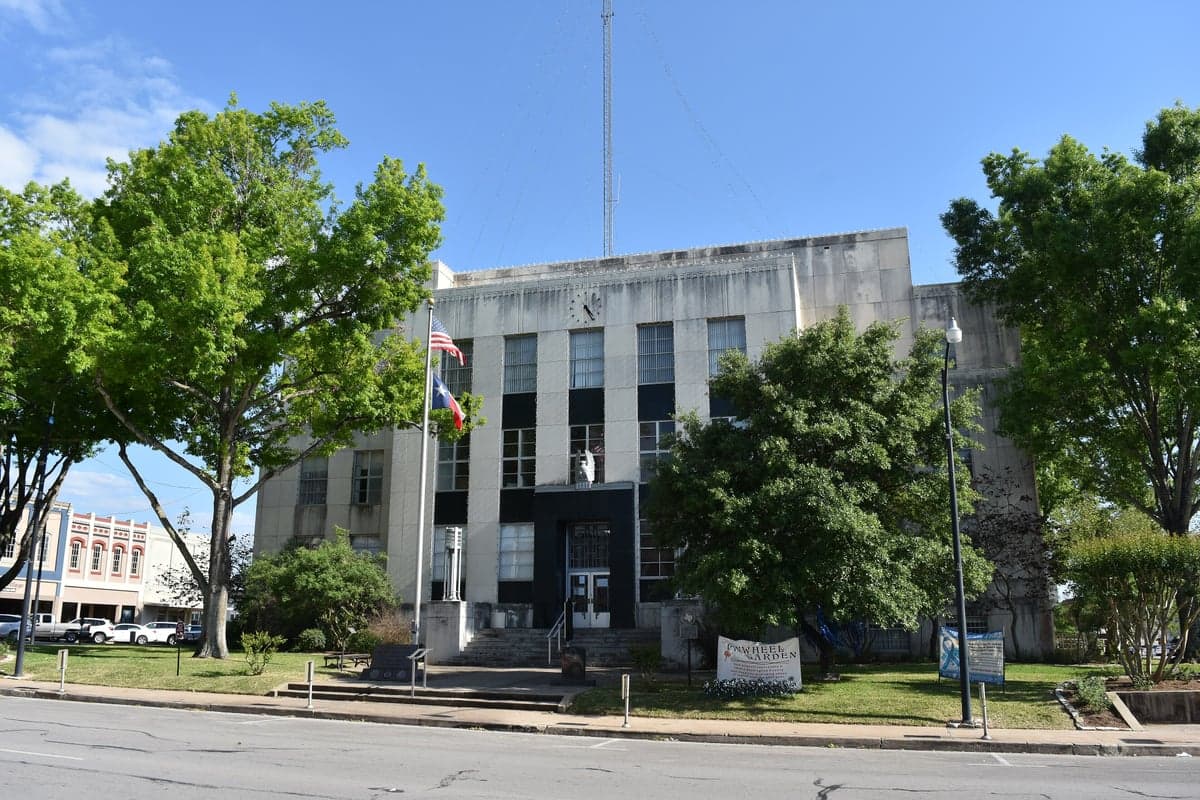
Photo: Wikipedia
Personal Sovereignty in Brenham, TX
Strong independent fundamentals that actively favor personal liberty and low regulation.
What does Personal Sovereignty tell us?
Personal Sovereignty measures your capacity for self-reliance and independence with minimal government friction. Higher scores mean fewer barriers between you and the way you want to live... but it assumes you have the space you need and good neighbors.
What does this tell us?
Personal Sovereignty measures your capacity for self-reliance and independence with minimal government friction. Higher scores mean fewer barriers between you and the way you want to live... but it assumes you have the space you need and good neighbors.
State Policy
Energy independence: Net exporter (220% of energy produced in-state)
Personal Liberty
Homesteading

Personal Liberty Analysis
Brenham, Texas offers a personal sovereignty environment that is shaped by its position in a deeply conservative, rural county with a strong tradition of local control, yet it is not a regulatory vacuum. As the seat of Washington County, the city operates under Texas state law, which provides a broad framework for individual autonomy, but local ordinances and zoning create specific constraints that residents must navigate. For a relocation audience prioritizing personal freedom, Brenham presents a generally light-touch regulatory posture, particularly in areas like taxation and self-defense, while homesteading and off-grid living require careful attention to local rules that are more restrictive than in unincorporated parts of the county.
Tax burden and regulatory posture in Washington County
Texas’s lack of a state income tax is a foundational advantage for personal financial sovereignty, and Brenham residents benefit from this directly. The overall tax burden in Washington County is moderate for Texas, with effective property tax rates typically ranging from 1.8% to 2.2% of assessed home value, depending on the specific taxing entities—Brenham Independent School District, Washington County, and the city itself. This is higher than some rural Texas counties but lower than many suburban areas around Houston or Austin. Sales tax in Brenham is 8.25%, the state maximum, which includes local options for the city and county. Regulatory burdens are relatively light: there is no city-level business license requirement for most home-based enterprises, though zoning and building permits apply. The city’s zoning code is moderately detailed, with residential, commercial, and agricultural districts clearly defined, but it is not as onerous as in larger Texas cities. For example, Brenham does not impose rent control, short-term rental bans, or extensive environmental overlay districts, which preserves a degree of property autonomy. However, the city does enforce standard building codes and requires permits for structural changes, which is typical for any incorporated municipality in Texas.
Self-defense and gun law specifics in Brenham
Texas law provides a strong foundation for self-defense rights, and Brenham residents operate under the state’s permitless carry statute, which allows lawful firearm possession without a license for individuals 21 and older who are not prohibited possessors. The city has not enacted any local ordinances that further restrict firearm carry, storage, or ownership, meaning Brenham follows the state’s preemption statute, which prohibits local governments from adopting gun regulations stricter than state law. This is a significant advantage for personal sovereignty, as it prevents the patchwork of local restrictions seen in some other states. Open carry of handguns is legal for those who can lawfully possess a firearm, and the Castle Doctrine and Stand Your Ground laws apply fully in Washington County. There are no local waiting periods, magazine capacity limits, or firearm registration requirements. For those seeking to carry in more places, a License to Carry (LTC) is still available and provides reciprocity with other states, but it is not required for most public carry. The local sheriff’s office and Brenham Police Department are generally supportive of Second Amendment rights, and the county has a reputation for being a pro-gun jurisdiction. For a reader prioritizing self-defense autonomy, Brenham offers one of the most permissive legal environments in the country, with no local erosion of state-level protections.
Self-reliance and homesteading viability: lot sizes, zoning, and off-grid feasibility
Homesteading and self-reliance are viable in and around Brenham, but the degree of feasibility depends heavily on whether you are inside city limits or in unincorporated Washington County. Within Brenham city limits, minimum lot sizes in residential zones are typically 6,000 to 10,000 square feet, which limits large-scale gardening, livestock, or extensive outbuildings. The city’s zoning code restricts keeping livestock—such as chickens, goats, or cows—to agricultural districts, and even then, there are setback and nuisance regulations. Backyard chickens are technically allowed in some residential zones but require a permit and are subject to limits on the number of birds and coop placement. Off-grid living, including solar panels, rainwater collection, and composting toilets, is legally possible but must comply with city building codes and health regulations. For example, rainwater harvesting is encouraged by Texas state law and is not prohibited by the city, but any structure used for habitation must meet the International Residential Code as adopted by Brenham, which includes requirements for plumbing and electrical systems that may complicate fully off-grid setups. In unincorporated Washington County, the regulatory environment is much lighter: no zoning, no building permits for most agricultural structures, and no restrictions on livestock or alternative energy systems. For a reader serious about self-reliance, purchasing land outside city limits—where 1- to 5-acre parcels are common and relatively affordable—offers far greater sovereignty. The county does enforce standard health and safety codes for septic systems and wells, but these are reasonable and designed to protect groundwater, not to restrict autonomy.
Personal liberties: parental rights, medical autonomy, speech, and property
Brenham’s personal liberties environment is shaped by Texas state law and local cultural norms, which tend to favor individual choice in several key areas. Parental rights are strongly protected under Texas law, and Brenham Independent School District does not have any local policies that override state-level parental rights statutes, such as the requirement for parental consent for medical treatment or the ability to opt children out of specific instructional materials. The district has not adopted controversial curriculum mandates beyond state requirements, and school board meetings are generally low-conflict compared to larger districts. Medical autonomy is more complex: Texas has some of the most restrictive abortion laws in the country, which may align with the values of a conservative audience, but also imposes limitations on certain medical procedures and vaccine mandates that some individuals may view as infringements on bodily autonomy. The state does not have a general vaccine mandate for adults, and Brenham does not have any local public health orders that exceed state law. Freedom of speech and assembly are protected under the First Amendment, and Brenham has no local ordinances restricting public protest or expression beyond standard time, place, and manner regulations. Property rights are generally strong, with Texas’s private property rights laws limiting eminent domain abuse, but the city’s zoning and historic preservation ordinances—particularly in the downtown historic district—can restrict what owners can do with their property. For example, exterior modifications to buildings in the historic district require approval from the Brenham Historic Preservation Commission, which some property owners may view as an infringement on their autonomy. Overall, Brenham offers a high degree of personal liberty in most areas, with the primary constraints being local zoning and historic preservation rules that are typical for a small city with a historic downtown.
Compared to other areas in Texas and the United States, Brenham ranks as a moderately high-sovereignty location for individuals and families who prioritize personal freedom. It is less restrictive than major Texas cities like Austin or Houston, which have more extensive zoning, higher taxes, and local gun ordinances that, while preempted, still create a different cultural environment. It is more restrictive than truly rural counties in West Texas or the Panhandle, where zoning is nonexistent and property taxes are often lower. For a conservative-leaning audience, Brenham’s combination of no state income tax, strong Second Amendment protections, reasonable property taxes, and a generally light regulatory touch makes it an attractive option. The key trade-off is between the convenience and services of a small city and the greater autonomy available on unincorporated land just outside the city limits. A strategic relocation decision would involve carefully evaluating whether the benefits of living within Brenham—such as access to utilities, schools, and municipal services—outweigh the zoning and permitting constraints that come with city residency. For those willing to live on acreage in Washington County, the sovereignty environment is among the best in Texas, with minimal interference in daily life and a strong legal framework supporting individual rights.

* Values derived from national, state, county, city and local statistics and may differ in a specific area. Last updated: 2026-10-23T21:31:54.000Z
Narrative content on this page is AI-generated and may contain mistakes. Verify any details that matter before acting on them.
ReloMaps may earn a commission from affiliate links at no extra cost to you.

