 Popular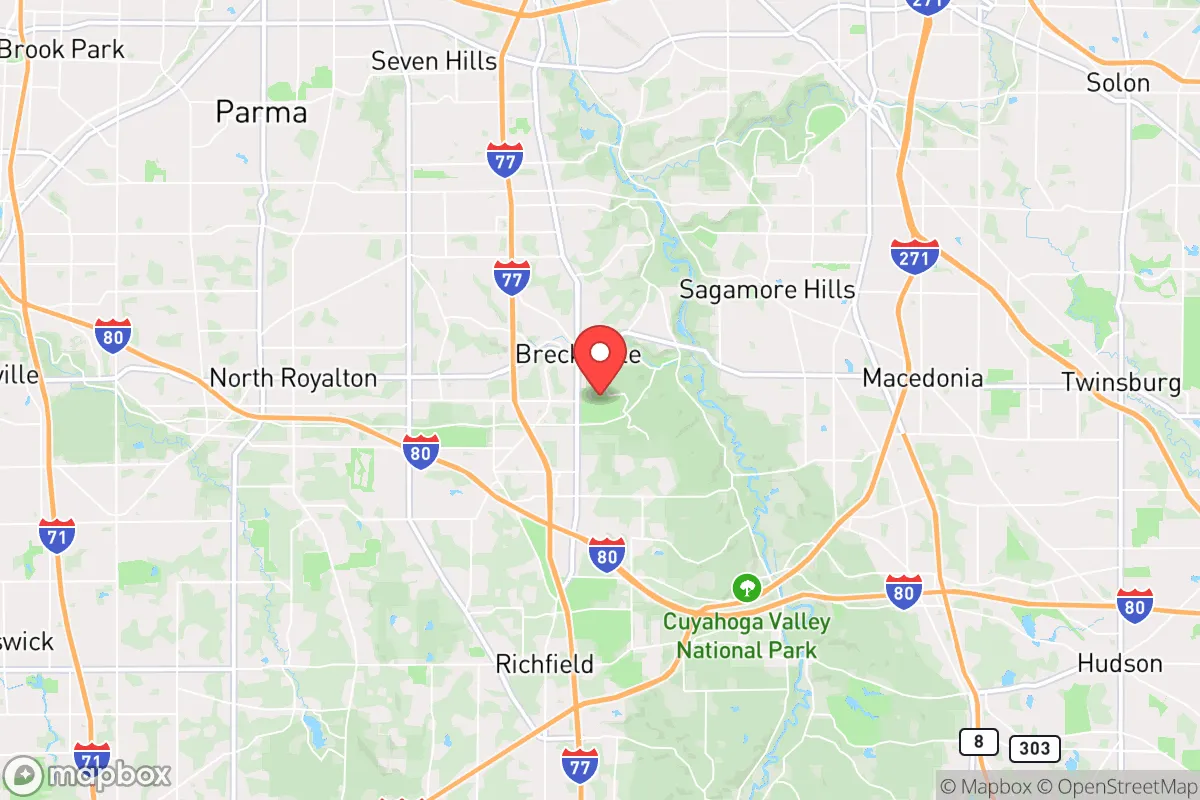
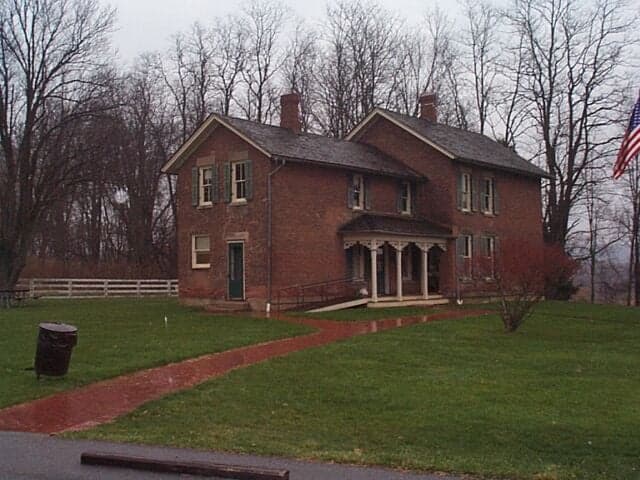
Photo: Wikipedia
Political ClimatePolitical Climate in Brecksville, OH
District shown is the primary district for this city’s centroid. Cities may span multiple districts.
Local Political AnalysisPolitical Analysis of Brecksville, OH
Brecksville’s political climate is reliably conservative, but it’s a measured, suburban brand of conservatism rather than a hard-right one. The city sits in a Cook PVI of R+5, identical to Ohio’s statewide PVI of R+5, which means Brecksville tracks the state’s overall partisan lean almost perfectly. That said, the local trajectory has shifted slightly rightward over the past decade—Brecksville voted for Trump by about 12 points in 2020, up from the 8-point margin Romney carried in 2012. This mirrors the broader trend in Cuyahoga County’s outer-ring suburbs, where places like Strongsville and North Royalton have also moved right, while inner-ring suburbs like Shaker Heights and Cleveland Heights have gone the other way.
How it compares
Brecksville’s R+5 PVI puts it in the same bucket as Ohio as a whole, but the comparison gets interesting when you zoom in. The city is a Republican stronghold within deep-blue Cuyahoga County, which as a whole leans D+20. That creates a sharp contrast: drive 15 minutes north into Parma or 20 minutes east into Solon, and you’ll find more competitive or even Democratic-leaning precincts. Brecksville’s politics are closer to those of Medina or Wadsworth to the southwest—both R+10 or higher—than to Cleveland proper. The key difference is that Brecksville’s conservatism is tempered by its proximity to a major urban center; you’ll hear plenty of talk about fiscal responsibility and local control, but less of the culture-war intensity you’d find in more rural parts of the state. The city’s voter turnout is consistently high—around 70% in presidential years—and local elections often hinge on development and school funding rather than national wedge issues.
What this means for residents
For conservative residents, Brecksville is a comfortable place to live politically. The city council and school board are reliably Republican, and you won’t encounter much pushback on traditional values in day-to-day life. Local policies reflect that: property taxes are kept relatively low, and the city has resisted some state-level mandates on housing density. For liberal residents, the reality is more nuanced. You’ll find a small but active Democratic club, and the city’s diversity of opinion is greater than in a deep-red exurb like Hinckley. But you’ll also notice that progressive candidates rarely win local office, and issues like police funding or zoning reform tend to be debated from a center-right perspective. The practical effect is that both sides can coexist without much friction—Brecksville isn’t the kind of place where yard signs spark neighborly feuds. The biggest political fights in recent years have been over a proposed apartment complex on Brecksville Road and the allocation of federal COVID relief funds, which were resolved through standard public hearings rather than partisan gridlock.
Culturally, Brecksville stands out for its strong sense of local identity and its resistance to being absorbed into Cleveland’s orbit. The city maintains its own police and fire departments, a well-regarded school system, and a historic downtown that feels distinct from the strip-mall sprawl of nearby Independence. There’s a palpable pride in the city’s independence—residents voted down a merger with the Cuyahoga Valley National Park in the 1990s, and they’ve consistently rejected light-rail extensions from Cleveland. This localism is the real political story here: Brecksville’s R+5 lean is less about national party loyalty and more about a desire to keep things running the way they’ve always run. That’s likely to persist, even as the state’s overall politics shift. If you’re moving here, expect a place where the political temperature is warm but not hot, and where the biggest debates are about potholes and school levies, not presidential impeachments.

State Political ClimatePolitical Climate in Ohio
State Political AnalysisPolitical Environment in the State
Ohio has shifted from a quintessential swing state to a solidly Republican-leaning one, carrying a Cook PVI of R+5. Over the past 20 years, the state has moved roughly 10 points to the right in presidential elections, driven by the collapse of union-heavy Democratic strongholds in the Mahoning Valley and the steady reddening of rural and exurban counties. While Democrats can still win statewide in wave years (Sherrod Brown’s 2018 re-election, the 2023 abortion-rights referendum), the baseline is now clearly conservative, and the trajectory points further right as the population continues to gray and the Columbus suburbs slowly diversify.
Urban vs. rural divide
The political map of Ohio is a textbook case of the urban-rural split. The three Cs — Cleveland, Columbus, and Cincinnati — are Democratic islands, with Cuyahoga County (Cleveland) delivering a 2-to-1 margin for Biden in 2020. Franklin County (Columbus) has become the party’s strongest growth engine, flipping from a 5-point Obama win in 2012 to a 22-point Biden win in 2020 as the city’s tech and education sectors boomed. Meanwhile, the rural southeast (Appalachian counties like Meigs, Monroe, and Noble) vote 75-80% Republican, and the northwest (the old “Black Swamp” region around Toledo and Lima) has shifted hard right as union loyalty faded. The real battlegrounds are the suburban rings: Delaware County (north of Columbus) went from 60% Romney to 55% Trump, while Warren County (north of Cincinnati) remains deep red at 65% Trump. The old “blue wall” of Youngstown and Steubenville has crumbled — Mahoning County voted for Obama by 18 points in 2012, then for Trump by 4 in 2020.
Policy environment
Ohio’s policy environment is a mixed bag that leans conservative on fiscal and regulatory matters but retains some Midwestern pragmatism. The state has a flat income tax of 3.5% (phased down from 4.0% in 2023), with no municipal income tax in most suburbs. Property taxes are moderate, averaging 1.5% of home value, but school levies vary wildly — expect higher rates in wealthy Columbus suburbs like Dublin and Upper Arlington. The regulatory climate is business-friendly: Ohio is a right-to-work state in practice (though not by statute), and the state’s tort reform caps non-economic damages at $350,000. Education policy is a flashpoint: the state has a robust school voucher program (EdChoice) that now covers most families, and the legislature has passed laws restricting how race and gender are taught in K-12 classrooms (HB 327 in 2023). Healthcare is a mixed bag: Medicaid expansion under the ACA was accepted in 2013, but the state has not expanded telehealth or nurse practitioner scope of practice. Election laws have tightened: voter ID is now required (SB 320, 2023), drop boxes are limited to one per county, and early voting hours have been reduced. The state also has a “stand your ground” self-defense law (SB 175, 2021) and permitless carry (HB 227, 2022).
Recent policy direction
The last five years have seen Ohio move decisively right on most fronts. On gun rights, the state passed permitless carry in 2022 and a “stand your ground” law in 2021, removing the duty to retreat. On education and parental rights, the legislature passed the “Parents’ Bill of Rights” (HB 8, 2023), requiring schools to notify parents of any changes to a child’s health or well-being, and banned transgender girls from female sports (HB 151, 2022). On abortion and bodily autonomy, voters passed Issue 1 in 2023, enshrining abortion access in the state constitution — a direct rebuke to the legislature’s six-week ban (SB 23, 2019). This created a rare tension: the GOP supermajority has since tried to strip the courts of jurisdiction over the amendment, a move that’s still pending. On taxation, the flat tax was cut from 4.0% to 3.5% in 2023, and the state eliminated its business franchise tax. On voting access, the legislature passed SB 320 in 2023, requiring photo ID and limiting early voting to 28 days (down from 35). On property rights, the state has not passed a “takings” reform bill, but it did preempt local bans on natural gas hookups (HB 201, 2021). On privacy and surveillance, Ohio has no comprehensive data privacy law, though a bill (HB 376) is pending. The overall direction is toward lower taxes, expanded gun rights, and tighter election laws, with the abortion amendment standing as the one major liberal check.
Civil unrest & political movements
Ohio has seen its share of political flashpoints. The 2020 George Floyd protests in Columbus and Cincinnati were large but mostly peaceful, though Columbus saw looting and a controversial police response that led to a consent decree with the DOJ. The state has a small but vocal “election integrity” movement, with activists in rural counties like Butler and Clermont pushing for hand-count audits and challenging voting machines. Immigration politics are relatively quiet — Ohio has no sanctuary cities, and the state’s foreign-born population is only 5%, concentrated in Columbus and Dayton. The most visible movement is the anti-abortion side, which has shifted to a “post-Dobbs, post-Issue 1” strategy of pushing for a 15-week ban with exceptions, though the legislature has not passed one. On the left, the “People’s Justice Project” in Columbus and the “Ohio Student Association” in Athens (home to Ohio University) organize around criminal justice reform and climate issues. There’s no serious secession or nullification talk, but the “State of Ohio” vs. “federal overreach” rhetoric is common in GOP county party meetings.
Projection
Over the next 5-10 years, Ohio will likely become more Republican at the state level, but the margin of control may narrow in the Columbus suburbs. The population is aging (median age 40, vs. 38 nationally) and white (78%), with little net in-migration — the state grew just 2.3% from 2010 to 2020. The Columbus metro is the exception, adding 200,000 people in that decade, many of them younger and more diverse. This will keep Franklin County a Democratic fortress, but the rest of the state is graying and hardening. The GOP supermajority is safe for the next decade, barring a scandal or a national wave. The abortion amendment will remain a live issue — expect continued legislative attempts to undermine it, and possibly a new ballot measure to raise the threshold for future amendments (the failed Issue 1 in 2023 would have done this). The flat tax will likely drop to 3.0% or lower, and school vouchers will expand further. A new resident moving to Dublin or Mason should expect a stable, low-tax environment with good schools and a conservative tilt, while someone moving to Cleveland or Youngstown will find a more polarized, shrinking city with higher taxes and a more liberal local government.
For a new resident, the bottom line is that Ohio offers a low-cost, low-tax, gun-friendly environment with a conservative state government that is actively pushing right on education and election laws. The trade-off is that the state’s largest cities are Democratic-run and culturally liberal, creating a patchwork where your daily experience depends heavily on which county you choose. If you’re a conservative family looking for affordable suburbs with good schools and a red state government, Ohio is a solid bet. If you’re a liberal single person who wants a blue city with a red state backdrop, you’ll find Columbus or Cleveland welcoming but will have to live with state-level policies you oppose. The state is not trending purple — it’s trending red, but with a stubborn blue urban core that keeps things interesting.
* Values derived from national, state, county, city and local statistics and may differ in a specific area. Last updated: 2026-10-10T16:26:39.000Z
Narrative content on this page is AI-generated and may contain mistakes. Verify any details that matter before acting on them.
ReloMaps may earn a commission from affiliate links at no extra cost to you.

