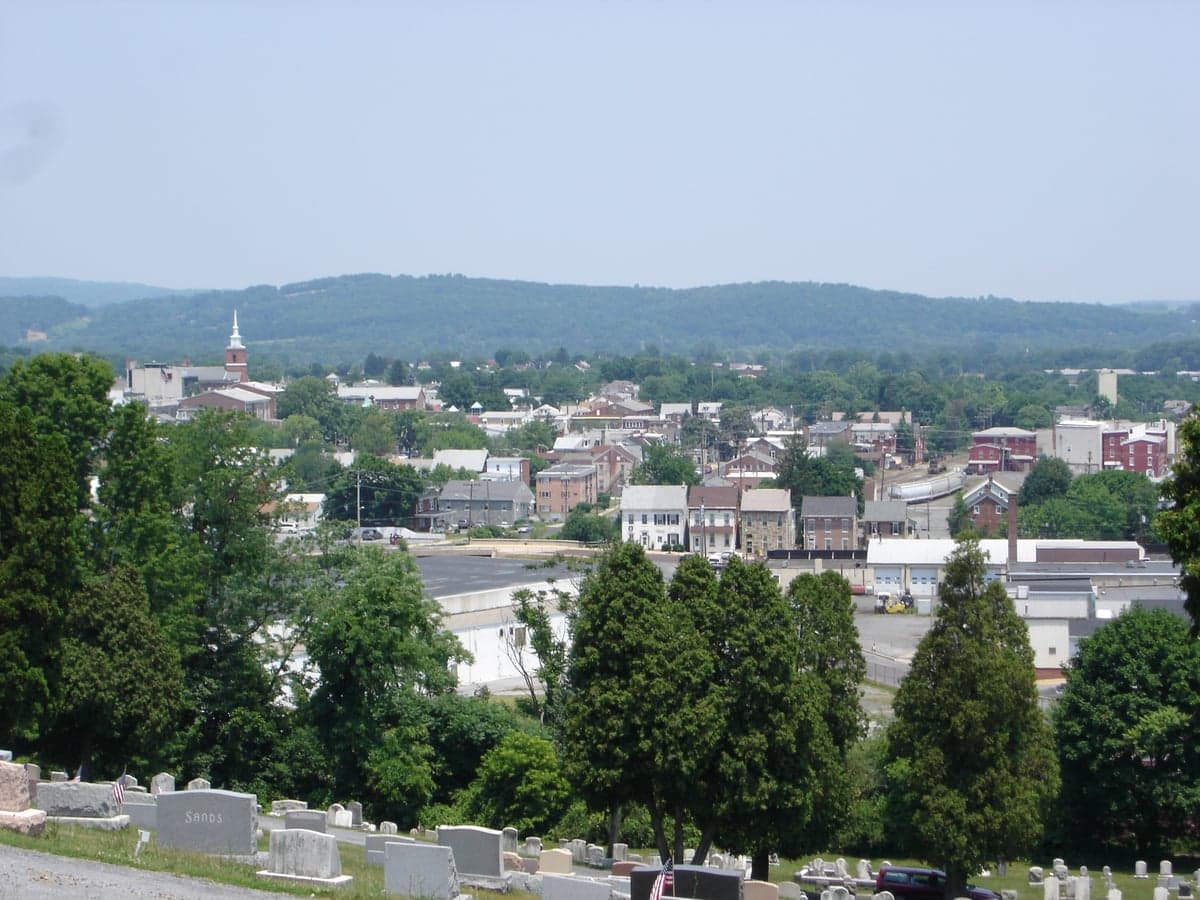
Photo: Wikipedia
Political ClimatePolitical Climate in Boyertown, PA
District shown is the primary district for this city’s centroid. Cities may span multiple districts.
Local Political AnalysisPolitical Analysis of Boyertown, PA
Boyertown, Pennsylvania, sits in a bit of a political bubble compared to the rest of the state. While Pennsylvania as a whole is a pure toss-up with a Cook PVI of EVEN, Boyertown itself leans decisively Democratic with a PVI of D+8. That’s a solid eight-point shift toward the blue side, and it’s not just a recent fluke—the town has been trending this way for a while, driven by a mix of younger families moving in from the Philadelphia suburbs and a growing service-sector workforce. If you’ve lived here long enough, you remember when the town square felt more evenly split, but the last few election cycles have made the local lean pretty clear.
How it compares
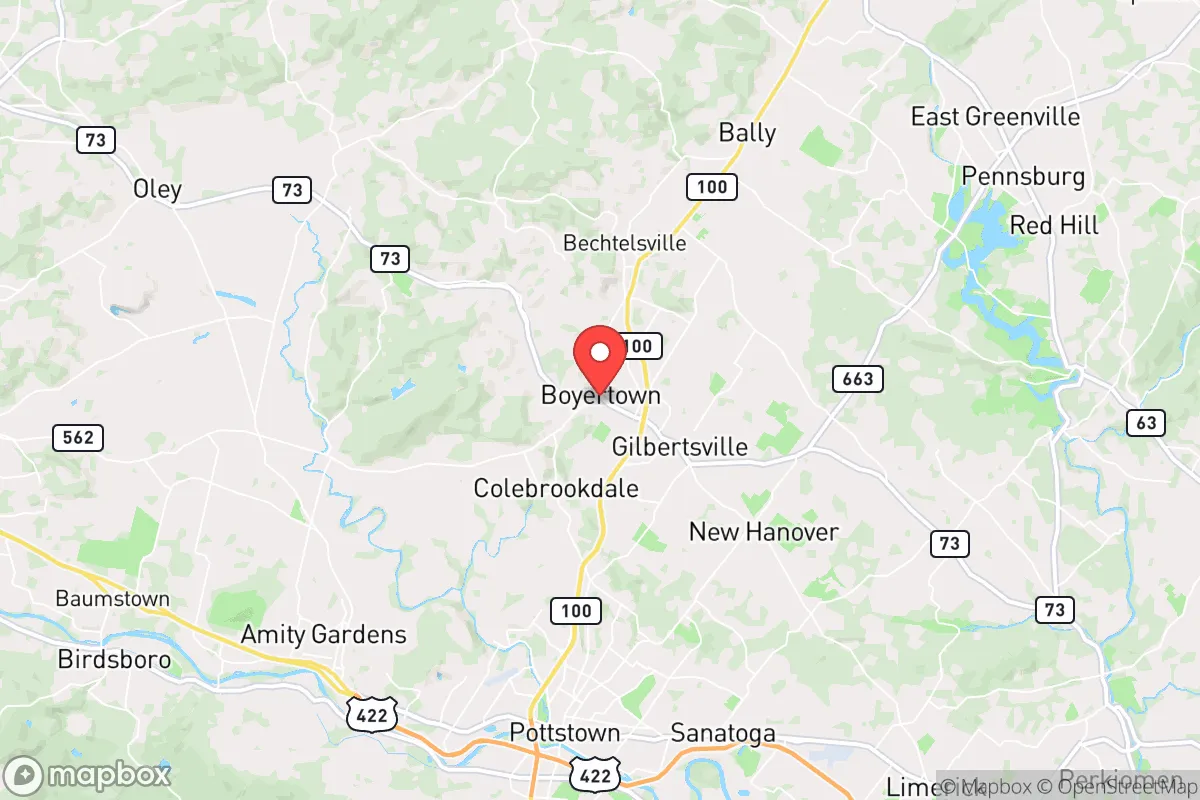
To understand Boyertown’s political climate, you have to look at the surrounding area. The town is in Berks County, which is a classic purple battleground—rural townships lean red, while the Reading area and Boyertown itself pull left. Drive ten minutes north to Bally or Bechtelsville, and you’ll find Trump signs still up on barns. Head south toward Pottstown, and you’re back in a more mixed, working-class zone. Statewide, Pennsylvania’s EVEN rating means the whole commonwealth is a knife’s edge, but Boyertown’s D+8 puts it in the same company as places like Allentown or Bethlehem—smaller cities where Democratic margins are reliable but not overwhelming. The key difference is that Boyertown lacks the heavy union presence of those steel towns; its blue lean comes more from white-collar commuters and local professionals than from organized labor.
What this means for residents
For conservative residents, Boyertown’s D+8 tilt means you’re likely in the minority locally, but you’re not isolated. The county commissioners and state house seats still flip depending on turnout, and you can find like-minded neighbors in the surrounding townships. School board races here are genuinely competitive, with conservative candidates often winning seats by focusing on curriculum and tax issues. For liberal residents, the local lean means your vote carries more weight in primaries than in general elections—Boyertown’s Democratic candidates usually cruise in November, but the real fights happen in the spring. Both sides should expect a lot of door-knocking: Berks County is a top target for state and national campaigns, so your mailbox will be full every even year.
One cultural distinction that sets Boyertown apart from the statewide norm is its strong sense of local identity. The town’s annual Bearly Open car show and the Boyertown Museum of Historic Vehicles draw crowds that cross political lines, and the local diners and coffee shops are where you’ll hear more talk about the high school football team than about Washington. That said, policy-wise, the town council has leaned into zoning for more mixed-use development and has been cautious about new gas stations or warehouses—a stance that pleases liberals but frustrates conservatives who want less regulation. Statewide, Pennsylvania’s EVEN rating means the legislature is perpetually gridlocked on big issues like school funding and energy policy, but in Boyertown, the local government moves slower and more deliberately. It’s not a place where politics dominates daily life—most folks just want the potholes fixed and the Fourth of July parade to stay on schedule.

State Political ClimatePolitical Climate in Pennsylvania
State Political AnalysisPolitical Environment in the State
Pennsylvania is the ultimate swing state, with a Cook PVI of EVEN that perfectly captures its knife-edge balance. Over the past 20 years, it has shifted from a reliably blue-leaning state in presidential races (voting Democratic from 1992 through 2012) to a true battleground where margins are measured in tens of thousands of votes. The 2020 and 2024 elections saw razor-thin results, with the state flipping from Trump in 2016 to Biden in 2020 and back to Trump in 2024 by less than 2 points. This trajectory reflects a slow realignment: the old Democratic strongholds in the southwest and northeast are shrinking and aging, while the Philadelphia suburbs are becoming more Democratic and the rural interior is becoming more Republican. For a relocator, this means you’ll live in a state where your vote genuinely matters, but where the political culture is deeply divided and often contentious.
Urban vs. rural divide
The political map of Pennsylvania is a textbook case of the urban-rural split. The two major Democratic engines are Philadelphia and Pittsburgh, which together cast about 30% of the state’s vote. Philadelphia County delivered 81% for Biden in 2020, while Allegheny County (Pittsburgh) gave him 60%. These cities are surrounded by deep-red exurbs and rural areas: Lancaster County voted 57% for Trump, York County went 60% Republican, and the vast northern tier — places like Tioga County and Bradford County — routinely give Republicans 70% or more. The key swing region is the Philadelphia collar counties: Bucks, Montgomery, Delaware, and Chester. These suburbs have been trending blue for a decade, driven by college-educated professionals moving from the city. In 2020, all four went for Biden after being competitive in 2016. Meanwhile, the old Democratic strongholds in the southwest — Washington County, Westmoreland County — have flipped hard red as union membership declined and cultural issues took over. The result is a state where a 45-minute drive can take you from a deep-blue city center to a deep-red farm town, with very little purple in between.
Policy environment
Pennsylvania’s policy environment is a mixed bag that reflects its divided government. The state has a flat income tax rate of 3.07%, one of the lowest in the nation, and a sales tax of 6% (8% in Philadelphia and Pittsburgh). Property taxes are high, averaging about 1.5% of home value, which is a common complaint among homeowners. There is no state-level gun permit requirement for open or concealed carry (with a license), and the state is a “shall issue” jurisdiction for concealed carry permits. However, Philadelphia and Pittsburgh have their own stricter local ordinances, including a ban on assault weapons in Philadelphia that the state legislature has repeatedly tried to preempt. On education, the state has a school choice program — the Educational Improvement Tax Credit (EITC) — that provides scholarships for low-income students to attend private or parochial schools, but there is no universal voucher system. The state’s election laws are a flashpoint: no-excuse mail-in voting was passed with bipartisan support in 2019 (Act 77), but it has been the subject of constant litigation and political attacks since 2020. Voter ID is required for first-time voters but not for repeat voters, a middle ground that satisfies neither side fully.
Recent policy direction
The last five years have seen Pennsylvania lurch in both directions depending on which party controls the governor’s mansion. Under Democratic Governor Josh Shapiro (elected 2022), the state has moved left on several fronts. In 2023, Shapiro signed an executive order banning state agencies from cooperating with out-of-state investigations into gender-affirming care for minors, effectively creating a sanctuary for families seeking such care. The state also expanded Medicaid under the Affordable Care Act in 2015, and the program now covers over 3 million Pennsylvanians. On the other hand, the Republican-controlled legislature has pushed through significant conservative wins. In 2022, the legislature passed a constitutional amendment (approved by voters) that explicitly states there is no right to abortion funding in the state constitution, though abortion itself remains legal up to 24 weeks. In 2024, the legislature passed a bill to ban “gender transition procedures” for minors, though Shapiro vetoed it. On gun rights, the legislature passed a preemption bill in 2023 that would allow the state to sue municipalities that enact their own gun laws, but Shapiro has not signed it. On election integrity, the legislature has passed bills requiring stricter voter ID and banning private funding of election administration, but Shapiro vetoed both. The net effect is a state where the governor and legislature are constantly at war, producing a policy environment that is volatile and unpredictable.
Civil unrest & political movements
Pennsylvania has been a focal point for political activism on both sides. The 2020 election aftermath saw massive protests in Philadelphia and Harrisburg, with Trump supporters gathering at the state capitol to challenge the results. The “Stop the Steal” movement was particularly active in rural counties like Lycoming and Butler, where local election boards faced intense pressure. On the left, the 2020 George Floyd protests in Philadelphia were among the largest in the country, leading to property damage and a lasting debate over policing. More recently, the state has seen a surge in school board activism, with conservative parents’ rights groups (like Moms for Liberty) winning seats in suburban districts like Central Bucks and Pennridge, while progressive groups have fought back over curriculum and library books. Immigration politics are less visible here than in border states, but Philadelphia’s sanctuary city status (it limits cooperation with ICE) is a frequent target of Republican criticism. There is no serious secession movement, but there is a persistent “state of independence” sentiment in the northern tier, where some residents feel ignored by both Harrisburg and Washington. Election integrity remains the most explosive issue: a 2023 audit by the Republican-led Senate Intergovernmental Operations Committee found “systemic issues” with voter roll maintenance, though Democrats dismissed it as partisan. A new resident will notice the political tension most acutely in local news coverage and in conversations with neighbors, where the 2020 election is still a raw nerve.
Projection
Over the next 5-10 years, Pennsylvania is likely to remain a swing state, but the demographic trends point toward a slow shift to the right. The state’s population is aging and growing slowly (0.5% per year), with the fastest growth in the conservative-leaning exurbs of Lancaster and York counties, while Philadelphia and Pittsburgh are losing population. In-migration is modest and comes mostly from other Northeastern states, not from the Sun Belt, so the cultural change is gradual. The key wildcard is the Philadelphia suburbs: if they continue trending blue, they could offset rural gains, but if the Democratic coalition fractures over issues like crime or education, the state could become more competitive for Republicans. The state’s electoral votes (19) will keep it a top target for both parties, meaning national money and attention will continue to pour in. For a new resident, the practical implication is that Pennsylvania will remain a place where your vote is meaningful, but where the political climate is exhausting — you will be bombarded with ads and canvassers every two years. The policy environment will likely stay gridlocked, with the governor and legislature trading vetoes and the courts settling the biggest fights. If you want a state where one party clearly sets the agenda, Pennsylvania is not it. If you want a state where your vote actually decides things, it’s one of the few left.
Bottom line for a relocator: Pennsylvania offers a low-tax environment with a flat income tax and reasonable sales tax, but high property taxes and a volatile policy landscape. Conservatives will appreciate the strong gun rights (outside Philadelphia) and the school choice options, but will be frustrated by the Democratic governor’s veto power and the urban liberal strongholds. Liberals will appreciate the abortion protections and the sanctuary policies, but will be frustrated by the Republican legislature’s constant pushback. The state’s political reality is one of perpetual conflict, which means nothing changes quickly and everything is a fight. If you’re looking for a place where your political views are the norm, look elsewhere. If you’re looking for a place where you can be part of the fight, Pennsylvania is your state.
* Values derived from national, state, county, city and local statistics and may differ in a specific area. Last updated: 2026-09-22T23:38:45.000Z
Narrative content on this page is AI-generated and may contain mistakes. Verify any details that matter before acting on them.
ReloMaps may earn a commission from affiliate links at no extra cost to you.

